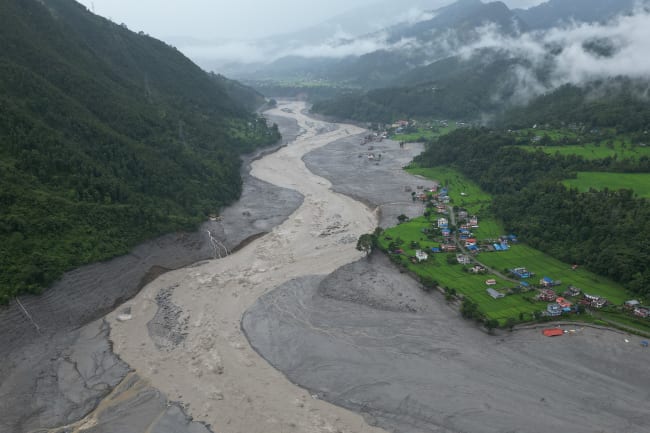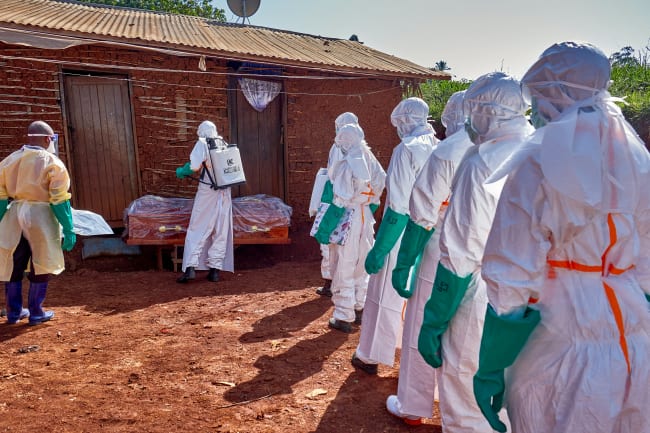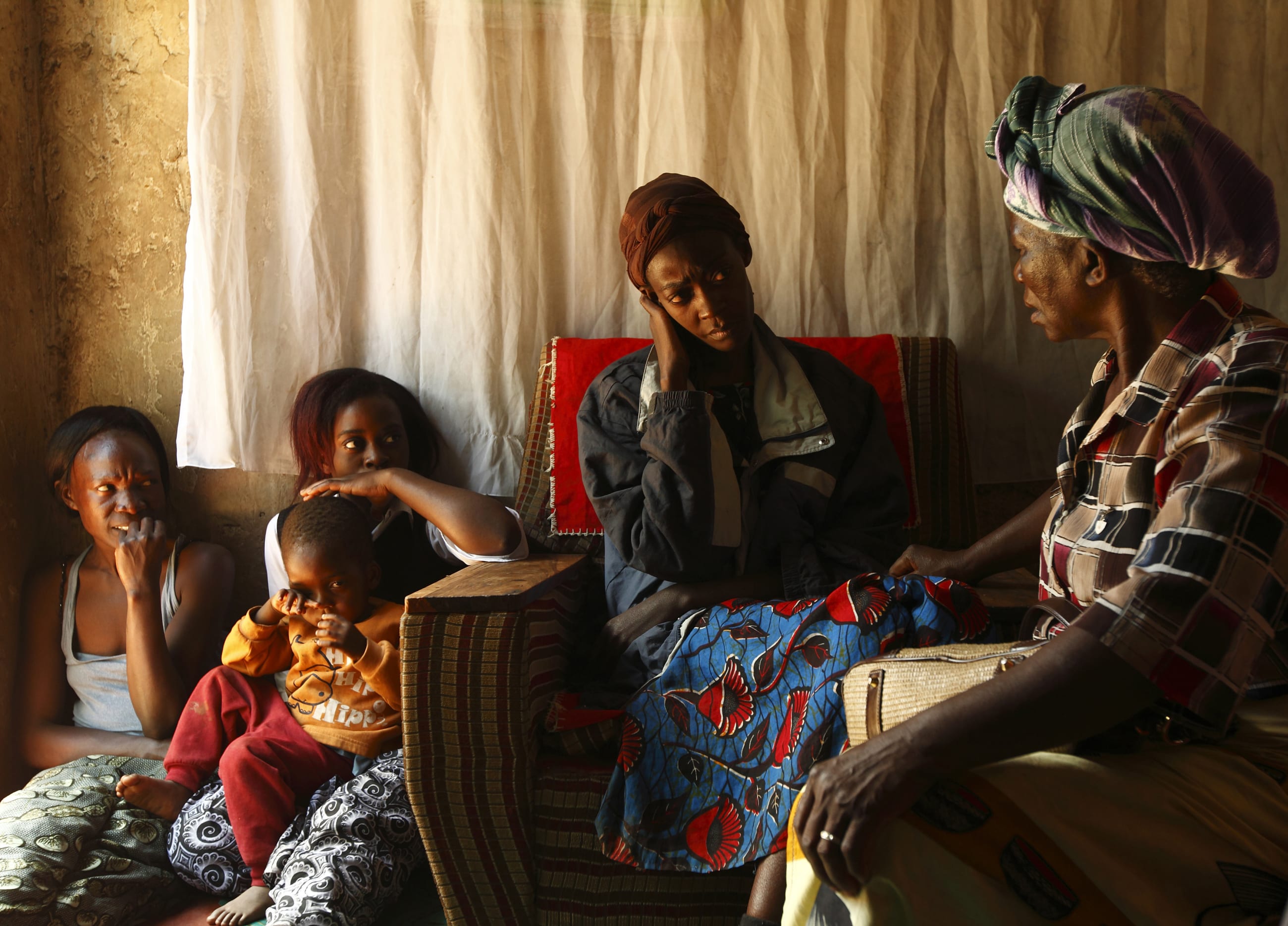
From late October to April, much of Zambia sees rain almost every day. Those months also mark when the threat of malaria, carried by mosquitoes that proliferate during that wet period, is most pressing.
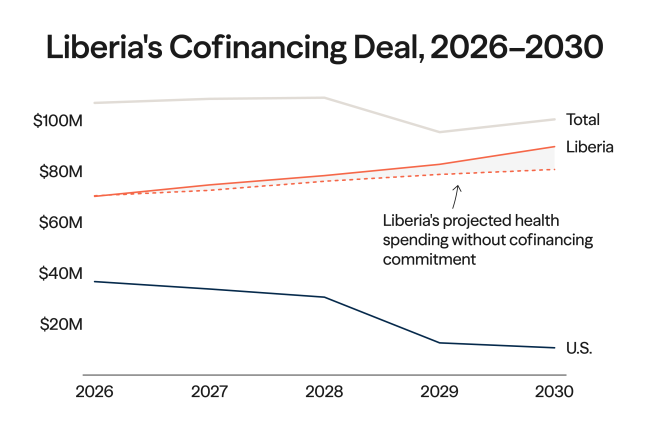
Against that backdrop, a week of difficult negotiations at the end of April between the United States and Zambia failed to reach a memorandum of understanding (MOU)—a bilateral agreement that would provide funding for Zambia's health programs. Their discussions centered on Zambia's willingness to exchange its mineral wealth and population health data for U.S. funds to support critical health initiatives addressing malaria, HIV/AIDS, and vaccinations.
Leaving those issues unresolved and ending negotiations benefits neither party. Over the past several decades, U.S. support has led to great progress in Zambia, but last year's foreign aid cuts now jeopardize the health of thousands. By May 2025, 71% of Zambian health-care facilities reported immediate impacts to health-care delivery. To avoid those disruptions, the withdrawal of support for critical programs should be gradual and planned; a successful MOU would guide that process.
The U.S. Malaria Response
Since 2015, the incidence of malaria [PDF]—the number of new cases per 1,000 persons at risk—has risen 8.5% worldwide and 23.8% in sub-Saharan Africa, which bears the brunt of the global burden. In 2024, 94% of malaria cases and 95% of malaria deaths occurred in this region, and in Zambia, four people die on average each day.
U.S. support has led to great progress in Zambia, but last year's foreign aid cuts now jeopardize the health of thousands
The U.S. government, through the President's Malaria Initiative (PMI), is credited with helping save 11.7 million lives since 2000. But over the past year, the program, launched by President George W. Bush to fund critical malaria prevention efforts, has been upended, along with other funding for HIV and vaccination programs.
A combination of precautions that includes using insecticide-treated bed nets and applying insecticide indoors to limit in-home mosquitoes can prevent malaria, but those tools are not always available or effective. In October 2025, at the start of Zambia's rainy season, the government rolled out the new malaria vaccine, which could have further improved prevention efforts and reduced incidence in young children if other programs to reduce the burden of malaria hadn't been cut as U.S. foreign aid was reduced. Now, anecdotally, local health-care workers are beginning to see signs of increased hospitalizations for severe malaria. At one hospital in northern Zambia, health workers reported around 80 to 100 hospitalizations for severe malaria per month during this past rainy season compared to about 50 to 75 per month during the same period a year ago.
Although I currently work alongside Zambian colleagues to address malaria, my first stint in the country was in 1997, tackling the death toll from measles. The main teaching hospital in Lusaka had a ward dedicated to children with measles that during outbreaks would treat 20 or 30 children at a time. When I first began working in Zambia, about 5% died in the hospital. Today, with more than three quarters of Zambian children fully immunized against the disease, the measles ward has closed because there have been so few cases.
The virology laboratory where we worked on measles was located right next to the morgue, where coffin sellers lined the streets. At the time, in the late 1990s, about 20% of Lusaka's adult population was infected with HIV.
As the PMI expanded malaria prevention efforts, the President's Emergency Plan for AIDS Relief (PEPFAR) provided access to HIV care and treatment. Beginning in 2011, I witnessed children living with HIV surviving longer and mother-to-child transmission of HIV becoming increasingly rare. In 2023, I and my colleagues at the Johns Hopkins Bloomberg School of Public Health and Macha Research Trust phased out our studies of children living with HIV in southern Zambia because there were so few cases.
Barriers to Adopting a Successful MOU
Zambia's mineral wealth, one of the touchpoints of the bilateral negotiations, poses a significant obstacle to successfully adopting an MOU. The country is one of the world's primary exporters of copper and has significant untapped deposits of lithium and cobalt, which are critical elements in today's electronics. Those resources also position Zambia at the base of the global supply chain. Its raw materials are shipped out of the country to be refined, and the final products are built and sold around the world.
Ghana and Zimbabwe made recent headlines for rejecting a foreign aid package amid similar negotiations. And although, on principle, all foreign aid packages should lift up recipient countries and be negotiated independent of economic development talks, reality often proves otherwise. Countries whose economic activities feature natural resource extraction rarely generate enough income to fund all government functions, necessitating a reliance on foreign aid. Yet discussions on resource rights should take place independent of the negotiations regarding foreign aid and health-care service delivery; even the impression of a quid pro quo should be avoided.
The challenge for the United States and Zambia is to keep negotiating until both sides are satisfied. Walking away from negotiations leaves too steep a budget shortfall with no time to plan for it.
Although far too many people in the United States are struggling, American children are not dying in large numbers of measles, HIV, malaria, or other preventable and treatable diseases. As a people, Americans can extend a hand to help the most vulnerable children and communities.
Americans should be proud of what they have achieved in improving the health of people in Zambia and around the world. Not only is it the right thing to do, it also offers gains unrelated to health. Foreign aid to Zambia has totaled about $500 million per year. In comparison, the first two months of the Iran War cost $25 billion. Zambia is one of the few countries in Africa to have had several peaceful transitions in government through free and fair elections. By supporting a democratic ally and addressing the poverty and poor health that foments unrest, the United States can enhance its national security.
AUTHOR'S NOTE:The views expressed here are the author's own and do not necessarily reflect those of Johns Hopkins University.