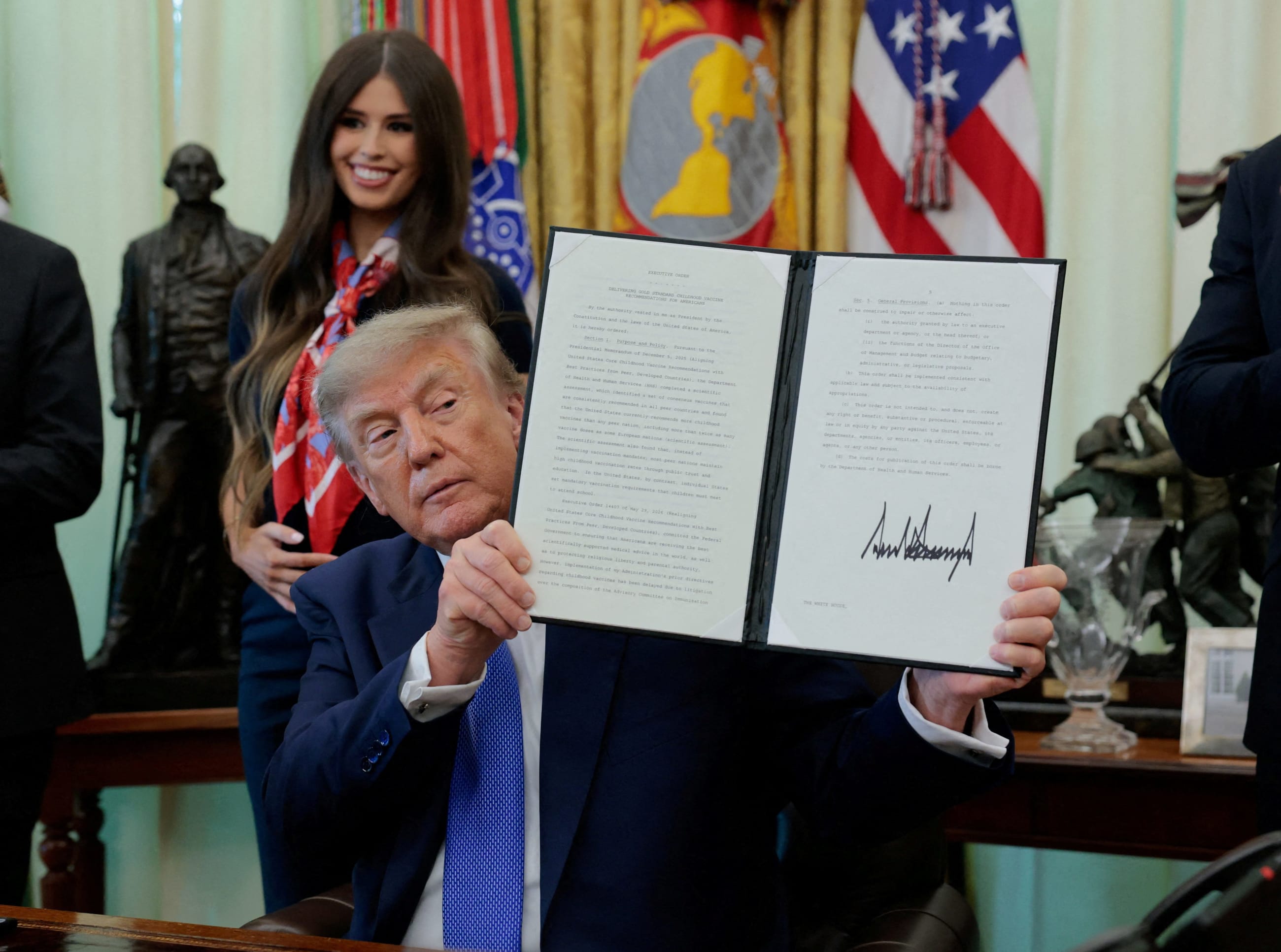
President Donald Trump's August 10 Executive Order (EO), "Delivering Gold Standard Childhood Vaccine Recommendations for Americans," presents a markedly different vision for childhood immunization in the United States. It departs from established, evidence-based public health recommendations to prevent hepatitis A, hepatitis B, meningococcus, respiratory syncytial virus, measles, mumps, rubella, influenza, and rotavirus. Although the order claims to align the U.S. schedule with best practices from peer countries, no other developed country appears to promote a comparable set of recommendations.
This order directs the federal government toward a childhood vaccine schedule that is more fragmented, instead of more firmly grounded in scientific evidence, and will further reduce confidence in lifesaving vaccines to the detriment of American children.
The likely result is lower vaccine coverage and less protection against dangerous infectious diseases
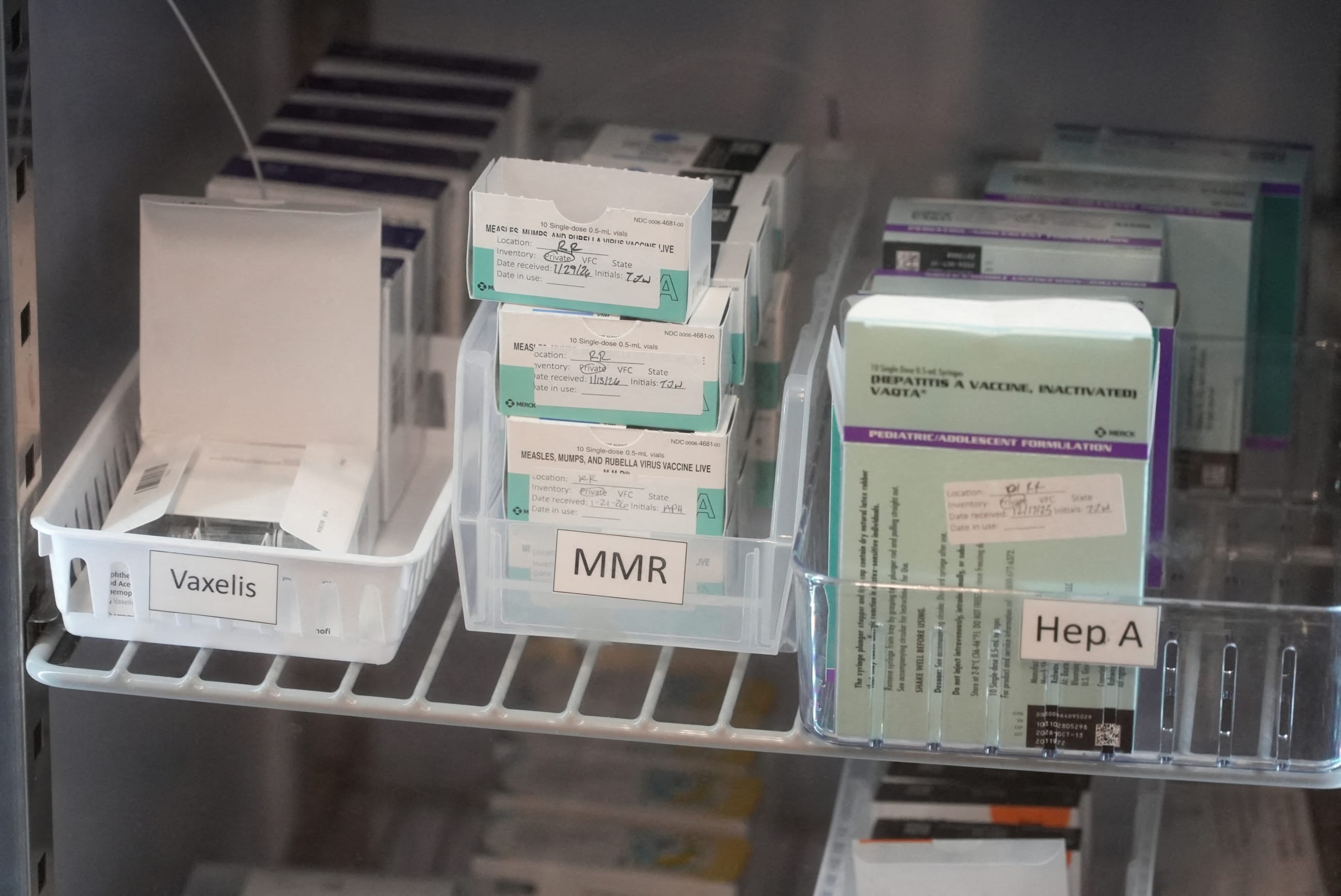
Although continuing to recommend vaccination against measles, mumps, and rubella, the EO also states that core, combination childhood vaccines, beginning with the measles-mumps-rubella (MMR) vaccine, should be replaced by single-disease shots and that, "to the maximum extent feasible," childhood immunizations should be administered at separate medical visits. This is not a gold standard.
Although offering separate shots could allow some parents to pick and choose the individual vaccines their children receive, it also means more injections and more opportunities for children to fall behind on recommended immunizations. The likely result is lower vaccine coverage and less protection against dangerous infectious diseases.
Sowing Doubt, Lowering Coverage
The EO's timing could hardly be worse. As of August 6, the United States had confirmed 2,465 measles cases in 2026—already more than the 2,289 reported in all of 2025. Of this year's cases, 94% have been associated with outbreaks. Meanwhile, the latest national estimate of MMR coverage among kindergartners is 92.5%, down from prior years and below the roughly 95% two-dose coverage considered necessary to suppress community transmission of a virus as contagious as measles.
As the EO acknowledges, no monovalent, or single-dose, measles, mumps, or rubella vaccine is licensed in the United States. Both Merck and GSK, the only two makers of MMR vaccines on the U.S. market, manufacture them as combination products. Therefore, the order's central directive cannot be implemented today. What can be implemented today is doubt.
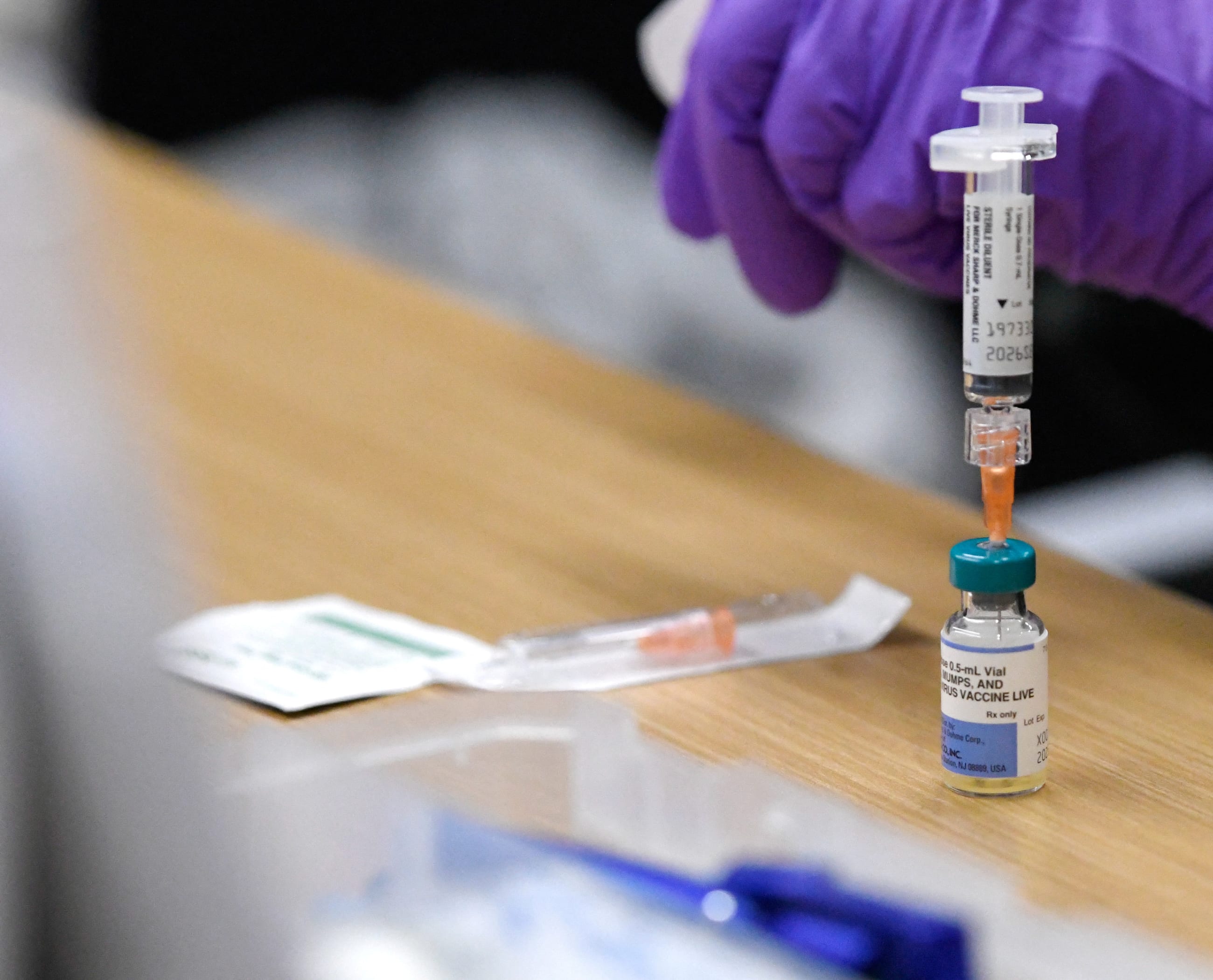
The order tells parents that the shot their pediatrician is about to give their child is presumptively unsafe enough to warrant redesign. More explicitly, the order overlooks strong evidence that the combined MMR vaccine is safe and offers no credible proof that separating it into three shots would make it safer. Doubt planted this way does not wait for the alternative vaccines to materialize. It acts immediately, influencing a family's decisions whether to vaccinate on schedule and cultivating a self-sustaining hesitancy to vaccinations.
A parent's "just in case" instinct to slow down, space out, or skip a vaccine is a rational response to doubt. But switching to three visits to the pediatrician instead of one means three needles, three administration fees, three chances for a missed appointment in a working family's schedule. Those frictions will likely lower completion rates and weaken other pillars of health. Every minute a pediatrician spends reassuring anxious parents that the vaccine their child should receive is safe is a minute not spent on other important activities, including anticipatory guidance focused on nutrition, safety, and development.
Separate Vaccines Doesn't Spell More Safety
In 1996, Brazilian researchers ran a large, randomized trial comparing three different MMR vaccine formulations in more than 10,000 children. The formulation containing the Leningrad-Zagreb mumps strain—mostly used in low- and middle-income countries—produced significantly more reactions than the other two combined vaccines. The formulation using the Jeryl Lynn strain—the same one used in the United States today—had the lowest risk of reactogenicity. The variable was the strain rather than the bundling. The lesson was not that combining measles, mumps, and rubella was inherently dangerous. It was that the specific vaccine strains and formulation matter. There is no simple rule that fewer components automatically mean a safer or less reactogenic shot. Splitting a vaccine only adds needles and changes nothing about the antigen inside it.
Parents deserve careful answers to questions about vaccine safety. Vaccine policy should be set by evidence and the transparent regulatory process that has protected American children for decades.