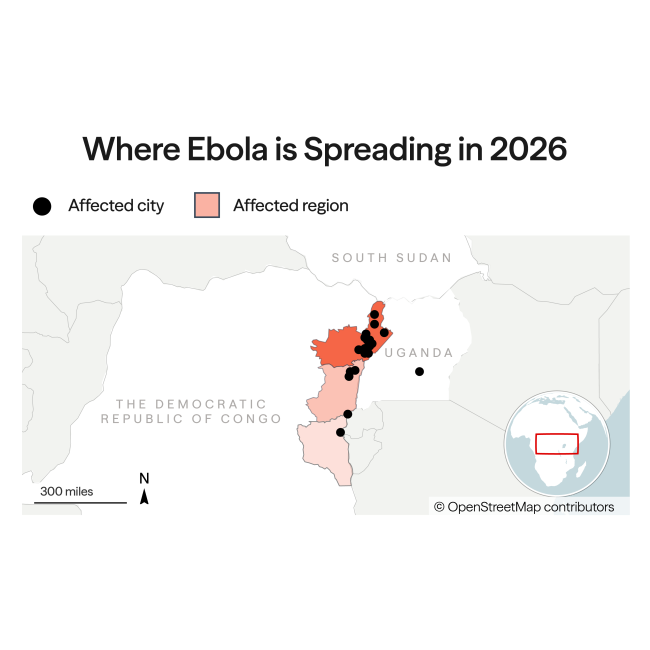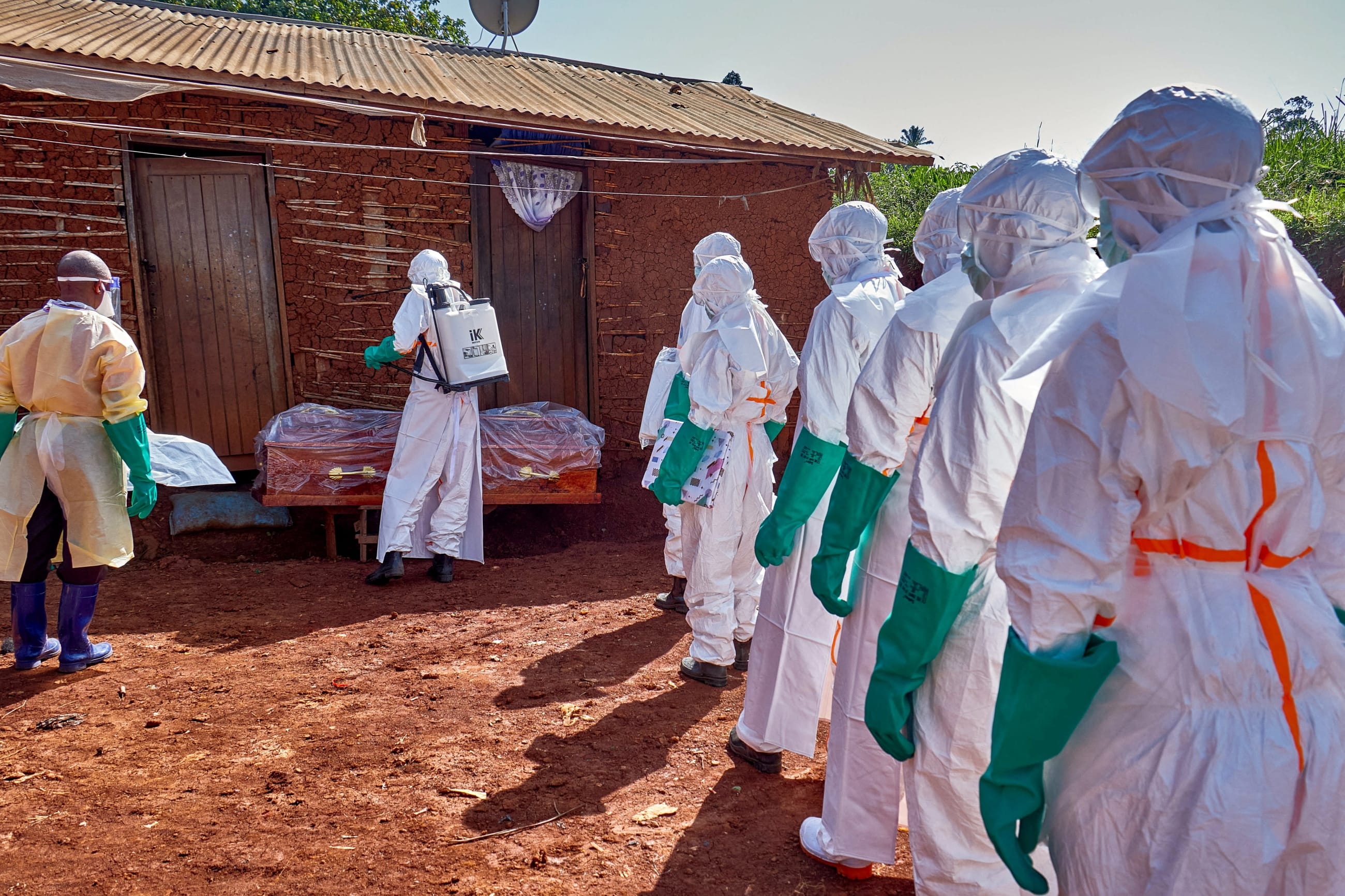
On September 23, the World Health Organization reported that cases of the Ebola Bundibugyo virus have grown 73% over the last three weeks in North Kivu, an eastern province of the Democratic Republic of Congo (DRC), even as transmission may be slowing in the country's neighboring Ituri province. The Africa Centers for Disease Control and Prevention stated in a communique that Ebola Bundibugyo "transmission remains active, progress is uneven, and continued geographic expansion reinforces the risk of further spread."
There is still no approved vaccine against or treatment for the Ebola Bundibugyo virus to combat the outbreak. The Coalition for Epidemic Preparedness Innovations (CEPI) is funding the development of five vaccine candidates through IAVI; Minapharm; Moderna; Public Health Vaccines, LLC; and the University of Oxford Serum Institute of India.
Think Global Health spoke to Nicole Lurie, executive director for Preparedness and Response and U.S. director at CEPI, to learn more about the candidates that the organization is racing to develop in partnership with companies and institutions, and which one might prove to be successful first.
□ □ □ □ □ □ □ □ □ □ □ □ □ □ □ □□ □ □ □ □ □ □ □ □ □ □ □ □ □ □
Think Global Health: How has CEPI's work evolved since the Ebola Bundibugyo outbreak was declared on May 15?
Nicole Lurie: CEPI is constantly monitoring for different outbreaks. When we first started seeing these cases in Ituri, we evaluated what we would need to do to get ready. Once we knew it was going to be Bundibugyo—a few days before the World Health Organization (WHO) or Africa Centers for Disease Control and Prevention (Africa CDC) declared an emergency—we stood up our response team.
We looked across all the potential vaccine candidates. We looked at the scientific information we had about how the virus family behaves. And we started to think about what we needed to do so that in the event that this rapidly escalated—which of course it has—we were able to say that we'd made investments in the basic virus science. We were in touch with an array of partners right from the very beginning to say "we've got partners like Oxford and Moderna that can manufacture fast."
They've had experience with filovirus, but they didn't have all the preclinical information, including the animal data. We asked them, "Why don't you do those things in parallel instead of in sequence?" We took a lot of risks to have doses manufactured by the time the animal data was done or by the time the phase I clinical trial was done, so that there would be doses to go into a trial.
We've now been working intensively with each of the candidates around the development of their vaccines, planning for their phase I trials, including some in Africa. We have been preparing with WHO partners, Africa CDC, and the DRC to look at all the trial designs. By the time vaccine candidates came out of phase I, and the WHO technical advisory committee agreed that those candidates should go into a trial, we had designed a trial that could accommodate multiple vaccines as they were ready. [The goal was] to be fast and efficient and prepared to go in the DRC. The other pieces [of the process] are the interactions with other global and country organizations that need to be involved in [vaccine development and delivery].
There's a lot of other work that CEPI's doing. We don't just work on Ebola; we have to continue to monitor further outbreaks. We've been involved in supporting vaccine development for other recent outbreaks where the vaccines are needed. The other thing that has made this really challenging is we're in the middle of fundraising for CEPI 3.0, our next cycle of CEPI. The fundraising effort in and of itself is really intense. And we also need to raise funds for Ebola. We don't want them competing with one another.
We basically borrowed $100 million from ourselves to get [the Ebola response] going. And we can't let that impede the work we need to do going forward. So all those things are happening at once.
TGH: Which vaccine candidates are the most likely to reach the finish line?
Nicole Lurie: I don't know what's going to cross the finish line first. Oxford and Moderna are in the middle of their phase I data, early data in humans. We expect that later this month, we'll have data from the phase I trials. Then, the WHO technical advisory committee will be able to say whether one or both should go into the phase II/III trial. We expect that the other three might be ready for phase I trials sometime between the end of this year and early next.
If Oxford and Moderna don't work out, we have additional candidates. Even if they do work out, there's probably additional pathways to licensure for those if we determine they're better or need more than one vaccine candidate out there.
I've never seen us or anybody else work this fast. Everybody is really committed to this.
TGH: How much longer could the process take from vaccine development to deployment to containment?
Nicole Lurie: We never give a best guess, but I can tell you I've never seen us or anybody else work this fast. Everybody is really committed to this. CEPI has a 100-day mission to be able to develop and have authorized a vaccine 100 days after an emergency is declared. We just passed the 100-day mark, but everybody is focused on what we have to do to get to those 100 days.
Companies are going fast, we're going fast, the regulators are going fast, the country is going fast, and all of the ecosystem partners that have to think about buying the vaccine and getting ready to put it in arms and doing all the social science you need to help understand where people are at—that's going on in parallel.
TGH: What kind of system is needed to get people vaccinated?
Nicole Lurie: That system is coming into place. First, it's making sure the vaccine is safe and effective. Then procurement, then distribution of that to the DRC. It's probably going to require cold chain—the good thing is the DRC is used to cold chain.
What's going to be required is mobilizing communities and [building] confidence in a vaccine so people want to take it. That means dealing with all the rumors, innuendo, misinformation, and deliberate attempts to mislead, as well as a lot of deeply held beliefs about vaccines or about whether Ebola is real. That work is going on in parallel. We have our eyes open to [those challenges].
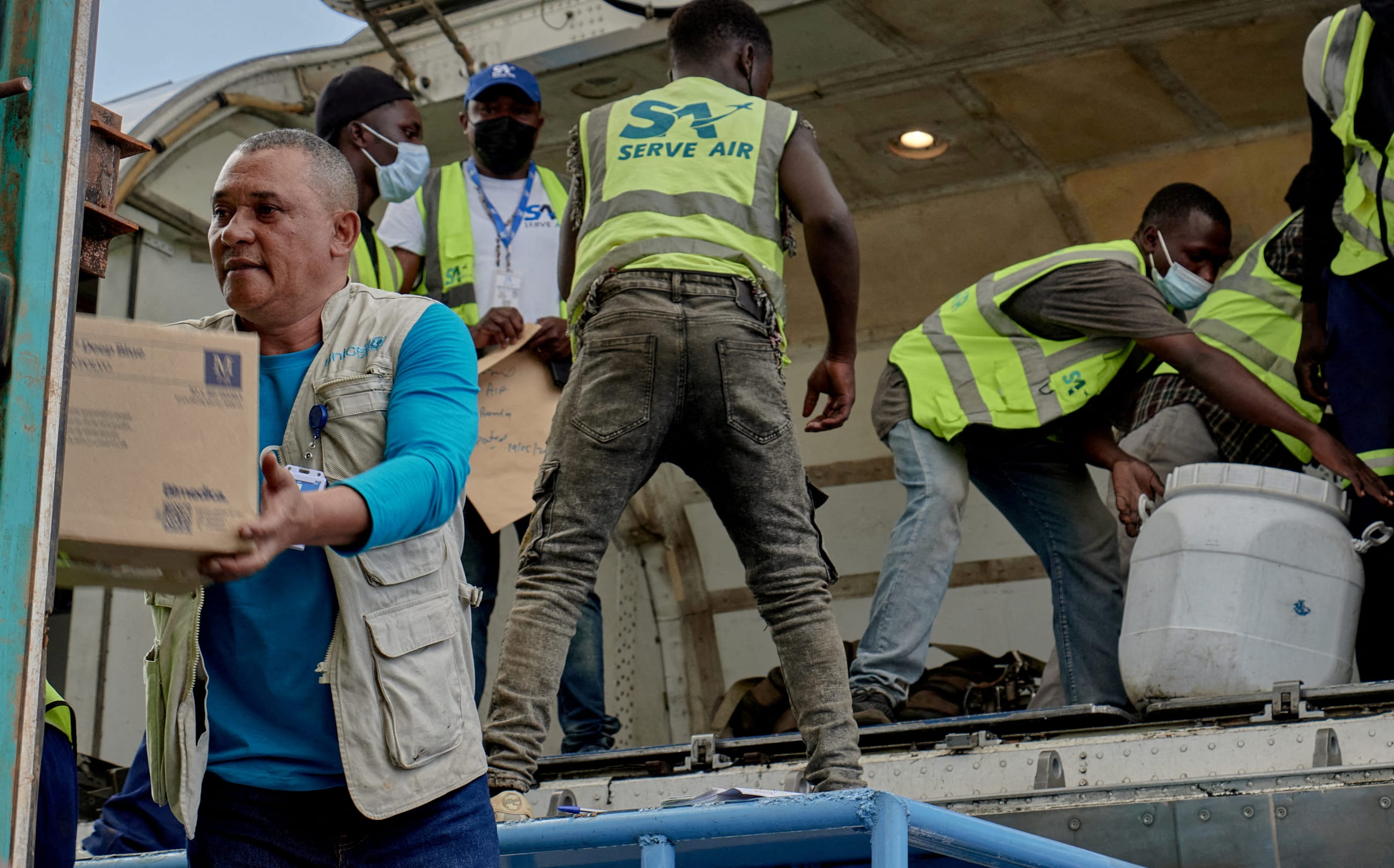
[The effort against mis- and disinformation] is not what CEPI does, but it's what our partners do, working closely with UNICEF [the UN Children's Fund] and with IFRC [the International Federation of Red Cross and Red Crescent Societies]. They are also leading the effort for procurement and with the country to start developing a vaccine rollout plan.
A lot of NGOs [nongovernmental organizations] are [working on this, too]; they're all on the ground taking care of people as well. They will be excited when they can vaccinate people and turn off the pipeline of sick people who come to their treatment centers.
TGH: What would it take to get countries most affected by threats to lead the development, manufacturing, and distribution of vaccines and treatments, instead of high-income countries?
Nicole Lurie: This is a structural issue in global health. And it's an issue that CEPI 3.0 and the 100-Day Mission seeks to address. We are working with countries and with regional institutions like Africa CDC to build regional networks and capabilities that can respond quickly.
That runs through real ready-to-activate capabilities, not just intent. We have laboratory networks in these countries that are putting skin in the game. Regional manufacturing capacity so that countries can manufacture in the region where the disease exists, working with regional regulatory authorities to strengthen them so they can approve products quickly. Regional clinical trial capacity: that's the path to getting there for regional and country self-sustainability.
We have manufacturing networks in Brazil, India, Indonesia, Senegal, and South Africa, and just made this investment in Minapharm (in Egypt). We're getting there. It's not a five-year proposition; it's a long-term proposition. But that direction has to be locked in now.
TGH: For vaccines developed with CEPI funding, the developer has a tech transfer agreement to share it with other manufacturers when needed. What about the vaccines that are not developed with CEPI funding?
Nicole Lurie: It's a great question. Where CEPI funds a vaccine or vaccine development, we always require a commitment to access. Sometimes it looks like tech transfer, sometimes it looks like special pricing, and sometimes it just looks like sharing data. It depends on how far along in development the vaccine is. We want a suite of tools that will solve the access challenge. Tech transfer is not the only solution. That's a really important point. For CEPI-funded vaccines, we may require tech transfer. When a vaccine was being developed for another purpose, we might jump in to support tech transfer because we're concerned about access.
[However], we don't have any legal leverage [for these vaccines]. We can offer convening power, broker introductions to other manufacturers, or match [manufacturers] up with clinical trial partners and others.
Then there's also the pandemic accord and the WHO negotiations. That tries to help with [access] as well, but it's developer-, vaccine-, and situation-specific.
What we're trying to accomplish for CEPI 3.0 is to have the building blocks for these kinds of vaccines against threats in different viral families ready. So that [the response to] Bundibugyo is not a one-off, but we can do it whenever anything ugly shows up. We want to act fast, have a vaccine developed quickly, manufactured quickly, tested quickly, and have it in people's arms. We can't do that without a lot of support and investment.
TGH: Do you feel like artificial intelligence (AI) and mRNA have made a big difference in speeding up the process?
Nicole Lurie: Oh, they've been huge. We're now able to use AI to help us design the antigen, the part of the vaccine that creates the immune response, and to make it much more robust and much more stable for a whole host of different kinds of vaccines so that we can get the best possible immune responses we can. During COVID, people talked about the spike protein and how to stabilize it. And then NIAID [the U.S. National Institute of Allergy and Infectious Diseases] sent out basically the secret sauce to do that to every vaccine developer, and they did it. We aim to do that for all of the viral families that are of a concern to humans.
AI, I would say, is helping a ton. And mRNA and other rapid manufacturing platforms are also helping a ton. We've invested not just in mRNA or not just in ChAdOx (the same platform as Oxford-AstraZeneca's COVID-19 vaccine), but in a whole bunch of novel platforms that can make vaccines safely and rapidly.
EDITOR'S NOTE: Interview has been lightly edited for clarity.