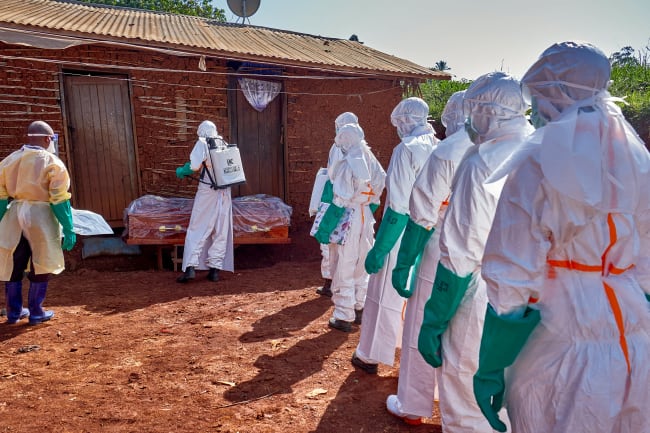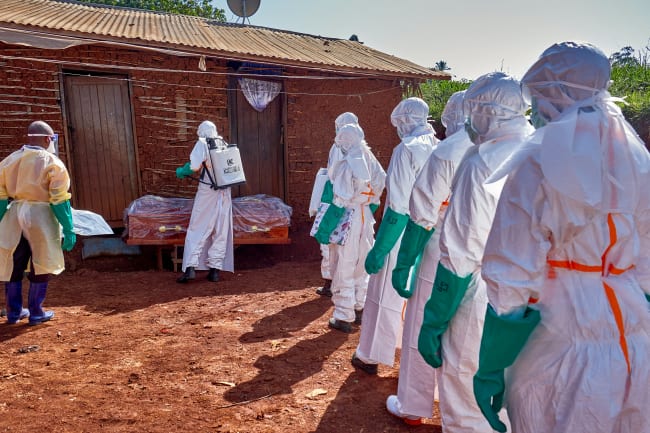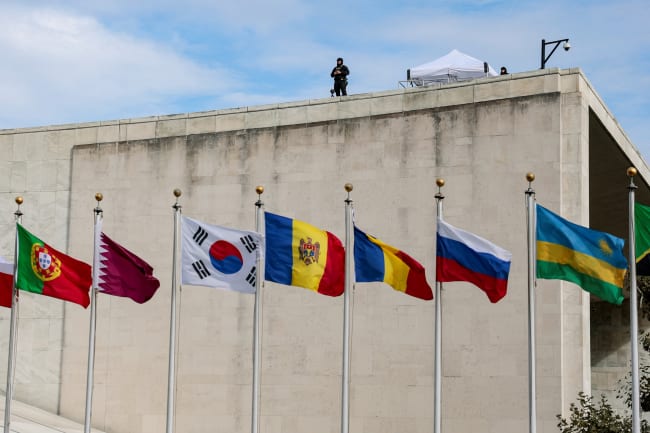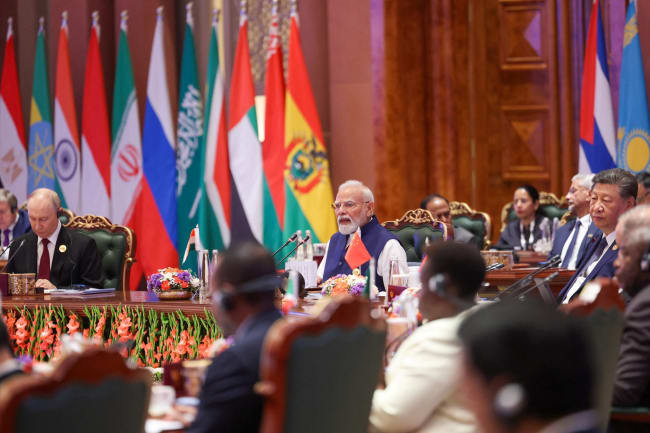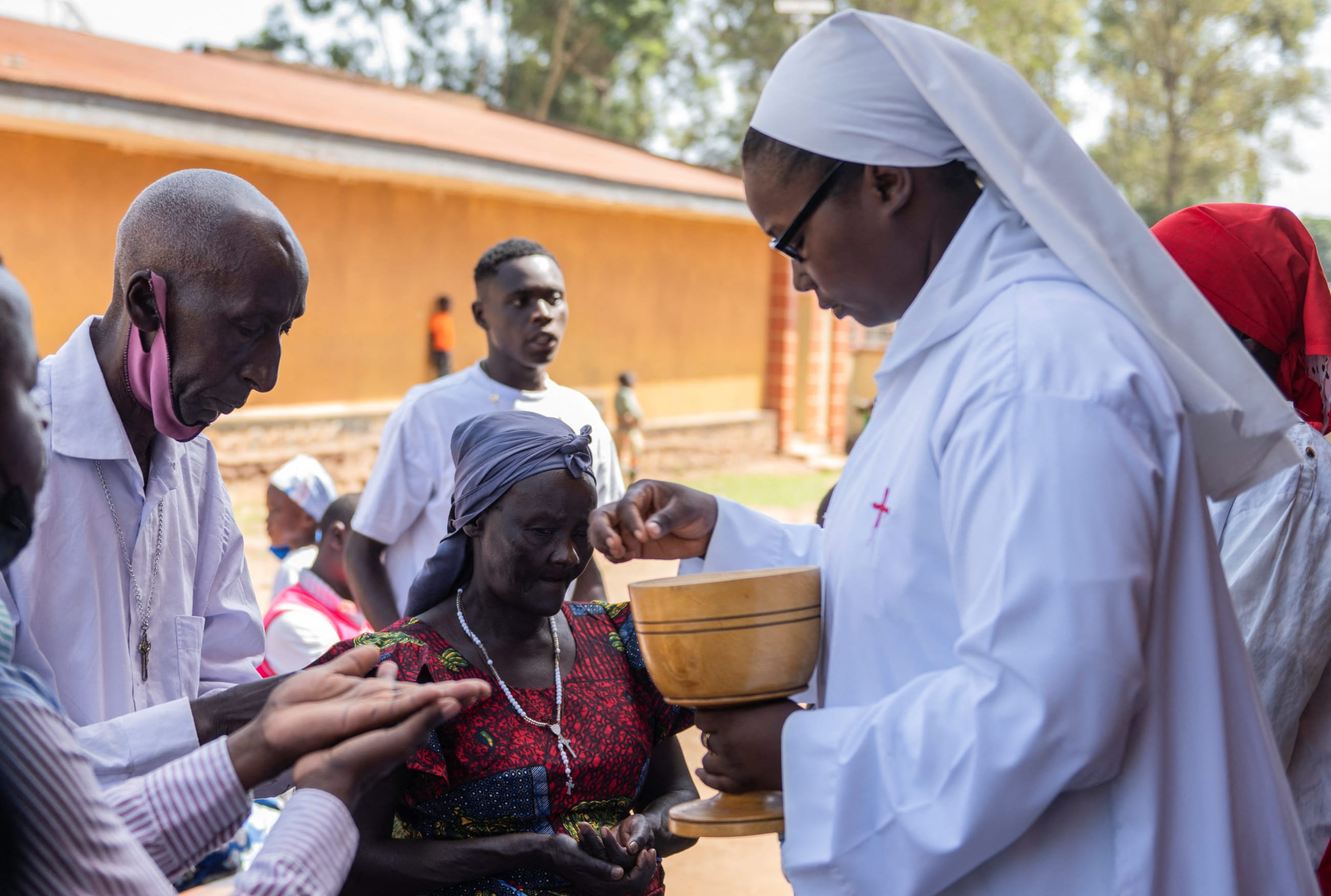
At this year's UN General Assembly in New York City, the ongoing outbreak of Ebola Bundibugyo virus in the Democratic Republic of Congo (DRC) has given world leaders a renewed sense of urgency about how countries can prepare for future epidemics and pandemics.
To understand how the global community can better respond to emergencies like Ebola, Think Global Health spoke to Suerie Moon, an expert in access to medicines and a professor who specializes in identifying the governance gaps and power imbalances that lead to health inequity.
Moon shared her perspectives on what the world has learned about preparing for crises since the COVID-19 pandemic, and what gaps remain as global health funding shrinks.
□ □ □ □ □ □ □ □ □ □ □ □ □ □ □ □□ □ □ □ □ □ □ □ □ □ □ □ □ □ □
Think Global Health: You once described the world's response to COVID-19 as reflecting "the utter inadequacy of our international arrangements to protect health." Would you characterize the Ebola response in Central Africa the same way? What, if anything, has changed?
Suerie Moon: A lot has changed for the better, both since the West African Ebola crisis [in 2014–16]—which many of us are thinking about as we follow what's happening now in the Democratic Republic of Congo—and also because of the COVID-19 pandemic.
A couple important things happened, including the creation of the Coalition for Epidemic Preparedness Innovations (CEPI) in response to the West African [Ebola] crisis, which was an effort to fill a gap in the architecture. It was clear the world needed an organization like CEPI that could react quickly, with expertise and funding ready, and put in place a number of measures prior to an outbreak to get research and development (R&D) moving as quickly as possible.
TGH: What lessons does the global community still need to learn in your opinion, to better respond to outbreaks like Ebola Bundibugyo?
Suerie Moon: The other gap in the architecture that this Ebola outbreak exposed is the lack of a standing crisis-response fund or financing arrangements. As with every crisis, it's a scramble [to respond]. Given what the global health financing landscape looks like today, it's harder than ever. Folks used to assume that during a crisis like the current Bundibugyo outbreak, the money will come, because everyone will panic. They will understand [that solidarity is] in their self-interest. What we're seeing is that's not a sound assumption.
[A crisis-response fund] was one of the proposals that was put on the table back in 2017 that never materialized. There was the creation of the World Bank Pandemic Emergency Financing Facility, which then closed down, but it was an effort to put in place at least some kind of rapid-response financing mechanism. It didn't work, and there are many reasons why.
TGH: What do you think CEPI is doing well, and in what ways do you think it could improve?
Suerie Moon: CEPI has moved quickly, which is critical. They've done well in responding to the desire for things like tech transfer, geographically diversified production, and R&D, within the constraints of the reality of where R&D is concentrated on this particular pathogen. You can't invent research on Ebola Bundibugyo out of thin air. There are a finite number of firms and academic labs that have worked on the virus. CEPI has heard the call for investment not only in traditional northern institutions but also in trying to enable and support development capacities in the Global South, whether that's production, R&D, or clinical trials, and they've made a lot of investments in that, as seen in the Bundibugyo response.
Another vital role CEPI plays is that it acts as a coordinator, unlike other funders. What CEPI has been doing is playing more of a coordination role, doing matchmaking [between institutions that work on the Ebola Bundibugyo strain], trying to bring together complementary capacities so that every step in the process can be completed. There are a lot of moving pieces in manufacturing, clinical trials, and tech transfer.
CEPI is acting the way a government would in the sense that they have a tremendous responsibility to complete the R&D, advance it, and ensure access. If this were all happening at national level, this is what we would expect a national government to do, with all of the governance arrangements and accountability arrangements that public bodies are subject to. The challenge is that CEPI is legally not a public entity.
The majority of [CEPI's] money is public money pulled together from about 30 donor countries. In that sense, they are public-facing, but in their legal entity and governance arrangements, they are a private nonprofit organization. Where this has come out in terms of concerns being raised about CEPI is questions about transparency and accountability. What are the arrangements for accountability, not just to funders but more broadly to the people whose health and lives depend on the work that CEPI does? I'm not suggesting CEPI has to change their legal structure, but what else could they do to try to address this mismatch between the [public nature] of their mission, their mandate, their funding, and the [private nature] of their governance arrangements? They could increase the transparency of how they function.
In an ideal world, CEPI would publish its agreements with grantees in full when they conclude, as the Medicines Patent Pool does. Since the devil is often in the details of such contracts, doing so would allow the broader community to understand exactly what kinds of provisions for access were achieved, and where there remains room for improvement. If transparency of the full agreements isn't possible, the text of access-related provisions could be published instead as excerpts. CEPI's governance could also be opened up, for example, by allowing broader stakeholder engagement from observers. CEPI could make public relevant documents for meetings of governing bodies, which is the norm for public organizations like the World Health Organization.
TGH: Once a vaccine is developed, what needs to be done to ensure that the people who need it most can access it?
Suerie Moon: One of the big lessons we've learned from 25 years of trying to improve access to medicine is that the best way to ensure access is to plan for it from the earliest possible moment. That's why the rules and norms of the Pandemic Agreement are so important. [The Pandemic Agreement] needs to become a legally binding, ratified treaty, because it underscores that idea [of planning for access]. Actors like CEPI are important because they are funding from the earlier stages [of R&D] all the way to the end. They are requiring access commitments from grantees, which is not standard practice in the global health domain. Those practices could be adopted by governments who also fund R&D.
For vaccines, a lot rests in CEPI's hands in terms of access provisions around supply and pricing submission of dossiers to regulators, whether that's getting WHO's or a national government's approval for candidates. There are challenges that make it difficult to guarantee access. First, when you find [a vaccine candidate] early on, it's hard to get those access provisions in place. Usually, those provisions are agreed to much later [in the vaccine development process].
All funders struggle with [access provisions]. It's tough to get specific, ironclad access guarantees until [a vaccine] has progressed further down the line. But [the lack of access guarantees] leaves funders vulnerable, in instances where they funded something where it wasn't possible to get strong provisions. By the time a product moves into phase 2 or phase 3 [trials], the developer says, "No, we change our minds; we don't want to take on these access provisions." That's what we saw Moderna doing with the COVID-19 vaccine back in 2020, 2021. [Moderna] got money from CEPI early on. Subsequently, [Moderna] got a huge infusion of cash from the U.S. government, and walked away from any kind of global access commitment that they may have considered back in the early days of January 2020. That's a big challenge and remains a challenge in this outbreak.
TGH: What are examples of success in access to medicines that you would point to as we think about what the future should look like?
Suerie Moon: The greatest success in access to medicines was when a whole global health architecture was created to [deliver prevention and treatment] for HIV. HIV was a huge success and continues to be a success, from funding the research to procuring the medicines. The HIV movement overcame intellectual property barriers. It succeeded in delivery on the ground and community mobilization. There was the whole ecosystem of actors in place to make that happen.
Now, that ecosystem is falling apart and being dismantled, because that ecosystem was largely funded through development aid money. The readers of Think Global Health don't need to be reminded of what's been going on in this regard. Yes, it's absolutely possible to have rapid R&D and access. The world can develop and deploy tools like vaccines and drugs and diagnostics quickly, save lives, and get an outbreak under control.
It's been done before. My concern is that the political will and leadership that we need to make all of that happen is very scarce these days.
EDITOR'S NOTE: Responses were lightly edited based on an interview and clarification via email. Moon was the senior author on a July 2026 comment, published in The Lancet, that proposed ways for CEPI to improve its transparency to boost vaccine equity.