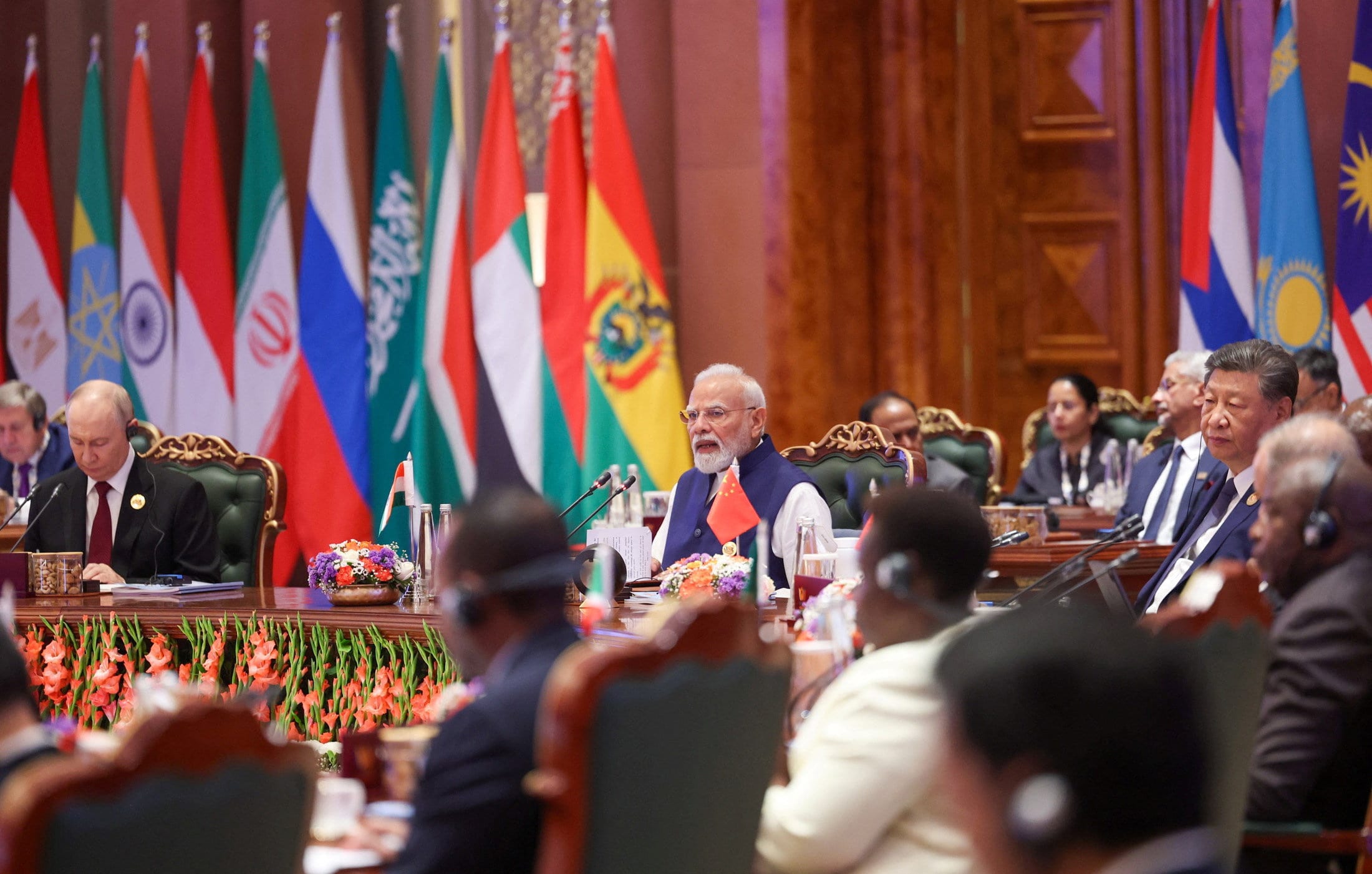
When India, in its role as BRICS (Brazil, Russia, India, and China) chair in 2026, hosted the first BRICS Health Working Group meeting in New Delhi in mid-April, its proposal to center healthy lifestyles and mental health seemed like a soft addition to an eventful, yearlong diplomatic calendar. But the eighteenth BRICS Summit held September 12–13 transformed these health priorities into formally endorsed areas of cooperation.
World leaders approved a BRICS Mission for Healthy Lifestyle and a roadmap for 2026–29, while supporting a network of mental-health training hubs and centers of excellence coordinated by India's top mental-health institution, the National Institute of Mental Health and Neuro Sciences (NIMHANS). These decisions undoubtedly give India's preventive health agenda greater diplomatic and institutional weight. However, their long-term relevance depends largely on how the BRICS nations turn lofty declarations into concrete improvements in primary health care.
The decisions made at September's summit follow a year of leadership on health at BRICS gatherings, including a focus on noncommunicable diseases (NCDs). While the April Working Group meeting showcased India's intent to expand the health discussion beyond only infectious diseases, pathogens, or vaccines, the July Health Ministers' Meeting reinforced the initiative by providing a detailed framework for firm health commitments. The ministerial declaration recognized NCDs, including obesity, not solely as results of individual choices but as outcomes of complex social, economic, environmental, and commercial factors. These factors create persistent pressures that increasingly shape daily life in many low- and middle-income countries (LMICs). And that is precisely why India's health leadership deserves closer attention—and, maybe, a little scrutiny.
From India to a BRICS-Wide Agenda
India's decision to put healthy lifestyles and mental health on the agenda comes at a moment when the most damaging public health pressures are least visible. Unlike infectious or communicable diseases such as tuberculosis or COVID-19, these conditions develop slowly under the pressures of city life. They are triggered by several industrial and environmental factors, such as processed food, and a sedentary work schedule, aggravated by the post-COVID work-from-home culture.
India's decision to put healthy lifestyles and mental health on the agenda comes at a moment when the most damaging public health pressures are least visible.
BRICS+ countries, where more than half the global population live, are facing many of the same challenges as India. The expanded BRICS+, which includes countries like Egypt, Ethiopia, Nigeria, Indonesia, Iran, and Saudi Arabia, has added more than 1 billion people to the original grouping, increasing its demographic profile exponentially. Most of the member countries, including the populous ones like India, China, and Brazil, are facing pressures marked by an aging civil society, urban life stress, erratic lifestyles coupled with poor diets and nutrition, increasing premature mortality, conditions like obesity, type 2 diabetes, heart disease, mental health distress, and limited access to high-quality and continuous health care.
NCDs are now the main killers globally. WHO estimates that NCDs caused at least 43 million deaths in 2021, equal to about three-quarters of all nonpandemic-related deaths. More important for BRICS, 73% of NCD deaths occur in LMICs, and 82% of premature NCD deaths occur there as well. Chronic disease affects working-age adults, household savings, insurance systems, public hospitals, and national productivity.
India's proposals to tackle NCDs align with the 2030 Agenda for Sustainable Development's unfinished health commitments: Sustainable Development Goal Target 3.4 calls for a one-third reduction in premature mortality from noncommunicable diseases by 2030 while advancing mental and metabolic health. The BRICS Mission for Healthy Lifestyles addresses several of the target's main risk factors: poor diets, physical inactivity, tobacco, and harmful alcohol use. The mental wellness priority also addresses the target's neglected second component. With less than four years to 2030, India sees BRICS as a way to turn UN commitments into cooperation on screening, prevention, mental health, and health indicators. The real test is whether this leads to measurable programs instead of merely reaffirming known goals.
Domestic Playbook
India's BRICS proposal did not emerge in isolation. It draws on domestic programs and existing infrastructure that have sought to shift public health away from hospital-led treatment and toward prevention, screening, metabolic reset, nutrition, and fitness.
Over the past decade, India has launched several domestic health programs focusing on wellness and preventive medicine, such as Tele-MANAS, POSHAN 2.0, and the Fit India Movement, which broadly target physical activity, nutrition, mental health, and primary health care. These programs also aim to revitalize India's traditional-medicine and health-care systems. Even though these initiatives vary in scale and size, they all reflect a strong people-centric policy emphasis on prevention across settings, from homes and workplaces to primary health clinics, to promote holistic health.
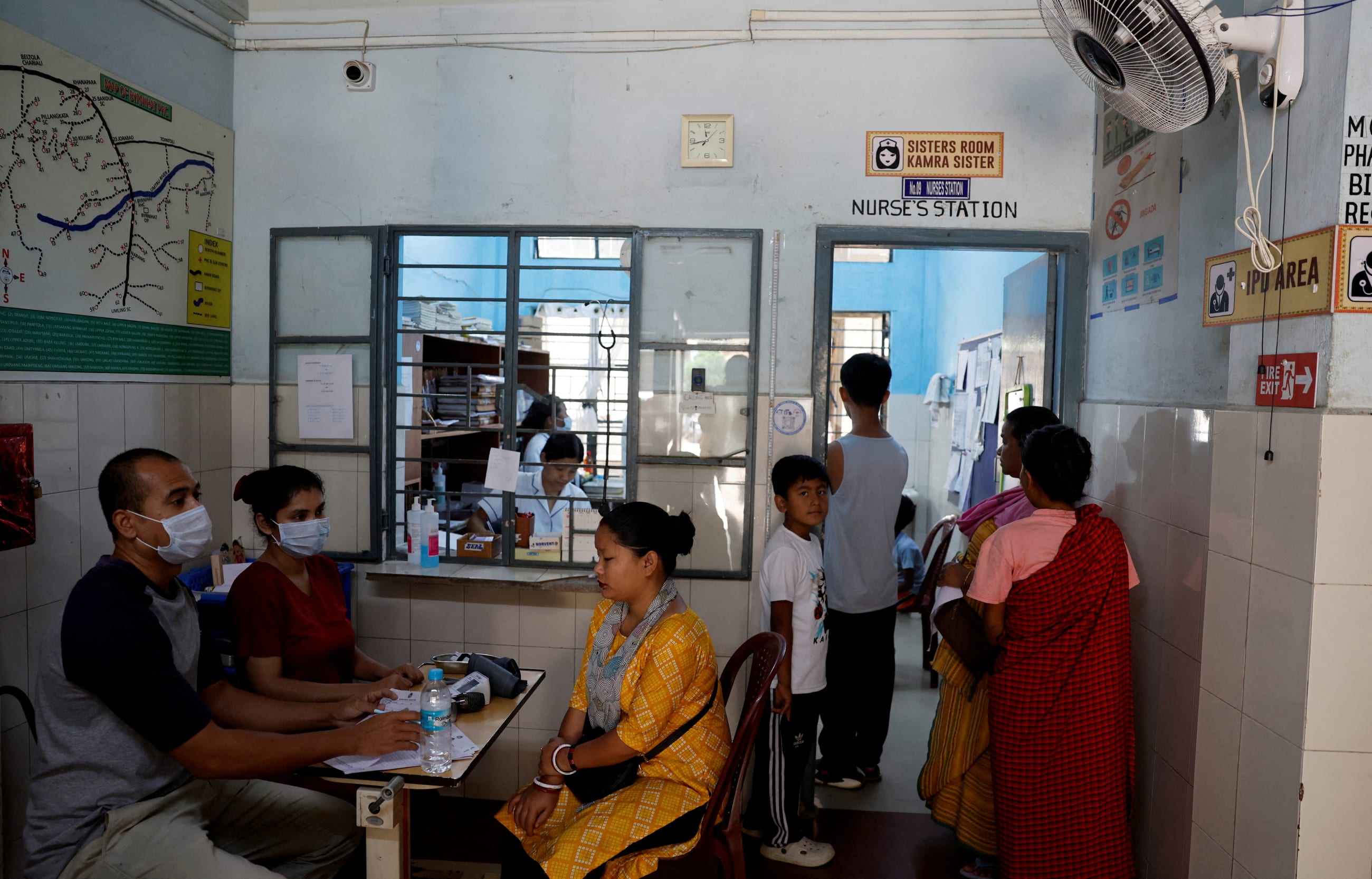
The clearest pillar of this approach is the expansion of Ayushman Arogya Mandirs, India's primary-care and wellness centers. As of December 31, 2025, the government reported that 182,944 of these facilities had been operationalized by transforming existing health centers in rural and urban areas.
Launched in October 2022, Tele-MANAS, India's national tele-mental health initiative, has become one of the country's prime efforts to expand access to counseling and mental health care and the second pillar in its health strategy. Within four years of its launch, 53 Tele-MANAS centers now operate across all states and Union Territories in India.
India's third pillar remains nutrition, where the country's approach is both large-scale and unfinished. Mission POSHAN 2.0 under the Ministry of Women and Child Development links nutrition, early childhood care, and rural child- and maternal-care centers known as Anganwadi. This network is large and has evolved to deliver early childhood care and nutritional services effectively. India's BRICS health commitment can plausibly connect nutrition to long-term NCD prevention.
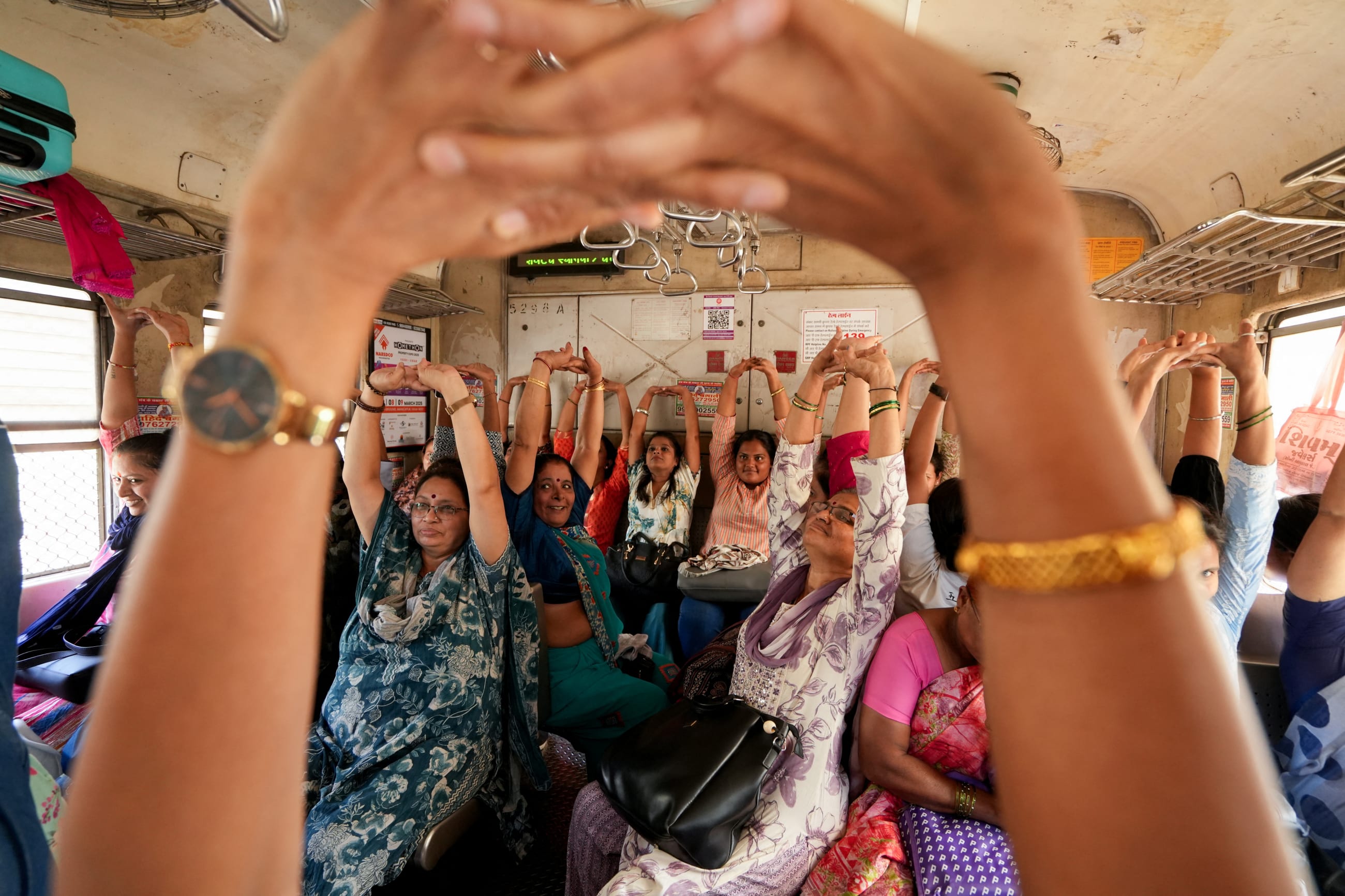
India's fourth pillar is behavioral health promotion, represented by the Fit India Movement and India's global promotion of yoga. Fit India was launched on August 29, 2019, with the stated aim of making fitness part of daily life and encouraging behavioral change toward a more physically active lifestyle. The Ayurveda, Yoga and Naturopathy, Unani, Siddha, and Homeopathy (AYUSH) program adds a second layer, giving India a culturally recognizable wellness language. However, AYUSH still requires evidence standards to be credible in a multilateral health setting.
India's 2026 BRICS health agenda builds on these domestic priorities, retaining evidence-based traditional medicine as a continuing focus while including healthy lifestyles and mental wellness as new priorities. This expansion redefines India's role within the expanded bloc, raising a question about its capacity to drive global health governance.
Can India Lead the Charge on Health?
India's push to make healthy lifestyles and mental wellness the cornerstone of BRICS priorities serves three linked goals. It broadens India's health diplomacy beyond affordable medicines by positioning the country as a source of public health models; creates a practical, nonpolarizing area of cooperation among BRICS members facing common chronic disease and mental health burdens; and integrates domestic initiatives such as Tele-MANAS and Ayushman Arogya Mandirs into a wider Global South framework. At the same time, such cooperation could help India improve its own health system using shared data, experience, and policy learning.
India's BRICS health commitment will inevitably be compared with its domestic record. A recent revelation about India's public-health sector is concerning and points to a severe crisis in access to medical care. In 2024, nearly half of all recorded deaths took place without a trained medical professional present, as shown in the latest Sample Registration System (SRS) Statistical Report. The share of such deaths was 45.5%, more than twice the 18% seen in 2020, and it has stayed around this level since 2021. Broadly, it implies that nearly half of India's population is dying without basic medical care, highlighting deep gaps in rural health-care infrastructure, unaffordable treatment costs, or an absence of timely emergency services.
The scale of India's health programs is impressive, but scale does not always translate into reliable care, as recent SRS data shows. India's primary-care facilities have chronic staffing shortages and limited diagnostic capacity. Although India has made progress on infectious disease, the country still struggles to reduce its burden of tuberculosis (TB). The National Tuberculosis Elimination Program aimed to eliminate TB by 2025, five years before the 2030 global target. Recent reports indicate that TB elimination remains an ambitious goal. This weakens claims that India can easily lead complex health transitions abroad.
India advanced the BRICS agenda in 2012, 2016, and 2021 by promoting economic growth, creating the Economic Partnership Strategy, and establishing the Vaccine R&D Center. The September BRICS Summit launched India's health agenda in a favorable way, with initiatives such as the BRICS Mission for Healthy Lifestyle, its 2026–29 roadmap, and a mental health network, moving beyond broad statements. The Delhi Declaration links preventive health with primary care, digital systems, epidemic preparedness, regulatory cooperation, and traditional medicine. Yet the declaration does not specify common targets, dedicated financing, or a firm reporting schedule. The next test, therefore, is whether these plans produce measurable cooperation and retain momentum under successive BRICS summits, including China's critical role as 2027 chair.