In the U.S. midterm elections on November 3, 2026, the cost of living was a leading issue among voters, and early exit polls showed roughly 1 in 5 reported having experienced severe financial hardship due to inflation. Alongside rising prices for food and fuel, Americans are feeling the pressure of increasing health-care costs. In a Gallup poll of registered voters released in late October, half the people reported health care as an extremely important concern factoring into their vote. Voters' preoccupation with health care rose by 40% since 2018, which was the last time Gallup had measured voters' views on that issue. Think Global Health interviewed Joseph Dieleman, a health economist who studies health spending at the Institute for Health Metrics and Evaluation, to understand the factors driving up health-care prices across the country.
□ □ □ □ □ □ □ □ □ □ □ □ □ □ □ □□ □ □ □ □ □ □ □ □ □ □ □ □ □ □
Think Global Health: Why are Americans facing rising health-care costs?
Joseph Dieleman: When people are stuck with bills for health care, it's one of two things. It's either their monthly premiums, which are going up for many people, or it's having a health event. That's when they have higher out-of-pocket spending, [whether it be] for a deductible, a copay, surgery, or a prescription.
The third bucket—which is less relevant—is the people without insurance. By and large, the people without insurance are either not accessing care or not paying for care. They're going into debt. It's personal bankruptcy. It's an important [issue], but different from people paying for high deductibles or premiums.
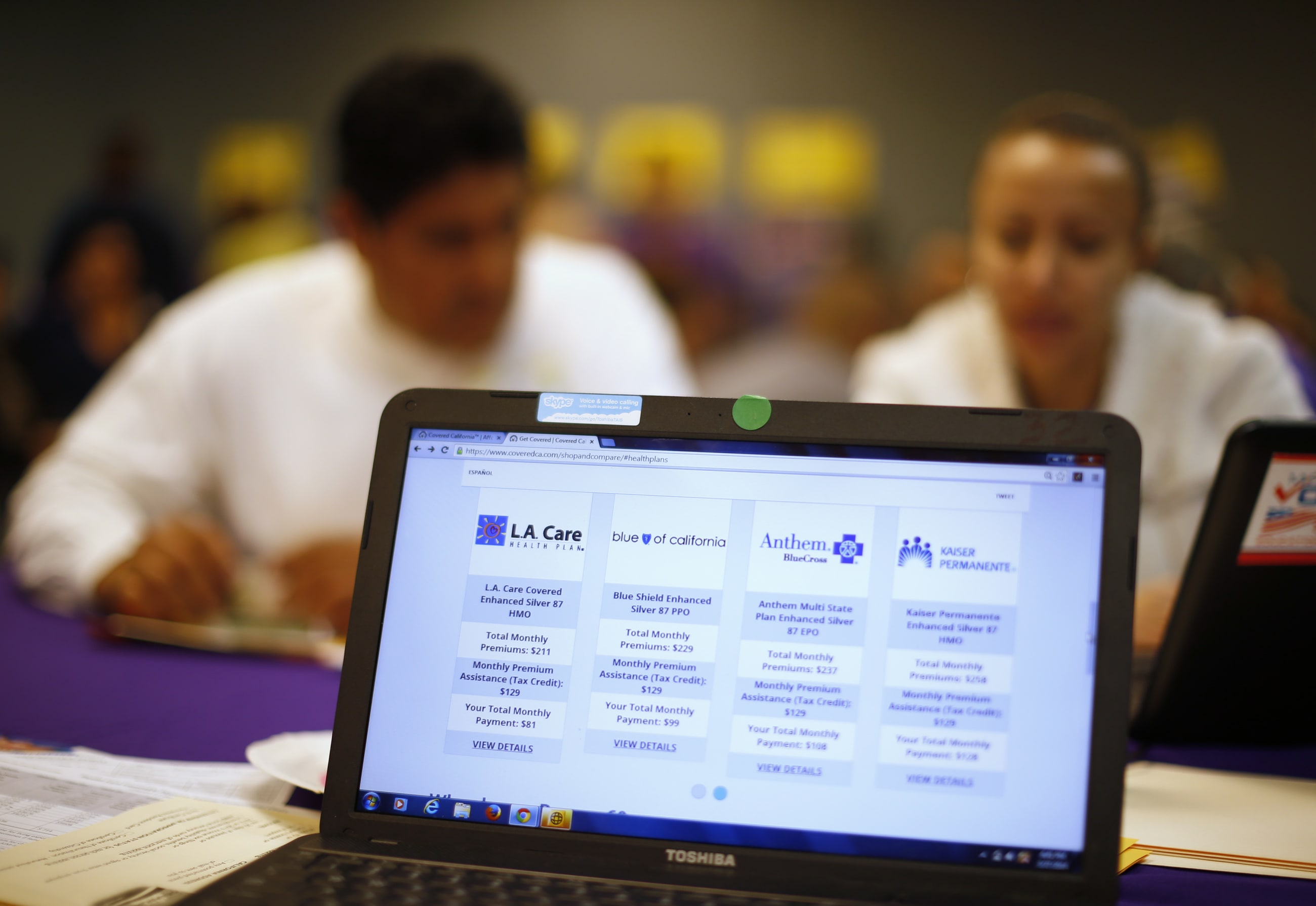
The expanded premium tax credits that subsidize the cost of marketplace plans expired at the end of 2025. This is a big deal for people who buy their own insurance rather than getting it from the government or an employer. In 2026, subsidized enrollees saw their premium payments more than double to keep the same plan.
The consequences for the individual are going to be less access to care, more medical debt, and more catastrophic health spending
The other reason for higher premiums is changes in the risk pool. That is a wonky way of saying insurance has more sick people [than healthy people], and healthy people are avoiding getting insurance. If you only have sick people, then everyone has to pay more because everyone is using it more. Health insurance at the most basic level needs to be people who are wealthy or healthy subsidizing the health care of the people who aren't.
As soon as people remove themselves from the insurance system because they are healthy, that cross-subsidy doesn't happen. As a consequence, insurance companies have to charge more.
Deductibles and copays are the same issue. The main reason deductibles are higher is because people are buying [cheaper] high-deductible insurance packages because the premiums [on plans with greater health-care coverage] are so expensive. They can only afford the lowest-tier private insurance. Or, again, because of the changing risk pool, the insurance company has to charge a higher price.
In simpler language, there are three reasons: the changes in the risk pool, which lead to higher premiums; the changes in the risk pool that lead to higher deductibles; and people buying worse insurance to begin with because of higher premiums. They all compound together and are mutually reinforcing.
TGH: And what about people without insurance?
Joseph Dieleman: If you look at the uninsured in the United States, they contribute very little to health-care spending in the United States. My own estimates are that this is less than 1% of total personal spending.
That's because one of two situations is happening: they're not seeking care, because they don't have insurance and are afraid they can't pay for it; or something traumatic happens and they have to get care, so they find themselves in the emergency department or in a trauma center. And the bill is going to be so large that they're not going to be able to pay for it in the first place.
I think the conversation about the uninsured is a very different conversation from the one about premiums and high deductibles. The fact that there are people who are uninsured in this country is a policy choice. All of these recent policy changes have led to significantly fewer people with insurance. The consequences for the individual are going to be less access to care, more medical debt, and more catastrophic health spending (defined as when you spend 10% or more of your income on health). It puts many hospitals in a bad place too, because as you have more uninsured individuals, you are essentially giving the hospital less revenue to care for sick people, and that can lead to solvency issues for most major hospitals.
TGH: Many people are looking for someone or something to blame for rising costs, whether it be health insurers, pharmacy benefit managers (PBMs), or drug companies. What is important for the average person to understand about why their health care is getting so expensive?
Joseph Dieleman: You mentioned health insurers, PBMs, and drug companies. I think all of those are good examples of drivers of excess spending and cost. These actors are [increasing prices] in an environment where policies have been set up for them to do exactly that. I'm personally less critical of those in companies and institutions, and more critical of the policy choices that create an environment where PBMs can contribute to higher spending for the individual and health insurers driving up costs.
For example, going back to the changing risk pool: allowing healthy people to avoid getting insurance is a policy choice, and it leads health insurers to charge more. I'm not saying insurers are blameless, but to a large degree they're responding to the environment they've been put in, which now has a worse risk pool. If I were going to point a finger, I'd point it at the policymakers, who should be doing more to make sure everyone has the coverage they need.
TGH: Which states are most advanced in their efforts to rein in health-care costs based on the data that you have to date?
Joseph Dieleman: Most states are trying to reduce spending. Among the states that are being innovative and trying to rein in costs, Rhode Island has stood out as an example. Maryland is another example. Oregon and California on the West Coast are also good examples. Washington state is [also] trying to do things [to contain costs].
Right now, there is a menu of policies where the cause and effect of exactly how they work is still being understood. But this menu of policies is the playbook that states are working [with] to try to maintain coverage and drive down spending. These policies are pretty complicated, but they are super important. One example from the state of Washington, where I live, is setting cost-growth benchmarks. The idea behind these benchmarks is that if you set cost-growth targets, and don't allow insurers or providers to grow faster than those targets, you can keep the whole system in check. And that's, of course, most robust in places where there's teeth, where the government or insurance regulator can impose fines on companies that are spending more [than the targets].
Another policy is reference-based pricing, where what providers, particularly hospitals, are paid for procedures is a function of what Medicare is willing to pay. In addition, a major policy is global budgets, where you set a budget for a hospital to operate on based on the number of people that it's serving, and the budgets are risk adjusted. Risk adjustment means [modifying] payments to reflect the characteristics of the population they are serving, such that hospitals treating older and/or sicker patients get more money because we know those patients cost more to care for. Then, [the government] doesn't let the hospital exceed that budget.
TGH: If state-based efforts to implement universal health-care pass, such as in Oregon, do you think these policies could address the rising costs of health care?
Joseph Dieleman: I think that sort of major systemic change is what moves people away from catastrophic [health-care] bills. [Universal health care] puts people in the situation where they get a bill, but they have health insurance to pay for it. I don't think [universal health care] necessarily makes health care cheap, but I do think it takes the pressure off the household in a way that a lot of other policies just move people from one bad place to another bad place.
EDITOR'S NOTE: Responses were lightly edited based on an interview and clarification via email. The piece was also updated on November 5, 2026 to reflect factual changes identified by the interview subject.