Japan's aging population is transforming its workforce and immigration policies. From 2020 to 2025, the number of births in the country declined from 840,832 [PDF] to 671,236 [PDF]. At the same time, companies have struggled to attract local workers to essential sectors such as manufacturing, caregiving, and construction—jobs that are often characterized by lower wages and demanding working conditions. The result is a rapidly aging population that threatens gross domestic product (GDP) growth—the primary measure of a country's economic health.
To sustain economic growth and maintain critical services, Japan introduced the Technical Intern Training Program (TITP) in the 1990s, opening its labor market to foreign workers. During former Prime Minister Abe Shinzo's tenure from 2012 to 2020, the TITP program underwent significant reforms and structural changes that led to the launch of the Specified Skilled Worker (SSW) program [PDF] in 2019. The SSW program facilitated pathways for foreign workers to stay longer via SSW (i) status, which provides up to five years cumulative stay to engage in jobs that require considerable knowledge or experience, or SSW (ii) status, which offers no limitations on duration of stay and requires proficient skills in a specified industry field. Now, under Prime Minister Sanae Takaichi's leadership, the Japanese government has introduced the Employment for Skill Development Program (ESDP). Set to begin in April 2027, ESDP will replace the TITP and function as a pathway into the existing SSW system. Estimates suggest that the program could accept up to 1.23 million foreign workers by March 2029.
As more immigrants begin to navigate the country's health-care system, the government should adopt policies that ensure non-Japanese residents have unrestricted access to care by addressing the language barriers and cultural misunderstandings that prevent immigrants from receiving quality care, as well as the structural and systemic challenges that exist.
Navigating Japan's Health-Care System
As Japan transitions away from being a homogeneous society, the concept of tabunka-kyōsei, meaning multicultural coexistence, has emerged, but its health system still proves difficult for foreign-born residents to navigate.
As more immigrants begin to navigate the country's health-care system, the government should adopt policies that ensure non-Japanese residents have unrestricted access to care
Japan requires all citizens and foreigners staying in the country for more than three months to enroll in its statutory health insurance system. Two insurance systems typically cover employees: employment-based insurance for salaried workers, and community-based insurance for those without stable employment. Compared to peer countries, Japan has relatively few undocumented migrants—around 70,000—who are excluded from the insurance schemes.
Despite providing comprehensive insurance coverage, Japan's health-care system operates within a linguistically, culturally, and administratively homogeneous framework, creating structural barriers to both foreign health-care providers and seekers. Compared to countries with long histories of immigration, such as the United States, Australia, and the United Kingdom, everyday interactions with foreign cultures in Japan remain relatively limited. As a result, cultural misunderstandings are bound to rise, particularly in sensitive settings such as health care.
The number of non-Japanese professionals holding medical, nursing, or allied health licenses remains extremely low. For the 2023 medical licensing exam, 102 international medical graduates passed, accounting for about 1% of the total number of doctors licensed that year. This is a significant contrast to countries such as the United States, Australia, and the United Kingdom, where the proportion is about 15%. Language barriers in obtaining licenses and securing employment, the cultural preference toward domestic health-care professionals, and comparatively lower salaries all deter foreign health-care professionals from working in Japan.
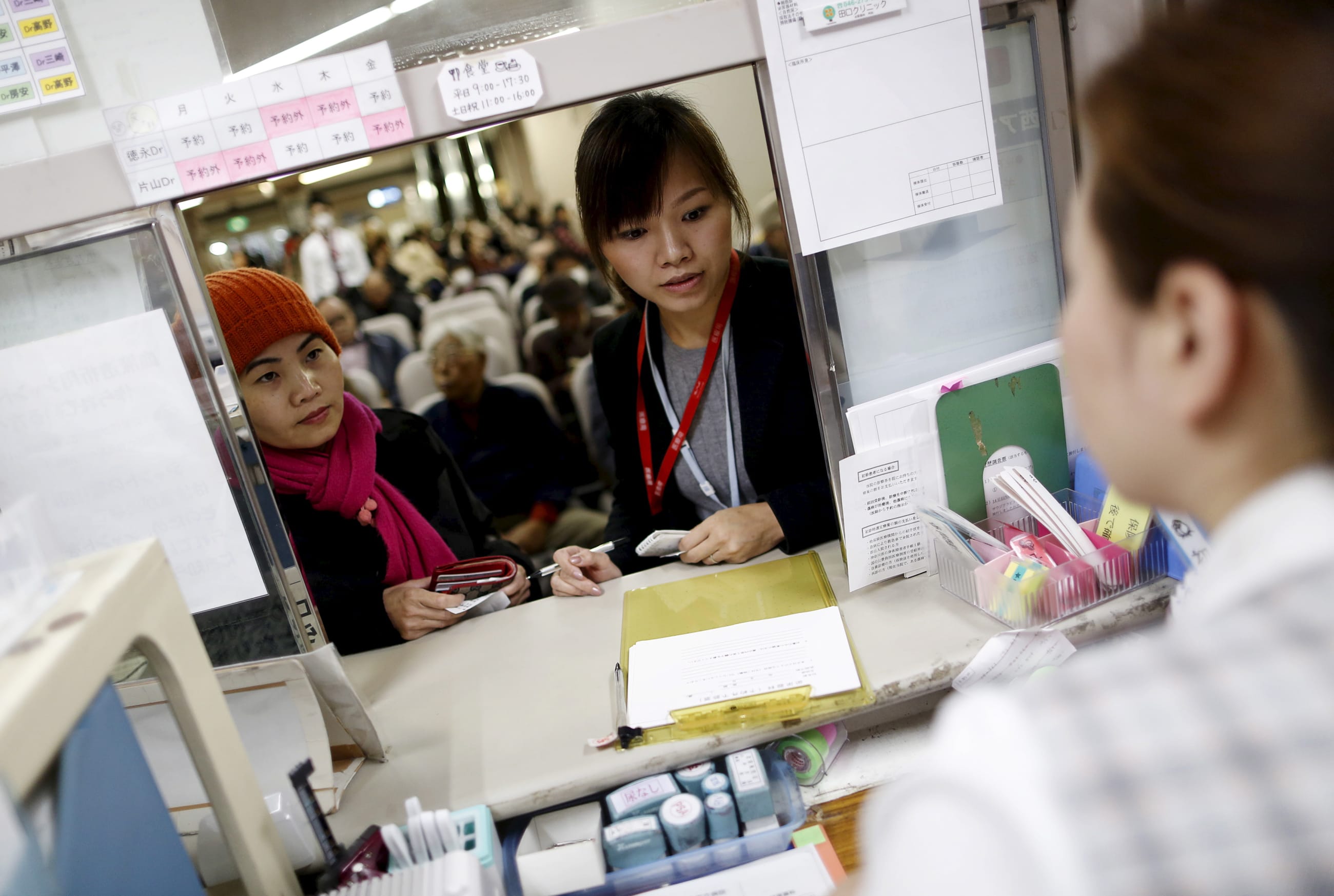
Language similarly remains one of the largest obstacles to accessing health-care services for foreign residents. Medical interpretation services to alleviate communication gaps exist, but they are limited to major metropolitan areas. Furthermore, the small number of trained interpreters and the high cost of interpretation services often make them inaccessible in practice. Language barriers can disrupt critical aspects of health care, such as informed consent procedures, and maternal, child, reproductive, and mental health services, where detailed, nuanced communication between patients and health-care staff is essential. Many administrative documents and health communication materials remain available only in Japanese, and offer limited multilingual alternatives, making effective health communication quite challenging.
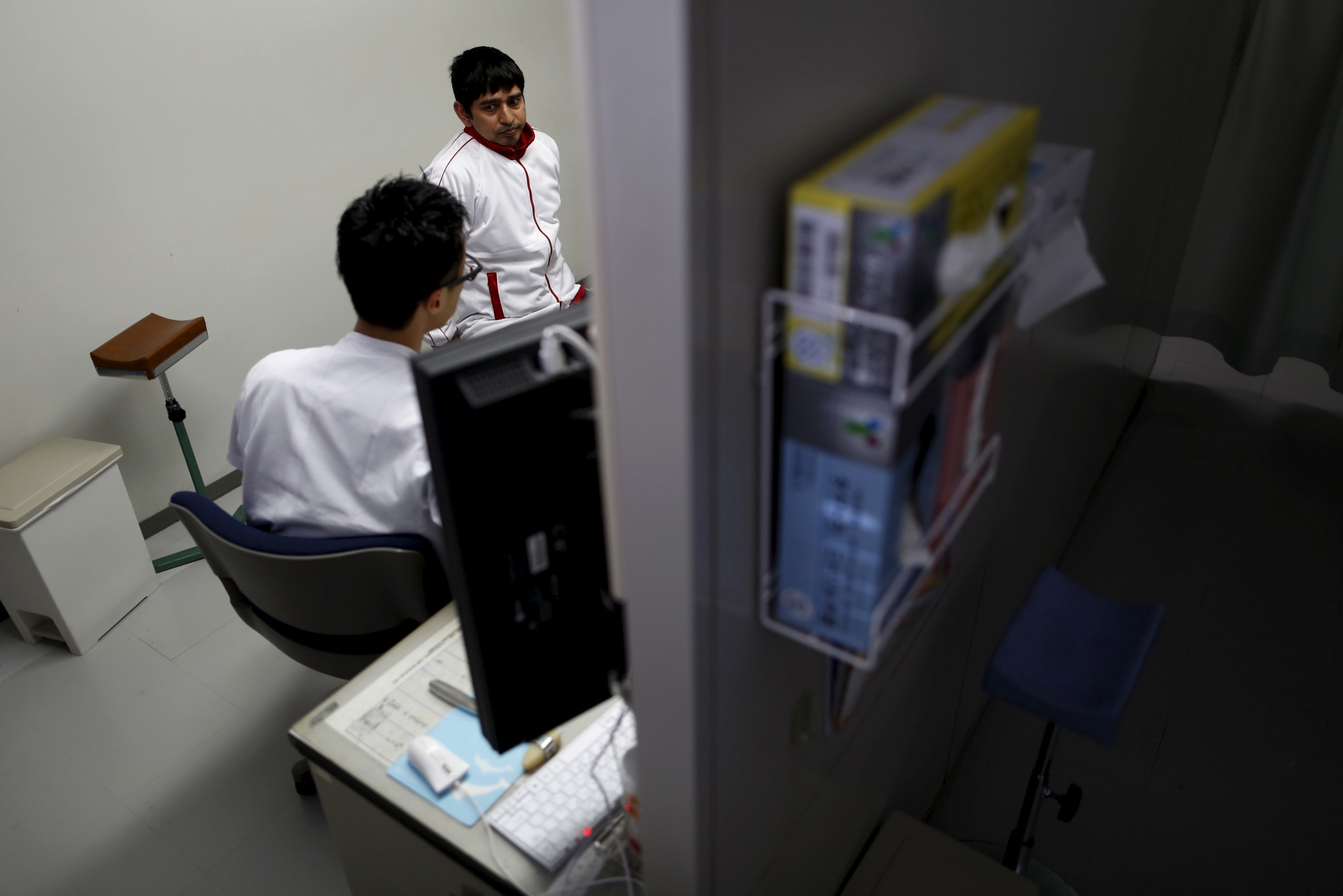
In 2019, the Mainichi newspaper reported that a 35-year-old woman from Myanmar who was living in Saitama Prefecture north of Tokyo did not understand her illness or her treatment plan due to language barriers, which delayed her recovery.
In a qualitative study from the Okinawa Institute of Science and Technology Graduate University that sought to understand the difficulties faced by highly skilled foreign professionals when dealing with the Japanese health-care system, participants reported that they felt speaking Japanese was a prerequisite for receiving appropriate health care and that they struggled to select and build relationships with doctors.
That sentiment is supported by data from a 2021 study [PDF] that surveyed 209 foreign residents and found that those with lower Japanese proficiency felt significantly more uneasy or inconvenienced at medical facilities. Other evidence shows that patients, particularly from racial and ethnic minority groups, often report higher satisfaction, better communication, and more trust with health professionals from the same background.
The Evidence Gap
Japan's experience reveals what can happen when immigration outpaces health-system adaptation.
Japan is facing a pivotal moment as its migrant populations grow and settle long term, magnifying demographic shifts. The second- and third-generation migrant populations will broaden the diversity over time, and the health needs of migrant populations, such as chronic disease management, reproductive health, aging, and mental well-being, will continue to evolve. Failure to address these health gaps now can lead to long-term health inequalities, undermining universal health coverage goals and straining the health-care system.
Whereas migrant health has been studied extensively in Australia, Europe, and North America, data from Asia remains limited. Emerging evidence suggests concerning health trends among migrant populations in Asia, such as clustering of chronic disease risk factors, delayed health-care seeking, lower use of preventive services, and unmet mental health needs. However, national health data of many Asian countries does not systematically disaggregate by migration-related factors. Due to the lack of such statistical evidence, migrant health remains a marginal issue, and policy responses are slow, disintegrated, or absent altogether.
Therefore, Japan should view migrant health as an emerging public health challenge with implications for health equity, social cohesion, and long-term population well-being and prepare its health systems for that new reality.