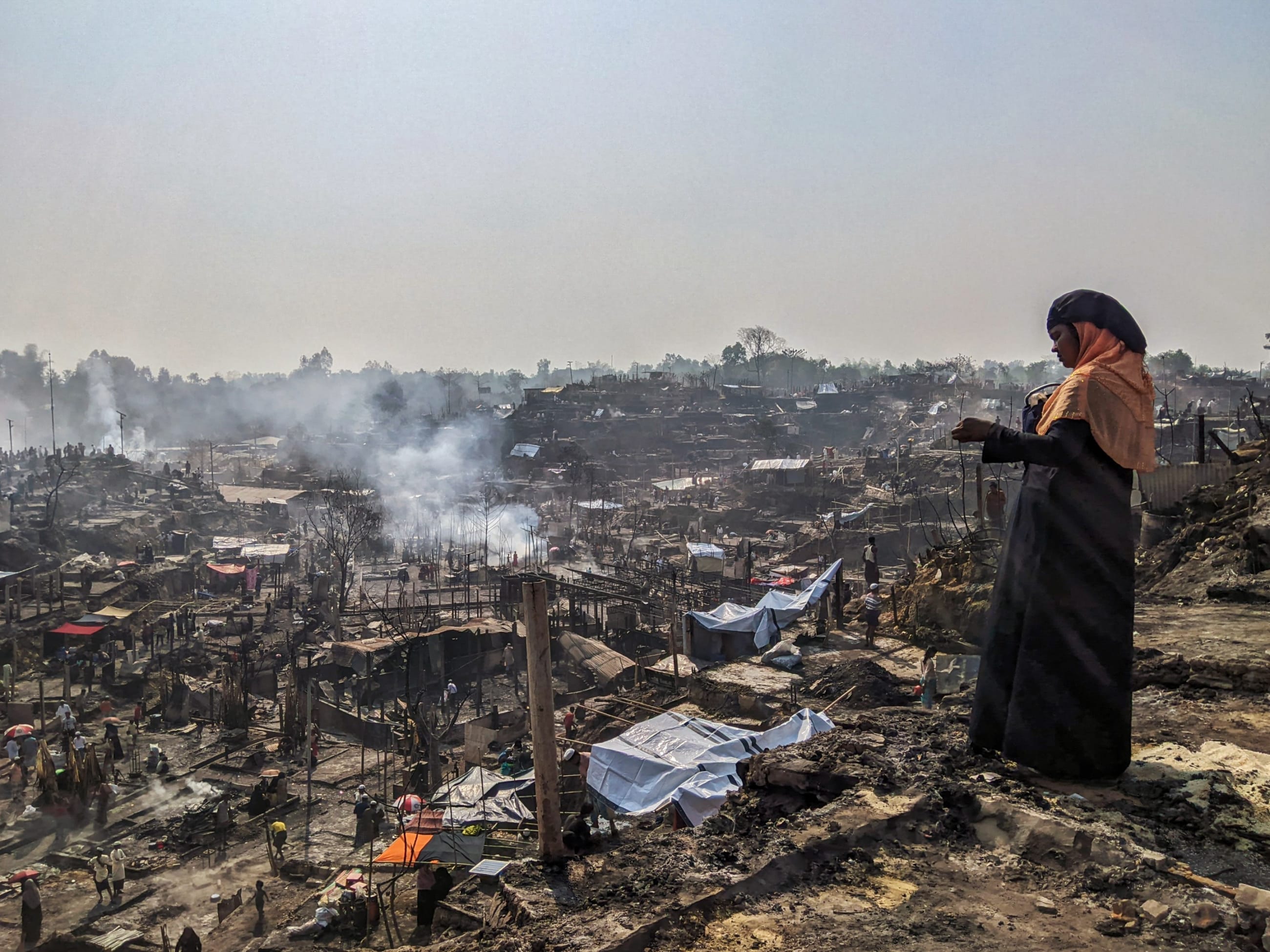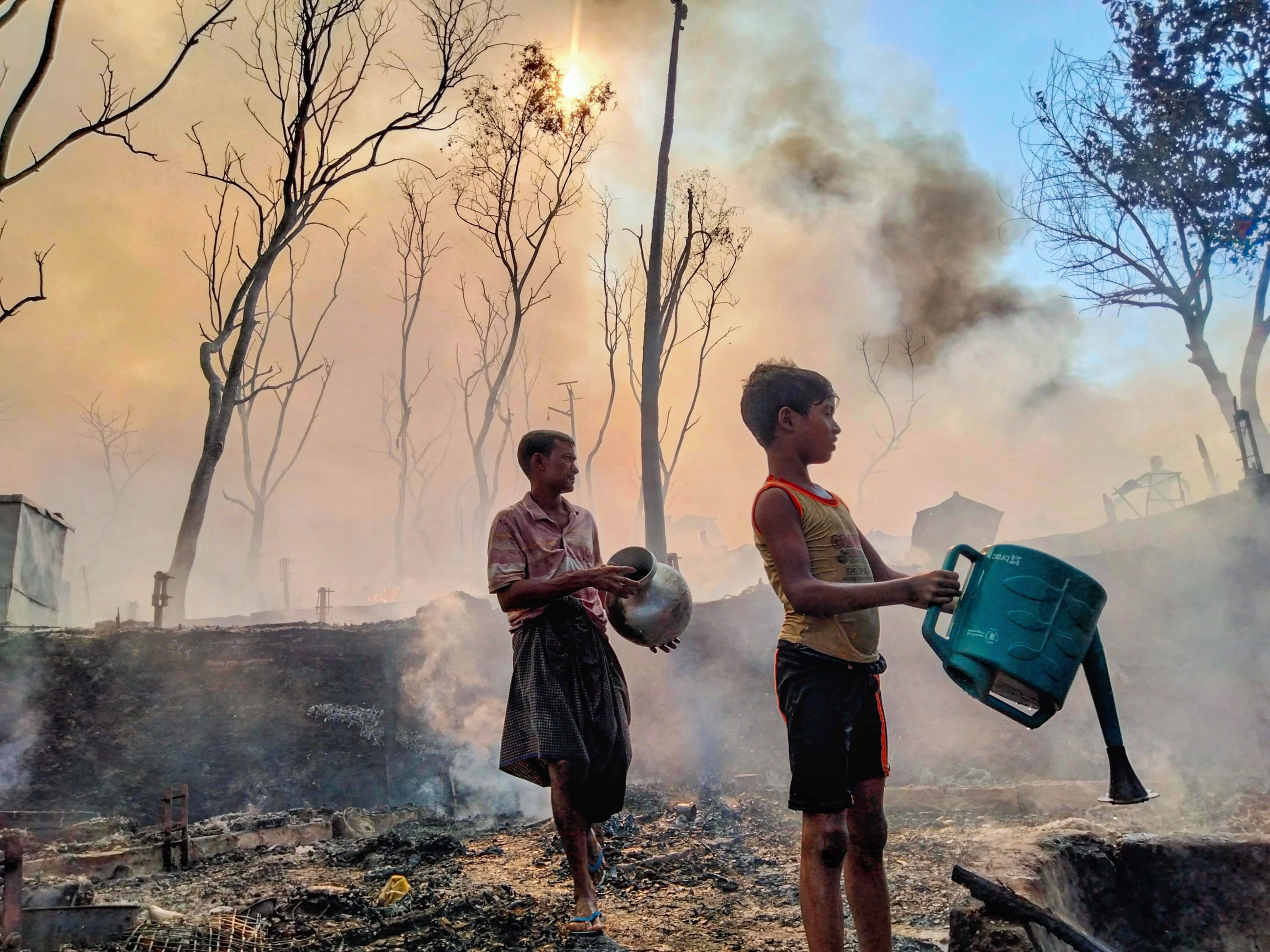
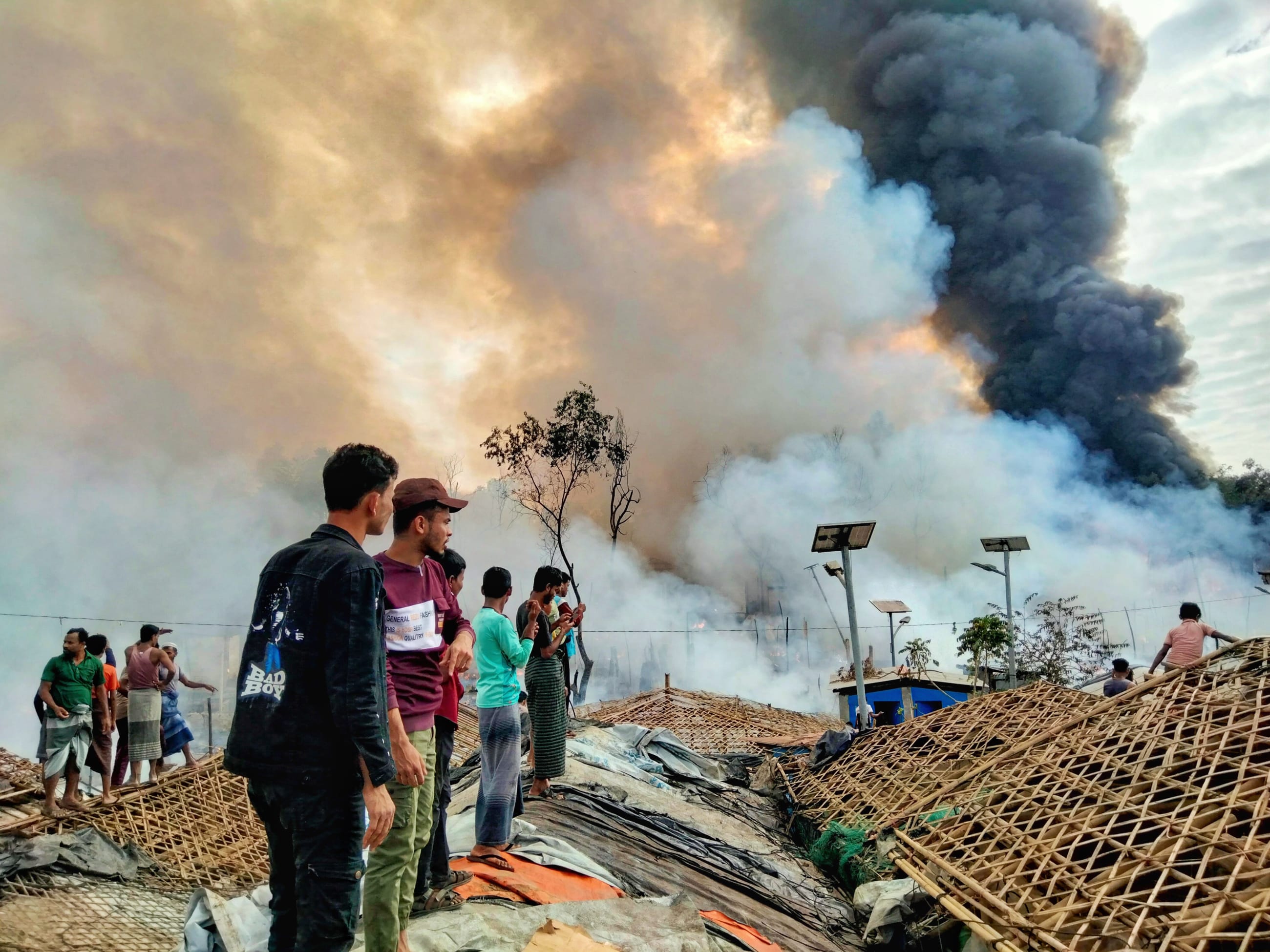
As a fire tore through the Cox's Bazar Rohingya refugee encampment in February, destroying shelters and displacing thousands already living in one of the most fragile environments on earth, another issue lingered for the Rohingya, a minority Muslim group from Myanmar's Rakhine State. The event was not an anomaly but part of a familiar pattern: disaster layered upon disaster in a place where exile has morphed from being an emergency into permanence.
Located in southeast Bangladesh, Cox's Bazar houses the world's largest refugee settlement. More than 1.18 million reportedly live across the dense network of camps known as the Kutupalong-Balukhali expansion site. By comparison, the next largest refugee site, Kenya's Dadaab complex, hosts nearly 705,000 people.
Since 2017, tens of thousands of children have been born in the camp
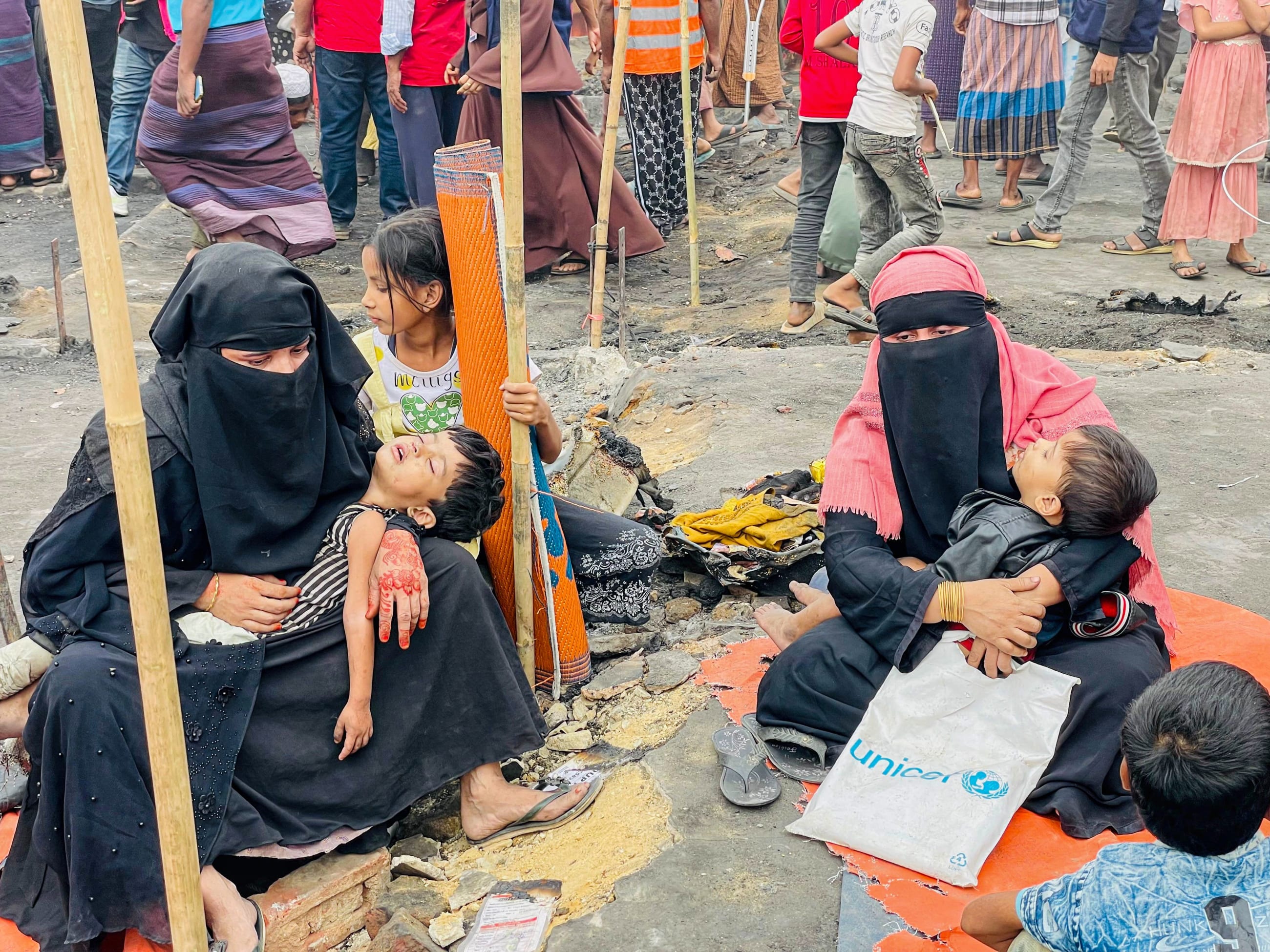
In Kutupalong-Balukhali, approximately 48,000 people are pressed into each square kilometer (about a third of a square mile), a population density that exceeds the world's most crowded cities. Among the inhabitants, 78% are women and children, and 12% have specific needs, including single mothers or persons with disabilities.
Since 2017, tens of thousands of children have been born in the camp, spending their early years in inherited displacement. Mohammed Imran, the photographer for this article, lives in the Kutupalong camp with his family. Their survival depends entirely on humanitarian aid. Food, health care, sanitation, and protection are negotiated lifelines, increasingly strained by mass global-funding shortfalls.
A Recipe for Disaster
Extreme population density, combined with limited access to sanitation and water, has made Cox's Bazar one of the highest-risk environments in the world for disease outbreaks. According to the United Nations, the entire camp population remains at risk of contagious-disease transmission. Illnesses such as measles, cholera, and diphtheria have had some of the world's worst modern escalations. From 2017 to 2019 alone, Kutupalong-Balukhali experienced a diphtheria outbreak, with 7,064 documented cases and 45 reported deaths—the worst reported in a refugee setting to date.
Monsoon season each summer intensifies these vulnerabilities because of the camp's physical constraints. Shelters are tightly packed, constructed largely of bamboo and tarpaulin. They are highly vulnerable to flooding, landslides, and fires, all of which represent recurring hazards that shape daily life in the Kutupalong camps.
As this complex situation persists, violence and persecution in Myanmar have failed to cease, and new Rohingya arrivals continue to seek refuge in Bangladesh by land and sea. But movement is no longer only inbound. In 2025 alone, the United Nations reported that more than 5,300 Rohingya embarked on dangerous maritime journeys from Bangladesh and Myanmar; of these, nearly 600 were reported dead or missing.
Reports from regional monitors describe increasingly sophisticated trafficking networks, with ransom demands exceeding $3,700 per person and a resurgence of coercive recruitment from within the camps themselves. Inaction has deepened the crisis, leading to global entrenchment of Rohingya trafficking networks.
Any Remedy for Prolonged Exile?
For decades, the Muslim minority group was systematically stripped of citizenship and basic rights in Myanmar's western Arakan region, which culminated in genocide in 2017 that forced upwards of 700,000 Rohingya to flee and killed more than 10,000.
The UN High Commissioner for Human Rights referred to the violence as a "textbook example of ethnic cleansing." The Arakan Humanitarian Association recently warned that their people are "on the brink of extinction."
Bangladesh's major political parties frame repatriation as the primary solution to the crisis, yet conditions inside Myanmar remain unsafe, and genocide investigations persist before international courts. At the same time, Bangladesh maintains a policy of nonintegration: movement is restricted, formal education access is limited, and livelihood opportunities remain tightly controlled.
As funding declines and local frustrations grow, refugees are perceived increasingly not as temporary guests but as a prolonged burden—support of refugees costs Bangladesh's economy an estimated 1.21 billion annually. The result is a population warehoused within a barbed wire encampment, unable to return home safely or build a future where they are.
The Rohingya Are Not Outliers
Globally, more than 75% of refugees [PDF] live in protracted displacement that often exceeds a decade in duration. Since 2017, the World Bank has recognized forced displacement as a development challenge, and that same year it launched a dedicated refugee sub-window under its International Development Association to provide multiyear financing for host countries, including Bangladesh. In Cox's Bazar, funding still operates on short-term, appeal-driven cycles.
Durable displacement requires multiyear financing frameworks that integrate humanitarian response with development planning rather than annual emergency appeals that reset each year. Yet most humanitarian financing remains annual, reactive, and crisis-based.
The 2025–26 Rohingya Joint Response Plan (JRP), the coordinated appeal led by the government of Bangladesh, UN agencies, and other humanitarian partners, called for $934.5 million of funding in its first year to reach 1.48 million people, including refugees and host communities. By the end of 2025, only about 46% of that appeal had been funded, leaving an urgent gap of nearly half a billion dollars.
Due to such a drastic shortage, the JRP underwent a triage-based "hyper-prioritization," which allocates the distribution of food, shelter, and health services only to those who are at immediate risk of death, severe malnutrition, or extreme safety risks.
Such a strategy of scarcity management hinders disease prevention. Chronic illnesses go largely untreated, maternal and pediatric health gaps continue to widen, and psychological trauma compounds daily survival. Studies within the last year report that up to 80% of Rohingyas' health needs are unmet; meanwhile, only 69.4% of deliveries are attended by a skilled health professional.
As funding for even the most basic standards of survival falls short, and increasing numbers risk, and lose, their lives in search of recognition, the limits of a system built around minimal thresholds of care are clear.
A strategy centered on bare survival undermines safety, weakens disease prevention, and prolongs instability. Addressing displacement requires more than sustaining life at its margins; it demands investment in systems that support stability, rights, and long-term integration. Without this shift, large-scale displacement crises will continue to erode not only individual futures but our collective humanity.