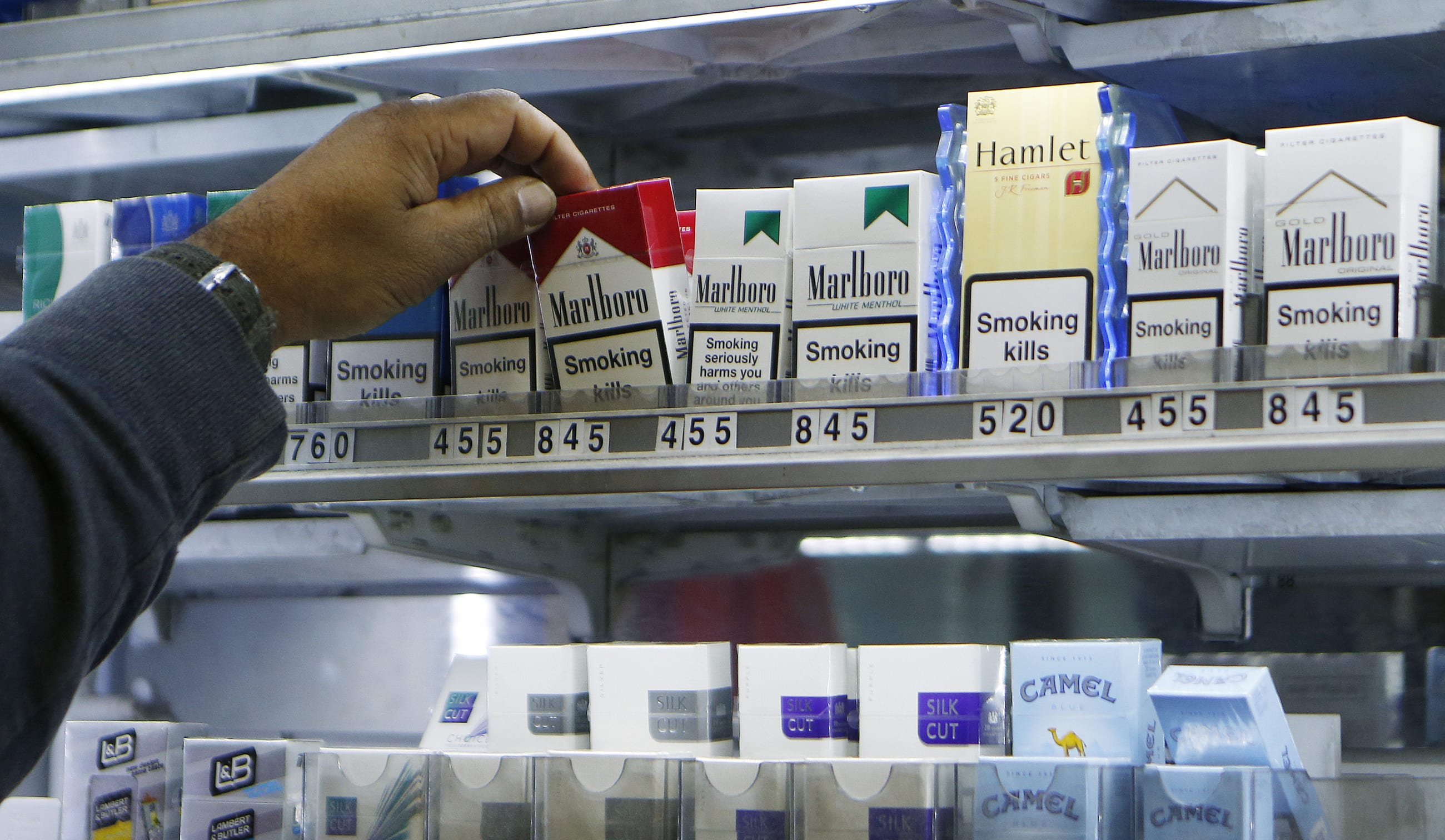
LONDON—In April, the United Kingdom passed one of the most ambitious tobacco control laws in the world, banning the sale of cigarettes and other tobacco products for anyone born in 2009 or later. The ban, effective January 2027, means today's 17-year-olds will never be able to buy tobacco legally. Smoking itself will not be criminalized, and nicotine vapes, popular with young people, are not included in the sales ban.
In England, current smokers make up 10.4% of adults. That rate drops to 3% among 11- to 15-year-olds, although 11% of those kids have tried cigarettes at least once. Overall, there are about 5.3 million smokers in the UK, and most start before they turn 18. A 2024 study estimated that every year, 127,500 Britons ages 18 to 25 pick up smoking. The habit kills about 74,800 people annually in the UK.
The generational ban is part of a broader Tobacco and Vapes Act that has already been hailed as a major public health achievement that could stop young people from smoking. But whether the prohibition ushers in a tobacco-free generation depends on what comes next—and advocates abroad are closely watching how the UK law is implemented, enforced, and socially metabolized.
"It's the beginning of the end of smoking, but there's still a lot more to do," said Caroline Cerny, deputy chief executive of the Action on Smoking and Health (ASH), a tobacco control charity organized by the UK's Royal College of Physicians.
The Enforcement Dilemmas
The Maldives—a tiny island nation in South Asia known for luxury tourism—and 22 towns in Massachusetts also have generational tobacco bans, but they offer a limited blueprint for the UK, which is home to 69.3 million people. Since November 2025 [PDF], the Maldives has prohibited anyone born in 2007 or later from buying, using, or smoking tobacco, whereas the UK law doesn't bar anyone from smoking, only from buying tobacco. The Maldives also has a strict countrywide ban on vaping, whereas the UK ban left out nicotine products and vapes because they can help adult smokers quit cigarettes.
It's the beginning of the end of smoking, but there's still a lot more to do
Caroline Cerny, deputy chief executive of the Action on Smoking and Health
Enforcement remains an open question, too. The UK doesn't issue national identification cards or require people to carry ID such as a passport or driver's license. Opponents of the UK's generational ban say this dearth will make compliance difficult for retailers, who will be tasked with parsing between, for example, a 36-year-old who's allowed to buy cigarettes and a 35-year-old who isn't. Supporters say smokers born around 2009 will just have to get used to carrying ID.
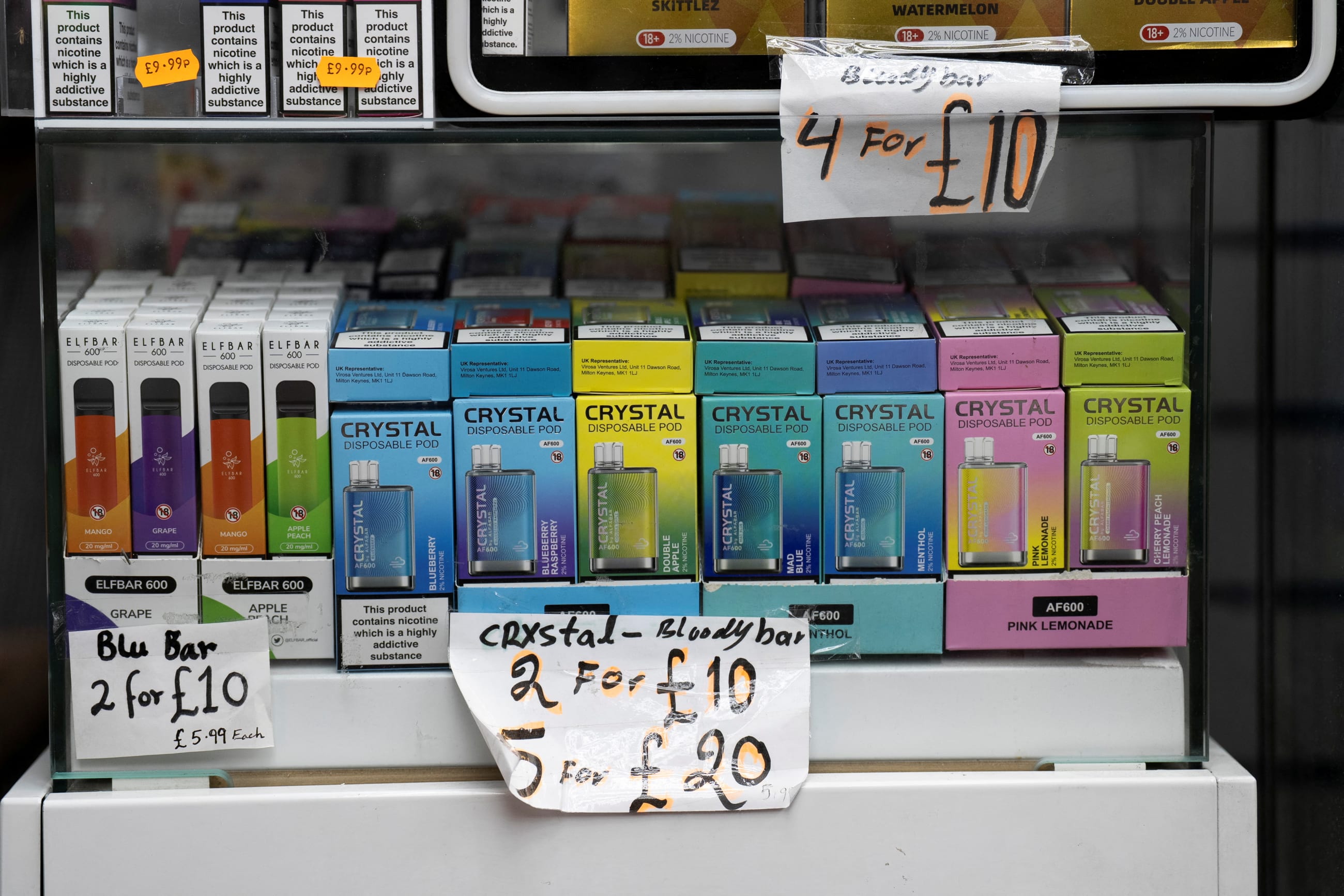
Currently, the minimum age to buy tobacco or nicotine products is 18, and retailers are supposed to verify customers' ages if they appear 25 or younger. But teenage smokers say they still manage to buy cigarettes at supermarkets and small shops.
Trading Standards, a consumer protection unit funded by local governments, is responsible for enforcing age-of-sale restrictions on tobacco, vapes, and alcohol—but its budget was slashed by 39% [PDF] in the 2010s. In some London boroughs with hundreds of thousands of people, there are only one or two qualified Trading Services staff members left, according to research published last year.
"We do need the government to cover the increased costs" of enforcing the generational ban, said Wendy Taylor, a Liberal Democrat on the Newcastle City Council. In local budgets, "there is no spare money lying around to do extra duties."
Funds for Enforcement
As part of the Tobacco and Vapes Act, the UK government allotted £10 million ($13.2 million) to hire about 80 new enforcement officers in England, with the goal of cracking down on underage sales and illegal tobacco and vapes. Under the UK's devolved system, the Scottish and Welsh governments will have to decide whether and how to boost enforcement spending.
Enforcement officers rely on tips from the public, other shopkeepers, schools, and public health authorities to identify retailers who may be selling to underage customers, according to Kate Pike, lead officer for tobacco and vapes at the Chartered Trading Standards Institute.
Trading Standards will then either send a warning or conduct a sting operation at a retailer using a child volunteer. Enforcement officers can have violators prosecuted, but the new law also gives them the power to issue £200 ($264) fines—a "quick and easy way of dealing with an offense," Pike said.
When the generational ban comes into effect, Pike said Trading Standards will be keeping a close eye on retailers that have previous violations and areas with higher teen smoking rates. "If we had more resources, we could have more people, and we could do more enforcement, but we will be targeting our activity at the most egregious [retailers] through intelligence work," she said.
Will the UK's Tobacco Ban Survive Politics?
Policymakers still have to hash out parts of the Tobacco and Vapes Act that aren't directly related to the generational ban, and those decisions will be key to whether the policy is effective. Chief among them: a new program to grant licenses to retailers, who currently only have to inform the government that they sell tobacco or vapes. Shopkeepers caught selling without a license will face fines of up to £2,500 ($3,300) and could have their licenses revoked in "serious cases" that haven't yet been defined.
"We think that will be a really important part of the enforcement picture, helping make sure that responsible retailers are rewarded and the less responsible ones are quickly identified, and Trading Standards have more powers to deal with them," Cerny said.
Nathan Davies, a PhD researcher studying smoke-free policies at the University of Nottingham, said license fees could also help pay for local enforcement officers. He said restricting the number of tobacco licenses granted could make enforcement easier and buying cigarettes less convenient.
Taylor agreed: "I mean, do we really need barbers to be selling vapes, for example?"
The Tobacco and Vapes Act also bars vape and nicotine advertising after June 2027, and it gives the government power to restrict flavors, packaging, and displays. Policymakers can also designate certain outdoor areas—such as schools or playgrounds—as smoke- and vape-free.
All of these measures will be worked out in the upcoming secondary legislation, which advocates expect to be introduced by 2029. They say it's critical to get these details right, partly to make it harder for a future government to shelve or delay the process.
"That's the big problem, that some of this legislation isn't going to come into force for at least two or three years," Taylor said. "That's always the worry, that some of it gets lost because of a general election and doesn't actually go through in the end."
Notably, Nigel Farage, head of the ascendent far-right party Reform UK—and himself a smoker—has said he will scrap the Tobacco and Vapes Act if Reform wins the next general election, which must be held by August 2029.
That's what happened in New Zealand, the first country to pass a generational tobacco ban in 2022 under the leadership of former Prime Minister Jacinda Ardern. Before the law came into force, a new center-right coalition government took office and repealed it to help fund tax cuts.
In the UK, tobacco control advocates say the generational ban appears more politically durable, given that it passed with strong cross-party support that emphasized smoking's public health impact and costs to the National Health Service. In one ASH-funded survey [PDF], 68% of English adults were in favor of the generational ban, including 50% of Reform supporters.
The fact that the generational ban goes into effect in January could help cement the policy, Davies said: "What we know about tobacco policies is that support for them increases after they come into place, because people get used to them."
Among people age 30 or younger in England, the generational ban could bring smoking rates below 5% by 2049, his research shows. It would take another decade in parts of England with higher smoking rates, meaning other initiatives will be needed to help people quit, tobacco control advocates said.
"We need to keep up the momentum, because often people in that group, those 5 million smokers, are from some of our most vulnerable and underserved communities as well," Cerny said.
A Prohibition Model for Europe?
Both supporters and opponents of tobacco control are closely watching how the UK law rolls out. Public health advocates in France, Belgium, Finland, Canada, and Taiwan are already eyeing generational tobacco bans of their own.
"This was unthinkable three or four years ago," said Martin Drago, advocacy manager at Contre-Feu, a French tobacco control group. In France, 39 lawmakers have signed on to a bill that would ban tobacco sales to people born from 2014 on. The measure needs 100 signatures to trigger a debate in the National Assembly, which Drago said could happen by next year.
The UK law "changed everything, because it shows that it's possible in such a huge and economically important country as the UK," Drago said. "Everybody's talking about it as the end-game measure."
Across 37 European countries—not including the UK—about 18% of 15-year-olds smoke cigarettes, a 2024 survey found.
Filippos Filippidis, chair of the European Respiratory Society's tobacco control committee, said he is pushing for an EU-level discussion on generational tobacco bans, but that it would be an uphill battle. "There's some countries where the tobacco industry is much more powerful than in the UK," he said.
Meanwhile, Davies cautioned that not every country will be ready to implement a generational ban. He said countries should first ensure that they have other "building blocks" in place, including smoke-free indoor policies, advertising bans, and strong enforcement mechanisms.
There have been other false starts in recent years. Malaysia and Balanga, a city in the Philippines, have both walked back plans to implement generational tobacco bans amid opposition from the tobacco industry.
"It's probably only a certain number of countries for whom this will be the right policy at the right time," Davies said. "It sounds simple, but it won't be."