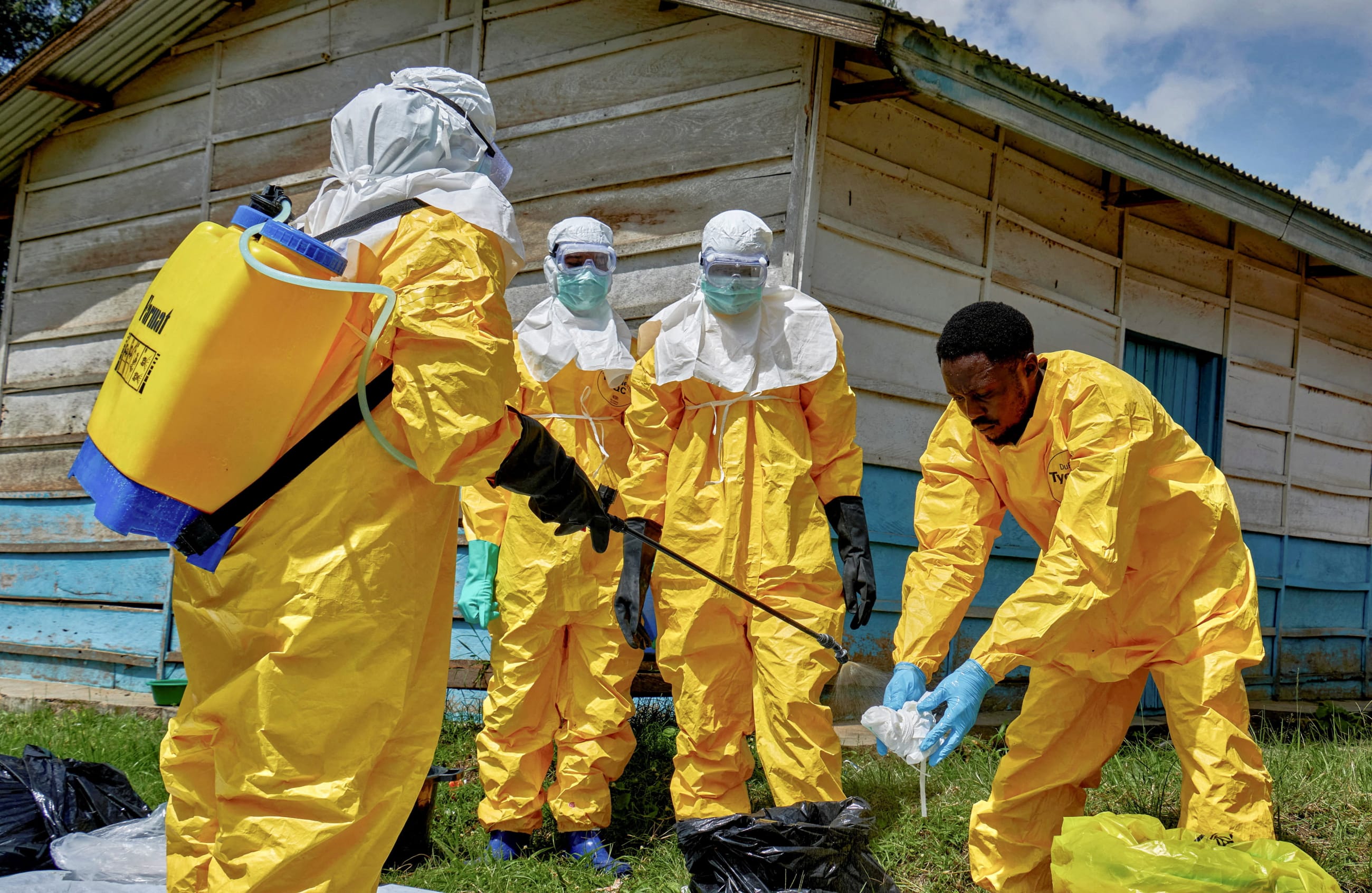
We remember our first steps toward a door that might as well have had "special pathogen" stamped across it, not in ink but in the mental checklist that hijacks your attention. For Syra, that checklist followed her into Biosafety Level 3 (BSL-3) environments, high-containment laboratories, and clinical settings used for high-risk "hot" pathogens such as Ebola, novel influenza virus, and Middle East respiratory syndrome (MERS) coronavirus. These microorganisms demand strict engineering controls, such as negative-pressure airflow, and enhanced personal protective equipment (PPE).
This mental practice took on real-world intensity during a professional experience with the 2014 domestic Ebola response in Texas: Is my PPE correct? Who's watching my doffing? For David, an emergency department frontline clinician, the same questions surface in the chaos of triage bays and hallway beds in New York City, when seconds matter and the margin for error shrinks: What happens if there's vomit? What if I miss a single touchpoint and carry contamination out on my sleeve?
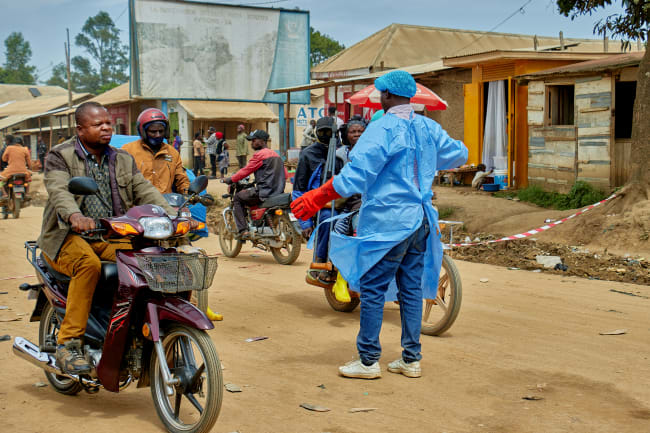
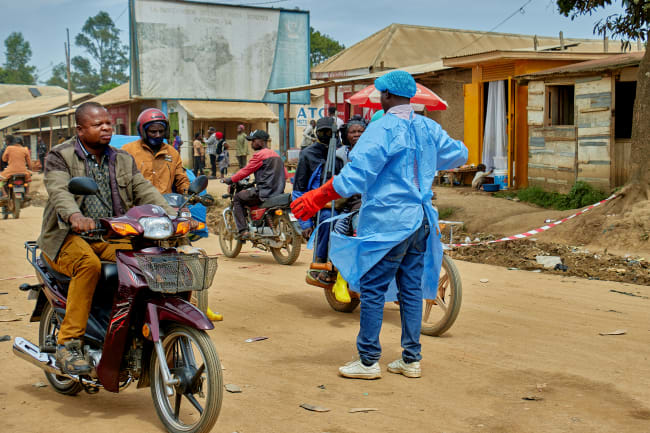
That reality feels especially urgent now, as the current Ebola Bundibugyo outbreak in the Democratic Republic of Congo and Uganda is again testing frontline readiness, diagnostics, infection prevention, and health-system coordination in real time.
While the infectious disease is rare, the fear is not. And in health care, fear plus a low frequency of encounters is a dangerous mix. The skills we need most are the ones we practice least.
That's why special pathogens virtual reality (VR) training is more than a flashy add-on. Done well, it's a practical, scalable way to build muscle memory for frontline staff before the day we need it most.
This winter, at NYC Health + Hospitals (NYC H+H), the largest municipal health-care system in the United States, we've launched a VR experience specifically for high-consequence infectious diseases or special pathogens. It is structured, takes less than 30 minutes to complete, and is built around the moments where real-world errors happen: assessing a patient with a suspected special pathogen in an isolation room, cross-contamination after body-fluid exposure, high-level PPE doffing, and recognizing and responding to PPE breaches.
Special pathogens VR training is a practical, scalable way to build muscle memory for frontline staff before the day we need it most
The VR simulator is not a substitute for hands-on PPE training, but it could provide the reinforcement to make that training stick, system-wide, year after year.
NYC Health + Hospitals has a long, practical history of responding to infectious-disease threats. Bellevue Hospital treated New York City's only confirmed Ebola patient in 2014. The city was an epicenter of the U.S. COVID-19 outbreak during spring 2020, forcing rapid adaptation under real-world surge conditions shaped by guidance and data from the Centers for Disease Control and Prevention (CDC).
Those experiences shaped a core lesson: preparedness can't be a binder on a shelf or a yearly slide deck. It has to live in people's hands, habits, and decision-making. VR is one way to make that living readiness more realistic.
The Readiness Gap: Rare Diseases, Common Vulnerabilities
Special pathogens, such as Ebola, Nipah, and other viral hemorrhagic fevers, are events where speed, precision, and discipline with infection control matter. The Joint Commission describes these threats as novel or reemerging agents that can transmit person to person, have limited countermeasures, could have high mortality, and demand prompt identification and specialized infection-control steps.
The problem is that hospital readiness can erode. Preparedness skills decay quickly when tasks are infrequent. Staff turnover is normal and constant. Live drills can be costly, time-consuming, and logistically difficult across large medical systems.
The compliance landscape is also changing. Accrediting expectations are increasingly explicit about education, training, and competency for staff who manage and implement special pathogen protocols.
That last piece, competency, often becomes the sticking point. Assessing competency is hard to do consistently at scale across hospital units. It's one thing to run an annual in-service training. It's another to ensure that thousands of staff across multiple hospitals can reliably perform under pressure if a person walks into an emergency room showing signs of Ebola.
VR as a Force Multiplier for Biopreparedness In-Person Training
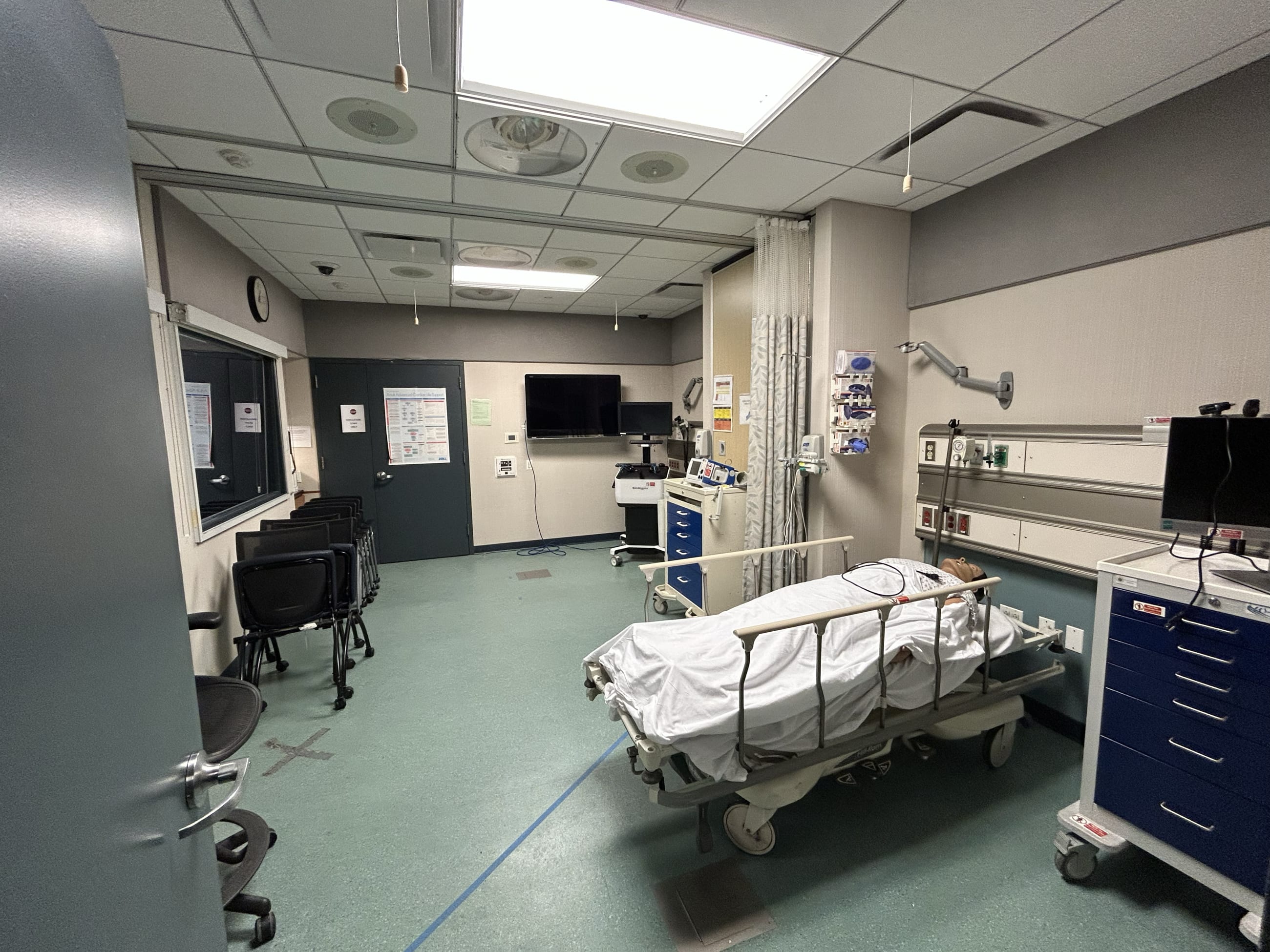
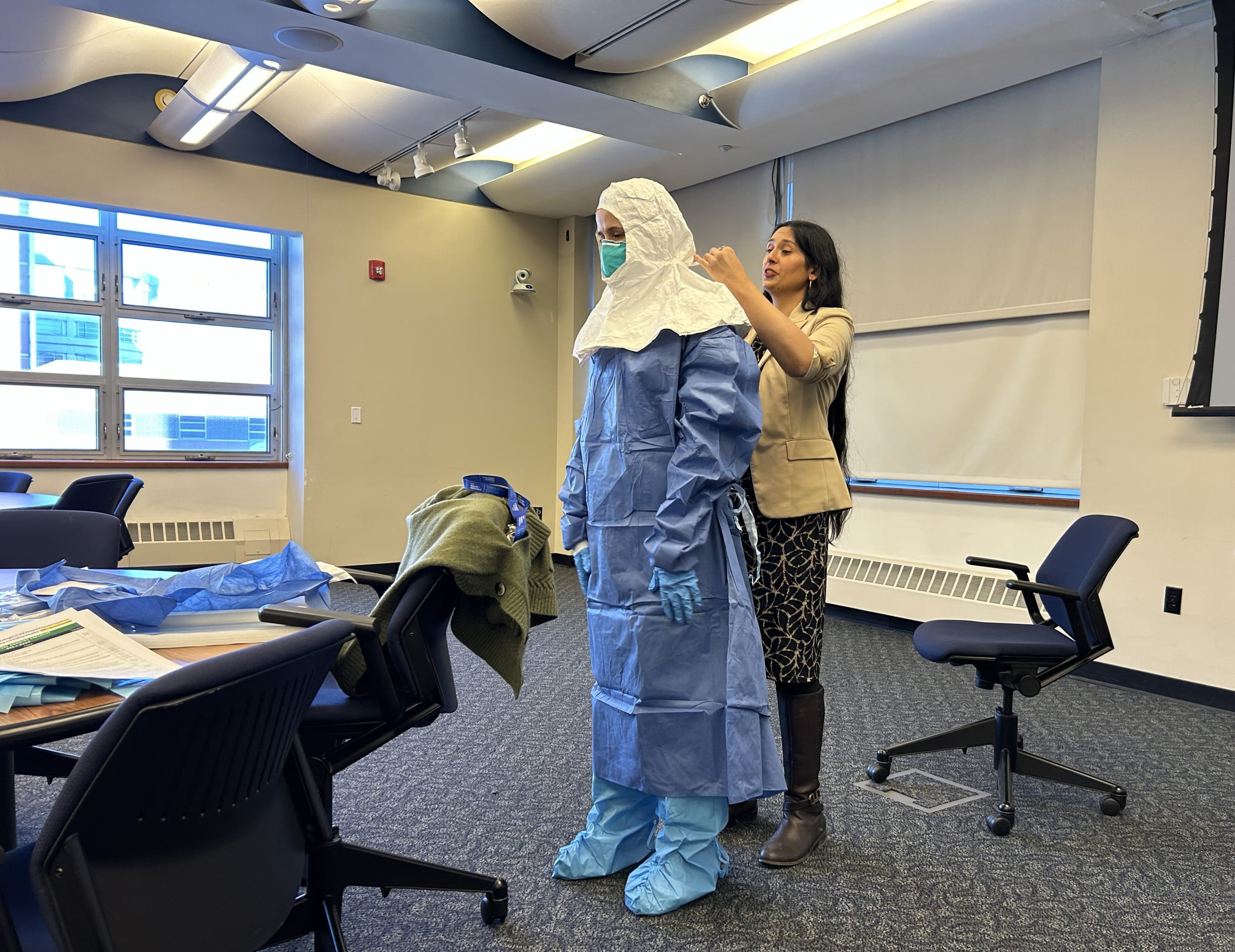
NYC H+H already conducts in-person special pathogens training through its System Biopreparedness Program, where health-care professionals review screening, isolation, preliminary patient management, and donning and doffing of high-level PPE.
VR strengthens that model in two ways. Before the in-person session, VR builds familiarity with the flow and expectations, so hands-on time can focus on tactile skills and coaching, rather than first exposure to concepts. Second, after an in-person session, VR sustains readiness until the next annual training. It allows for supporting refreshers, onboarding, and just-in-time practice when the threat landscape shifts.
That blend matters because hands-on PPE is nonnegotiable, but hands-on training is hardest to scale. VR fills the gap between "we taught it once" and "they can do it repeatedly."
The VR advantage is repetition without risk. During medical simulations, doctors talk a lot about realism. But for special pathogens, the biggest barrier to competence is opportunity.
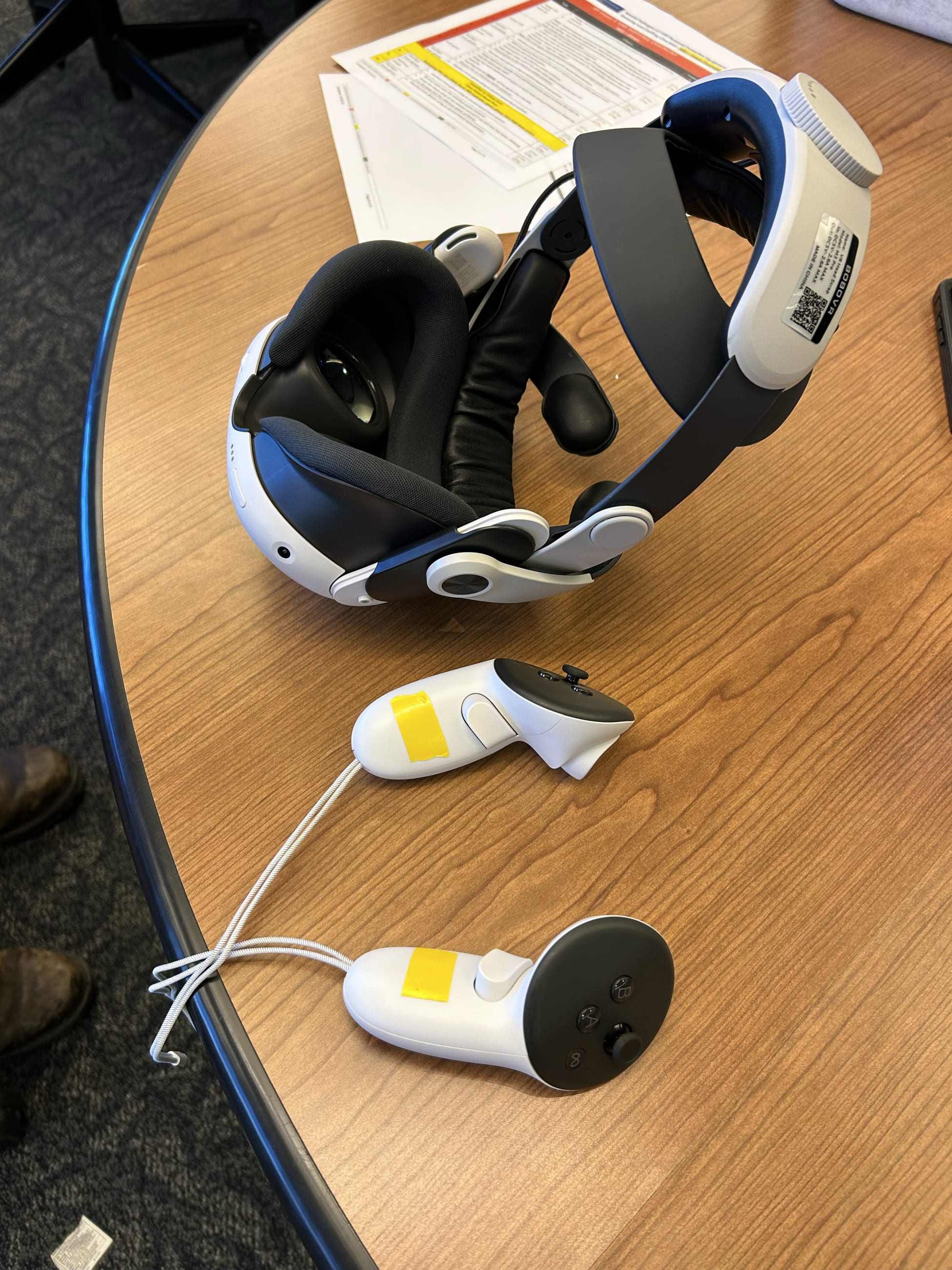
VR creates opportunity. It allows staff to rehearse the cognitive and behavioral sequence of high-risk care in a way that is
- standardized: every learner faces the same critical moments;
- repeatable: learners can practice again and again without recruiting a full team, scheduling a simulation laboratory, and throwing away PPE donned during the practice session;
- psychologically safe: people can make mistakes, see consequences, and learn without endangering colleagues;
- time-efficient: requiring less than 30 minutes makes the VR simulation feasible for real clinical schedules; and
- scalable: VR is deployable across a system, not just at a flagship site.
For special pathogens, that matters because the errors are often small: touching the wrong contaminated surface, stepping outside the zone, moving too quickly during doffing. The consequences can be enormous.
Inside the Special Pathogens VR: Four Parts, Built Around Where Errors Happen
Our VR training is broken into four parts, designed to mirror the workflow of frontline care while targeting known failure points. After putting on the VR headset, the medical worker
- enters a virtual patient's room and conducts a physical assessment of the symptoms. This is where the clinical instinct meets the need to slow down and stay deliberate. Learners must assess while maintaining situational awareness: where equipment is placed, how they move, and what they touch;
- identifies environmental cross-contamination after contact with bodily fluids. Special pathogens readiness isn't just about wearing PPE; it's about securing the whole room. Body fluids amplify risk and mistakes. In the simulation, learners identify contamination pathways and "hidden" transfer points when contaminated gloves with bodily fluid are not changed. These details are easy to miss in a lecture hall and hard to reproduce reliably in a live drill;
- doffs high-level PPE. Doffing is where many real-world exposures occur. VR lets us slow the moment down, make each step deliberate, and reinforce the sequence. That visibility matters because hand placement and movement are critical during doffing: even brief, unrecognized contact with a contaminated surface or the wrong part of the PPE can cause self-contamination. For example, a contaminated gloved hand may drift to the face shield or respirator at the wrong moment in the sequence, creating a risk of contamination; and
- walks through breaches and contamination of PPE. This portion turns a mere procedure into judgment. What counts as a breach? What do you do immediately? Whom do you notify? How do you avoid turning a near-miss into an exposure event?
These are teachable moments—but only if learners can experience them.
A February 2025 Pilot Shows That VR Can Move Confidence and Stick
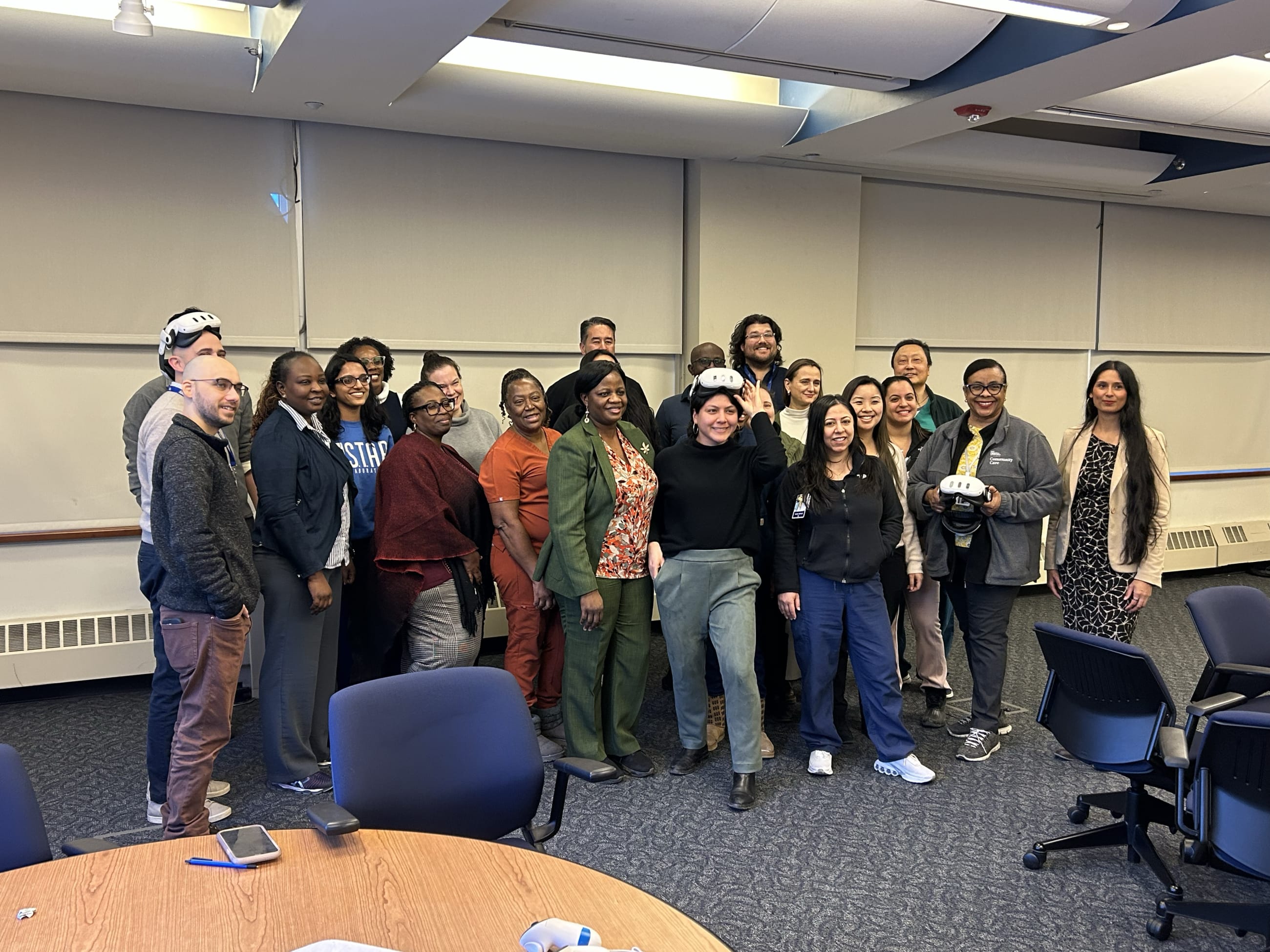
In February 2025, we piloted the program with more than 20 health-care simulation fellows and instructors, alongside a broader mix of clinicians and training staff who help build readiness behind the scenes.
Before training, participants recounted something important: all respondents (100%) were trying special pathogens VR for the first time. Baseline confidence was uneven, and nearly half reported being not or only slightly confident in special pathogens PPE workflows, such as the sequence of events, safety checks, and contamination risk points.
After the VR session, that picture shifted sharply. In the post-training survey, more than 8 in 10 respondents described themselves as confident or very confident in those same PPE workflows, an increase from roughly 1 in 5 who felt that way beforehand. Nearly 9 in 10 rated the training "very beneficial," and participants overwhelmingly described the experience as engaged and comfortable, not stressful.
Perhaps the most policy-relevant finding was how people wanted VR used. Beforehand, a majority expected VR to work best in combination with in-person PPE training. Afterward, every respondent recommended VR as a supplement to in-person donning/doffing, most saying it should be a required supplement, not an optional add-on. In other words: learners weren't asking to replace hands-on PPE, they were asking for a scalable way to reinforce it.
The open-ended comments mirrored the quantitative results. What people wanted most going in was practical: proper PPE doffing, risk points, the "right order," and how to recognize breaches. What they valued most coming out was also practical: step-by-step prompts, immediate feedback on correct/incorrect choices, realistic pacing of decisions, and reinforcement of what they had just learned in demonstration.
Because pilots are for improving, participants also made a list of requests before a wider rollout of the simulation. Their ideas include having the avatar remove its PPE, adding voice options for responding to the VR prompts instead of just selecting answers in the delay via point-and-click hand controllers, tightening speed where education narrative drags, and improving "how to choose options" guidance֫—small user experience (UX) changes that can increase realism and reduce friction without changing the clinical content.
A Model for Health Systems Everywhere: Training for the "Invisible" Contamination
Most training tells people what to do. Fewer programs train people to see what they did.
Special pathogens VR can make invisible risk visible by explaining what happens when a learner touches their face shield the wrong way. It demonstrates how a rushed doff sequence creates cascading exposure points, and it shows how the environment can become the vector for spreading an infectious disease. That feedback loop is what traditional methods struggle to deliver consistently, especially across large systems. This process aligns with where accrediting bodies are heading: not just "did you provide education?" but "can staff demonstrate competency for implementing special pathogen protocols?"
Special pathogen events are rare, but they are not random. Global outbreaks, travel-linked introductions, and new or reemerging agents will keep testing health systems. The question is whether we keep relying on episodic training for once-in-a-career scenarios or whether we modernize how we build and sustain competence.
VR won't replace the fundamentals: PPE practice, drills, surveillance, and a strong infection-prevention program. But it can make those fundamentals more durable. Special pathogens VR training offers a practical way to keep the highest-stakes skills from becoming the rustiest ones.