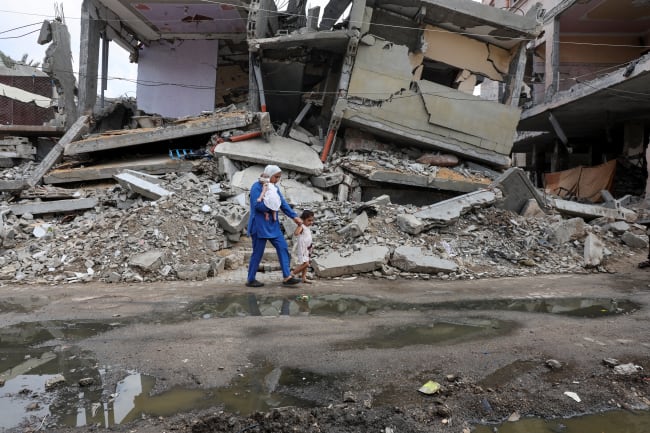
A year after official development assistance for health began sliding into a historic cascade [PDF], coupled with political strife surrounding vaccination and sexual and reproductive rights, global health institutions such as the World Health Organization (WHO) have been forced to calibrate their mandates.
WHO has had to alter [PDF] its management, restructure its operations, and dismiss hundreds of staff. Both Gavi, the Vaccine Alliance and the Global Fund to Fight AIDS, Tuberculosis, and Malaria are operating within smaller envelopes—the funds they were able to raise as opposed to their initial targets for replenishments. They also face political headwinds as major donors scale back funding.
These changes are collectively transforming what Geneva-based institutions do at their headquarters; they are also having a domino effect in the countries they seek to serve.
The poorest countries cautioned against the reduction in WHO's technical capacities, especially at the national levels
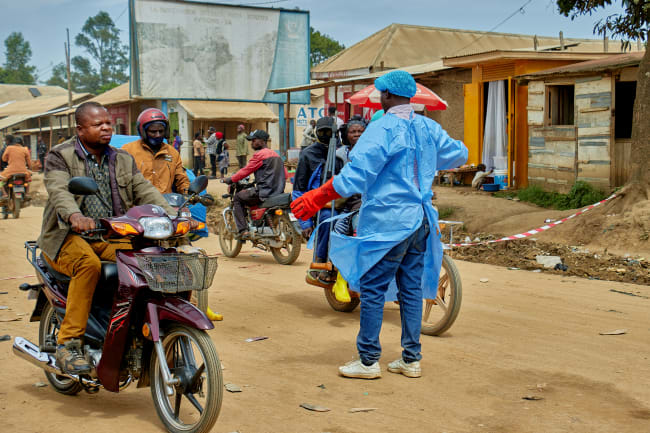
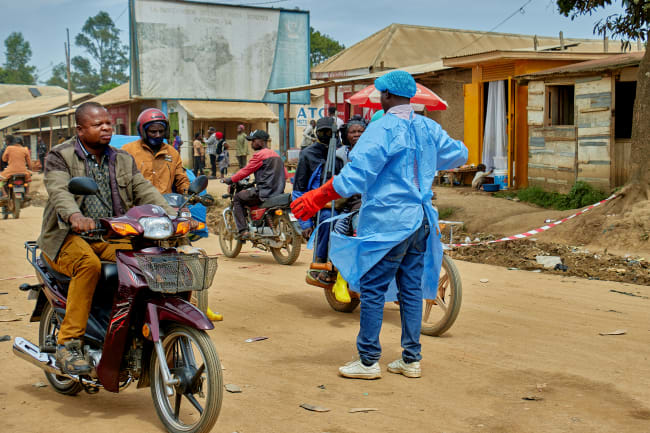
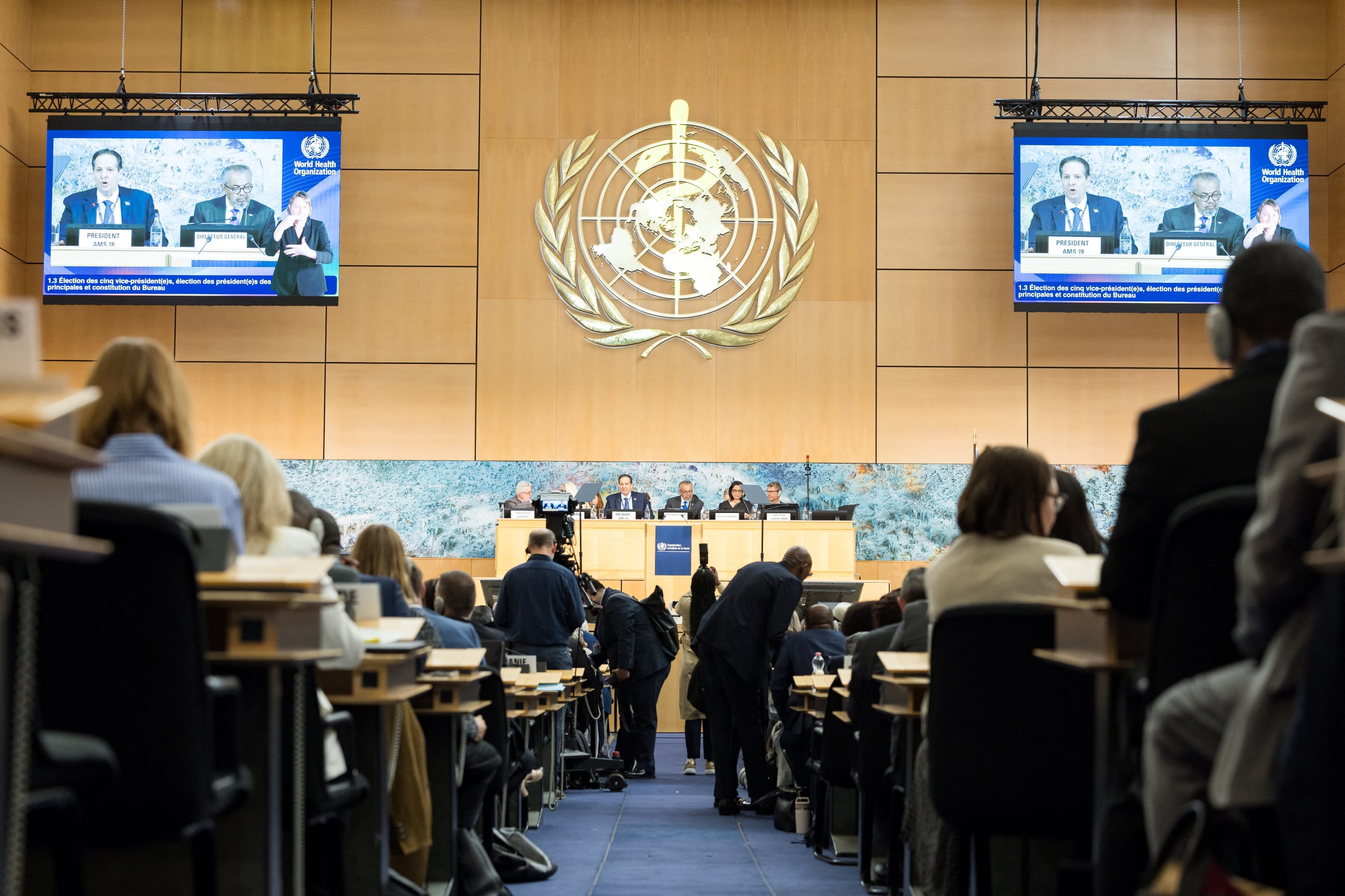
At last week's seventy-ninth World Health Assembly, the poorest countries cautioned against the reduction in WHO's technical capacities, especially at the national levels. These warnings came against the backdrop of what has swiftly become one of the worst outbreaks of Ebola in the Democratic Republic of Congo (DRC) and Uganda, an outbreak classified as a Public Health Emergency of International Concern on May 17, a day before the assembly began. The emergency is unfolding in the context of reduced financial support for WHO's work in emergencies, and a loss of funding in many African countries as a direct result of aid withdrawals from the United States and other Western nations in 2025. Financial support for the Contingency Fund for Emergencies dropped by more than 30% [PDF] by December 2025 compared to the previous year.
The emerging picture in Geneva is not only one of strained finances but also one of reduced ambition for what these institutions can deliver amid a global health architecture under forced transformation. There are competing visions for what comes next.
The WHO: Resized and Restructured Financing
Following the proposed withdrawal by the United States, announced in January 2025, WHO's 2026–27 budget was slashed by 21%, to $4.2 billion from what was originally slated. This maneuver triggered massive restructuring of the organization [PDF] and resulting activities. Last year, a new headquarters structure was announced that shrank its form from 11 to six divisions and from 67 to 36 departments.
WHO's budgetary cycle runs for two years; in the current biennium (2026–27) the organization is dealing with nearly a billion dollars of shortfall. WHO's program budget has four segments, of which the base budget is the largest. WHO sets its scope covering work done across all three strategic priorities as well as the enabling functions conducted by country offices, regional offices, and headquarters. The remaining segments involve special programs with other institutions; the Global Polio Eradication Initiative [GPEI]; and emergency operations and appeals.
According to WHO [PDF], "Financial pressures for the organization continued in 2025, driven primarily by nonpayment of assessed contributions and suspension of voluntary contributions by the United States of America, which were mitigated by the implementation of strict cost containment measures."
In its update to the assembly, WHO reported that outstanding assessed contributions rose to $184 million. Although 75% of the 2025 unpaid amount is attributable to the United States, another 46 member states did not pay their 2025 assessments within the year.
Assessed contributions from its member states accounted for 13% of revenue and 17% of the base segment of the 2024–25 program budget.
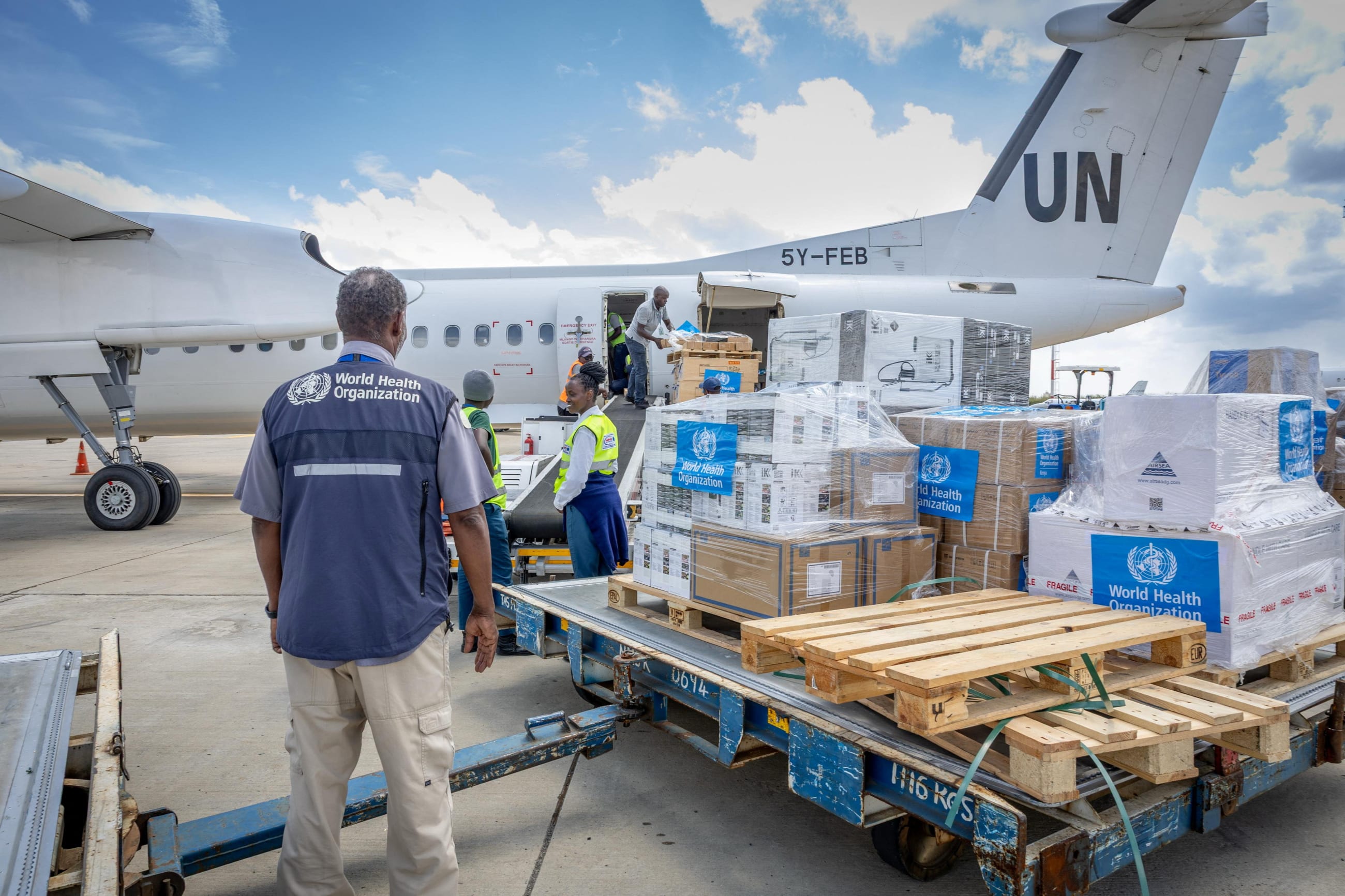
WHO says, "Assessed contributions from Member States are payable at the start of each year. These contributions are essential for timely and predictable financing of the Organization, especially during the current period of heightened uncertainty. They help to finance Member States' priorities and provide catalytic funding to mobilize additional voluntary contributions . . . Member States are encouraged to improve the timeliness of their payments and reduce the amounts still outstanding."
Despite the deep cuts from major donors such as the United States, WHO continues to be vulnerable to the vagaries of earmarked funding. In 2025 [PDF], WHO had a total revenue of $3.1 billion, of which 83%—$2.6 billion—were voluntary contributions.
The organization used the majority of those pledges—$2.5 billion—to support the program budget, but only 8% was fully flexible or thematic. The rest was earmarked. Without flexible, unearmarked funding, WHO cannot deploy resources to areas that it deems most important, or to those that are chronically underfunded, such as noncommunicable diseases. Earmarked support from donors results in a situation where only certain areas get funded. This limits WHO's ability to make decisions dynamically.
The Squeeze and What's Next for WHO's Mandate
The financial crunch and restructuring led to a near 10% drop in WHO's total workforce, to 8,569 in 2025, according to a report [PDF] on human resources delivered by Director General Tedros Adhanom Ghebreyesus at the World Health Assembly.
In parallel, some activities have been moved [PDF] to other countries, notably certain surveillance operations to Germany and health workforces to the WHO Academy in France.
WHO has had to review and suspend some areas of work following funding cuts triggered by the United States.
In a document [PDF] that was considered at the World Health Assembly last week, WHO laid out the influence of the restructuring and realignment.
A few examples:
- Where work was no longer strategically relevant, WHO has stepped back: "It discontinued direct scientific leadership of selected clinical trial platforms, such as tuberculosis trial platforms and multi-country newborn‑health trials, while reinforcing its normative role on trial standards, ethics and inclusion."
- Where mandates lie more clearly with other UN agencies, WHO has reduced overlap: "It clarified lead roles in protection‑adjacent or protection‑linked thematic areas, with WHO stepping back from parallel delivery, while continuing to provide technical guidance and standards where health mandates remain relevant—for example, in selected areas of menstrual health, sexual and reproductive health in humanitarian settings, and related protection work now led by the United Nations Population Fund and the United Nations Children's Fund."
- Where other partners can deliver more effectively at scale, WHO has transitioned work: "It handed over logistics functions to operationalize appropriate transfer of innovative technologies and support geographically diversified health product manufacturing capacity."
- Where WHO can step back, while stepping up where it must, WHO has refocused its resources: "In acute emergencies, WHO differentiates between roles best performed through coordination and normative guidance and those best performed through direct delivery, stepping back from operational functions where countries and partners are able to lead, while stepping up its unique convening, standard‑setting and operations role where gaps in knowledge are clear or emerge and no alternative capacity exists."
In the discussions about these deep transitions, member states shared their concerns, including at the executive board meeting on May 25, 2026, following the conclusion of the WHA. Representatives for the United Kingdom said, "in the light of the extremely concerning Ebola outbreak in DRC, we would just like to repeat again the importance of making sure that the emergencies program is properly funded, and referring to your list in the report, on reviewing emergency, emerging risks impacting WHO strategic priorities, we are concerned that the emergency program is not sufficiently resourced, and would like to see that considered as a matter of urgency."
Guinea, a member of the executive board, warned that organizational realignment should not jeopardize WHO's technical capacity at the country level.
Although countries have repeatedly stressed that WHO must continue to maintain and steadily implement its core mandates under its constitution, including global norm-setting and coordination among member states, it remains to be seen what this will mean in the context of the resource crunch.
A Change in the Leadership at the WHO
Amid these far-reaching changes in the institution, WHO will also see the election of a new director general (DG) [PDF] by May 2027. Whoever comes next will need a combination of skills, from political acumen to navigate geopolitics (as some member states articulated this month) to being an able administrator who can ensure efficiency with a reduced workforce and limited latitude with respect to finances.
In a recent piece for Geneva Solutions, I argued that the new director general should be deft at juggling essential mandates in global health while also dealing with donor impulses in the face of obvious financing pressures. Seasoned WHO watchers, particularly activists, say that WHO needs more than just finances; it needs courage and conviction to make tough political choices at a critical juncture for the institution.
A WHO-Led Reforms Process
The fundamental shifts in global health have also given rise to several reform efforts.
As the central coordinating authority in global health, WHO is now seeking to articulate its role in a tumultuous period for global health and the international order.
Last week, the World Health Assembly adopted a decision that will empower WHO to host a joint process [PDF], led by member states and in concert with global health partners, to support reforms of the global health architecture.
The objective is to develop options and recommendations for reforms, while drawing on existing endeavors and relevant elements of the UN80 Initiative. The DG is expected to release a summary report by next year.
Based on statements made at the assembly, countries are eager for a new architecture to reference the expansion of national health sovereignty and regional capacities; reflect on changing disease burdens and health risks; consider the rapid evolution of science, AI, and digital technologies; and address contractions in health financing.
The effort will be to restore power imbalances, fragmentation, and duplication. Member states are urging the elevation of country ownership and leadership in reaction to the expansion in the number of large-scale health actors over the last several decades, creating too much complexity in the global health landscape. Initiatives such as the Accra Reset seek to put developing countries in the driver's seat. It is not clear yet how reform efforts outside WHO will tie to the member-state-led process.
Critics are less hopeful that WHO's initiative for reform will be a meaningful one. The WHO process shies away from touching the mandates of existing institutions.
Haiti, a new member of the WHO Executive Board, said that countries facing vulnerabilities must still be able to fully participate in global health governance and decision-making.