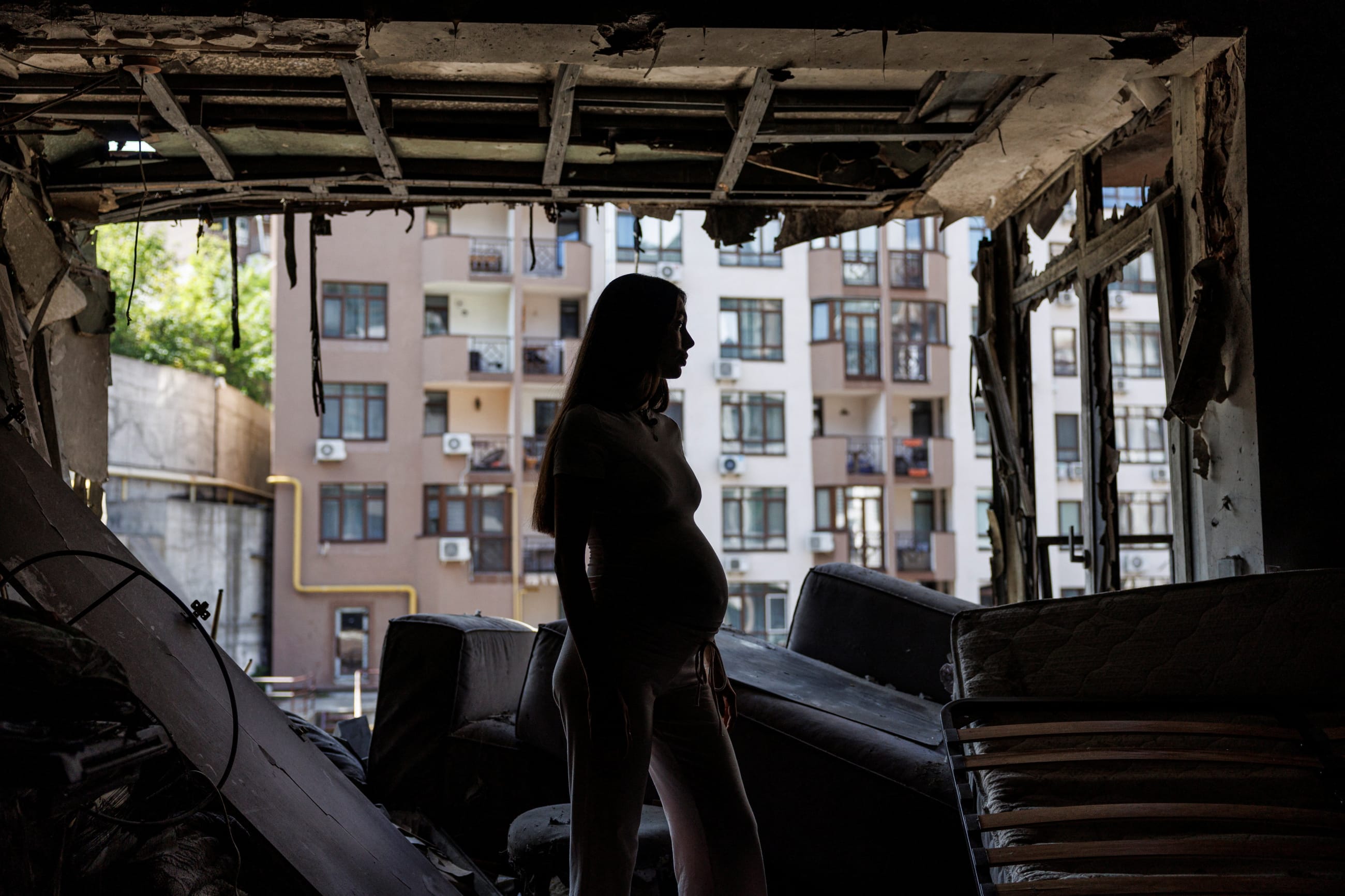
The global fertility rate is falling and the average age is rising, creating concerns about population loss and diminished economic capacity. In Ukraine, the situation feels even more acute. After four years of full-scale war, the east European nation faces a demographic crisis in that the death rate in 2025 outpaced the birth rate by nearly 3 to 1.
Millions have fled the country for safety, and those who remain are often hesitant amid the uncertainty and trauma to have children. In March 2025, First Deputy Minister of Social Policy Daria Marchak announced that after the start of the full-scale invasion, Ukraine set an "anti-record" for the number of children born per woman. Currently, this figure stands at approximately 0.9—which Marchak claims is the lowest rate in the history of the country and well below the replacement-level fertility rate of 2.1.
Amid the stop-start conversations around a ceasefire, Ukrainian officials and policymakers are devising plans to encourage refugees to return and stimulate the birth rate. These policies have been outlined in the country's strategic documents—and, crucially, emphasize voluntary return.
Ukraine's Demographic Policy Strategy through 2040 envisages the creation of cross-cutting conditions for a comfortable life in Ukraine: affordable housing, high-quality public infrastructure, a safe environment, a barrier-free environment, an inclusive labor market and social cohesion of the population, ensured equal rights and opportunities, and the freedom and dignity of citizens.
The demographic policy doesn't have a finalized price so far. As Iryna Sitnikova writes on the national media platform Hromadske, an additional 29 billion hryvnias ($703.4 million) will be needed in 2026 for childbirth payments, parental support, and the eNursery program.
Births and Deaths Before the War in Ukraine
Looking back at Ukraine's history is necessary to fully understand its demographic crisis. The country has endured devastating wars, famine, occupation, and severe economic upheavals. These traumas did not pass without consequence, and their effects continue to shape the nation's population trends and public health landscape today.
Ukraine, the second largest country in Europe by land area, experienced five demographic crises through the twentieth century
Several trends, some of which started a century ago, are reshaping the country's age structure and reducing life expectancy, which as of 2024 is estimated at approximately 56 to 57 years for men and 70 to 71 years for women, according to Dmytro Shushpanov, head of the Department of Demographic Modeling and Forecasting at the National Academy of Sciences of Ukraine and a doctor of economic sciences.
Ukraine, the second largest country in Europe by land area, experienced five demographic crises through the twentieth century: during World War I, the famine of the 1920s, the artificial famine organized by the Soviet Union in the 1930s known as the Holodomor, World War II, and the famine of 1946–47.
Ukrainian historian Inna Kovalyshena told Think Global Health that birth rates declined in the 1960s as a consequence of the Holodomor of the 1930s. "People were not born because their potential parents had not been born or died," she added. World Bank data shows that Ukraine's fertility rate hovered around the 2.1 replacement limit until the late 1980s, when it dropped and never recovered.
In 1991, when Ukraine gained independence, its population was 52.1 million. During this period, migration was from former Soviet blocs, primarily involving people with Ukrainian and Crimean Tatar heritage.
By the time Russia annexed Crimea in 2014, the population had dropped more than 10% to 45.9 million. "The decline in birth rates in Ukraine reflected broader European trends," said Olga Dukhnich, head of the Demography and Migration program at the Frontier Institute. "Since the second half of the twentieth century, people across Europe have been having fewer children. The 1990s were also years of crisis, which inevitably affected population growth."
Even before the 2022 invasion, excess mortality in Ukraine was particularly pronounced among men of conscription age, 25 to 49 years old. During the full-scale war, the death rate has increased even more, especially within these age groups. This trend is driven by combat losses as well as civilian deaths caused by shelling.
Marchak emphasized that because of low birth rates and mass emigration, Ukraine's population is rapidly aging. Shushpanov said it is also valuable to account for indirect deaths. For example, at the start of the invasion, many people died because they could not receive medical care in time. Given their high levels of stress, people are developing illnesses they might never have developed if not for the war—such as cardiovascular diseases, autoimmune disorders, and cancer.
Enticing the Return of Ukrainian Refugees
According to the UN High Commissioner for Refugees (UNHCR), Ukraine's overseas population of refugees and asylum-seekers grew from 6,700 to 250,000 after early skirmishes hit the Crimea Peninsula in 2014—though Dukhnich said official statisticians cannot fully calculate these departures because people did not deregister their place of residence as they fled. This tally escalated after the invasion: in 2025, it sat at 5.3 million, down from the 2023 peak of 5.9 million.
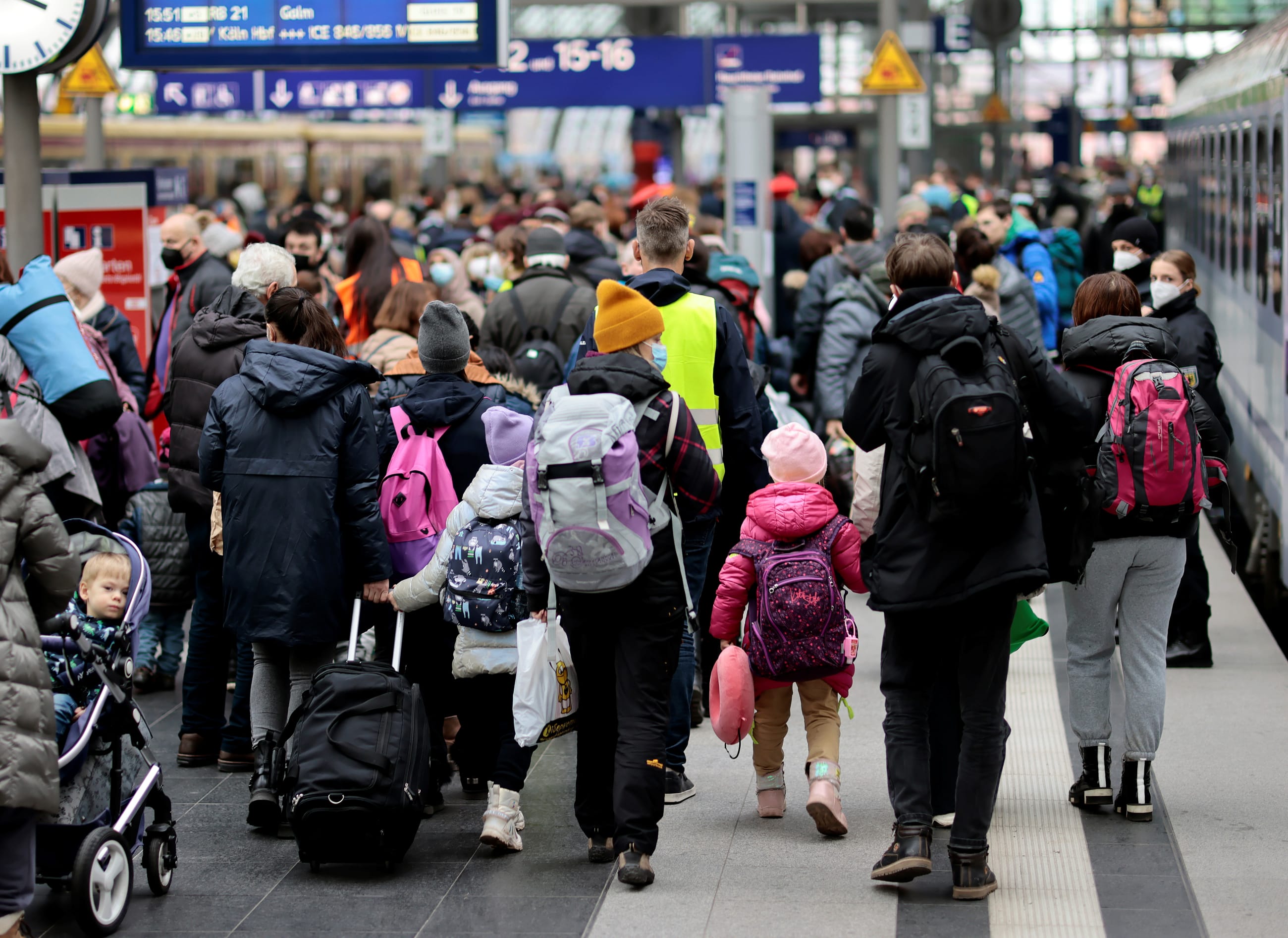
"It is important that many of those who left were educated and had rather high standards of living. When drawing parallels with other countries, we should focus not on those experiencing armed conflicts, but on those with a high percentage of citizens living abroad," Dukhnich said.
Dukhnich gave the following example: Ukraine could benefit from the experience of the Philippines, where 15 million citizens live and work in other countries. They develop strategies to encourage people to return. Ukraine, she added, should emulate Baltic states and Poland: Many Ukrainians who left their country before 2022 were economic migrants, and young people are still lured abroad by better opportunities. Poland went through a similar phase of large-scale emigration after 2004, when the country entered the EU, and is now trying to entice people to return as its economy grows.
Strategies of Returning
The longer the war, the fewer people are eager to return. The UNHCR estimates that 1.3 million Ukrainian refugees have returned over the last four years, but those numbers are steadily declining: 660,000 in 2022 but only 98,000 in 2025.
According to a March 2025 study by Ukraine's Center for Economic Strategy, only 43% of Ukrainian refugees worldwide plan to return. Two years ago, that figure was 74%. The survey, conducted every six months since November 2022, involves 1,000 refugees, based mostly in Germany and Poland.
Experts think of migration as a collection of push and pull factors that influence their decisions to leave, stay, or return." Return (pull factors) policies are only beginning to develop now," Dukhnich explains.
Approved in late 2024, Ukraine's Demographic Policy Strategy aims to counter the challenges posed by Russian aggression and to implement demographic policy, including portions of the EU's Ukraine Facility initiative to improve the country's labor market and living standards. The document identifies demographic threats to Ukraine's development and ways to overcome them.
"Ukraine has a lot to build on: convenient digital public services, affordable healthcare, a comfortable climate, and a significant cultural heritage," said Oksana Zholnovych, Ukraine's minister of social policy. "We can become a global center for the development of military stechnologies, provide rehabilitation and prosthetics services, and start rebuilding our infrastructure better than before, which will open up opportunities for professional and career self-realization. Realizing all these benefits will help Ukrainians return to their homeland."
Beyond conventional pronatalist measures, the plan emphasizes structural determinants of population health and retention—affordable housing, inclusive labor markets, accessible health care, barrier-free infrastructure, and social cohesion.
Developed with support from the UN Population Fund and national demography experts, the framework positions postwar reconstruction not only as physical rebuilding but also as a demographic intervention to encourage return migration and long-term population resilience.
Dukhnich added that policymakers must also contemplate the push factors that are still compelling people to leave Ukraine.
"There are still many myths in Ukrainian society about life abroad. It is believed that if your child receives a European education, they will automatically enjoy a European standard of living. But that is not the case," she said. A handful of studies conducted among refugees back her claim. Much will also depend on whether the war ends and under what conditions.
Ukraine Should Keep Kids in the Country, But How?
Another question is how to support birth rates in a country undergoing its greatest crisis since gaining independence. In July 2025, the Cabinet of Ministers of Ukraine approved a bill to support families before and after the birth of a child, and the president signed it into law. The legislation provides for an increase in a one-time payment given to women after the birth of a child. The previous stipend amounted to 10,300 hryvnias ($244), but starting in 2026 it will rise to 50,000 hryvnias ($1,184) starting in 2026. This will be followed by monthly payments of 7,000 hryvnias until the child reaches 1 year of age.
This year, state financial assistance will also add 8,000 hryvnias ($189) for childcare support for children ages 1 to 3 under the eYasla program, provided that one of the parents or guardians caring for the child is employed full time; 8,000 hryvnias in childcare cash benefits under the eSadok program; and 5,000 hryvnias ($118) in a one-time cash payment for first-grade students under the Schoolchild's Package program.
Women in Ukraine suggest the birth rate could also be addressed with more governmental funding and societal comprehensive efforts. Anastasiia Bagalika, a Ukrainian journalist and mother of four, calls for infrastructure, such as more accessible pedestrian crossings, ramps, and family- and child-friendly spaces, expanded nurseries, kindergartens, and municipal nanny programs, and pro-birth policies.
She says financial aid could also go further by offering accessible mortgages, business grants, education, and tax incentives for large families.