On May 22, Australia's leading health advisor declared diphtheria a disease of national significance in response to the country's worst outbreak in 70 years.
The declaration, reserved for disease events considered large and potentially wide-spreading, would allow the country to better coordinate its response to the growing surge of infections, Chief Medical Officer Michael Kidd said in a public statement.
Diphtheria is a bacterial disease that presents as a throat infection or ulcerlike skin wounds, spreading through droplets in the air and contact with the sores. Although potentially fatal if left untreated, this disease, like polio or rubella, was largely a rarity for decades. Since the introduction of a vaccine in the 1940s, cases had, until recently, plummeted across most of the world.
In Australia, diphtheria had been limited to only a handful of cases since the 1990s, the infection itself occurring almost always outside its borders. Yet by the time Kidd made his announcement, the disease was spreading. By late May, more than 230 people had contracted the pathogen, one of whom later died from his symptoms.
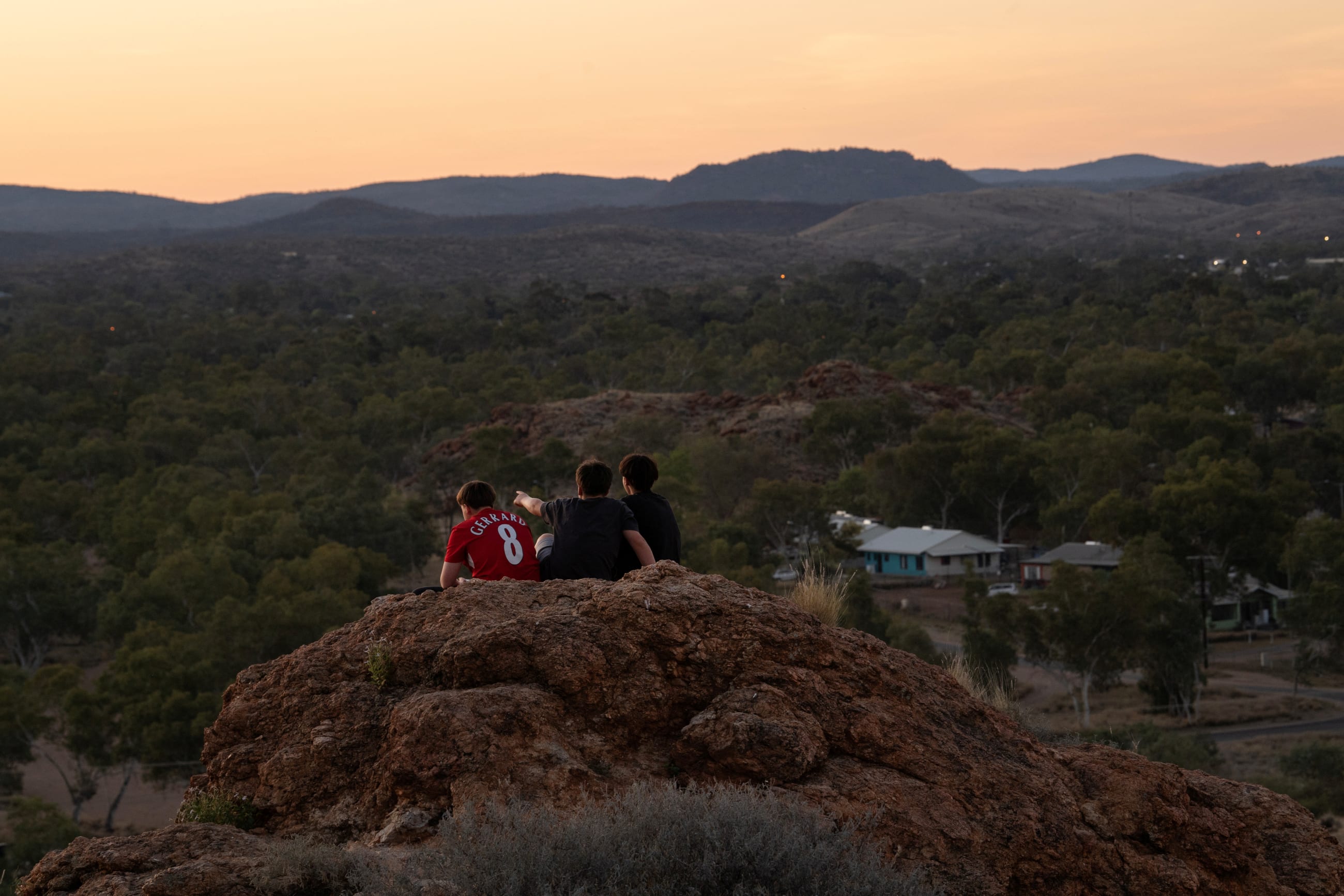
As Kidd noted in his declaration, the disease did not sprawl across the continent evenly. Australia's largest diphtheria outbreak in almost a century had, disproportionately, infected Indigenous communities living throughout remote Australia: around 95% of cases were among Aboriginal Australians in the Northern Territory and the state of Western Australia.
Drivers of an Outbreak
Diphtheria numbers have slowed since Kidd's decision; there were more than 500 confirmed illnesses nationwide as of early August. Exactly how the outbreak began, and why it spread almost exclusively among Indigenous Australians, isn't understood yet, said Paul Burgess, the chief health officer of the Northern Territory, which reports more than half the country's total caseload. Officials do know that the bacterial strain behind this outbreak has appeared in Australia before. In 2022, Queensland, a state east of the Northern Territory, reported a sudden burst of 25 cases, Burgess said. "And then it just seemed to disappear."
The same variant, Burgess explained, was then discovered in the Northern Territory in late 2025, first creeping into the capital city, Darwin, before gradually spreading throughout its rural pockets and the northernmost section of Western Australia. By April, infections had sharply accelerated: there were more than 200 cases across the two jurisdictions, alongside a small cluster in Queensland and South Australia.
The outbreak may be a consequence of a more virulent strain, Burgess suggested. Health workers could also have dismissed diphtheria's flulike symptoms and skin sores as more common, less serious diseases. "Clinicians, who haven't seen diphtheria in their entire career, may not have been thinking about it," Burgess said. "We haven't seen an outbreak—since mid-last-century—like this."
Waning immunity could have contributed, too, said Archana Koirala, who studies pediatric infectious diseases at the University of Sydney. Routine childhood-vaccination rates across Australia overall, including for diphtheria—although still high—have fallen short of ideal, dropping to a five-year low in 2025. Despite boosters being recommended for adolescents and adults, those hospitalized after contracting the disease amid the outbreak were likely underimmunized, government data suggests [PDF].
It's unlikely, however, that low vaccination rates alone ignited the outbreak, Koirala said. This wave of diphtheria appeared in communities who have relatively high coverage; almost three-quarters of the confirmed cases in May had been previously inoculated at least four times. This isn't a scenario where the unvaccinated contracted and spread the disease, she explained, "but it is people who have had multiple doses of diphtheria-containing vaccines."
James Ward, director of the University of Queensland's Poche Centre for Indigenous Health, agrees that vaccination is likely not as significant as other factors. "It's very easy to blame populations when something like this happens," he said. Something more consequential, he argues, was a delayed public health response.
It's very easy to blame populations when something like this happens
James Ward, director of the University of Queensland's Poche Centre for Indigenous Health
One day before Kidd's declaration, the Australian government pledged millions to curb the outbreak. The Northern Territory, according to Paul Burgess, also enacted proportionate efforts as soon as the first cases were discovered in 2025, which included promoting vaccines, advising close contacts, and partnering with Aboriginal communities. Still, the nation's reaction, Ward argues, was not fast enough. "We knew about this in October, November last year," he said. "We were calling for action, but the response has been far too slow."
Speaking to the Australian Broadcasting Corporation in May, Dawn Casey, chief executive of the National Aboriginal Community Controlled Health Organisation, a body that represents 148 Aboriginal health organizations, said that the federal government was alerted weeks before it acted. "They just do need to, in the future, respond much more quickly than they have," she said.
The delay allowed infections to spread, Ward said, as seen previously across rural Indigenous communities. "The response was too slow, but you could put that in the context that the response is too slow for syphilis [PDF], and the response has been slow for tuberculosis and Shigella," he said. "The system's not perfect in outbreak responses in remote Australia."
The Gap in Australia
The influx of those outbreaks is also symptomatic of wider health inequities, Ward said. Many acute illnesses, including tuberculosis, Shigella, and syphilis, alongside chronic diseases like diabetes and heart disease, are more common among Indigenous Australians, whose life expectancy is around nine years shorter than the national average. This gap is shrinking in some parts of the country, data suggests [PDF], but still remains large.
One driver for the health divide between Indigenous and non-Indigenous Australia is a difference in resources, Ward said. More than a third of Australia's Indigenous population lives below the poverty line, and that figure increases for those living in remote areas. It's widely suspected that diphtheria may have spread throughout these communities more easily because homes are often cramped and overcrowded.
Limited access to primary care is also more common [PDF] among Aboriginal and Torres Strait Islanders. Health services are sparse across rural Australia, and the few facilities that do exist are too often stretched and underresourced. In his experience visiting the Aboriginal health clinics servicing these communities, Ward said, trauma and chronic illnesses take priority over vaccinations and sexually transmitted infection (STI) screenings. "This other preventative work gets pushed aside because of priority and triaging in clinics every single day in remote Australia."
The wider rural health-care sector has long been underfunded and understaffed [PDF], said Susi Tegan, chief executive officer of Australia's National Rural Health Alliance, the system relying on overseas and temporary health workers flying in to plug the gaps. Part of the challenge has been attracting and maintaining personnel, which communities have felt more in recent years. During the COVID-19 pandemic, burnout among doctors and nurses was common, Tegan said, and many chose to leave rural health care. "We have lost people in communities because they're not supported."
Staff numbers, although recovering, are nowhere near prepandemic levels, said John Boffa, who's spent almost four decades in Aboriginal health care, working throughout the Northern Territory. "People are missing out on essential health care because we don't have a workforce, and we've got the money," he said. "And that is tragic."
Boffa, who is also the public health medical officer at the Central Australian Aboriginal Health Congress, based in Alice Springs, said the shortage of doctors, nurses, and Aboriginal health practitioners has impeded preventive care. "In some communities, immunization rates are not what they should be, and that is partly due to the workforce issue."
Problems with health literacy can compound this, with patients deferring treatment or routine checkups. But so can the range of stressors those living in these communities often face, Boffa said.
"It's a bit easier in mainstream to say, 'This is a serious disease, get vaccinated,'" Boffa said. "But in Aboriginal communities, with everything else going on, you really do have to get out there and stress, 'This is potentially life-threatening, and that's really important.'"
Clear information about diphtheria, alongside community engagement and the wider awareness of the disease, has encouraged more locals to seek vaccinations, Boffa said. The delay in public health messaging was a problem, he believes. "But now we've swung into gear, and we're working."
The diphtheria outbreak appears to have peaked in May, Boffa explained, but infections will likely linger into the near future. "It looks like there's going to be a long tail, so we've got a lot of work to do still," he said.
Whatever forces were behind this outbreak, the fact that it reached the level it did is unacceptable, Boffa said. Although the response should be reviewed, the sheer spread of this disease, he added, is another reminder of the many inequities that Indigenous Australia faces. "It is a wake-up call again about the disadvantage," Boffa said, "but we'll get on top of it."