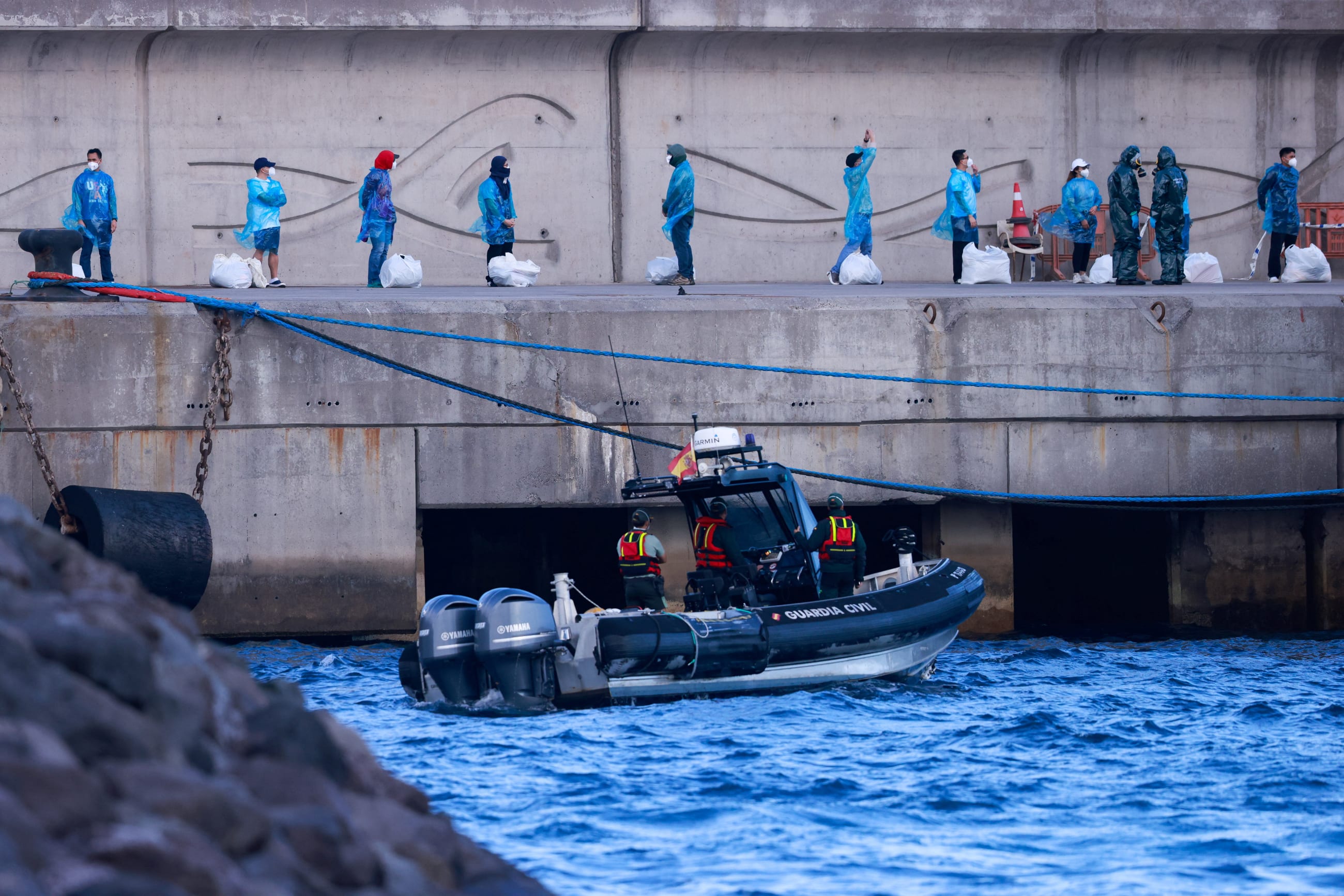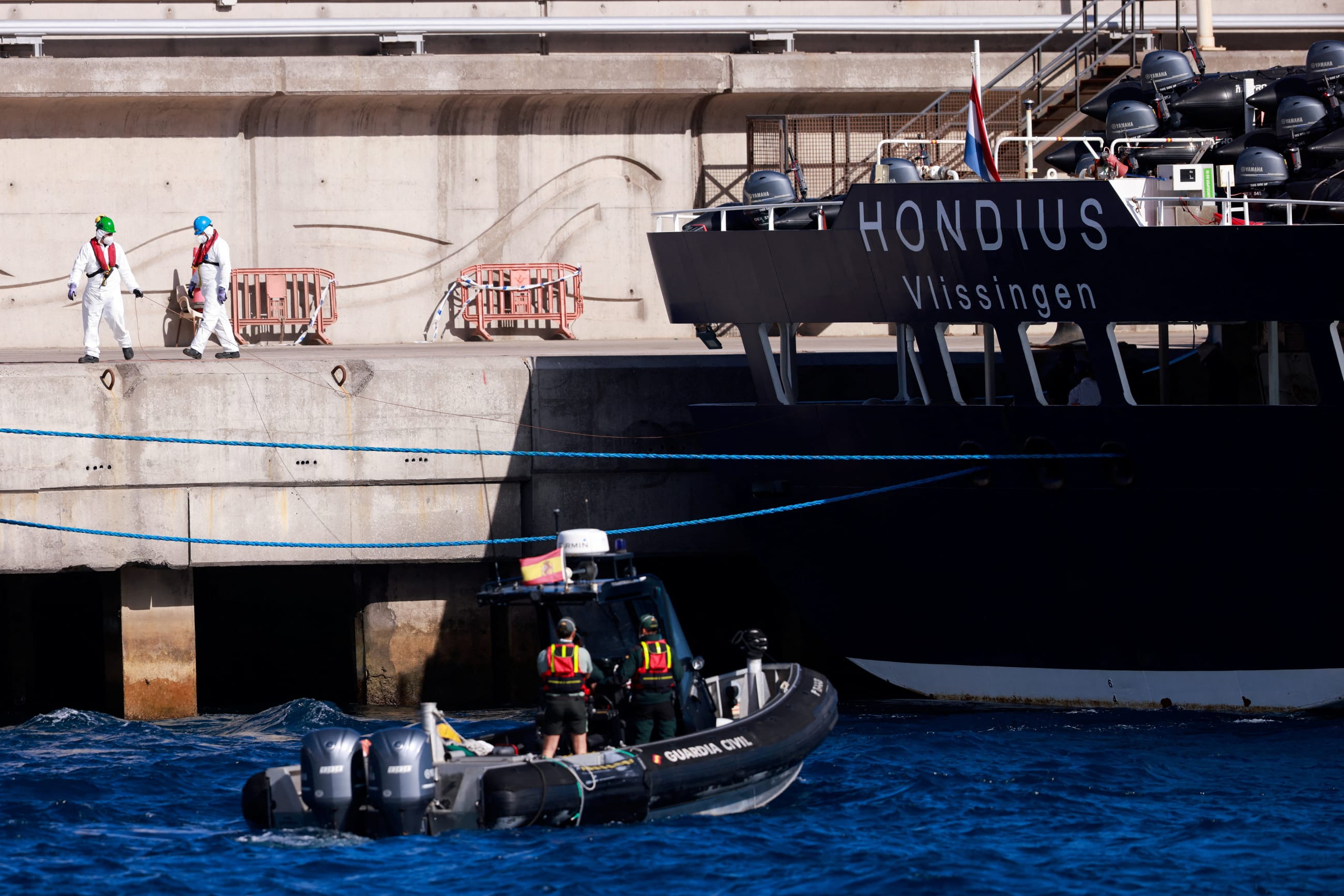
On Sunday in the Canary Islands, nearly 150 passengers and crew disembarked from a Dutch expeditionary ship, the MV Hondius, under the guidance of the World Health Organization (WHO) and Spanish authorities. The operation was conducted on the island of Tenerife after Cape Verde had barred the vessel from docking because of a hantavirus outbreak that has caused the deaths of three passengers as of May 13.
Hantaviruses are typically spread by rodents, but this outbreak has garnered international attention because it involves a hantavirus species named Andes that has demonstrated human-to-human transmission through close contact with an infected individual, generally through prolonged exposure. A hantavirus infection can progress rapidly from fever and gastrointestinal symptoms to sudden respiratory and cardiac insufficiency, and death.
The incident, which the WHO has assessed as carrying a low risk to the general public, comes at a delicate political moment for the global agency and global health law. Argentina, where the first MV Hondius passenger is thought to have contracted the virus, has declared its departure from the WHO. So too has the United States, which has 16 U.S. citizens undergoing assessment at the University of Nebraska Medical Center. One asymptomatic individual has tested positive and has been moved to a biocontainment unit. Two additional passengers—one with symptoms—are at Emory University Hospital in Atlanta, Georgia, following evacuation from the ship.
Cape Verde's refusal to receive MV Hondius and the president of the Canary Island's opposition to Spain's agreement to permit the ship's arrival have tested the international legal framework designed for precisely this scenario. In doing so, this incident has underscored the importance of international rules around public health emergencies—especially timely with international negotiations stalling around pathogen access and benefit sharing (PABS), the topic of an annex critical to the WHO Pandemic Agreement.
Without the PABS annex, the Pandemic Agreement, adopted last year, cannot be opened for signature by WHO member states
Without the PABS annex, the Pandemic Agreement, adopted last year, cannot be opened for signature by WHO member states, the necessary first step before they become parties and it can enter into force. The annex negotiations were due to be finalized by this month's World Health Assembly, but member states recently agreed that additional time is needed to find consensus and will seek an extension.
Critics may point to the MV Hondius outbreak to argue that it exposes flaws in PABS instead of demonstrating the need to successfully complete the annex. Consider that in mere days and weeks, this outbreak implicated multiple nations, including samples taken from cases while onboard the Dutch ship, by island health-care workers, and while undergoing treatment in the United States, Netherlands, South Africa, and Switzerland. Efforts to track more than two dozen people who disembarked the cruise in Saint Helena are underway.
Why Pathogen Access and Benefit Sharing Matters
PABS is an attempt to redress a much longer injustice in medicine, science, and industry, where high-income countries collected genetic resources, including physical pathogen samples and their genetic sequences, from low- and middle-income countries to research and develop vaccines and therapeutics, publish papers, receive grants, and build scientific capabilities. Those medicines are typically developed for profit and sold at inaccessible prices to developing countries. The PABS system, and its operation as detailed in the annex under deliberation, creates binding legal obligations for both accessing pathogen samples and their genetic sequences and, on equal footing, equitably sharing the subsequent benefits, including diagnostics, vaccines, and therapeutics. In doing so, PABS seeks to rectify an extractive and exploitative history that has focused on imposing legal obligations to share and cooperate—but on only one side of the equation.
Critics may argue that in health emergencies such as the MV Hondius outbreak, it becomes difficult to determine which country is entitled to sovereign rights when the Andes virus may have been contracted in Argentina or while on a ship under a Dutch flag; or isolated and sequenced by scientists in countries where the patients are tested or treated, such as Cape Verde, the Netherlands, Senegal, or South Africa. Who is entitled to, or who owes, benefits when multiple laboratories upload sequences to the various databases used by researchers worldwide to track and study outbreaks? What about the already large volume of Andes virus genomes from decades of Argentine and Chilean research? If, as is proposed, the PABS annex is limited to pathogens with pandemic potential, would that apply to a known hantavirus with historically limited human-to-human transmission? These questions are, however, arguments for designing PABS regulations properly, not for abandoning them.
The MV Hondius incident demonstrates the need for a multilateral system that defines the obligations and terms for sharing samples, sequences, and benefits
Jurisdiction of origin is readily solved: once a genetic resource has been extracted—that is, taken from an infected person in a clinical sample—a country may choose to exercise its jurisdiction over the genetic resource, including setting the terms of access and any requirements for benefit sharing. Making that process clear, accountable, and as efficient as possible is what a PABS system aims to provide. Currently, countries can set these requirements in accordance with their domestic legislation and implementation of the Nagoya Protocol. However, implementation has been inconsistent, there are no standardized access or benefit-sharing terms, and each transfer may require a new bilateral contract, which risks delaying and impeding rapid public-health response.
The draft PABS annex includes the establishment of an expert advisory group to regularly advise on pathogens with pandemic potential. As the MV Hondius outbreak demonstrates, novel conditions and pressures could modulate the nature of the risk that known pathogens pose, and the pandemic potential of previously unknown pathogens could take time to assess. Those variables depend on rapid and comprehensive sample and sequence sharing.
The MV Hondius incident demonstrates the need for a multilateral system that defines the obligations and terms for sharing samples, sequences, and benefits; sets a clear but sufficiently flexible definition of pathogens to be included; and distributes the benefits based on public health need.
Argentine and Chilean researchers built the foundational knowledge base for Andes hantavirus over decades, allowing the global scientific community to benefit freely and without any formalized mechanism for compensation. This moment illustrates the extractive history PABS seeks to rectify.
How International Law Has Shared the MV Hondius Outbreak
This is not the first time the world has faced the challenge of ships and infectious diseases. Centuries of negotiations between countries on their obligations and expectations during outbreaks inspired the International Health Regulations (IHR), which were revised in 2005 and then amended in 2014, 2022, and most recently in 2024. The third edition of the regulations (incorporating up to the 2014 amendments) are binding for 196 states parties, including all WHO member states. The United States and Argentina, despite their proposed withdrawals from the WHO and rejection of the most recent 2024 amendments [PDF], also remain legally bound under the third edition of the IHR treaty.
Under the IHR, operators of ships and aircraft arriving from international voyages must prepare for and facilitate medical examinations of persons on board and provide relevant public health information to the country of arrival. They must also provide, on arrival, a ship or aircraft declaration of health that addresses questions about deaths or illnesses on board that could have been caused by an infectious disease.

The IHR make clear that states parties cannot use public health to justify denying a ship entry to any port, refusing passengers from disembarking, or taking on supplies. Per these regulations, countries can impose health measures such as quarantine, isolation, and medical treatment for arriving passengers and decontamination of the ship, but only when based on scientific principles, evidence, and applied without discrimination. If, however, a port lacks the capacity to respond, the IHR recognize a legitimate exception, and states parties without sufficient health infrastructure to safely manage an outbreak or provide medical care are not required to absorb a risk they cannot handle. In that scenario, the ship may be directed to proceed at its own risk to the nearest suitable port.
Cape Verde's refusal likely falls within this capacity exception, given its significantly constrained health system. Spain's agreement to receive the ship in the nearby Canary Islands is consistent with its international legal obligations under the IHR, but the Canary Islands' regional president's initial opposition was not. WHO Director General Tedros Adhanom Ghebreyesus attended the arrival of the MV Hondius in the Canary Islands, but a day earlier, he took the unusual but compassionate step of expressing his respect and gratitude in a letter to the people of Tenerife, underscoring how the island is the nearest port with the "the medical capacity, the infrastructure, and the humanity to help [the passengers] reach safety." The letter acknowledged how Spain honored its IHR commitments and reiterated that "the best immunity any of us has is solidarity."
Cooperation Across Fractures
International cooperation around the MV Hondius has so far been extensive. With WHO support, Cape Verdean medical teams evaluated passengers and sent samples to Institute Pasteur de Dakar. South Africa's National Institute for Communicable Diseases is conducting serology to assess a patient's immune response and genetic sequencing on the pathogen, while providing care for them. The Netherlands airlifted three symptomatic individuals, including the ship's doctor, and is providing treatment. Countries across the world have worked with the WHO and Spain to coordinate the evacuation of remaining passengers and crew.
Information continues to flow through the IHR's national focal points (NFPs)—a state party's designated contact for constant communication with the WHO and other parties on IHR matters—across Cape Verde, the Netherlands, Spain, South Africa, and the United Kingdom. The latter officially notified the WHO of the cluster on May 2 per its IHR obligations. And despite their purported withdrawal from WHO and rejection of most recent IHR amendments, the United States and Argentina remain legally bound states parties to the IHR and have fulfilled some obligations so far. Argentina's NFP has shared passenger and crew lists by nationality, and the U.S. NFP is structurally able to receive and share information with the WHO. How this incident might influence the debates around both countries' withdrawals slated for the World Health Assembly later this month remains to be seen.
More Than Capacity: An Unaddressed Vulnerability
Despite the scale of multilateral cooperation, deep fractures run through global health law and outbreak collaboration. Although states parties may assert health-system capacity concerns, there may be persisting fears that accepting ships or aircraft with ill passengers could trigger reactionary travel restrictions from other countries—especially harmful for tourism-dependent economies.
Such a fear would be well founded. During COVID-19, countries imposed sweeping and, in some cases, discriminatory travel bans that bore little relationship to epidemiological evidence. After reporting the omicron variant, Botswana and South Africa were subjected to retaliatory travel restrictions. The IHR prohibit the use of unnecessary and discriminatory travel and trade restrictions; however, the lack of general push for compliance throughout the entire pandemic evidenced a clear shift in states parties' perspectives that travel restrictions could have "necessary" application in certain circumstances.
Governments imposing disproportionate restrictions face no recourse for their actions
Neither the 2024 IHR amendments nor the Pandemic Agreement addressed this normative change, and, as a result, the disincentive structure remains intact: countries that comply with their obligations to report outbreaks or accept a ship with unwell passengers risk economic punishment from countries that respond with disproportionate restrictions. Furthermore, governments imposing disproportionate restrictions face no recourse for their actions.
Countries now operate in a landscape where public expectations have changed, where the line between precaution and discrimination is contested, and where blanket legal prohibitions on restrictions may be neither realistic nor desirable. The world needs accountability for restrictions that are discriminatory and disproportionate, and new guidance for making that call. There is little appetite for more reforms, but soft law, including a nonbinding framework and World Health Assembly resolution, is an appealing pathway for this urgent repair.
Equity Is Solidarity, Solidarity Is Security
For too long, global health security efforts have sought to demand that countries share pathogen samples, sequences, and outbreak information without commensurate obligations to ensure that those countries receive access to diagnostics, vaccines, and therapeutics in return. Until that asymmetry is addressed with genuinely enforceable commitments, countries will continue to calculate that compliance may carry more risk than refusal.
The former passengers and crew of the MV Hondius, and their close contacts, are relying on international collaboration to keep them safe, healthy, and alive. What the world owes them, and every ship and aircraft that follows, is a system of genuine solidarity and equity. The World Health Assembly convenes later this month. Member states should commit to completing negotiations for the PABS annex with legally enforceable equity provisions. They must consider what withdrawal from the WHO means for collective health security, and they must begin the urgent conversation for nuance and accountability around travel restrictions.
Until the rules protect those who follow them, the calculus at the water's edge will not change.