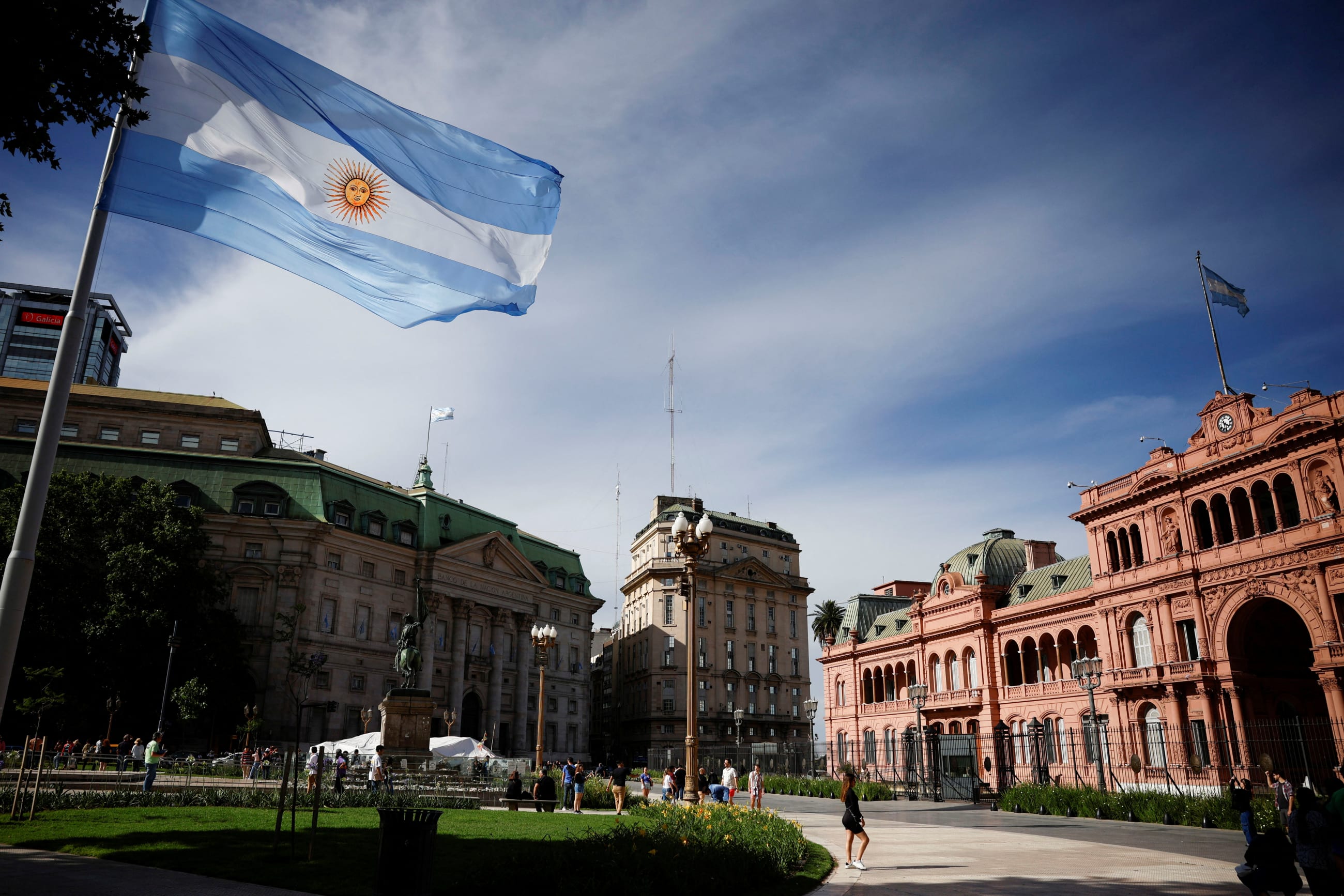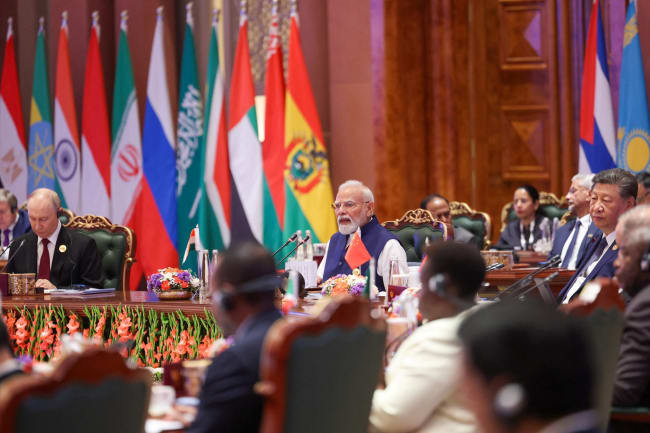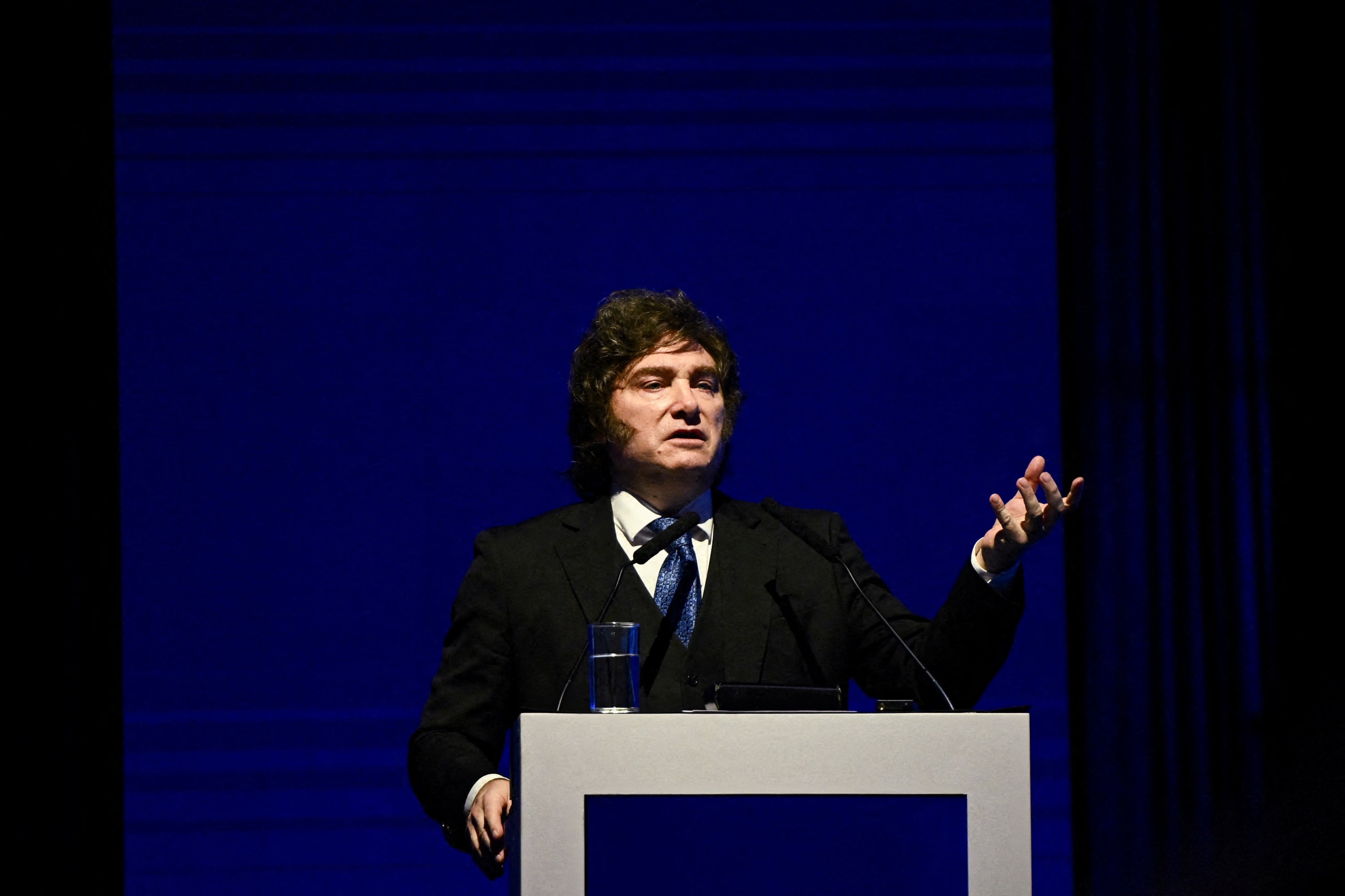
In January 2025, the United States submitted a notice of withdrawal from the World Health Organization (WHO) to the UN secretary-general, and Argentina followed on March 17. Exactly one year later, Argentinian Foreign Minister Pablo Quirno confirmed via social media that the South American country had completed the withdrawal process, portraying the move as an assertion of national sovereignty and criticizing politically motivated health guidance. The optics of these withdrawal notices appear identical, shaped by shared rhetorical vocabulary, timelines, skepticism of multilateral institutions, and criticism of the WHO's handling of COVID-19.
Yet the downstream consequences differ substantially, most critically in their legal foundation: the United States exercises a withdrawal right it explicitly reserved at the first World Health Assembly, whereas Argentina, holding no such provision, has invoked the Vienna Convention on the Law of Treaties, a basis the WHO director general has already rejected as legally invalid.
Ahead of the seventy-ninth World Health Assembly, which begins May 18, this gap in constitutional legitimacy will raise fundamental questions about compliance, sovereignty, and voluntary adherence. The larger implications of these moves will extend beyond Buenos Aires and Washington, threatening existing mechanisms for infectious-disease surveillance and containment, and raising complex legal questions about treaty withdrawal and global health governance.
What Are the Rules for an Exit?
Adopted at the 1946 New York Conference, the WHO constitution avoided codifying a formal withdrawal process. The primary assumption was that international health cooperation would be cumulative and that ties would deepen over time. Instead, the constitution included only a declaratory statement permitting withdrawal if a member found a later constitutional amendment unacceptable.
No other founding member, nor any subsequently joining member, obtained a comparable provision
In 1948, the constitution came into force but was amended to include a sole exception secured by the United States at the first World Health Assembly. Washington obtained a unilateral right of withdrawal [PDF], reserved exclusively to itself, provided that all financial obligations to the organization are met for the current fiscal year. No other founding member, nor any subsequently joining member, obtained a comparable provision. In fact, when seven Soviet bloc states attempted to withdraw between 1949 and 1950, the WHO classified them as "inactive," declining to acknowledge their withdrawal as legally valid.
As a member with no such reservation, Argentina has based its withdrawal on the Vienna Convention on the Law of Treaties, particularly Articles 54 and 56 [PDF], whereby withdrawal is permissible when a treaty does not specify termination procedures, provided reasonable notice is given. In his report to the WHO executive board issued on January 20, 2026, WHO Director General Tedros Adhanom Ghebreyesus stated firmly that "the purported notification of withdrawal by Argentina should not be accepted as effective."
Nevertheless, at its February 2026 session, the executive board chose not to follow its own legal advice. Instead, a draft decision was adopted [PDF], proposed by Argentina and co-sponsored by Israel, recommending that this month's World Health Assembly acknowledge the withdrawal as effective as of March 17, 2026. The assembly is thus invited to confirm an action that is already being treated as settled, based on a disputed legal argument and without precedent.
Should it be endorsed, the decision would elevate practice into precedent, and the WHO, which has historically relied on procedural stability, will recognize an informal exit mechanism that could disrupt the organizational balance without altering the constitution.
Half In, Half Out
Argentina has declared its intention to maintain its Pan American Health Organization (PAHO) membership, framed as a gesture of reassurance. PAHO stands apart from WHO's five other regional offices, as it predates the WHO by 46 years, operates with its own budget and governing bodies, and holds an independent legal personality. Since a 1949 agreement, PAHO has served a dual institutional role, both as an Organization of American States (OAS) specialized agency and as the WHO's Regional Office for the Americas. In practice, Argentina's withdrawal from one organization but not the other creates an additional complication because the distinct membership structures of the two organizations have never been tested in this way, given that no country has previously sought to maintain only one side of the relationship.
Although the arrangement seems administratively manageable, it raises questions for which no tested answers exist, among them the following:
- What is the legal viability of PAHO membership detached from WHO membership?
- What is the status of Argentina's voting rights within PAHO structures that are linked to WHO authority?
- What are the adjustments to financial assessments and technical obligations under partial withdrawal?
- What are the implications for Argentina's access to WHO normative instruments such as emergency-use listings, prequalified medicines, and clinical guidance?
These are not hypothetical concerns. In early 2026, a cruise ship departing an Argentinian port reported a cluster of hantavirus cases among passengers, precisely the kind of event that triggers International Health Regulations (IHR) notification obligations. Given that Argentina's membership status is contested, the incident exposed the operational gap these questions describe: it was unclear through which channel Buenos Aires was obligated to notify, whether PAHO or WHO held primary jurisdiction, and whether the WHO's emergency-response mechanisms applied to a country mid-withdrawal.

Furthermore, Argentinian authorities have, on several occasions, cited the PAHO Revolving Fund for vaccines and essential medicines as the basis for the country's continued involvement. The fund represents one of the most effective pooled-procurement systems in global health, particularly for lower-cost vaccine access across Latin America. It is embedded in a broader WHO-aligned regulatory and normative system in which dismantling one element of that system inevitably affects the rest. The fund is, however, an instrument of procurement, not of governance—it provides access to markets, not to decision-making.
The more significant risk lies in the country's loss of its formal voice and seat on the WHO executive board, and most critically its place in negotiations over the IHR and the Pandemic Accord, a seat that carries with it not only a vote on binding international health law but access to WHO emergency-use listings, prequalified medicines, and the regulatory guidance on which Argentina's domestic health system quietly depends.
Will There Be Any Significant Implications?
The broader implications could extend beyond Argentina's national public health. Of greater consequence is what the withdrawal signals to governments in the region. Some Latin American countries, including Brazil, Colombia, and Mexico, have voiced concerns that reflect broader regional critiques of the WHO's institutional challenges and inequities in global health responses. These concerns point to the organization's inconclusive handling of the COVID-19 origins investigation, the slow pace of Pandemic Agreement negotiations extending into 2026, and persistent barriers to access to essential medicines, which together have reinforced perceptions that the WHO serves the interests of more powerful member states more reliably than those of vulnerable populations.
If Argentina can demonstrate that PAHO membership alone suffices, financially constrained governments will take note and could consider disengaging from the WHO altogether. The result would be a fragmented regional health landscape at precisely the moment when collective action is most needed as the region confronts resurgent vector-borne diseases, widening antimicrobial resistance, and the unfinished work of pandemic-preparedness reform.
Globally, and as documented at the WHO executive board meeting in February 2026, Israel's representative warned that "in Israel, there are also, unfortunately, strong public voices calling for us to leave the organization." Additional departures, especially by major financial contributors, risk structurally weakening the organization at a moment when global health threats from climate change, antimicrobial resistance, and zoonotic disease are intensifying.
What Will Happen at the Seventy-Ninth World Health Assembly?
The decision now rests with the World Health Assembly. After the WHO executive board failed to reach consensus in February 2026, the proposed draft resolution recommends [PDF] that the assembly "formally acknowledge" the withdrawal rather than approve it. That choice of language matters: acknowledgment implies recognition of a claimed fact without conferring legal endorsement.
Three possible outcomes are anticipated. First, the assembly could decline to act, placing Argentina in a state of legal uncertainty likely to trigger a dispute under international law. Neither party favors this outcome, nor has either articulated a viable alternative. Second, the assembly could retroactively accept the withdrawal, creating a precedent that permits exit without constitutional authorization by invoking the Vienna Convention. This outcome would permanently weaken the WHO by normalizing withdrawal for short-term political reasons. The assembly's third option could impose conditions before acknowledging the departure—including payment of outstanding contributions, a transitional framework for disease surveillance, or a binding commitment to continued IHR reporting. This is the most responsible course, yet it would require enforcement mechanisms that the WHO constitution was never designed to deliver.
What This Moment Signals
Argentina's withdrawal is often framed as geopolitical signaling rather than a constitutional problem. The Argentinian government achieved its objective: a symbolic disengagement from a multilateral institution at minimal operational cost. Argentina has created the first serious test of whether the WHO constitution's silence on withdrawal can be displaced by an appeal to customary international law. The U.S. withdrawal represents a crisis of financing and political support; Argentina's constitutes a challenge to constitutional order.
This moment also highlights a broader development that is often understated: the emergence of selective participation that retains regional benefits while disengaging from global obligations. Whether these arrangements can endure depends less on political intent than on the ability of institutions to function effectively within partial membership configurations for which they were never designed.
The WHO's immediate problem is procedural: addressing withdrawals that fall outside clear constitutional pathways. For PAHO, the challenge is operational—governing a membership where institutional alignment with Geneva is no longer shared. For the region, the question is both simpler and more consequential: whether collective preparedness is still possible when participation itself is fragmented. Should the assembly leave the legal questions surrounding Argentina's withdrawal unresolved, it may prompt similar moves by other governments and member states.