The U.S. departure from the World Health Organization has been compared to a divorce, given that the WHO Executive Board meets this week, February 2–7, to consider whether the United States still owes the international organization hundreds of millions of dollars and whether the legal requirements for withdrawal have been met.
But the divorce analogy is inapt. Legal proceedings to settle the division of data and staff assets, monies owed, ongoing support, or the formal termination of U.S. membership are unlikely.
This incident is more akin to a messy breakup, where only one side insists the relationship is over. The WHO is stuck in a bad romance, playing the long game to win the United States back. UN agencies have a history of using this tactic, maintaining that previous member states' withdrawal notices amounted to just taking a break, even when the original legal justification for that position is debatable.
There are practical reasons for the World Health Organization to do so with the United States, and serious consequences for the well-being of Americans and populations abroad.
Never Say Never Again?
January marked the second time in as many Trump administrations that the United States has pushed to break up with the World Health Organization. The country first attempted to leave the WHO in July 2020, issuing a notice of withdrawal over COVID-19 era complaints. The Biden administration retracted this notice in January 2021, before that withdrawal took legal effect, just for President Trump to submit intentions to leave all over again on the first day of his second term in 2025. Since February 2025, U.S. representatives have stopped attending WHO meetings in an official capacity, skipping the World Health Assembly and the executive board meeting in May. The United States did not pay its assessed contributions to the WHO for 2024–25 ($278 million) nor the hundreds of millions it promised the UN agency in voluntary contributions.
January marked the second time in as many Trump administrations that the United States has pushed to break up with the World Health Organization
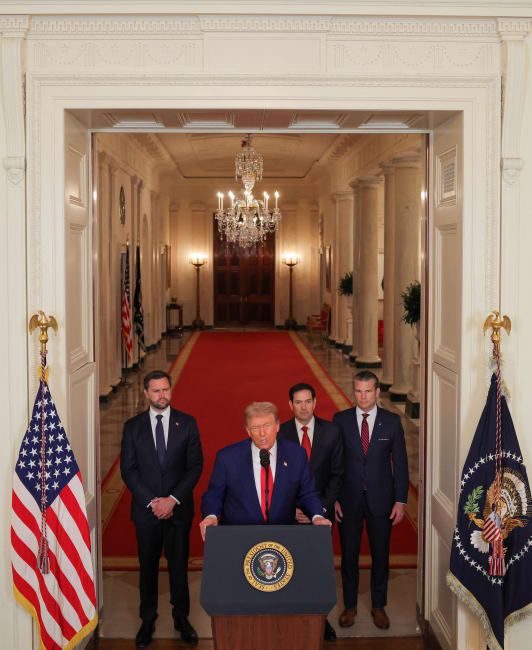
In a joint statement, Secretary of Health and Human Services Robert F. Kennedy Jr. and Secretary of State Marco Rubio asserted, "Going forward, U.S. engagement with the WHO will be limited strictly to effectuate our withdrawal and to safeguard the health and safety of the American people. All U.S. funding for, and staffing of, WHO initiatives has ceased."
Or, to put it in lyrical terms, the Trump administration claims the United States will never, ever, ever get back together with the WHO (as a member state).
The World Health Organization's response has been to maintain, effectively, that, no, it isn't over. At a press conference on January 13, the WHO's chief legal officer reported that only WHO member states can decide the question of when and how the United States may withdraw. They will consider the question at this week's executive board meeting and later at the World Health Assembly in May. The question of when the United States can withdraw is not just about money, says WHO Director General Tedros Adhanom Ghebreyesus: "What matters most is solidarity, cooperation and for the whole world to prepare itself for any eventualities to a common enemy, like a virus."
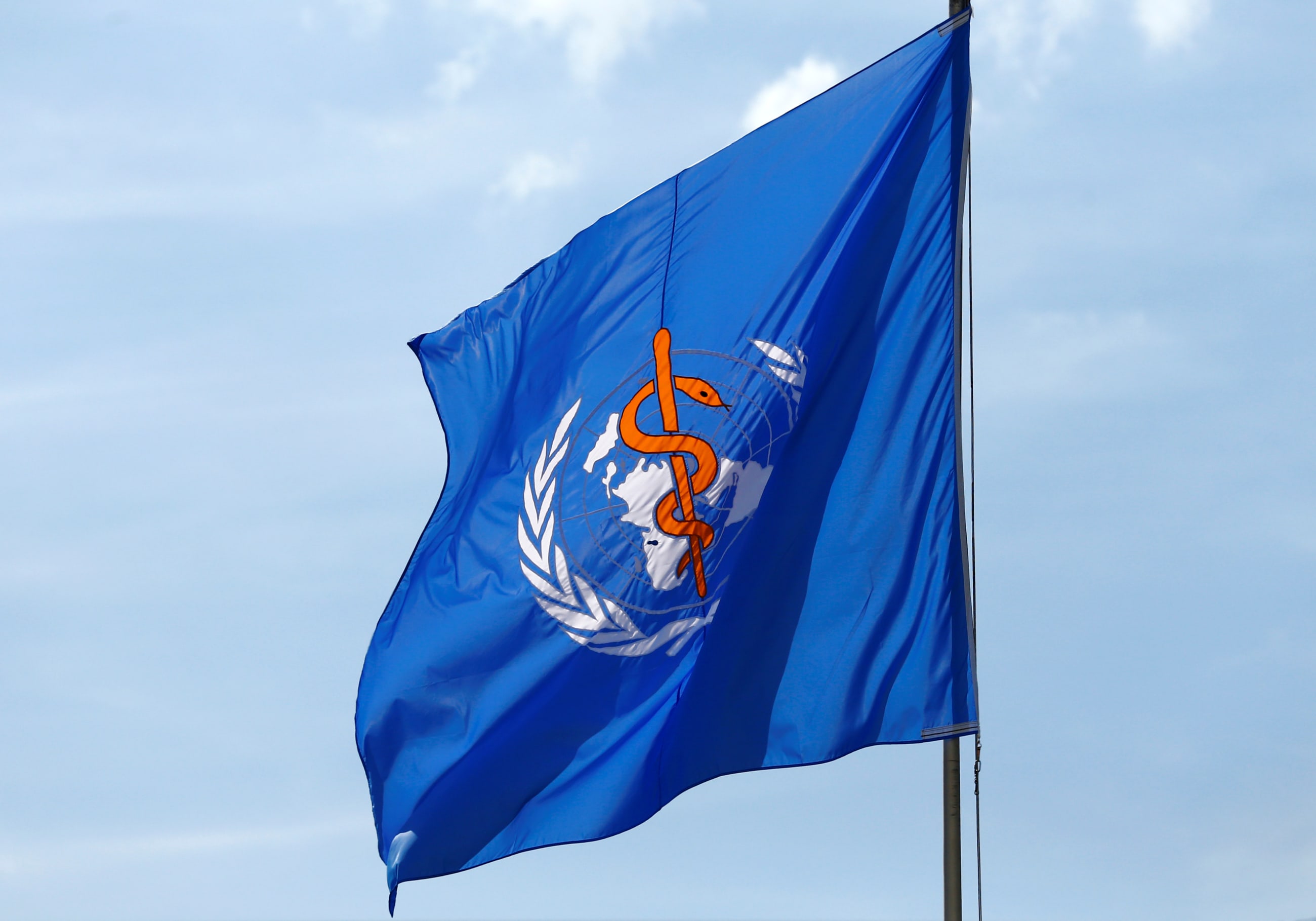
In classic bad-breakup form, the WHO refused in January to return the American flag that once flew outside its Geneva headquarters, arguing that the withdrawal was not yet final.
An Empty Seat for Mending Ways
Given that there is little the WHO can do to force the United States to participate or pay its arrears, the international organization's response could strike some observers as denial—an inability to accept that its relationship with its largest funder is over, at least for now.
The U.S. Congress, not the WHO, is the party best placed to try to force the Trump administration to abide by the terms of its 1948 Joint Resolution. In that resolution, Congress authorized the president to accept U.S. membership in the WHO, but reserved the right for the United States to withdraw once (a) it has given one-year notice and (b) the U.S. financial obligations to the organization have been met in full for the current fiscal year.
The U.S. Congress, however, has shown itself unwilling to restrict U.S. presidents from exiting international agreements or to assert its institutional mandates to restrict the current commander-in-chief from doing much of anything. The WHO has the authority to interpret the provisions of the organization's constitution, not the congressional joint resolution, and it did so in 1948 when the World Health Assembly determined that the United States could accede to the WHO constitution with reservations, a right not explicit in that treaty.
History suggests, however, that there could be more at play here in the WHO refusal to confirm U.S. withdrawal. The WHO constitution is silent on the possibility of withdrawal. During the World Health Assembly debates on the U.S. accession with reservation, countries argued that the U.S. ability to withdraw meant that other nations needed to have the same right. Some international law scholars point to discussions at the San Francisco conference that finalized the UN Charter that acknowledge that a UN agency cannot compel member states to continue their involvement when the member state maintains that the organization's purpose has been thwarted. Nevertheless, UN agencies have adopted a consistent strategy and practice to thwart attempted member-state withdrawals.
In 1949, the Soviet Union, Ukrainian Soviet Socialist Republic (SSR), and Byelorussian SSR gave notice to withdraw from the WHO. The following year, Albania, Bulgaria, Czechoslovakia, Hungary, Poland, and Romania followed suit. The withdrawing countries ceased to pay their assessed contributions, leaving a large gap in the WHO's budget, similar to today's situation with the United States. Pointing to the WHO constitution's lack of provision for withdrawal of membership, then Director General Brock Chisholm responded by claiming the countries were merely "inactive," not formally withdrawn, stating that "the erring brothers have their seats waiting for them when they desire to mend their ways."
Whatever its legal basis, Chisholm's strategy worked: it allowed the WHO to evade a formal rupture with its prodigal member states until circumstances changed in a way that allowed their return. That happened with Joseph Stalin's death in 1953 and subsequent shifts in Cold War dynamics. The Soviet Union announced its intention to rejoin the WHO in 1955. By 1956, all communist countries, except China and North Korea, had reintegrated. Although openly welcomed back by the WHO, they were required to pay a small percentage (5%) of back membership dues. By requiring payment of these overdue assessed contributions, even in reduced form, this resolution reinforced the perception that the absent countries had still been member states, even in their absence.
Other UN agencies have followed suit. In 1965, Indonesia attempted withdrawal from the United Nations in protest against the election of Malaysia as a nonpermanent member of the Security Council. When the government decided "to resume full co-operation" and "resume participation"—an indication of absence based on cessation of participation, rather than withdrawal—they were required to pay 10% of Malaysia's arrears for the period of its absence. UN Secretary-General U Thant explained that the reduced payment had been agreed on because "Indonesia had derived no benefits from membership during its period of non-participation." Building on the precedent, Czechoslovakia, Hungary, and Poland paid partial arrears when they resumed participation in the United Nations Educational, Scientific and Cultural Organization (UNESCO) following an attempted withdrawal in 1952.
The Ripple Effects
The stakes of a permanent U.S. withdrawal from the WHO are serious for Americans and people worldwide. A robust disease-surveillance system requires participation from as many countries as possible, especially those where novel pandemic threats are most likely to emerge, such as China. The U.S. government will struggle to achieve that level of coverage without working with the WHO and its various surveillance and data-sharing networks, such as the one that establishes the annual flu vaccine formula. The WHO has not always performed well in responding to crises, but it has shown a capacity to rectify shortcomings when its member states are unified. The prospects for that reform are better with continued U.S. engagement.
This crucial distinction between temporary absence and formal withdrawal (requiring a readmission process) speaks to the heart of the WHO's approach with the United States. With different U.S. leadership and continued WHO reforms, circumstances could change, in ways that enable the United States to re-engage the WHO. Even if the United States is steadfast in its belief that it has formally withdrawn, refusing to accept the exit could give cover to future administrations seeking to avoid the need to re-ratify the WHO constitution, a feat requiring a two-thirds Senate vote that would likely prove impossible in the current polarized political climate. The WHO's stance could help prevent a domino effect of other members attempting withdrawals, an issue made clear by Argentina's and Israel's announcements to exit following the U.S. departure.
With romance, refusing to heed a partner's decision to end a relationship is a bad strategy. International relations with multilateral institutions, however, may be different. The WHO's approach prioritizes long-term global health cooperation over procedural clarity and the momentary, leader-driven prerogatives of member states. The calculus rests on a strategic bet: U.S. withdrawal will eventually be regarded like the Soviet's seven-year hiatus: a temporary breakup, rather than a permanent divorce. If past practice is any guide, their strategy may facilitate the reunion of the global health agency and its largest donor.