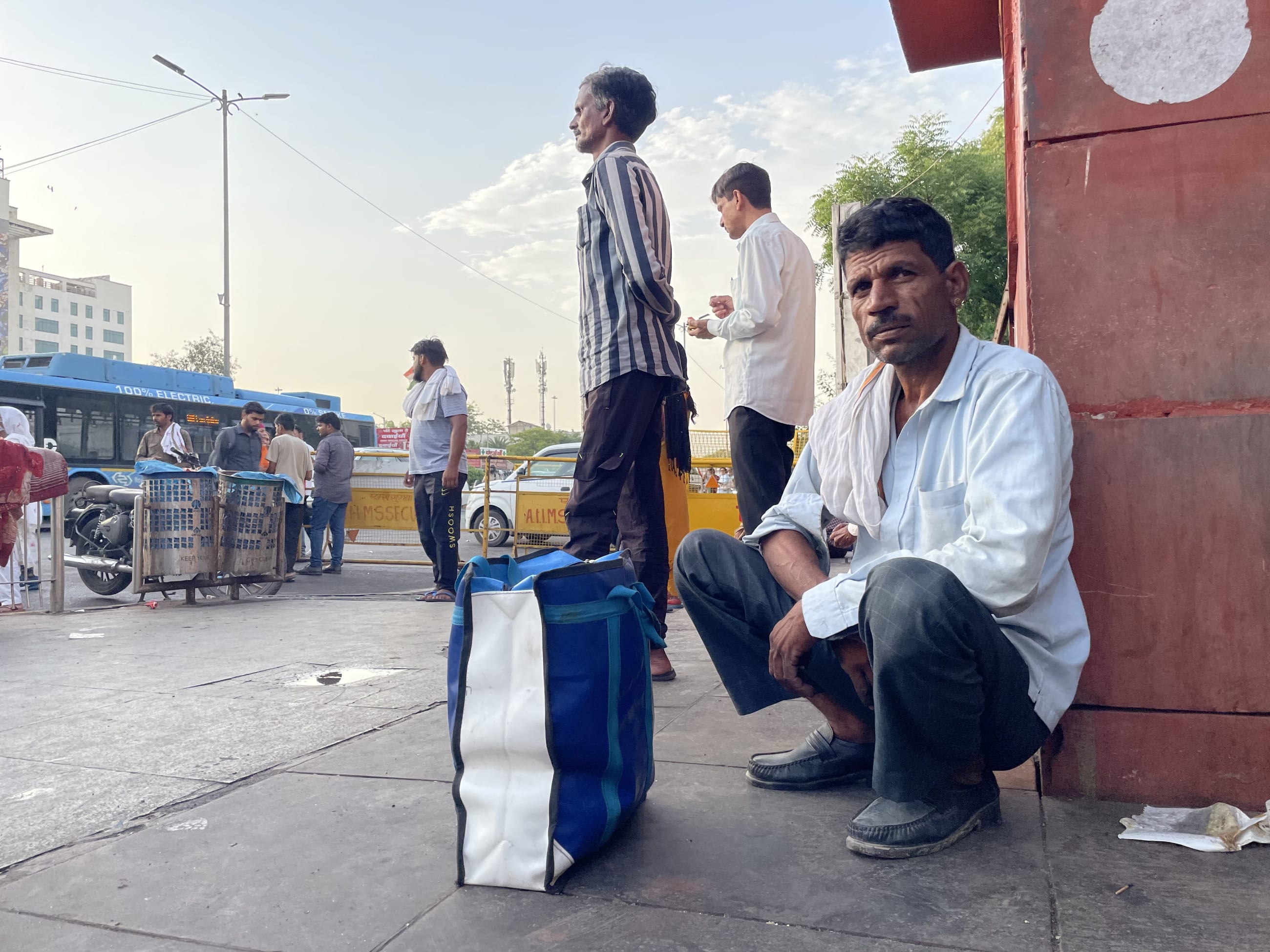
Ramesh Kumar did not stop working because he caught tuberculosis (TB). He stopped because no one would employ him once his diagnosis became known in June 2025.
The 45-year-old migrant worker from Madhya Pradesh had been earning about $130 (12,000 rupees) per month in a garment factory when he fell ill and had to take a leave of absence. His body weakened, and doctor's visits consumed his schedule. His employer inquired about the disruption, and after Kumar disclosed his diagnosis, he lost his job. His wife, who cleaned utensils in several homes, also lost her income after employers learned that someone in her household had the disease. The family's combined earnings, already precarious, collapsed overnight.
"In India, rest is a privilege," Kumar said. "People like us cannot afford to sit at home and recover."
In India, rest is a privilege. People like us cannot afford to sit at home and recover.
Ramesh Kumar
His misfortune was compounded by a broader shock unfolding across India last year as funding cuts to tuberculosis programs backed by the U.S. Agency for International Development (USAID) disrupted the community-based care that many patients depend on to survive a long and exhausting course of treatment. After this funding evaporated, patients have been increasingly forced to navigate illness and its social consequences on their own.
India remains the world's highest tuberculosis-burden country, accounting for roughly a quarter of global TB cases. Approximately 2.7 million people develop the disease each year, and TB-related deaths average two every three minutes. Despite the government's pledge to eliminate tuberculosis by 2025, a decade ahead of the global target, India entered 2026 without meeting that goal.
The South Asian country has witnessed progress—with its TB death rate dropping 21% from 2015 to 2023. But still in 2023, tuberculosis ranked seventh among India's causes of deaths, behind lower respiratory infections but ahead of neonatal disorders and road injuries. TB accounted for 3.4% of fatalities that year, or 334,000 deaths.
Although case detection has improved in recent years, experts say India's progress remains fragile and heavily dependent on sustained investment beyond hospital walls.
Community Care on Life Support
Under India's National Tuberculosis Elimination Programme (NTEP), diagnostics and medicines are provided for free. But public health experts emphasize that TB control depends on more than clinical access. Treatment typically lasts six months or longer, and patients often need counseling, nutritional support, and consistent follow-up to complete it successfully.
For decades, much of that support came from community organizations, many funded wholly or in part by USAID.
Between 1998 and 2022, USAID stated that it had invested more than $140 million in India's TB response [PDF], supporting nongovernmental organizations, private-sector partners, and survivor-led networks that bridge gaps between hospitals and households. Globally, the U.S. agency spent roughly $250 million annually on bilateral TB programs in low- and middle-income countries, investments that researchers credit with saving millions of lives. That funding stalled in February 2025 after the United States shuttered USAID and moved its operations to be under the Department of State.
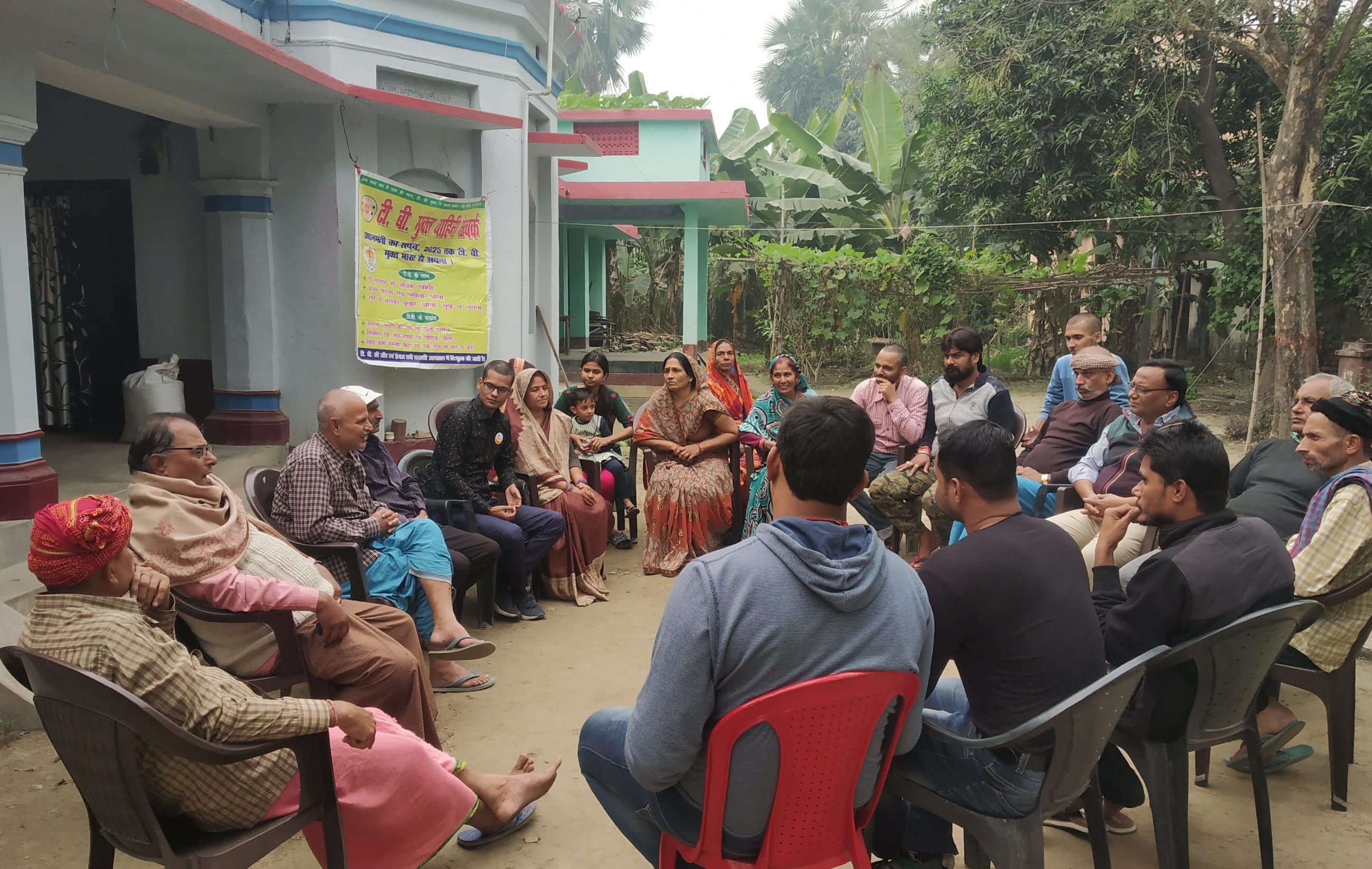
In Bihar, one of India's poorest states and among those with the highest TB burden, the consequences are stark. Sudeshwar Singh, a TB survivor and the founder of TB Mukt Vahini, a community-led organization working across the state, says the funding freeze has forced a near-collapse of operations.
Prior to the funding drop, TB Mukt Vahini coordinated more than 800 "champions" across Bihar's districts. These workers helped patients navigate treatment, counseled families to reduce stigma, and ensured that people did not drop out midway through therapy. Today, Singh says, fewer than five staff members remain active, largely covering costs with the organization's coffers.
"The medicine alone does not cure TB," Singh said. "Patients need confidence, information, and someone to stand with them for months."
Community-based programs such as TB Mukt Vahini are vital for Bihar, where poverty, migration, and weak health infrastructure intersect. Given its population of more than 100 million and a per capita annual income of roughly $458 (42,000 rupees), the state struggles to meet even basic health needs while having the third-largest burden of TB cases.
The loss of funding has meant fewer home visits made by TB Mukt Vahini—from twice a month to once every three months. The program has reduced outreach in remote villages and had limited ability to monitor treatment adherence. According to Singh, programs supported by USAID's Challenge Facility for Civil Society and the Tuberculosis Implementation Framework Agreement helped fill these gaps, funding grassroots work that government systems could not sustain. Several of those initiatives ended in April 2025.
Public health advocates warn of severe consequences. A modeling study, published in September by the Stop TB Partnership, estimates that a prolonged freeze in U.S. funding could increase TB cases by 36% and deaths by 68% across high-burden countries by 2030. Given India's share of the global burden, the country would bear a disproportionate impact.
Blessina Kumar, a long-time global TB advocate, told Think Global Health that donor-funded community programs serve as the connective tissue of national TB responses. Without them, patients are far more likely to fall through the cracks, even when medicines are technically free. She warns that dismantling survivor-led networks risks undoing years of progress in reducing stigma and improving treatment completion, particularly among migrants and informal workers.
When the Safety Net Disappears
Anjana Singh, 48, who has worked with TB Mukt Vahini for a decade, knows the stakes personally. She survived TB herself and credits counseling and community support with saving her life.
"When I was sick, I faced isolation and fear," she said. "I did not even understand what TB was or how it could be treated."
After recovering, she became a TB counselor, supporting patients through treatment and educating families and communities. For years, she earned a modest stipend of $65 to $76 (6,000 to 7,000 rupees) per month. The pay was low, she said, but the work mattered.
Since funding stopped last February, Singh and hundreds of other TB workers have lost their jobs. Some continue counseling patients informally, paying travel and phone costs themselves.
"We explain the medicines, we talk to families, we tell society there is no need to isolate patients," she said. "Without counseling, people lose confidence and stop treatment."
For patients such Ramesh Kumar, that loss of support can be devastating. With no counselor to intervene, stigma in his community intensified into a social boycott of him. Kumar and his wife say neighbors stopped visiting their home and avoid speaking with them. The family took loans from informal lenders to survive. Despite his doctor's advice to rest, Kumar continues to search for work, risking his recovery.
Health experts caution that treatment interruptions increase the risk of drug-resistant TB, a far more dangerous and expensive form of the disease that threatens individual patients and public health systems.
India's TB elimination target was always ambitious. As the 2025 deadline has passed unmet, progress could hinge less on headline targets than on the survival of community-based systems that support patients through long and demanding treatment.