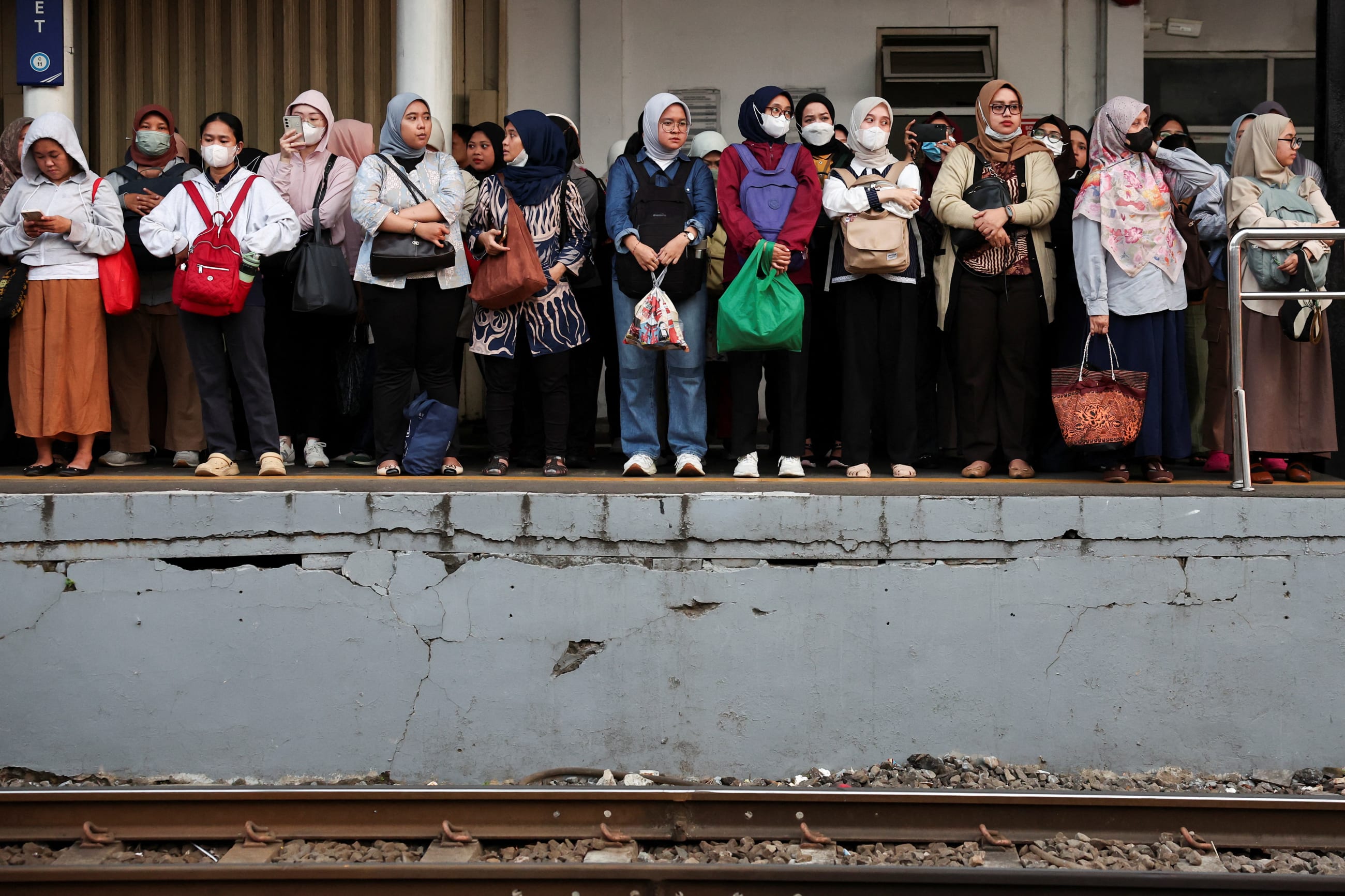
Each year, cervical cancer kills more than 20,000 women in Indonesia, placing the country among the highest burden for the disease in the Indo-Pacific. Although this noncommunicable disease is preventable and curable, it remains the second most common cancer among Indonesian women, with nearly 70% of cases detected at advanced stages [PDF]. The country's dense population and scattered geography—approximately 285 million people are spread across 17,500 islands—contributes to the problem. For rural populations, where resources are scarce, the difficulties are immense. Nearly 1 in 3 (27.8%) districts are classified as remote, making equitable health care a challenge.
In response to those challenges, Indonesia is emerging as a global leader in fighting this cancer. In June 2025, the country hosted the second Global Cervical Cancer Elimination Forum in Bali, a move that demonstrates its commitment to shaping regional and global discourse on prevention and care. That same year, the Women's Health and Economic Empowerment Network and the Elimination Partnership in the Indo-Pacific for Cervical Cancer launched a Technical Assistance Facility for noncommunicable diseases and women's cancers to strengthen cancer prevention and treatment in the Indo‑Pacific, beginning with cervical cancer elimination in Indonesia.
Those initiatives reinforce a shared commitment to expand primary care, ensure access to essential services and medicines, and protect women from the financial catastrophe of cancer. With policy frameworks in place, the next year is pivotal to translate national commitments into measurable gains in global goals in advancing cervical cancer elimination ahead of the next UN High‑Level Meeting (HLM) on Universal Health Coverage (UHC) in September 2027.
Vaccination: From Scale‑Up to Reducing Supply-Chain Dependency
Human papillomavirus (HPV) causes nearly 94% of cervical cancer deaths in low- and middle-income countries (LMICs). As part of Indonesia's efforts to reduce incidence, the government added the HPV vaccine to its National Immunization Program in 2023 [PDF]. In 2017, a school-based pilot began in Jakarta, and by 2021, it had expanded to 20 districts and cities, reaching more than 90% of girls in the piloted districts for a full course (two doses) of the vaccine.
20,000
Each year, cervical cancer kills more than 20,000 women in Indonesia
A year later, HPV vaccine coverage reached 29% for the first dose and 7% for the second for girls ages 11 and 12. In August 2023, the government rolled out nationwide HPV vaccination, offering free doses of the quadrivalent vaccine—a vaccine that protects against four types of HPV—to girls ages 11 and 12. Delivery is through Bulan Imunisasi Anak Sekolah (School-Age Child Immunization Month), a national school‑based immunization program that uses puskesmas (public health centers) to administer HPV doses each August and November. Although Bulan Imunisasi Anak Sekolah expanded national HPV vaccination coverage, recent subnational data shows that there is uneven uptake across provinces due to geographical challenges. That data underscores the need for continued outreach and delivery support. National coverage data following the 2023 launch has not yet been reported.
Before domestic manufacturing was possible, Indonesia procured HPV vaccines either through government purchases from Merck Sharp & Dohme or the UN Children's Fund (UNICEF). In 2022, the launch of NUSAGARD [PDF], Indonesia's first domestically manufactured HPV vaccine, marked a national developmental milestone in reducing the country's dependency on global supply chains for sustainable vaccine procurement. Local production was enabled by a technology transfer agreement between Merck and Indonesia's state-owned manufacturer Bio Farma for the manufacturing of quadrivalent HPV vaccines. At the Global Cervical Cancer Elimination Forum in 2025, Indonesia committed to adopting a single‑dose HPV vaccination schedule by streamlining delivery while maintaining protection against cervical cancer.
Screening: A Shift to High‑Performance HPV‑DNA Testing
Access to cervical cancer screening is also undergoing major transformation. Since 2023, the national Cervical and Breast Cancer Prevention (CECAP) program has shifted its high‑performance screening standard from visual inspection with acetic acid (VIA) testing, which relies on visual detection of cervical lesions, to HPV‑DNA testing, which identifies high‑risk HPV infection with greater sensitivity and accuracy. This way, high‑risk infections and precancerous changes can be detected earlier. This advantage allows health workers to find and treat more high‑grade lesions sooner, leading to fewer cervical cancers in subsequent screening rounds. In February 2025, the government launched the national Cek Kesehatan Gratis (Free Health Checkup) program, which provides free cervical cancer screenings on citizens' birthdays. To receive a screening, patients register for an appointment via the SATUSEHAT mobile application and receive care in a puskesmas that is partnered with the country's Social Security Agency for Health (BPJS Kesehatan).
Treatment: Expanding Equitable Access
Treatment access remains uneven in the country, and it particularly lags in remote provinces. In 2023, Indonesia launched the National Cervical Cancer Elimination Plan (NCCEP), which outlines the nation's commitment to expanding access to surgical, chemotherapy, and palliative care services across all 514 districts by 2030, reducing time‑to‑treatment and preventable deaths. As part of that plan, Indonesia set 90‑75‑90 targets: fully vaccinate 90% of girls and boys by age 15; screen 75% of women ages 30 through 69; and ensure that 90% of women diagnosed receive treatment. That strategy seeks to prevent new HPV infections and limit cancer progression through screening with same‑day treatment. It also strives to lower case‑fatality by ensuring timely therapy for women with cancer.
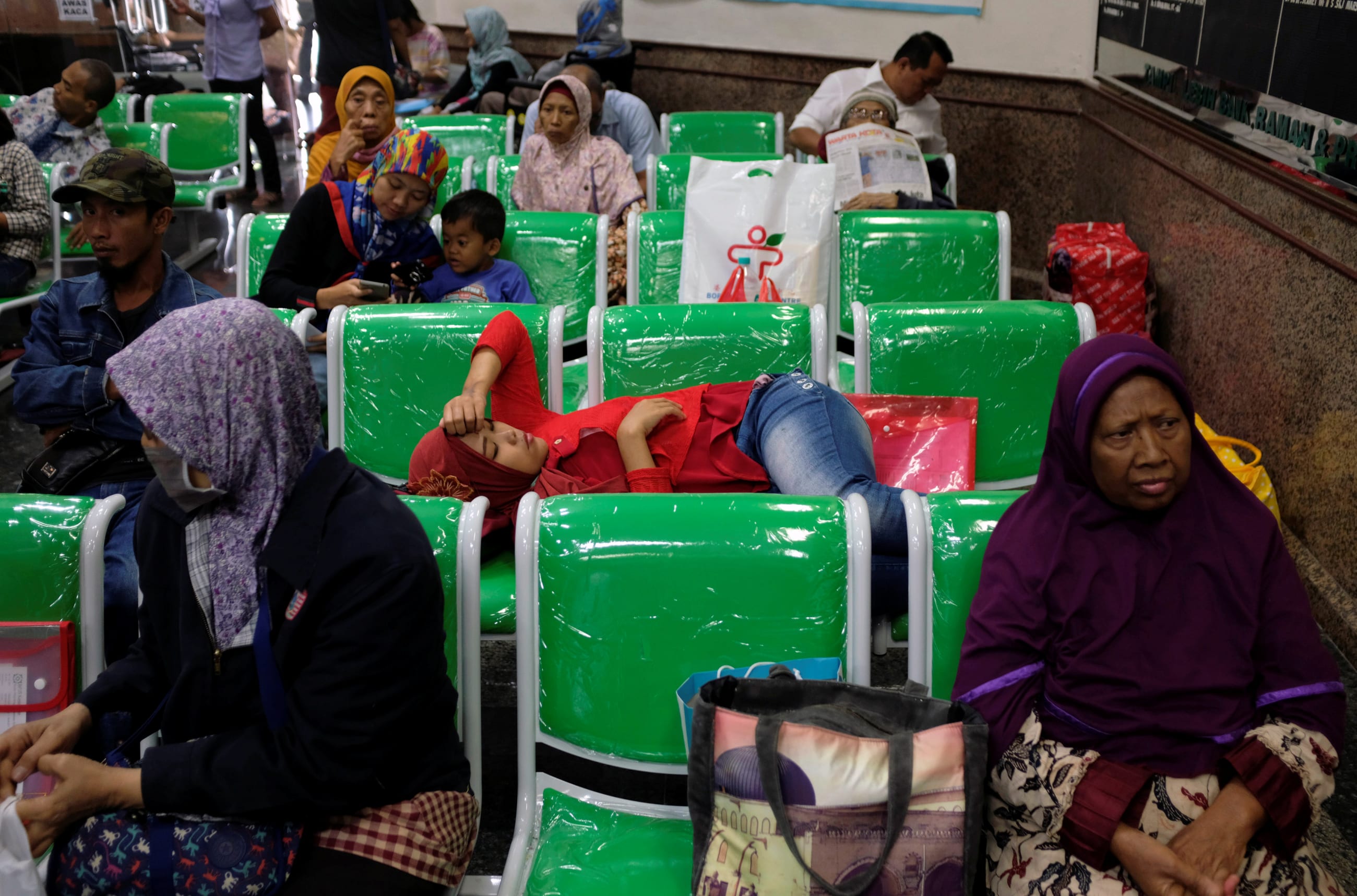
During its International Cancer Conference in 2024, Indonesia built on that commitment when it announced plans to expand radiotherapy and nuclear medicine services across the 34 provinces. That decision is critical because a combination of external‑beam radiotherapy, which directs cancer‑killing radiation at the cervix from outside the body, and brachytherapy, which places a small radiation source close to the tumor, can cure most cervical cancers that have not spread to other organs. Complementary international initiatives, such as the International Atomic Energy Agency's Rays of Hope, which seeks to expand equitable access to cancer diagnosis and radiotherapy by building sustainable imaging, nuclear medicine, and radiotherapy capacity in LMICs, further signals momentum for the country to close treatment gaps, especially for women living far from tertiary centers.
Indonesia also developed a National Cancer Control Plan (NCCP) 2024–2035 [PDF] (Rencana Kanser Nasional) to concentrate national efforts on prioritizing cervical cancer among the country's most burdensome cancers, including breast cancer, lung cancer, colorectal cancer, and childhood cancers. Together, these mechanisms attempt to reduce cervical cancer incidence in vaccinated women and girls, increase early detection, and improve survival through definitive treatment.
Investing as an Enabler of Health System Transformation
Indonesia is pairing health systems advancement with a strategy that leverages traditional and alternative financing mechanisms to promote sustainability within national health plans. In 2023, Indonesia received an approximate $4 billion loan package [PDF] from the World Bank, the Asian Infrastructure Development Bank, the Islamic Development Bank, and the Asian Development Bank to strengthen the country's public health system.
With local vaccine production bolstering supply security, high-performance screening, and treatment capacity growing within a national cancer framework, Indonesia can accelerate progress in eliminating its cervical cancer burden ahead of the next UN HLM. Together, a united Indonesia aspires to a future where cervical cancer is a disease of the past and every woman—across all socioeconomic demographics—can live a healthy life free from its threat.