Argentina's vital statistics [PDF] offer several troubling signals for global health observers. After roughly two decades of steady improvement, key mortality indicators have begun to reverse.
The latest national numbers—preliminary data released this January but encompassing health metrics from 2024—show infant fatalities rising to 8.5 per 1,000 live births, up from 8.0 in 2023. It is the first such increase in about 20 years. Likewise, maternal mortality has risen to 4.4 per 10,000 live births, 25% above its pre-pandemic level of 3.49, and the crude death rate climbed to 8.1 per 1,000 population from 7.6 the previous year. That fatality uptick represents a reversal of a decades-long decline and translates to approximately 20,000 additional deaths annually in a country of 46 million people.
Argentina is an upper-middle-income country with a long tradition of biomedical education, a national scientific research system, and health infrastructure that—however fragmented—has historically delivered broad coverage to most of its population. That is precisely what makes its current trajectory so instructive for the region.
The country's health statistics have long suffered from quality problems, a challenge that extends across Latin America
The country's health statistics have long suffered from quality problems, a challenge that extends across Latin America. According to UNICEF and the Ministry of Health [PDF], an average of 6% of newborns are unregistered in their first year of life. Infant and maternal mortality [PDF] figures also tend to underestimate the true burden of preventable deaths, particularly among poorer populations [PDF]. Although weak civil-registration systems can lead to discrepancies in individual indicators, concurrent deteriorations across multiple indicators are less attributable to measurement error alone and more consistent with underlying systemic stress in the health system.
Infectious diseases have followed a similar trajectory. During the first two months of 2026, the incidence of several communicable diseases rose sharply compared to the period from 2020 to 2024. Pertussis, also known as whooping cough, increased 3,340%, leptospirosis by 480%, hepatitis A by 275%, and syphilis by 106% compared to their five-year medians. The resurgence of vaccine-preventable diseases—in particular, pertussis and hepatitis A—coincides with a sustained decline in vaccination coverage across all Argentine jurisdictions. None currently meet the herd-immunity thresholds necessary to interrupt community outbreaks.
Those health declines suggest that the country could be entering a new mortality regime from which, historical experience suggests, it will be difficult to recover. Behind that decline lie convergent pressures: macroeconomic strain, chronic health-system fragmentation, disrupted disease prevention and early care, and declining capacity for coordinated public health that could pull Argentina's health indicators away from the trajectories expected of an upper-middle-income country.
Mortality Traps and Decades of Fragmented Progress
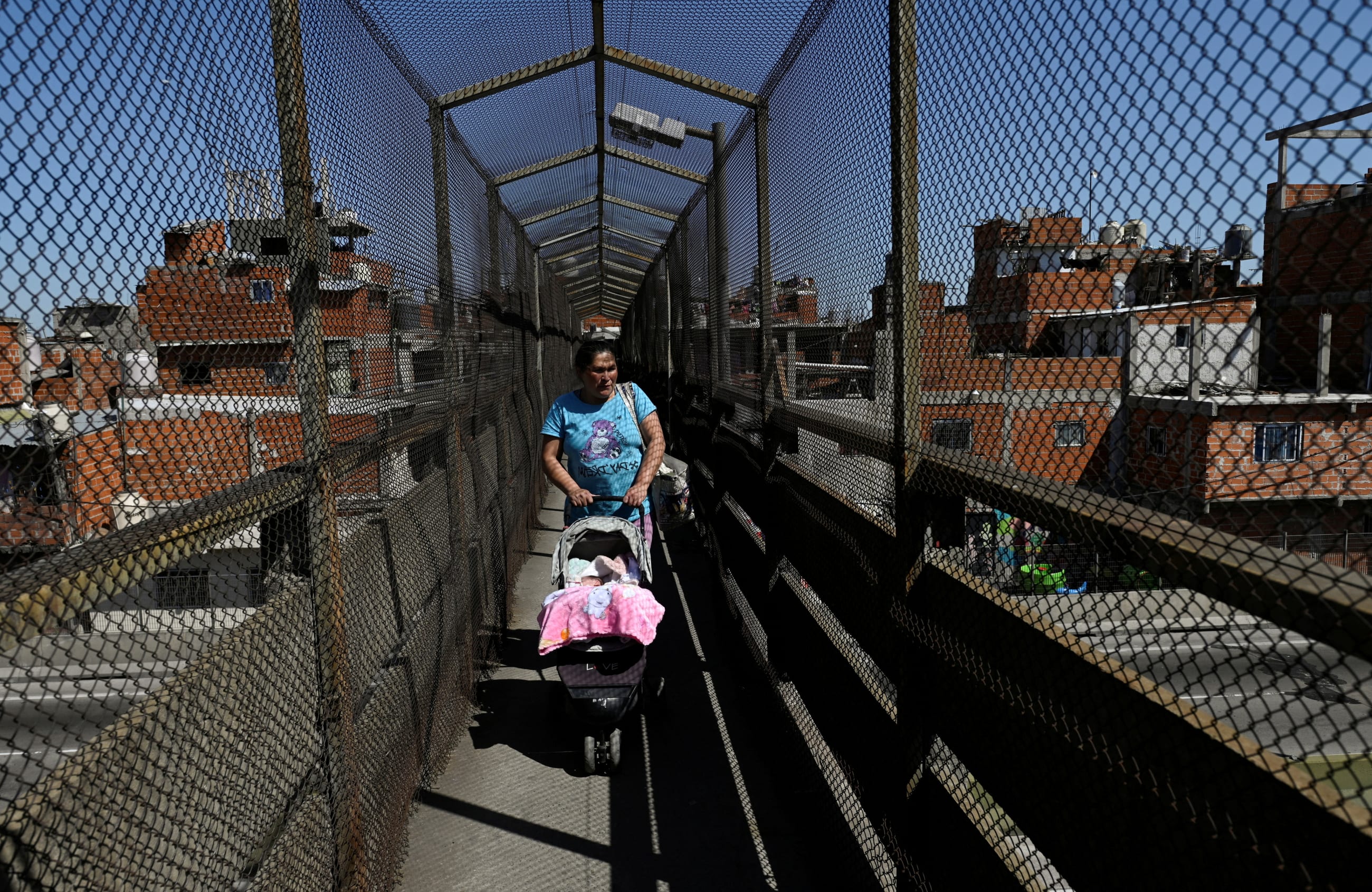
Following the 2001 economic crisis [PDF], Argentina achieved sustained reductions in infant and maternal mortality through a coordinated mix of public health policies and targeted social programs that expanded access to medicines and strengthened maternal care in low-income communities. Yet those gains did not overcome the public health-care system's fragmentation and its chronic underfinancing, which continued to harm long-term performance. Over nearly two decades, the health system was partially rebuilt and succeeded in delivering essential services to approximately half the population; however, it continued to struggle to ensure equitable access for rural and marginalized communities, particularly in the large impoverished peri-urban belts.
Today, countries that once lagged behind Argentina have moved ahead, proving that sizable percentage reductions in infant mortality are possible at any stage in economic development. Between 2000 and 2023, infant mortality declined across the Southern Cone countries—Argentina, Brazil, Chile, and Uruguay—but the pace of improvement differed markedly. Brazil recorded the fastest average annual reduction, at 3.67%, followed by Argentina at 3.09%. Chile improved more slowly at 1.72%—yet still ended the period with the lowest rate in the group. In 2021, Chile's infant mortality rate of 5.8 per 1,000 live births placed it close to the United States at 5.4, although it was still above the OECD average of 4.0.
Argentina, despite modest gains, was never on track to reach the OECD average, a standard that captures the mortality outcomes achieved by advanced health systems. Infant mortality declined over the last two decades, but that progress was uneven and was not matched by improvements in territorial inequality. Since 1985, infant mortality rates in Argentina's northern provinces of Formosa, Jujuy, Misiones, Salta, and Tucumán have remained more than twice as high as Buenos Aires, the nation's capital. Countries such as Brazil or Peru saw infant mortality rates fall as substantial movements toward health equity, through expanded primary care, strengthened maternal and child health services, improved access to skilled birth attendance, and targeted social protection programs.
By implementing a combination of expanded primary-care networks in rural areas, conditional cash transfer programs such as Juntos, targeted maternal and child health interventions, and gradual improvements in health-system integration, Peru was able to achieve and sustain notable reductions in infant mortality. In the late 2010s and early 2020s, Peru's infant mortality rate had converged with Argentina's, a reversal that would have seemed improbable in the early 2000s.
But Argentina's uneven progress hides a deeper failure: the persistence of subnational mortality traps rooted in structural heterogeneity—zones of high mortality concentrated in poorer provinces and among marginalized populations—which two decades of overall improvement only partly reduced.
A Convergence of Underlying Factors
Argentina's first challenge is structural fragmentation. Rather than be integrated, the health sector operates through three largely parallel and poorly coordinated subsystems—public, social insurance (obras sociales), and private (prepagas)—that serve different populations with unequal resources, quality, and territorial reach.
The interaction between fiscal adjustment and public health capacity is another factor in Argentina's uneven health outcomes. Although the literature remains contested, a substantial body of epidemiological research has linked tightening fiscal policy, rising poverty, and unemployment to adverse population-health outcomes. In Argentina, cuts to health spending after 2023 have prompted concerns surrounding access to prevention, testing, and treatment programs. Because many health services are delivered through provincial health systems heavily dependent on national government funding, budget cuts erode effective coverage.
Persistent poverty contributes to Argentina's health deterioration. For most of the last decade, poverty has remained above 30%. That rate, combined with the fact that 24.7% of health expenditures are still paid out of pocket, makes deferred consultations, reduced access to medicines, and mounting barriers to transport and follow-up care more likely.
Those disruptions have two major consequences: the first is the exhaustion of health-system capacity [PDF]. Years of underfunding and severe organizational disruption cannot be reversed by a budget line—progress requires time, institutional rebuilding, and sustained political will. The second, although harder to measure, is the accumulation of unhealthy behavioral changes including a lack of exercise, smoking, and alcohol use within a population that has lived in chronic poverty for decades [PDF]. These are not downstream effects of poverty—they are its structural sediment. The observed pace of decline [PDF] in the probability of premature death death before age 70) between 1970 and 2019 suggests that Argentina would require more than 75 years to halve that risk, whereas Brazil would need 43 years and Chile only 21.
A Sentinel Event for Latin America
Taken together, these changes offer a coherent and evidence-based account of how Argentina's worsening vital statistics could have arisen from an array of deep social and health-system transformations.
Shifts in mortality regimes are typically recognized only in retrospect, once the opportunity for low-cost interventions has already closed. When excess deaths arise primarily from preventable causes, health-system capacity remains intact, and targeted interventions can restore prior trends without major structural reform, the window is open. It closes when preventable mortality persists despite intervention, institutional capacity erodes, and the underlying determinants of death shift from episodic disruption to systemic deterioration.
Argentina may still be within that window; but not for long.