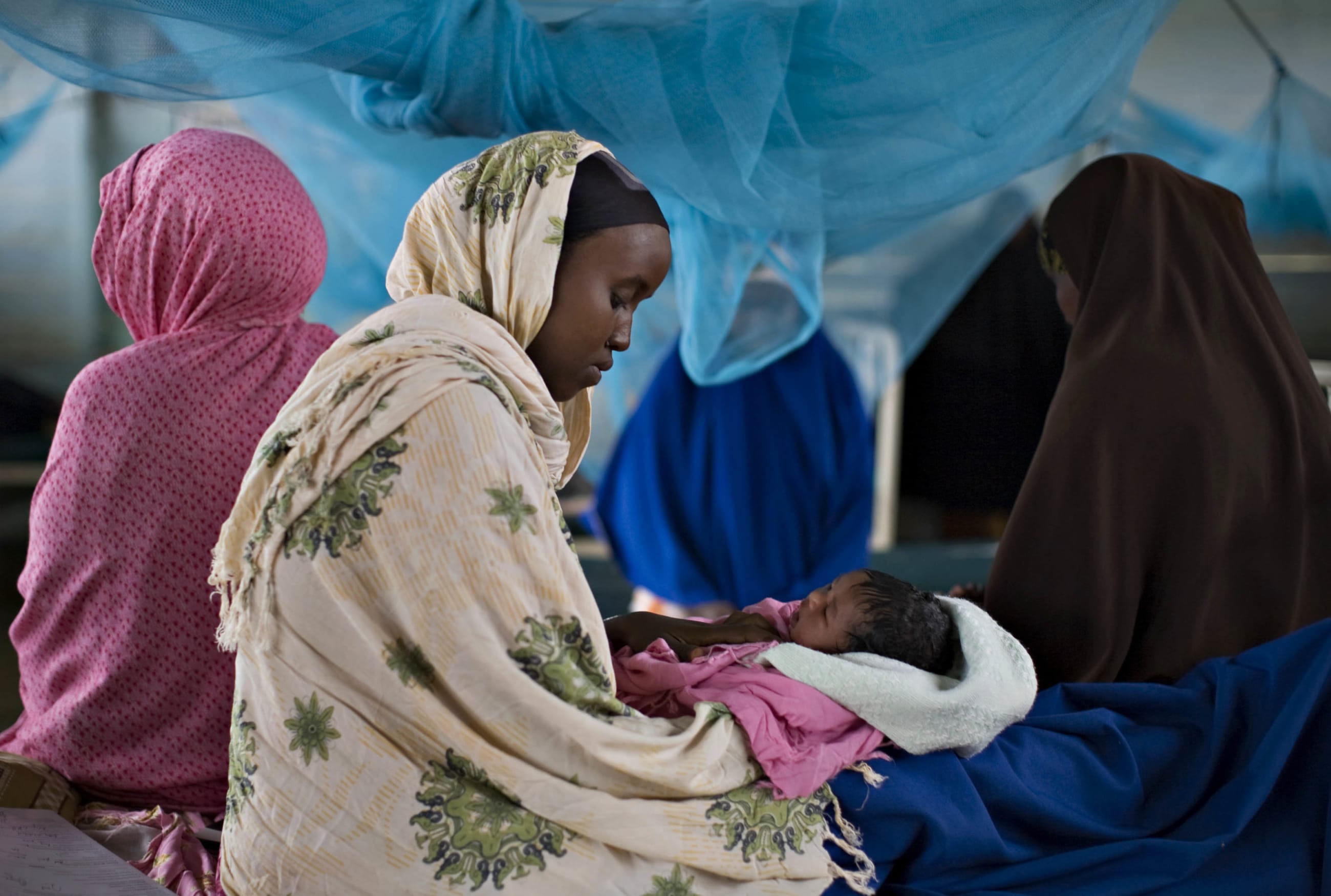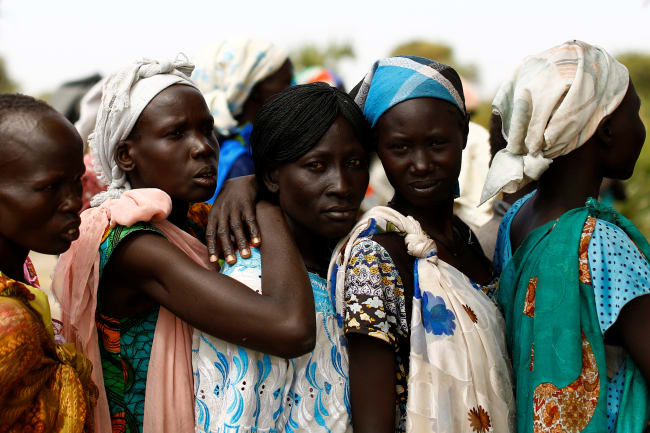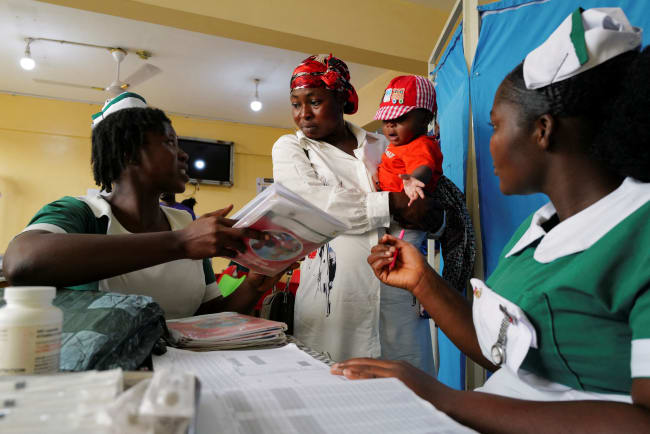
A birth certificate is a child's first formal recognition by the government—the access pass to health care, education, financial systems, and legal protection. Without a birth certificate, a child begins life unaccounted for, growing up unseen by the institutions meant to safeguard and provide opportunities, left behind at each milestone that marks the pathway to prosperity.
In sub-Saharan Africa, more than 110 million children younger than 5 lack a birth certificate, including nearly 7 in 10 infants younger than 12 months.
Yet there is room for optimism. Twenty-six African countries are on track to register all births by 2030, in alignment with Sustainable Development Goal 16.9, and since 2019, the World Bank has delivered on 70 digitalization investment projects totaling $9 billion across 37 African countries.
Those advances are critical, as the consequences of remaining unregistered and unrecognized fall hardest on girls. Inequities follow girls into womanhood, limiting their rights and benefits, including marital protections such as spousal support or inheritance, financial inclusion, voting, and universal health coverage. As the pace of digital transformation accelerates across Africa, the divide could widen. But the current wave of investment in digital technologies presents a chance to create smart systems that bring millions of girls and women into a world of opportunity and protection.
110 million
In sub-Saharan Africa, more than 110 million children younger than 5 lack a birth certificate
Inclusion does not happen by accident. The everyday norms that determine who goes to school, who owns property, who accesses information, and who controls resources are reinforced by the structures and systems that recognize—or fail to recognize—people across their lifetimes. Governments and investors need to prioritize the foundations: birth registration, legal identity, and recognition by governments. When girls are not captured in national data, their exclusion becomes normalized. When systems are intentionally redesigned to include them, opportunities expand. Countries may inherit systems that reinforce inequities, but they do not have to pass them on to the next generation.
Governments have the power to create a different future and more-equal playing field for our children in three ways.
Count everyone by registering every birth. Civil registration and vital statistics systems—the universal and timely recording of births, marriages, and deaths—are foundational to the social compact.
Currently, significant obstacles remain in countries that have not yet digitalized registration services and where the burden remains on families to travel, often long distances, to register vital events like births, marriages, and deaths.
When everyone is counted, governments have a complete picture of citizens' unmet needs, a pre–requisite for guiding public policy and realizing a more equitable world. Countries with better-performing civil registration and vital statistics systems have improved health outcomes for all. They have lower maternal and child mortality rates and increased capacity to effectively implement gender-sensitive and gender-responsive policies.
![A town hall worker examines identity documents of a witness who has come to testify to the identity of an individual making an application for a birth certificate, in Abidjan, May 18, 2006. Ivory Coast citizens who remain without identity papers must urgently be given documents if the war-scarred West African state is to hold [elections] due by October, the main opposition leader said on Thursday.](https://assets.cfr.org/images/t_tgh-max_2600x2600/f_auto,q_auto/v1776248288/tgh/2006-05-18T120000Z_85916695_PBEAHUNNUDW_RTRMADP_3_IVORY-COAST/2006-05-18T120000Z_85916695_PBEAHUNNUDW_RTRMADP_3_IVORY-COAST.jpg)
Recognize everyone by linking every birth registration to a national digital ID. In today's world, inclusion means having a digital identity. In a digital society, services are delivered through systems that require a consistent, verifiable identifier, and participation depends on authentication. When birth registration operates separately from digital identity platforms, recognition becomes fragmented.
But when birth registration and digital ID are integrated, identity becomes durable and legally valid. The acknowledgment granted at birth carries forward into education, health care, financial access, inheritance, and civic participation. Thailand and Vietnam are examples of countries leading the way on digital IDs, with nearly universal civil registration and a personal ID number issued during birth registration. Every newborn is seamlessly enrolled in the country's universal health coverage [PDF].
Ethiopia, Kenya, and Rwanda represent some of the most advanced efforts in Africa toward large-scale digital ID systems. These systems allow people and financing to move seamlessly across public and private sectors, creating new markets that further drive economic development.
Connect everyone by linking digital IDs to inclusive digital public infrastructure—the backbone of modern societies that enables secure and seamless interactions between people, businesses, and governments.
When countries invest in digital public infrastructure, they remove barriers for millions of people. Digital IDs connect people to essential social services and economic activities. Notably, Rwanda saw birth registration jump from 63% in 2016 to 90% in 2024 after its civil registration system was fully digitized, and the system is now being leveraged to reduce health inequities. When a child is born in a Rwandan hospital today, their birth is registered and their health data is linked to their unique national ID number before they return home. Primary care workers can identify which children have not completed their vaccination schedule and can re-engage them in care.
Rwanda's system also enforces rights by removing barriers to economic opportunity and independence. For example, when a woman marries, not only is the marriage automatically registered; her name is also added [PDF] to any property records, guaranteeing a 50% share of her spouse's holdings. Rwanda has proven how digitalization and community-based registration services can be linked to digital public infrastructure even in resource-constrained settings. Given intentionality, these are steps other countries can take to advance more equitable access to rights, benefits, and services.
Countries are demonstrating that counting, recognizing, and connecting everyone are not side issues on the path to equity; they are the fabric that holds every other right in place. When built with inclusion in mind, new digital public infrastructure can dismantle the barriers that keep women and girls on the margins.
When built without it, infrastructure risks deepening inequality—replicating the same exclusion but at greater costs. Equity is impossible when invisibility is the norm.