On June 18, the U.S. Department of State declared its intention to permanently end all HIV-related U.S. foreign assistance to South Africa by early 2027.
This announcement is the latest disruption to foreign aid in the country, which saw a 43% drop in HIV-related expenditures between 2024 and 2025 following the Trump administration's dissolution of the U.S. Agency for International Development (USAID), executive order ending all U.S. aid to South Africa, and imposition of a waiver that significantly scaled back services eligible for funding from the President's Emergency Plan for AIDS Relief (PEPFAR).
Despite last year's aid chaos, PEPFAR "Bridge Plan" funding had maintained some crucial services and opened the door for a phased transition with additional resources from the America First Global Health strategy (AFGHS). To date, the U.S. government has made agreements to give AFGHS funding to 32 countries, but South Africa was never extended a deal, over diplomatic tension. Now, South Africans living with and at risk of HIV have lost the benefits of a safe, planned transition from the past PEPFAR program to a new model.
Ending all U.S. foreign aid for health to South Africa will deepen care disruptions and could lead to a surge in new HIV infections and rates of advanced HIV disease. It departs from the U.S. government's own stated priority that the AFGHS makes the United States safer and stronger by shuttering vital research partnerships after decades of investment. It is critical that the U.S. Department of State extend health funding to South Africa for all programs currently supported with U.S. resources, for as long as required, to ensure an orderly and safe aid transition. By reversing the decision, the United States can still demonstrate that it understands that global health security depends on continued cooperation.
South Africa's HIV Care After Aid Cuts
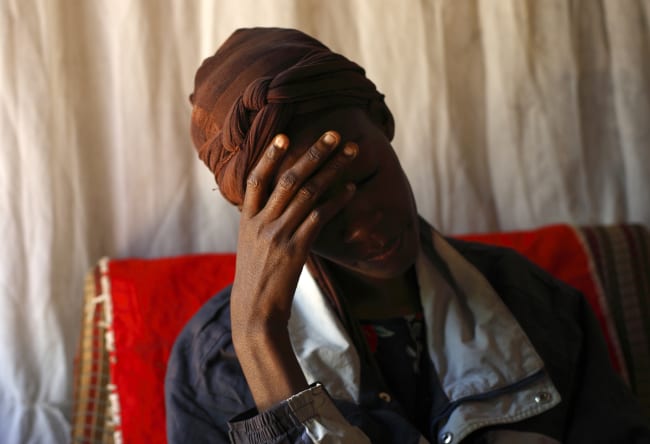
The impact of last year's aid cuts were felt immediately. Within a month or two of the January 2025 foreign aid freeze, Melokuhle*, a mother of two, arrived at a busy government clinic in South Africa to restart her HIV prevention medication. Melokuhle assumed that her visit would follow a standard protocol: a counselor or health worker would administer a rapid HIV test. Since Melokuhle thought she might have had a recent exposure, she also needed a confirmatory antibody-based test. If the test came back negative, that counselor would restart her on pre-exposure prophylaxis (PrEP).
Instead, nothing was as she expected. The counseling stations where people could quickly learn their HIV status were gone. A nurse explained that, in the months since the U.S. foreign-aid transition, the clinic had lost staff and services. Those remaining were overworked and unable to do basic tasks. "We only test when you ask," the nurse stated. "If you did not ask, then I was not going to test you." Prior to the dissolution of USAID, Melokuhle was an HIV prevention educator who had spent several years building rapport with adolescent girls and young women, encouraging them to use PrEP to stay healthy and HIV-free in a country where nearly 1,000 adolescent girls and young women acquire HIV each week. A PrEP user herself, Melokuhle knew that restarting the medication required HIV testing to ensure that she was still negative. The antiretroviral drugs used in PrEP don't control HIV, and HIV-positive people who use PrEP can develop drug resistance.
Melokuhle shared her experience with Physicians for Human Rights (PHR), Emthonjeni Counseling & Training, and Advocates for the Prevention of HIV in South Africa (APHA) as part of an oral history project that gathered lived experiences of 40 people, including government nurses, people living with HIV, counselors, data collectors, physicians, activists, and youth, on the frontlines of global health cuts imposed by the Trump administration. These oral histories, shared in a new report, document the "triple blow" from cuts to HIV funding, research, and cooperative diplomatic relations that undermined billions of dollars in U.S. investments in research infrastructure and the primary prevention services needed to deliver lenacapavir, a twice-yearly injection that is 96% effective in preventing new HIV infections.
Although the United States funded only a fraction of the South African HIV response, it supported most prevention and key population activities
Since the South African narratives were collected, the U.S.-South African public health partnership has gotten even more precarious. The U.S. government's own data corroborate Melokuhle's experience, and the report finds overall that availability of testing, PrEP initiations, and community-based services have all been gravely damaged by U.S. aid cuts, including in South Africa. Unlike other countries that previously received aid, South Africa has not signed a memorandum of understanding with the United States, over policy differences, preventing its transition to a new era of health aid focused on country ownership and independence.
"Triple Blows": The Trump Administration's Response to South Africa
Decades of investment and collaboration have slashed rates of mother-to-child transmission and reduced the frequency of death from advanced HIV disease. Making progress toward epidemic control, alleviating suffering, and averting preventable infections are major triumphs, especially given that they were attained without an effective HIV vaccine or cure.
But instead of sustaining progress, the Trump administration's actions, including dismantling USAID and expanding the "global gag rule," are endangering hard-won progress in the fight to control HIV worldwide. In April, Under Secretary for Foreign Assistance, Humanitarian Affairs, and Religious Freedom Jeremy Lewin declared that programs with "sentimental value" had to be eliminated so that money for new innovations such as lenacapavir could be freed up. Lewin did not specify which programs, but he made those remarks at a forum on lenacapavir, which will roll out without the extensive network of community-based and community-led services that had been built to deliver this PrEP tool in South Africa and across the African region.
Although the United States funded only a fraction of the South African HIV response, it supported most prevention and key population activities. When all resources for a small subset of services—including prevention—were removed, entire communities of key and marginalized populations who are at high risk for HIV infection, including LGBTQ+ people, sex workers, people who use drugs, adolescent girls, and young women, lost access to services.
Prior to cuts, programs based in schools, community centers, and townships brought invaluable information, peer support, and encouragement. Now, clinics no longer have the bandwidth to prioritize prevention over care and treatment. A government nurse described that change, saying that a "person that is sitting there for hours for PrEP is not sick and now is not a priority."
Data collection systems are also falling apart, making it harder to track infections and new cases. Cuts to funding have slowed infectious-disease surveillance and research progress, and the weakened ecosystem threatens the pipeline of new innovations in HIV prevention and treatment.
A teenage girl seeking PrEP will have to do what Melokuhle did: travel to a health clinic that may be difficult to reach, wait for hours to pick up for a refill, or, if starting PrEP, ask for an HIV test from clinical staff overwhelmed with the influx of patients due to the aid cuts. But decades of public health research tell us that stigma, lack of social support, difficulty accessing services during school or work hours, long wait times, and lack of confidentiality all deter girls from seeking care.
The collapse of primary prevention services in South Africa is a warning of what is to come if HIV programs lose additional funding.
Lessons from South Africa with Worldwide Health Security Implications
Decades of investment and collaboration on program design and implementation have shown the value of leadership by communities affected by health inequities. These frontline responses, which often do not fit into facility-based government health systems, are essential for pandemic and outbreak response—whether to known pathogens such as HIV, recurring threats such as Ebola or Hantavirus, or entirely new pathogens with the potential to spark global outbreaks.
The U.S. withdrawal of funding for these programs comes in the context of a highly secretive, noninclusive planning process for implementation of the AFGHS, which prioritizes bilateral partnerships with selected recipient countries over broader multilateral and community-driven approaches. Communities and civil society have been excluded from planning spaces and denied access to the data and documents being used to guide decision-making.
This trend is not confined to the United States. At the World Health Assembly in May, member states endorsed a proposal for a joint process hosted by the World Health Organization (WHO) on the reform of global health architecture that excluded affected communities and civil society from its governing task force.
More than 20 years ago, when the United States began the PEPFAR program in South Africa, these partnerships were a cornerstone. At a time when then President Thabo Mbeki and his minister of health questioned the efficacy of antiretrovirals and the causal relationship between HIV and AIDS, the United States worked with activist physicians and mobilized communities to build antiretroviral therapy (ART) programs that expanded and exist to this day.
Diplomatic wrangling did not delay an effective pandemic response then, and it should not now. The State Department has indicated willingness to consider an impact assessment of the current timeline for canceling South Africa's HIV aid. Such an assessment should be conducted in collaboration with the community-based and community-led groups, including those whose testimony is included in the report. It should include evaluation of prior U.S. investments in key infrastructure elements, including primary prevention platforms, electronic medical records, and pharmacy systems, that will be wasted if the transition is rushed.
AUTHOR'S NOTE: *Name changed for anonymity.