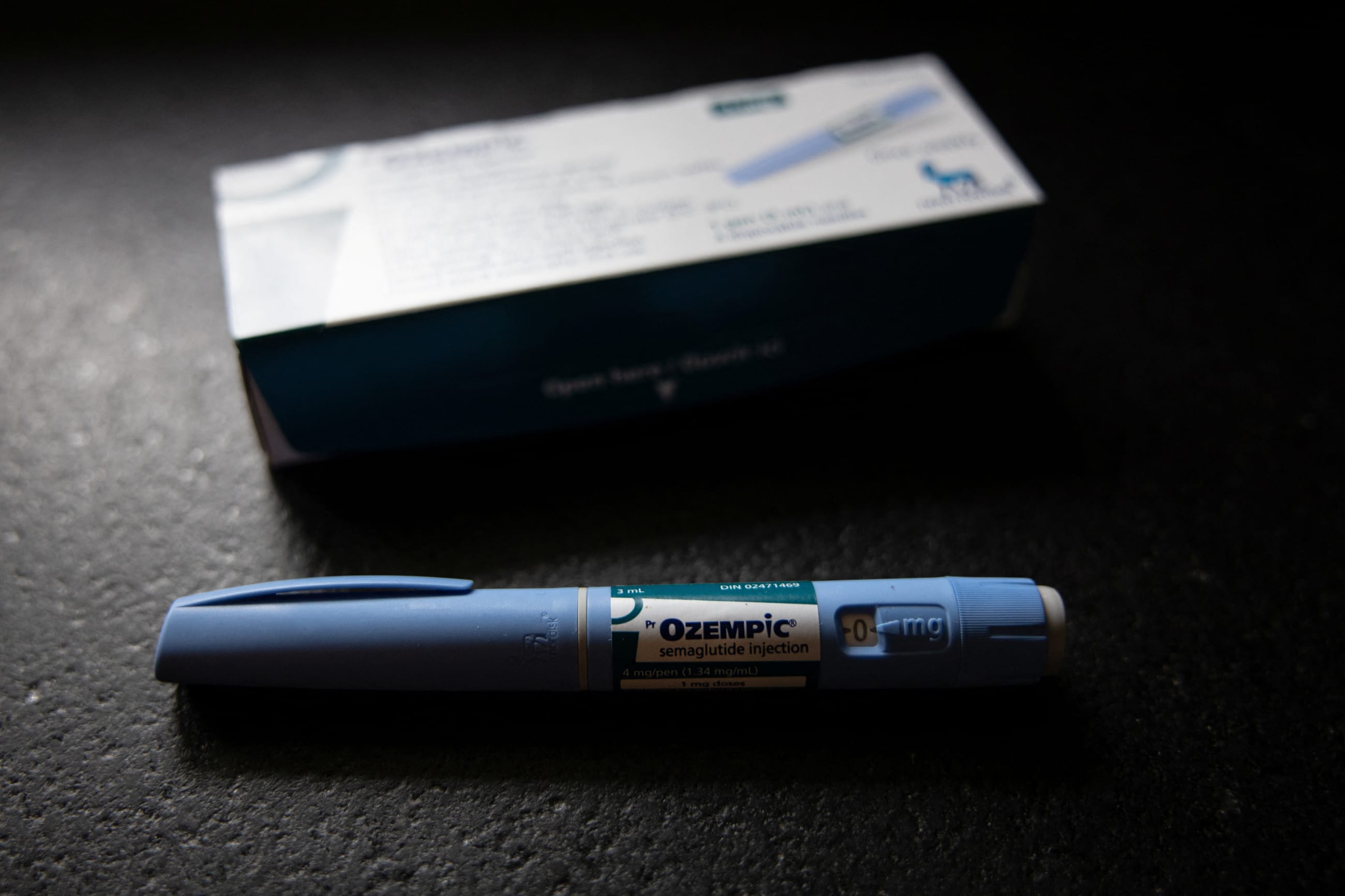
As the reach of glucagon-like peptide-1 (GLP-1) medications such as Ozempic continue to expand in the United States and Canada, how those drugs influence mental health has become an urgent question. Originally approved for diabetes, GLP-1s are now being prescribed for weight loss as doctors and researchers study how the drugs can improve heart disease, sleep apnea, and possibly depression.
Using GLP-1s for depression, however, has been met with skepticism. For the 43% of Americans and 11% of Canadians living with obesity who also experience depression or other mood disorders, the mental health effects of these medications remain largely unknown. Experts say the uncertainty isn't only because more studies are needed, but also because the current research results are inconsistent. Some studies suggest that GLP-1s could decrease anxiety and depressive symptoms; others raise concerns that the drugs worsen symptoms.
As researchers decipher how GLP-1s affect mental health, experts are worried that access to the drugs is outpacing the scientific investigation. Online clinics and telehealth providers now offer these medications virtually, sometimes with minimal screening for psychiatric history. Concerns are that, without proper screening, those with prior mental health conditions could experience worse symptoms.
Mental Health Risks
Linda Anegawa, a board-certified physician in obesity medicine and internal medicine and former chief medical officer at Noom, says when it comes to mental health, losing weight has historically been considered positive—not just for the body, but also for the mind. She notes that "when people [generally] lose even a small amount of weight and improve their metabolic health, their risk of depression and anxiety goes down."
This pattern existed before what she calls the "Ozempic revolution."
We have very mixed evidence with regards to the cognitive and the mental health effects of these medications
Riccardo De Giorgi, University of Oxford
In 2024, following an uptick in reports of suicidal thoughts and behaviors associated with GLP-1 use, the U.S. Food and Drug Administration (FDA) conducted an internal review on the safety of GLP-1s that analyzed clinical reports of suicidal thoughts associated with using those medications. But because there were few reports and because suicidal thoughts can be influenced by many factors, the review concluded that there was no strong evidence of a causal relationship between GLP-1 use and suicidal thoughts. Even so, the FDA noted that it could not rule out a small risk because isolated cases of suicidal thoughts or actions have been reported in people using GLP-1 drugs.
Novo Nordisk, maker of Ozempic, has stated that patient safety is a top priority and that it encourages independent research and will continue to work with regulatory bodies regarding the safety of GLP-1 medications.
Even with initial uncertainties, the research community is excited about the potential uses of GLP-1s for treating mental health. Early studies show promising results, but concerns remain that GLP-1s could be associated with an increased risk of suicide.
"I should be one of the enthusiastic ones, but in reality, I'm one of the skeptics, or cautious at least," says Riccardo De Giorgi, psychiatrist and clinical researcher who studies mental health and GLP-1s at the University of Oxford. "We have very mixed evidence with regards to the cognitive and the mental health effects of these medications. Lots of this evidence seems quite promising, but some of it is a bit more concerning," he explains.
GLP-1s and Depression: Research Gaps
Some of the uncertainty surrounding how GLP-1s influence mental health stems from early clinical trials. Wegovy and Zepbound excluded individuals with depression, psychiatric conditions, or prior reports of suicidal thoughts whereas Ozempic did not survey whether those studied had mental health conditions at all. The trials' endpoints—the outcomes measured to determine the drugs' main effects—also did not consider mental health outcomes.
This gap leaves open the possibility of unintended psychiatric effects, not because the drugs are inherently harmful, but because their impacts haven't been properly studied among users with mental health conditions.
The lack of data around mental health outcomes is just one piece of a complicated puzzle. Rodrigo Mansur, psychiatrist and associate professor who studies mental health at the University of Toronto, describes how the diversity of mental health complicates matters further. "What we call depression is this incredibly varied group of conditions," Mansur says. What's measured, and how it's measured within these studies, can greatly vary the outcomes.
De Giorgi explains that some forms of depression may be related to increased inflammation. At the same time, GLP-1s are now understood to have potent anti-inflammatory effects in the brain that could reduce depression for individuals with depression related to inflammation. But for those who do not have inflammation-driven depression, GLP-1s might not produce any effect at all, De Giorgi adds.
Future studies that include people with mental health conditions will be essential, say De Giorgi and Mansur, who are both actively researching the drugs' mental health effects.
Taking Caution
Weight loss itself can come with negative mental health consequences, and many have certain expectations about how taking GLP-1 will affect their body. Anagawa describes that, in her experience, some patients may show improvements in mental health after starting GLP-1s. Yet she worries that unmet expectations around weight loss can worsen outcomes for those already struggling with their mental health and possibly fuel disordered eating behaviors. "I've seen patients feel great; their mental health has improved because they have less pain and improved energy. And on the flip side, I also feel [that] patients are more obsessively using diet products or health trackers," she says.
Anagawa sees enormous benefit to these medications but advises her team of clinicians to operate with caution while physicians await more definitive results about GLP-1's impact on mental health. Her conservative approach runs counter to what's common in the telehealth world, she says. "By and large you have med spas and companies that essentially ship meds to your home without you ever even seeing a clinician."
For physicians like Anagawa, it's not about halting GLP-1 access, but about ensuring that mental health isn't treated as an afterthought in the new era of weight loss.