Diagnosing the international system for health's flaws has been the easy part of global health reform discussions. For years, many professionals have pointed to fragmentation, inefficiency, and outdated mandates. Recent cuts to official development assistance (ODA) did not create these problems; they made them impossible to ignore.
Ahead of the World Health Assembly in May, the question is whether political and institutional leaders will act on what they have long observed.
What is urgently needed is not another diagnosis but an ambitious roadmap. Reform will not happen through a single grand decision. It will emerge from a series of coordinated political decisions by different actors on institutions' roles and functions, financing, structural changes, and leadership. But those actions should be shaped by a shared vision: a simpler, more focused, and more legitimate international system for health.
Subsidiarity should guide reform: global institutions should only perform functions that cannot be delivered effectively by countries or regions alone. Following this logic, the international system for health should be radically simplified.
What is urgently needed is not another diagnosis but an ambitious roadmap
To streamline the international system, mandates should shrink, and institutions should merge, transform, or disappear. The goal is a system that does less, but better. A system that tries to do everything ultimately does little well.
Approaches to institutional consolidation were outlined in a Think Global Health article from January by Muhammad Ali Pate, Donald Kaberuka, and Peter Piot. The authors suggested that global health institutions should complement local capacities, reduce transaction costs and administrative burden for countries, and have more precise mandates.
Abandoning multilateralism is an overcorrection. The solution to weakened political support for international cooperation is not retreat but reform.
Shifting Paradigms in Global Health
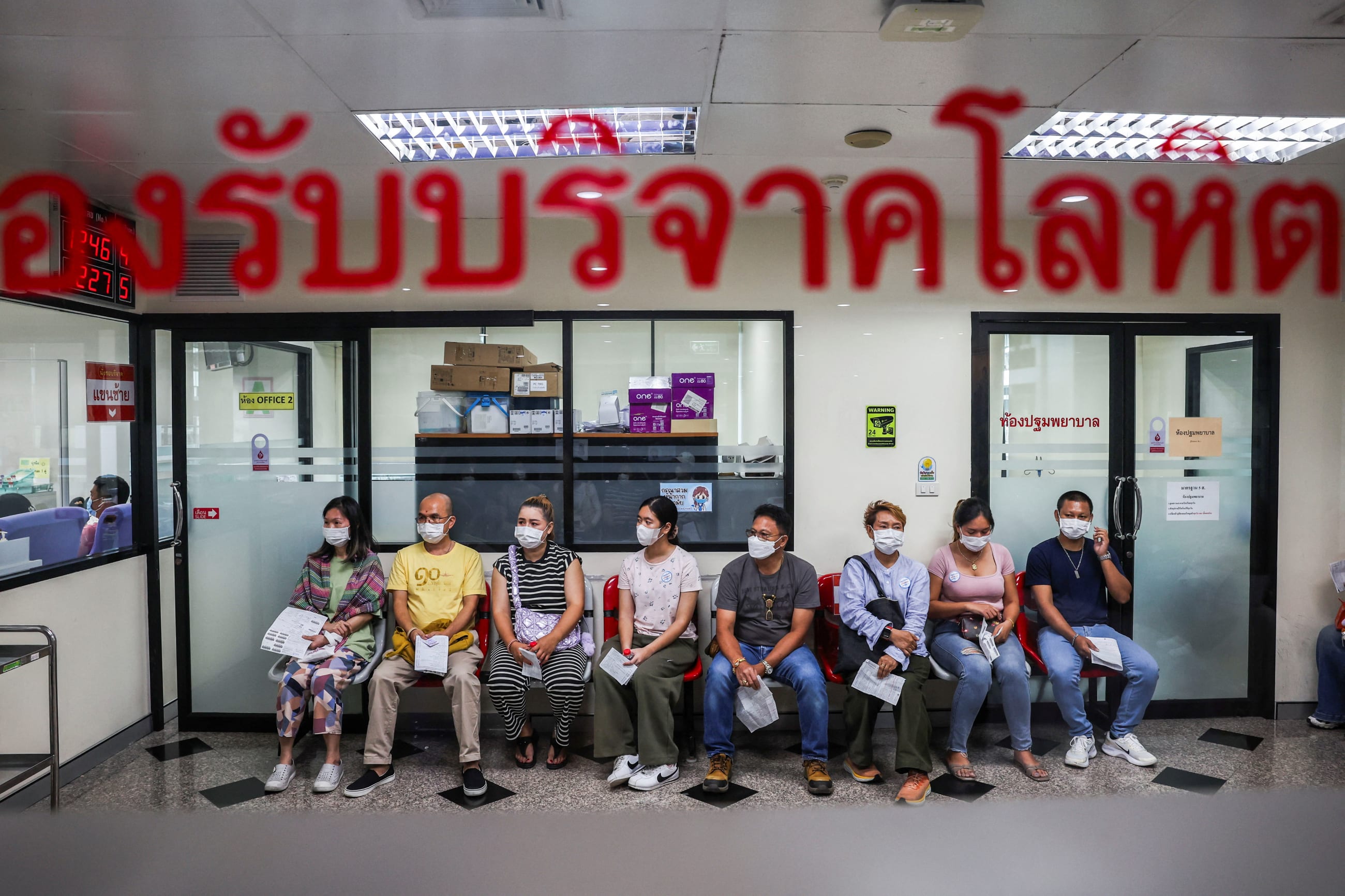
The world has changed dramatically since the millennium—now the international system for health should do the same. The burden of disease has shifted from infectious to noncommunicable diseases. Population aging along with commercial and environmental dilemmas are now the primary causes of poor health. Economies have been transformed. Many countries, such as Thailand, which were once dependent on aid have graduated to middle-income status and are now able to finance their health needs.
Over the past two decades, the number of global health actors has expanded dramatically. The growing constellation of players—governmental and nongovernmental organizations (NGOs), international organizations, funds, and initiatives—has contributed to major gains in life expectancy and to reduced child and maternal mortality and infectious disease.
At the same time, those actors have produced a system that is overly complex, competitive, and poorly coordinated. Institutions compete for governmental and private funding, often using mandate creep to maintain relevance. This construct leads to overlap, duplication of efforts, and outdated mandates. For example, some disease-specific entities, such as the Joint UN Program on HIV/AIDS (UNAIDS), are less well-suited to the future epidemiological and economic landscape.
This is not just inefficient, it is unsustainable.
In parallel, the geopolitical order is being redrawn. China has expanded its roles in development and financing, with a swing in recent years from major creditor to net debt collector. South-South alliances continue to strengthen, the United States is pushing for conditional and America First–driven engagements, and African countries are making strong domestic commitments to end aid dependency. Yet authority and agency remain concentrated in the hands of a few governments in Western countries—a relic from a world that no longer exists.
Inaction on the global health reform agenda is not a neutral choice; it is a decision to impede or even undermine progress.
A System Fit for the Future
The current development model, heavily reliant on aid, is misaligned with global realities. The international system's nourishment from transferal of resources—specifically ODA—will continue to decline [PDF] in importance.
Domestic financing should drive the next generation of health gains. In a reformed system, ODA should be targeted to contexts where other forms of finance are unavailable capacity, including to build capacity in fragile and low-income settings and when needed emergency support. Further, ODA should be used to accelerate a transition to national ownership and financing.
Global public goods for health that reflect shared benefits, interests, and responsibilities should be financed by all governments and not perpetuate dependencies on external aid.
To catalyze those changes, governments should acknowledge that international health cooperation serves all countries, not just low- and middle-income ones.
Reform should move beyond the false dichotomy between national sovereignty and multilateral cooperation. Those are not opposing forces. A well-functioning international system strengthens, rather than undermines, countries' abilities to protect their populations. The benefits of pandemic preparedness, research collaboration, and regulatory coordination are universal. Pretending otherwise weakens the case for collective action and responsibility.
Yet the reform debate is at risk of stalling without a clear pathway to implementation. No shortage of discussions, reports [PDF], or high-level commitments exists. What is essential now are concrete decisions about mandates, financing, and governance. Amid rising geopolitical tensions, the current momentum will dissipate, and the opportunity for meaningful change will be lost. The World Health Assembly will be an opportunity to ensure that countries do not lose that momentum.
There is a growing temptation to bypass multilateral institutions altogether and prioritize short-term national interest in global health. But partnerships built primarily on self-interest rarely deliver equity. They risk replicating the same power imbalances and inefficiencies. Although circumventing the system is easier than fixing it, this approach is far less effective.
High-income countries such as Sweden have a role to play, but not as agenda-setters. The future system must be co-created with partners across Africa, Asia, Latin America, and the Middle East. Legitimacy to act cannot be imposed; it needs to be built through genuine collaboration.
Ultimately, the stakes are high. Failure to reform will not preserve the system; it will erode it. When multilateralism loses, it is not institutions that suffer most, but people.
Reform is not optional. It is overdue. Countries should look forward and refrain from preserving the system from the past that is no longer fit for purpose nor ready for a new and different future.