Since the end of February, the world has been reminded how much the Strait of Hormuz underpins the global economy. Beyond the shock to markets lies a more urgent consequence: the disruption of life-saving food aid for the region and the world.
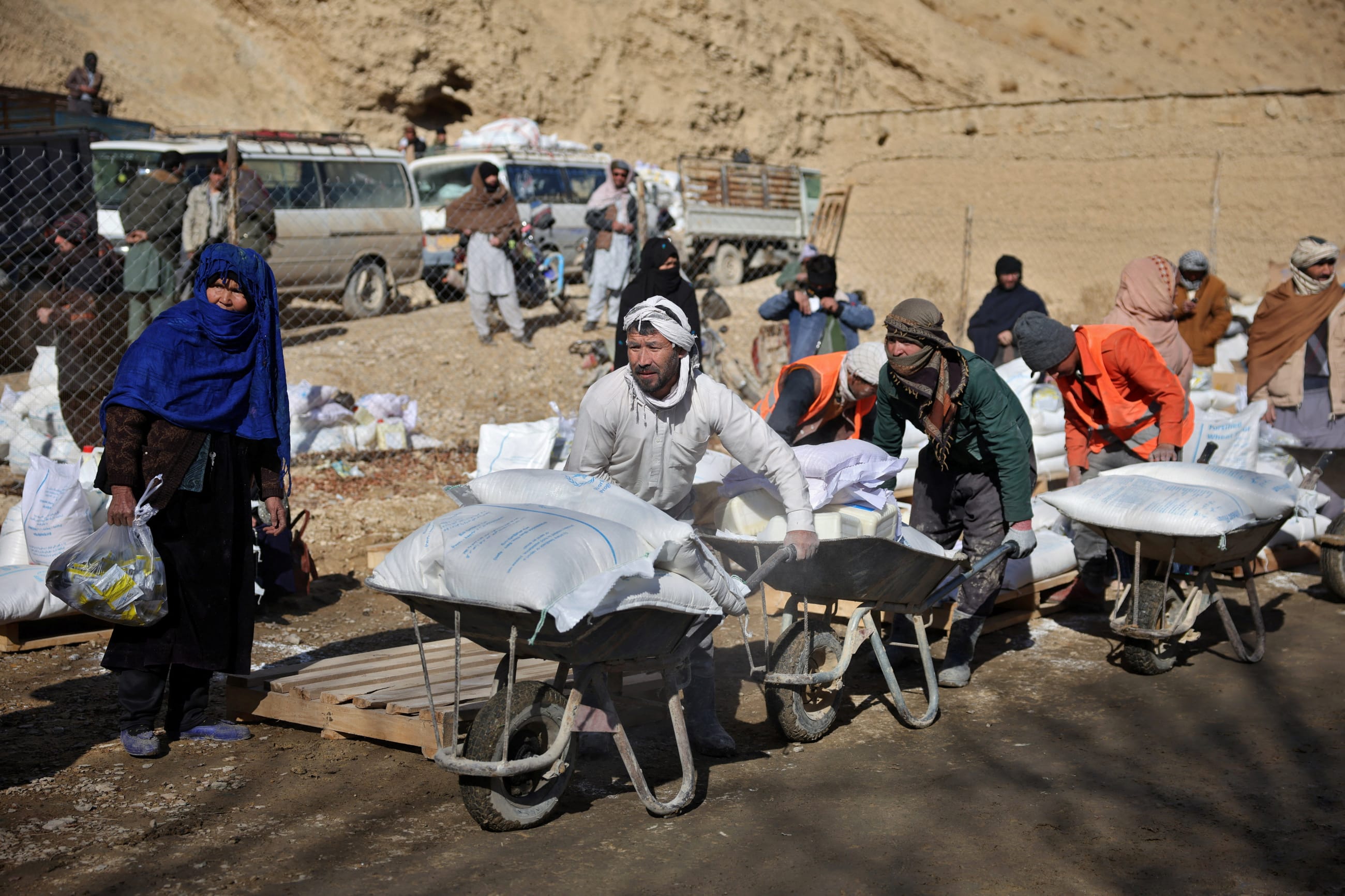
In Afghanistan, where 3 out of 4 malnourished children have been turned away from nutrition clinics after last year's drop in foreign aid, containers of urgently needed specialty food—loaded onto trucks and ready to leave Dubai by sea through the Strait of Hormuz—have been returned to World Food Program (WFP) warehouses and stacked back onto the shelves they had only just left. Mere miles offshore, an additional 70,000 metric tons of food are stranded on cargo ships as traffic in the strait remains at a standstill.
As the hungry grow hungrier and the sick grow sicker, logisticians are scrambling to find new routes for these food supplies. Getting aid to Afghanistan had once involved direct transit across the strait to Pakistan. Now, it entails an odyssey through Saudi Arabia, Jordan, Syria, Turkey, Georgia, and Azerbaijan, a trip across the Caspian Sea by ferry, and a final journey across Turkmenistan—extra costs hollowing the WFP's food budget every day the war extends.
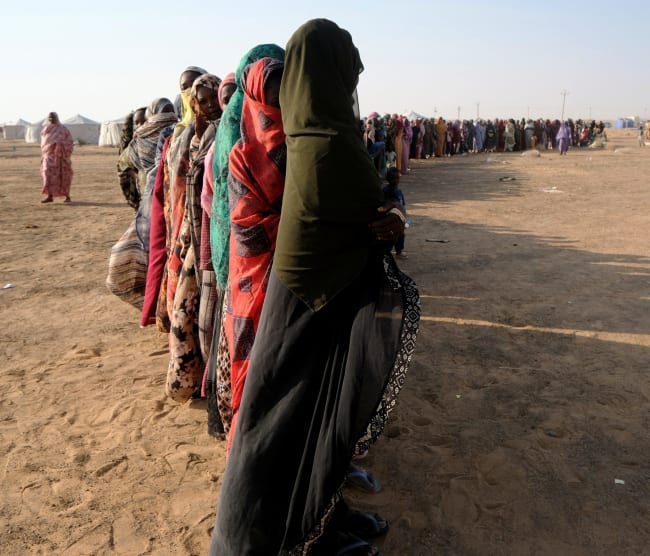
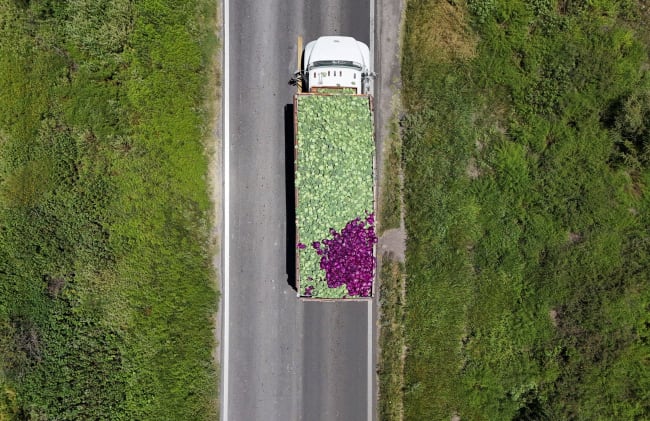
This disastrous situation threatens to worsen as oil and fertilizer prices surge and as farmers in the Northern Hemisphere start to plant crops. Because one-third of global seaborne trade in fertilizers [PDF] passes through—or, now, is halted in—the Strait of Hormuz, the timing of these shocks ensures that the effects will reverberate for months to come. Even if the war ended tomorrow, costs would remain elevated because price spikes take months to unwind. This calamity puts food further out of reach for those already skipping meals, particularly in conflict-ridden countries where famine looms, among them Sudan and Somalia.
45 million
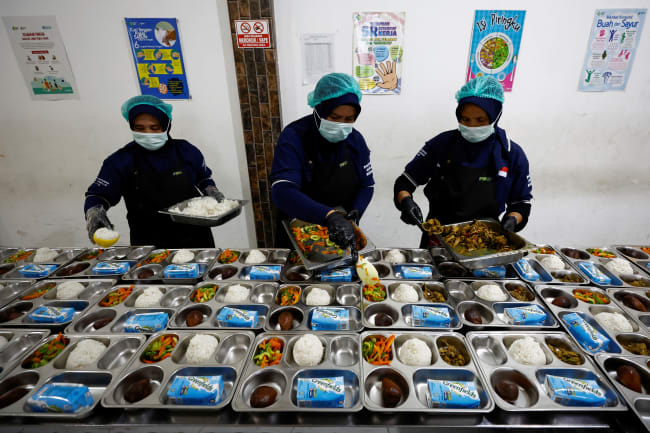
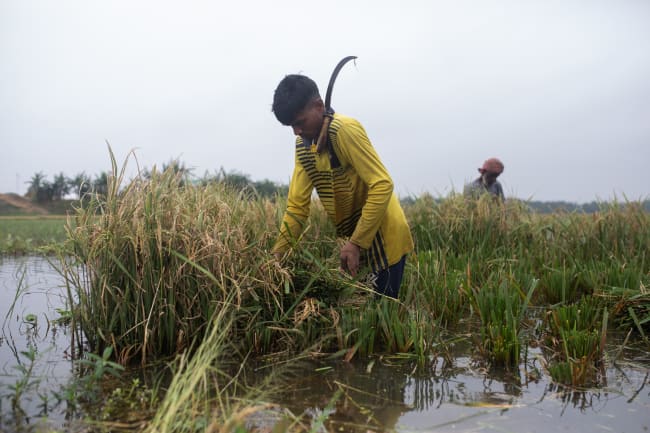
The WFP projects that if the war persists through the end of June, and if oil prices remain over $100 a barrel, 45 million additional people will face acute hunger
The WFP projects that if the war persists through the end of June, and if oil prices remain over $100 a barrel, 45 million additional people will face acute hunger. The consequences will be felt most in regions that rely heavily on food and fuel imports, many of which already suffer from conflict and drought.
The WFP also estimates that, as a direct result of the conflict, populations suffering from acute food insecurity will increase by 24% in Asia, 21% in West and Central Africa, 17% in East and Southern Africa, 16% in Latin America and the Caribbean, and 14% in the Middle East and North Africa.
Although this spiraling crisis has few modern precedents, one loose parallel is clear: the fallout from Russia's full-scale invasion of Ukraine in 2022. Back then, the world rallied to contain its humanitarian consequences.
The question is whether it can happen again.
The Ukraine Playbook
On the eve of its military invasion on February 24, 2022, the Russian Navy launched a blockade of Ukraine's Black Sea ports. The two countries had been major exporters of food, accounting for a quarter of global wheat exports. The WFP purchased more than half of its wheat from Ukraine before the war. Both countries were also key global producers of ingredients for fertilizer—potassium, phosphorus, and nitrogen—which are among farmers' greatest expenses.
In the days following the invasion, a number of countries levied sanctions against oligarch-controlled fertilizer and potash industries; in response, the Russian government halted all exports. Other countries, including China, followed, pausing their fertilizer exports to protect domestic availability.
Immediately, the prices for fertilizer and its core components soared, and the cost of food followed shortly behind. The UN Food and Agriculture Organization (FAO) documented a 12.6% spike in common food prices between February and March 2022. By June, the WFP concluded that the Ukraine conflict had driven a surge in new cases of starvation, reporting 345 million people at risk of, or already suffering from, acute food insecurity.
Two interventions prevented the cascade from worsening. The first was cold, hard cash: Humanitarian donors shattered funding records in 2022, covering needs for those inside Ukraine as well as those affected around the world. The WFP raised a record $14 billion, and total donor contributions reached $43.2 billion—a 40% year-over-year increase.
The second recourse was the UN-mediated Black Sea Grain Initiative. This agreement between Russia and Ukraine created a maritime corridor for commercial food and fertilizer exports. In total, 33 million metric tons of corn, wheat, and other foodstuffs reached 45 countries—stabilizing global food prices and averting a wave of starvation.
This successful blueprint is yet to be followed for the Iran war.
Today's Crisis Begins in a Deficit
The humanitarian momentum on display in the early months of the war in Ukraine largely collapsed in the three years to follow, culminating in the Trump administration's destruction of the U.S. Agency for International Development (USAID) and much of its budget. Despite health and conflict relief demands reaching near all-time highs, the United States obligated $4 billion to humanitarian causes in 2025, less than a quarter of what it provided in 2022.
Europeans have followed suit. Germany, the second largest aid donor, cut more than 70% of its humanitarian budget between 2022 and 2025. Dwindling funding has forced the WFP to sharply curtail programs and staff. Other UN and nongovernmental organizations are also cutting back even as the food crisis ramps up.
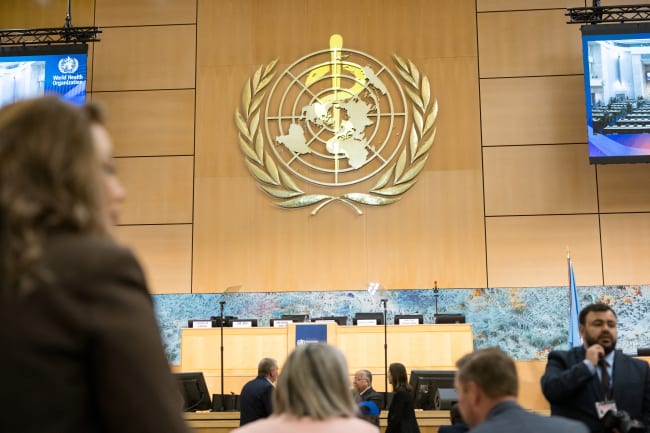
UN leadership is not responding as it did after the Russia-Ukraine war began
Humanitarian aid cuts, in combination with ongoing droughts and conflicts, have resulted in seven countries—Afghanistan, Haiti, Mali, Somalia, South Sudan, Sudan, and Yemen—staring down famine conditions. Last year was the first time in the twenty-first century that two famines, in Gaza and Sudan, occurred in the same year. The number of people in Integrated Food Security Phase Classification 5, defined as catastrophic, is currently at 220,000, a 65% increase since 2020. And that was all before bombs began to fall on Iran. Any hope that catastrophic forecasting might catalyze humanitarian funding has since begun to fade.
UN leadership, likewise, is not responding as it did after the Russia-Ukraine war began. On March 27, UN Secretary-General António Guterres made the well-intentioned announcement of a new task force for "the development and proposal of technical mechanisms" to facilitate fertilizer trade through the Strait of Hormuz, but the move lacked the urgency to meet the moment. To be sure, it is critical to anticipate consequences months from now—but certainly not at the expense of those on the brink of starvation today. Moving 70,000 metric tons of food adrift at sea should be an immediate priority.
What's more, although the Black Sea Grain Initiative had two task forces running in parallel—one focused on Russian food and fertilizer exports and the other on Ukrainian grain shipments and humanitarian needs, headed by Rebeca Grynspan of the UN Conference on Trade and Development and Martin Griffiths of the UN Office for the Coordination of Humanitarian Affairs (OCHA), respectively—the task force for the Strait of Hormuz inexplicably excludes OCHA and Griffiths' replacement, Tom Fletcher.
The hunger is too severe to sideline the experts, especially considering the UN General Assembly's mandates to coordinate lifesaving humanitarian aid run through OCHA [PDF].
Next Steps to Avert Regional Famines
Facing a crisis of growing scale and complexity, the United Nations and international community need to act before the window to contain it closes. Four steps are critical.
First, the WFP and FAO should issue a malnutrition and hunger appeal within weeks. Donors and aid agencies respond well to clear roadmaps. The WFP's warning on March 17 that 45 million people are at imminent risk of acute food insecurity is a start but should be matched with clear signposting for the plan to come. The program should detail how much the intervention will cost, how donor countries can help, how resources will be allocated, and how progress will be measured.
The appeal should culminate in a high-level pledging event hosted at the United Nations, giving the media a clear story and donors a deadline to act. This tactic has historically compelled donors to find the money for organizations such as the WFP. Given that humanitarian budgets are under strain and millions of lives are at stake, such an event should happen within weeks, not months.
In addition, it's time for the donor retreat to not just stop—but also reverse course. The U.S. Department of State recently received $5.4 billion in humanitarian funding from Congress—and yet, a month into the war, no new aid has been announced. That needs to change, if only to bolster the case for a U.S. nominee to helm the WFP, an appointment long tied to American willingness to mobilize funds to prevent famine. Humanitarian aid cannot fall to the United States without the West, or to the West without the rest. All the donors should seize the moment and show the world that international solidarity can still deliver lifesaving aid.
Finally, the UN secretary-general should course correct and establish a separate OCHA-led humanitarian task force for the Strait of Hormuz. The severity of the crisis warrants direct coordination by famine response experts. It worked for the Black Sea Grain Initiative, and it can work again.