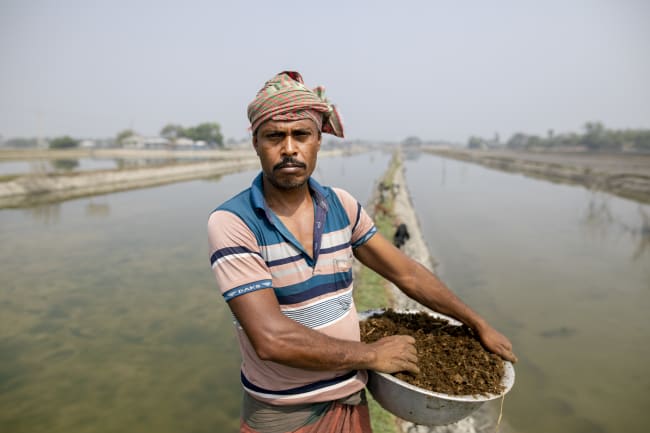
According to the World Meteorological Organization, the coming El Niño weather event could become the strongest on record, intensifying global flooding, drought, and heat over the next six months.
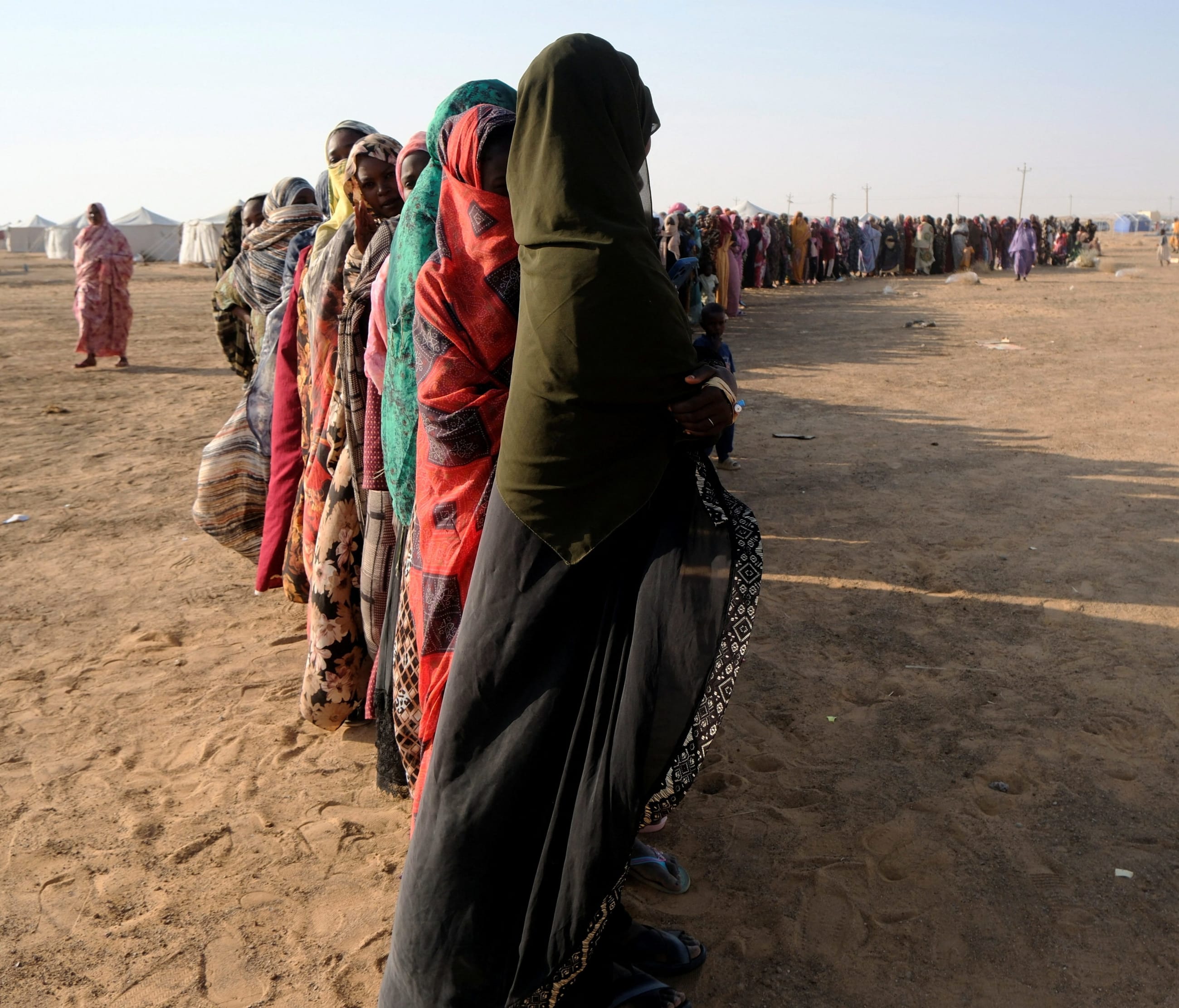
Extreme weather threatens to deepen acute hunger for millions, particularly across Africa, Asia, and Latin America. Below-average rainfall and spiking temperatures could make food even more scarce in high-risk countries such as Sudan, which could in turn worsen ongoing conflict given that the limited supply of food is weaponized. As world leaders prepare to convene at the UN General Assembly (UNGA), however, the funding outlook to mitigate potential hunger crises remains uncertain.
To learn more about how El Niño could harm food-insecure countries and what countries and humanitarian organizations can do to prepare, Think Global Health spoke with Sam Vigersky, an international affairs fellow at the Council on Foreign Relations focused on humanitarian interventions and crisis response.
□ □ □ □ □ □ □ □ □ □ □ □ □ □ □ □□ □ □ □ □ □ □ □ □ □ □ □ □ □ □
Think Global Health: What's your reaction to the El Niño news, and what impact could extreme weather have on global food insecurity?
Sam Vigersky: I'm hesitant to say that this couldn't come at a worse time—because something worse can always happen—but it's arriving at a moment when the international humanitarian system has no shock absorbers left. The funding cuts ongoing since 2022 became truly catastrophic in 2025 after the Trump administration leveled the U.S. Agency for International Development (USAID).
The system is in an era of extreme triage right now. Some of the [organizations addressing the] most hard-hit humanitarian crises are cutting programs, they're cutting food rations, and they're absorbing new costs as a result of the crisis in the Middle East, which is making fuel and fertilizer more expensive.
We're staring down a very dangerous moment around the world for another crisis to land. It's clear that the forecasting is available to tell us how bad this could be, but we don't have the money or the political will in motion to get ahead of it and prevent the worst possible outcome.
TGH: We also know that El Niño won't hit uniformly. The World Food Program (WFP) identified Sudan and Nigeria as two of the countries at highest risk for drought and extreme heat over the next few months. Could you talk a bit about the challenges these two countries face?
Sam Vigersky: In both, we've seen the feedback loop between conflict driving hunger and hunger leading to conflict. The prospect that people will have less food to eat because of drought—because harvest yields are down—means a growing risk that these long-term conflicts, such as in northeast Nigeria or across the civil war in Sudan, will only intensify. People will become more desperate.
Food is increasingly being used as a weapon of war
Food is increasingly being used as a weapon of war. It already is being used as such in Sudan. This means cutting off the limited supply lines of food to starve populations, but also using food as a recruitment tool for people who don't have any.
Food weaponization tactics foreshadow that these crises have real risks of escalating, and not just even in the next six months [during El Niño] but [beyond it]. The other risk of a drought scenario means that seed stocks from a crop harvest aren't there for the next planting cycle. So the food emergency extends beyond El Niño to the next harvest cycle unless there is funding to replenish seed stocks. That should be worrisome for both those crises.
TGH: Could new food insecurity pressures be created by the coming weather event in other situations?
Sam Vigersky: I'm looking at the countries already in an extreme place. Pakistan is high risk under this El Niño. Afghanistan is in a major food crisis that dates back to earlier this year. That's a region of the world where there's no margin already.
In Afghanistan, only one in four people were getting food aid for acute malnutrition earlier this year. More than 700,000 Afghans have returned from Pakistan this year, many forcibly. The WFP predicted that 50 million people might become acutely food insecure globally. Those numbers will be hard to address with limited resources, which worries me in places such as Afghanistan and Pakistan because that border is already quite tense. There's been intermittent warfare between those two sides this year already. Neither can deal with any more conflict at this moment, so that's high on my radar right now.
TGH: Also want to get your take on the response. Last week, Devex reported that the State Department is closing out its remaining Food for Peace awards, which you wrote about in June. What does that shift mean for the U.S. ability to respond to this crisis and crises like it?
Sam Vigersky: When Food for Peace was in USAID, it was nested together with the other parts of the humanitarian response—shelter, health, nutrition. A situation like El Niño requires coordination between interventions. You need to sequence what's needed today with what can be put on a boat and delivered six months later when the El Niño impacts hit.
When you splinter those types of interventions across the U.S. government rather than putting everyone in the same building, that, to me, creates some questions about how coordination might work between the U.S. Department of Agriculture (USDA) and the State Department.
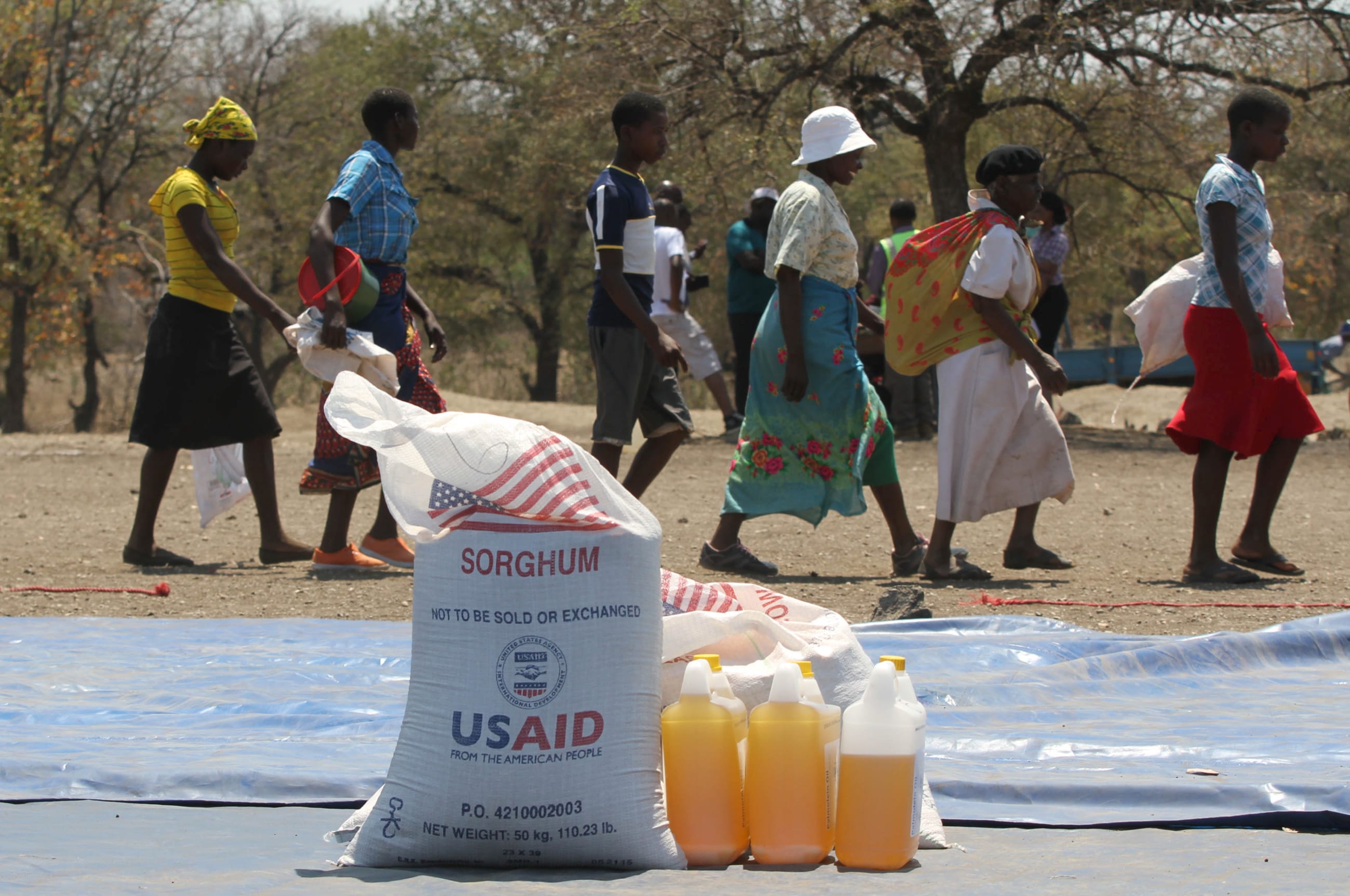
They're both obviously trying to help these humanitarian crises. Whether they can find an efficient way to do that is really an open question. My research so far suggests that the USDA doesn't have the in-house expertise to manage Food for Peace and is trying to hire new people to run the program. That seems like a very inefficient and potentially costly mistake when many former Food for Peace experts presently at the State Department have managed it for decades. Ideally, the State Department would be managing Food for Peace, in collaboration with shelter, with protection, with health interventions that the rest of the State Department is doing with humanitarian money.
TGH: Who do you think is in the best position to give assistance? Is it the WFP?
Sam Vigersky: WFP and the Food and Agriculture Organization of the United Nations are taking a global lens, using all the science and technology to pinpoint where the greatest impacts are going to be. They have the logistics and food supply chains to get there, whether that's Plumpy'Nut for acutely malnourished kids or food baskets for people who are food insecure. They're best placed as a global coordinator and—in most cases—in-country to put together the strategy.
But it's not going to be one UN agency. It's going to be all the NGOs that are usually at the last mile, working in communities that understand the vulnerabilities and can raise the alarm about what might happen weeks and months before it takes place.
TGH: What if anything can governments do to prepare?
Sam Vigersky: I was in Ethiopia in 2016, during the tail end of the last major El Niño. Among the populations affected were pastoralists whose herds all ended up dying out because of drought. Some regular farmers lost their seed supplies as well.
Governments absolutely have a huge role to play in that, whether that's helping in the restocking or destocking of certain communities that are going to be affected, or getting formal seed supplies onto their markets through their line ministries. The government should be coordinating, and the United Nations should be supporting them.
TGH: As we approach UNGA and high-level meetings on climate and climate action, what do you think should be at the forefront of those discussions?
Sam Vigersky: In the past, you'd expect a big convening around El Niño specifically, trying to hit a certain funding number and identifying the populations at risk. That convening would see international solidarity coalesce around a strategy that the United Nations is leading to make sure that the worst outcomes don't come to pass.
What we see at UNGA are two things. The world is facing more armed conflict and crises than at any point in memory, and that means everyone's distracted, rightly: With Ukraine, with Ebola, with the situation in the Middle East, with Iran and the Strait of Hormuz, Gaza. A lot of oxygen is going to be going into that rather than on El Niño and what the impacts are there. The second part obviously is that the United States is less engaged in this type of work. It has said it wants to do acute lifesaving aid. El Niño is that, but in the government's mind, El Niño also probably feels like a bit more of an anticipatory type of exercise to get ahead of something that's going to take place in three or six months.
It's just harder to get [the United States] to engage in that space right now, and that's worrisome because when you look at global cooperation for humanitarian aid, the United States has always been the center of gravity. It's not to say that it is the only country that matters, but it really is the only country that has political leadership pulling the right people to the table. It makes sure that the United Nations gets the resources it needs and is going to hold the UN accountable too if it's not delivering. We're just seeing real disengagement from the United States, which means at UNGA you're not going to find the level of urgency around this issue that you might have in the past.
TGH: Does anything give you hope in this situation?
Sam Vigersky: I'm hopeful in that we have better science today than we did 10 years ago, when the last El Niño of this type of severity took place, which means that forecasting should be better. More efficient pipelines should be available to get the food to the places it needs to get to, even if fewer resources are available to fund it. And I still think people are moved by human suffering, and I hope we see that type of reaction not just at UNGA but beyond UNGA, from governments that can help in these situations.
EDITOR'S NOTE: Interview has been lightly edited for clarity and follow-up via email.