For many adolescents, time online includes exposure to technology-facilitated violence: harassment, threats, coercion, cyberbullying, and the nonconsensual sharing of images.
Offline, violence is typically limited to a specific time and place. But digital spaces change how harm works. Content can stick around, be copied, and spread quickly. Harassment can follow a young person across platforms, and a single incident can be replayed and seen by far more people than intended. What starts as an interaction between a few people can quickly become something much larger that is harder to control and harder to escape.
Recent rulings holding Meta and Google liable for harms to young users mark a turning point in how people think about social media and adolescent mental health. For years, companies argued that they should not be held responsible for damaging effects caused by content posted on their platforms by their users, relying in part on legal protections that generally prevent online services from being treated as the publishers of third-party content; courts are beginning to reject that claim.
But accountability, on its own, will not counter the detrimental effects of social media. Adolescents could still encounter cyberbullying, online sextortion, and other forms of technology-facilitated violence, even under stronger regulation. Without effective services and support systems for those facing online violence, young people could continue to experience lasting consequences for their psychological health and well-being.
Online Violence and Mental Health
Online violence is becoming increasingly common. Nearly half of 13-to-17-year-olds in the United States have reported being cyberbullied, and 1 in 12 children have experienced online sexual exploitation or abuse.
One in five teens report that social media has hurt their mental health
More than three decades of research link exposure to offline physical, sexual, and emotional violence to depression, anxiety, posttraumatic stress, and suicidal thoughts. Online harm follows similar patterns, with exacerbating factors such as loss of control over one's image, reputational damage, and the persistence of harmful content. Research suggests that cyberbullying is as strongly or more strongly correlated with suicidal ideation as bullying that takes place offline.
These concerns are unfolding amid a broader adolescent mental health crisis. In 2023, nearly 40% of U.S. high school students [PDF] reported persistent feelings of sadness or hopelessness, 20% seriously considered attempting suicide, and nearly 10% attempted suicide. Among girls, these numbers were even higher: more than half reported persistent sadness or hopelessness, and more than 1 in 4 seriously considered suicide.
Although parents are more likely than adolescents to attribute poor teen mental health to social media, adolescents are aware of the risks these spaces pose. One in five teens report that social media has hurt their mental health, and girls are more likely than boys to say so.
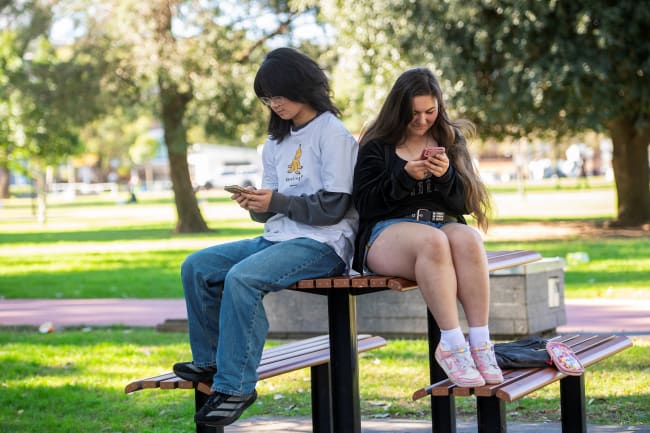
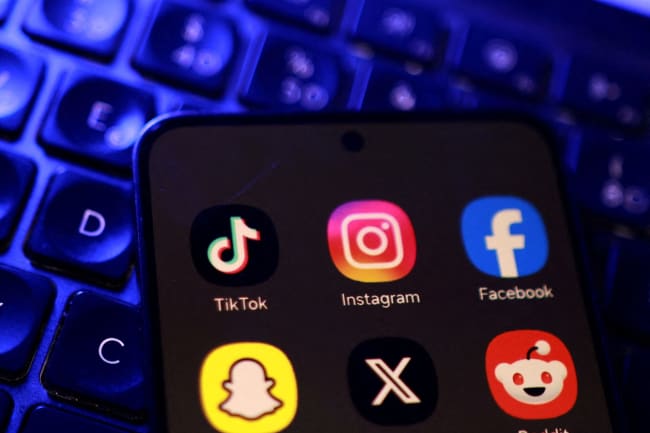
Nonetheless, digital spaces, and social media platforms in particular, are an integral part of adolescents' lives. Approximately 95% of U.S. adolescents are online every day, and the average teen spends nearly five hours a day on social media. Platforms like YouTube, TikTok, Instagram, and Snapchat are a large part of adolescent social life: in 2025, 90% of teens reported using YouTube, and more than half reported using TikTok, Snapchat, and Instagram.
Features like autoplay, infinite scrolling, and time-limited videos—all strategies social media platforms use to maximize engagement—play a critical role in keeping adolescents glued to their screens. For example, recent research revealed that teens are navigating to the TikTok app on their phone before they are aware that they're doing so, a behavior that the study classified as "automated attachment."
Not all social media use is harmful, however. Young people use these platforms to talk with friends, follow news, explore their identity, express political views, and seek support. In a 2025 Pew survey, most teens said social media helped them feel more connected to friends' lives, and roughly half said it made them feel more accepted or supported during hard times.

Although there are certainly benefits in reducing the amount of time teens spend online, it could be counterproductive to bar access entirely. If trends continue, adolescents will continue to spend a nontrivial portion of their time on social media, even as states adopt restrictions on addictive feeds, such as Florida's age and parental-consent requirements, which have faced legal scrutiny and implementation challenges.
Reducing Exposure Is Not the Same as Reducing Harm
The recent lawsuits against Meta and Google shift responsibility to companies for their social media platforms. They recognize that design choices, internal knowledge of risks, and failures to act have consequences. That accountability is already beginning to translate into concrete changes: the recent settlement with Meta will require new protections for younger users, including daily time limits, nighttime restrictions, stronger age checks, and default safety settings.
However, decades of research and practice—including work done on preventing violence against women, girls, and children; and reducing community violence, including gun violence—show that approaches focused on a single source of harm rarely lead to lasting change. Targeting only one actor or setting often fails to address how harm unfolds across contexts. Interventions that are particularly successful in reducing violence and its consequences, like one initiative [PDF] that works with survivors, couples, and communities to address intimate partner violence in Rwanda, simultaneously target the individual, relational, community, and societal levels of the issue. Addressing online violence should not be any different.
Although companies bear responsibility for safely designing their platforms, adolescents also need tools to confidently navigate digital spaces and access to support that treats cyberbullying experiences as valid and serious. Improving teens' digital literacy—the ability to safely locate, evaluate, and communicate information on digital devices and platforms—can help teens recognize when they are being targeted, manipulated, coerced, or drawn into harmful online dynamics. Efforts to promote digital literacy have expanded substantially in the last decade, and a recent systematic review of such approaches points to their effectiveness in helping young people identify misinformation and change knowledge and behavior. The curriculum-based Civic Online Reasoning Program, for example, teaches adolescents how to assess source credibility and the importance of looking beyond the first few results of an online search. Similar tools can help adolescents identify whether and when they are experiencing technology-facilitated violence, understand what is happening to them, and know where to turn for help.
Schools, families, and peers play a role too: whether harm escalates or stops often depends on how the people around a targeted young person respond. An evaluation of Germany's "HateLess. Together Against Hatred," published in 2024, shows that school-based interventions can combine classroom-, school-, and community-level activities to strengthen students' civic engagement in online spaces and build their confidence and skills to stand up to online hate speech. This program promotes students' skills to cope with online hate speech, supports classes to collaboratively develop classroom rules, carries out school-level activities to promote awareness, and facilitates student presentations about the topic to parents. In addition to being potential targets of harmful content, adolescents are also bystanders, peers, and participants in the digital environments that shape what spreads.
When adolescents experience technology-facilitated violence, schools should make it easy for them to reach a trusted adult and connect with clear, reliable referrals for mental health and psychosocial support. Health providers should also be prepared to ask about these experiences, respond to them, and connect young people to care, just as they would with other forms of violence and trauma.

EDITOR'S NOTE: This article includes a discussion of suicide. If you or someone you know needs help in the United States, call the national suicide and crisis lifeline at 988 or text the Crisis Text Line at 741741.