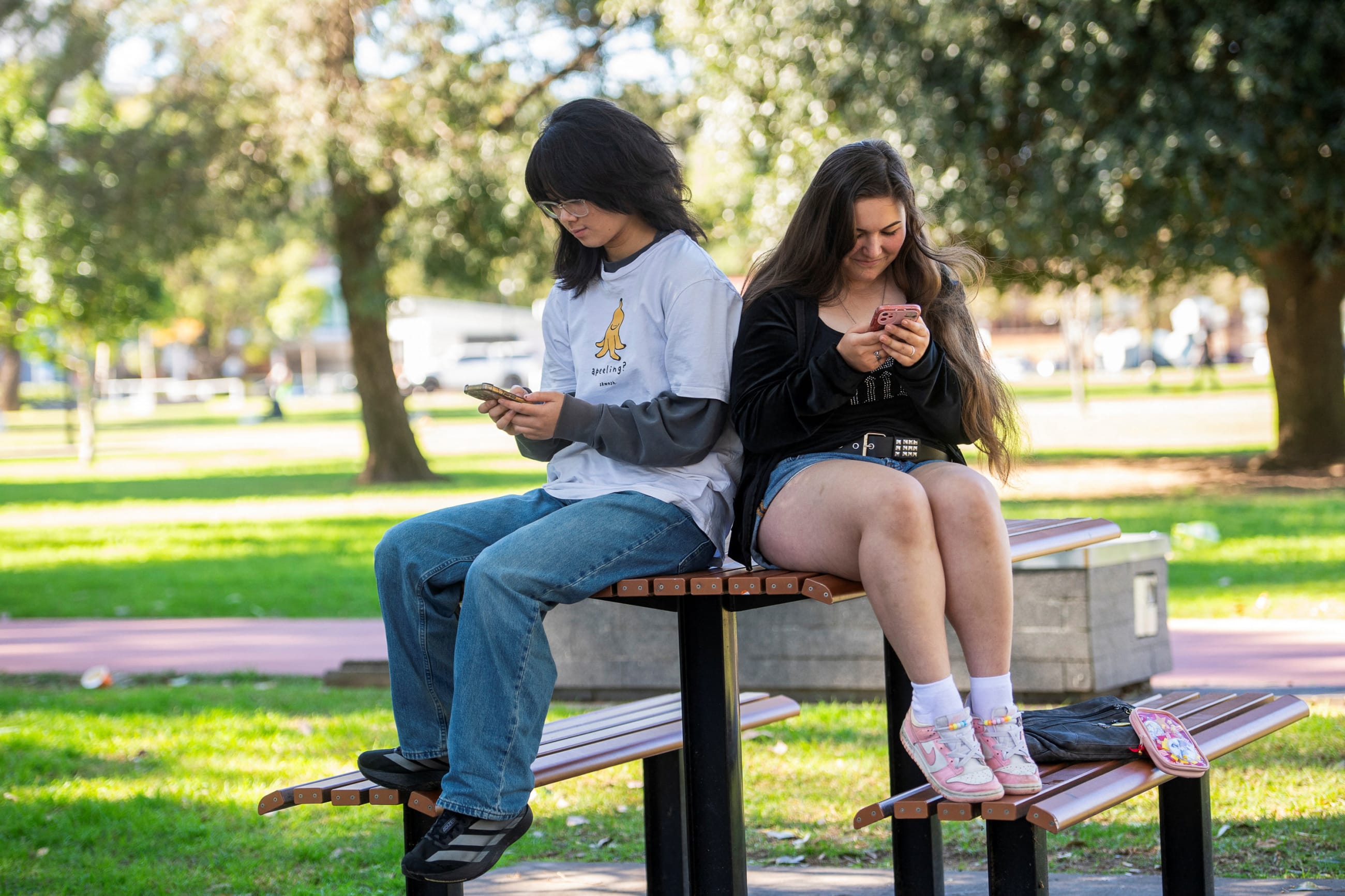
On August 26, 2026, Meta settled with 47 U.S. states for up to $17 billion, the second-largest of any such settlement after U.S. Tobacco's, in 1998. The company agreed to place limits on platforms like Instagram and Facebook for teens, such as restricting use to two hours per day and removing features including infinite scroll, beauty filters, and "like" buttons. The settlement came in response to claims that Meta's technology harmed children's mental health and was addictive, and that the company deceived users about the safety of its products.
Globally, the burden of mental health disorders has more than doubled over the last three decades, and the highest rates are seen among adolescents. Will banning kids from social media reverse this trend? The answer is unclear, but efforts to limit young people's access to these forms of technology to protect their mental health are on the rise; eight countries have passed or implemented age-based restrictions on social media, and lawsuits against technology companies are multiplying.
Think Global Health spoke with experts and youth advocates to monitor the emerging response to young people's social media use and to understand the potential effects of regulating or restricting use on youth mental health.
Since Australia passed its social media ban for people younger than 16 last year, some U.S. states and countries such as Indonesia, Malaysia, and the United Kingdom are attempting to put similar minimum-age requirements in place to mitigate concerns about the technology's effects on mental health. However, the evidence linking social media use and mental disorders in youth is difficult to measure because use of the technology is so pervasive, making it challenging to isolate its effect, according to Damian Santomauro, the lead scientist measuring mental disorders for the Global Burden of Disease study. Furthermore, it is uncertain whether countries' efforts to protect young people from social media will be as effective for improving health as raising the minimum age to purchase tobacco to 21, or as ineffective as interventions such as abstinence-only education.
Effect of Social Media Bans on Youth in Question
So far, evidence from countries that have passed social media restrictions for youth have shown that many young people are finding ways to bypass the laws. In Australia, a nationally representative survey [PDF] conducted by the government three months after the ban found a small yet statistically significant decrease in social media account ownership among children ages 10–15, from 52% before the ban to 42% after the ban. In Malaysia, after the social media ban went into effect on June 1, 2026, for people younger than 16, children were still able to access the platforms, and the government postponed the ban until January 2027.
If countries eventually manage to succeed in limiting young people's access to social media, the policies' effects on youth mental health are yet to be determined given the dearth of scientific evidence. Although some studies have found that use of social media may harm young people's mental health by a small amount, others have found no evidence [PDF] of harm.
"I'm not surprised when studies report very low or weak effects because they begin in an environment that is already impacted by social media," said Santomauro via email. Santomauro hopes that Australia's social media ban will encourage children and adolescents to get off their phones and have more in-person interactions and old-fashioned play. "Social cohesion is protective for mental health," Santomauro said in an interview.
Some youth advocates worry that social media bans could worsen mental health among young people instead of improving it. "I think one of the biggest risks [of Australia's social media ban for people younger than 16] is that we inadvertently make some young people more isolated while trying to make them safer," said Lucy Thomas, cofounder and CEO of Project Rockit, an organization that works with children to prevent cyberbullying, in an email. Thomas explained how removing access to social media for youth could remove sources of connection and support, particularly for youth from communities and identities experiencing marginalization.
Mixed Reactions to Social Media Bans
In the United Kingdom, where the government passed a ban on social media for people younger than 16 scheduled to start in spring 2027, England's Children's Commissioner's Social Ambassadors, who act as representatives of youths' views to the government, spoke of the benefits of social media. "I use Instagram the most, and it has given me a space to advocate for issues I care about, share my own experiences, and support other young people," said Fasanya*, 16, in an email. Social media also provides opportunities for youth: Fasanya discovered an open call for the Bradford African Festival of Arts on Instagram, where they performed spoken-word poetry at the event.
The social media ban seems performative by governments
Muhammad*, 17, Youth Ambassador
Julie Scelfo, the founder and executive director of Mothers Against Media Addiction, an advocacy group in the United States, noted in an interview that social media bans are not internet bans. "Implementing a social media ban, especially ones that only apply to these large companies, will not prevent children from going online, finding community, and accessing spaces that can provide support," she said. Scelfo expressed hope that social media bans would prompt youth to seek out websites that provide resources designed with their needs and safety in mind.
Other youth ambassadors based in the United Kingdom expressed how social media bans for youth are misguided, focused on barring children from accessing the platforms instead of regulating the social media companies. "The social media ban seems performative by governments," said Muhammad*, 17, via email. "Controlling the harmful content existing on social media platforms should come first, but the government seems afraid of challenging social media companies directly," Muhammad said.
Arianne*, 16, expressed concern that the social media bans for youth could backfire, lowering the incentives for companies to protect young people. "It didn't feel like these tech companies were being held accountable; it felt like they were given the perfect opportunity to continue promoting dangerous content with the excuse that children would no longer be able to view it despite the large number of children who will inevitably bypass the ban," Arianne said in an email. Arianne called for the government to force social media companies to regulate harmful content instead of imposing bans, and a complete ban of platforms if they fail to comply with regulation targets within a given timeframe.
As a mother of three, Scelfo welcomed lawmakers' efforts to finally take seriously the threat of addictive technology products as a way to ease the burden of parents having to monitor everything their children view online. "It's just impossible and frankly absurd to expect that parents could manage these products on an individual level," she said.
Measuring Success of Social Media Bans and Regulations
Following U.S. states' landmark settlement agreement with Meta that will force the company to remove certain features for youth, governments around the world are eyeing similar regulations on companies. As governments' efforts to regulate or ban social media for youth evolve, monitoring the effects of these actions on youth mental health will be essential.
Thomas urged lawmakers to avoid focusing solely on how much time young people are spending on social media as a measure of success. "The more important question is whether young people are actually safer, healthier and more connected as a result [of government actions]," she said.
Santomauro would like to see a rigorous study of Australia's youth social media ban to better understand its effects on youth mental health. He cited the need to use cohort studies—a type of research that monitors people over time—to see whether youth mental health has changed since the ban started. Santomauro said that the ideal study would track the prevalence of mental disorders among young people who grow up without access to social media compared to those who grew up with access to the platforms. He noted that it is time-consuming and expensive to measure mental health accurately—the best way he has identified is via a nine-question survey that asks adolescents to self-report symptoms of mental disorders. Investing in this type of research could shed light on whether social media bans work to improve mental health, according to Santomauro.
The youth advocates from the United Kingdom and Thomas of Project Rockit in Australia stressed the need for governments to involve young people in the process of designing the policies meant to help them. "To decrease the negative effects of social media, the government must understand social media through the lens of the children which the policies effect," said Muhammad. Policymakers tend to lag in their understanding of the technology compared to young people.
"[Youth] understand these platforms in ways that adults simply can't replicate," said Thomas.
AUTHORS' NOTE: The last names of the youth who provided comments for this piece were anonymized to preserve privacy.