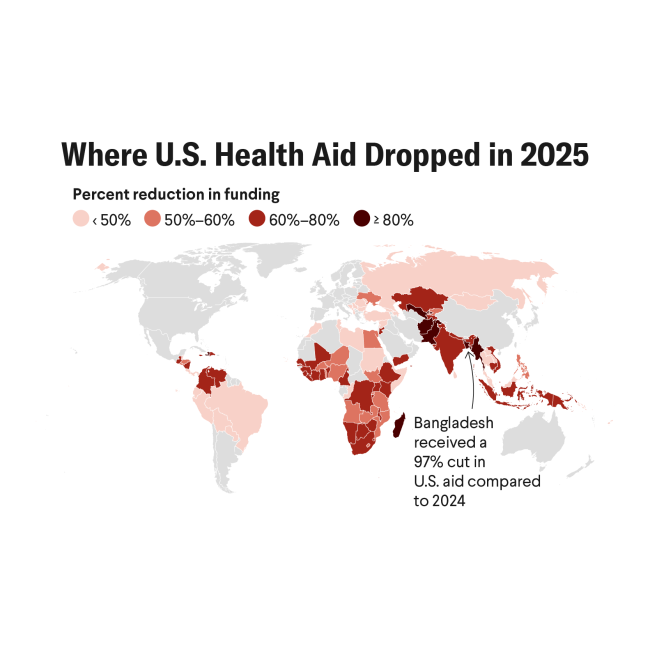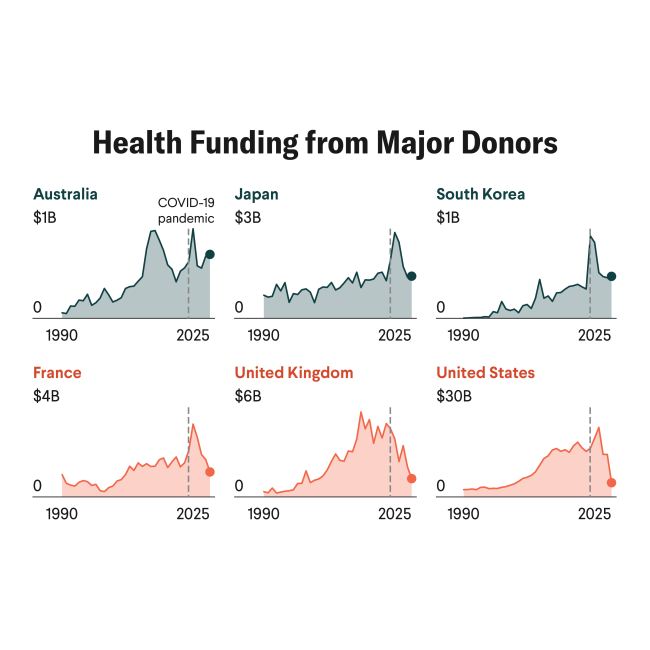
In 2025, global health programs were shaken by a 12% overall funding cut, leaving financing at its lowest level since 2012 as the United States and other major donors stepped back. Now, new preliminary estimates from the Institute for Health Metrics and Evaluation (IHME) show that financing for global health dropped even further, but by less (5%).
The largest absolute cut this year came from the United Kingdom, which decreased its funding levels by 37%, or $891 million, according to IHME. The United States had the next-largest absolute drop, reducing its development assistance for health by $668 million, or 8%. Next, Canada and Germany lowered theirs by more than $100 million each from 2025 to 2026, a 10% and 8% drop, respectively.
In response to the shortfall in aid, some low-income countries—and 49 of 54 African countries—have raised their health spending, but the increases have not been enough to offset the losses in donor funding. The long-term financial outlook of organizations such as the United Nations and Gavi remains uncertain, though some of their steep reductions in funds have been buffered by their short-term reserves.
Some Support Continues amid Overall Funding Decline
A few donors moderately increased their funding from 2025 to 2026, against the broader trend. IHME estimates that Japan grew its contributions during this uncertain period by 2% ($32 million). The increased funding from Japan reflects the country's broader foreign policy agenda. The country seeks to [PDF] elevate global health as an instrument of diplomacy, according to government statements, consolidating its leadership on universal health coverage and its standing with the Global South.
IHME estimates the Gates Foundation's contributions to global health also rose, increasing by 4% ($249 million) from 2025 to 2026. In 2026, the Gates Foundation remained the second largest single source of development assistance for health, behind only the United States.
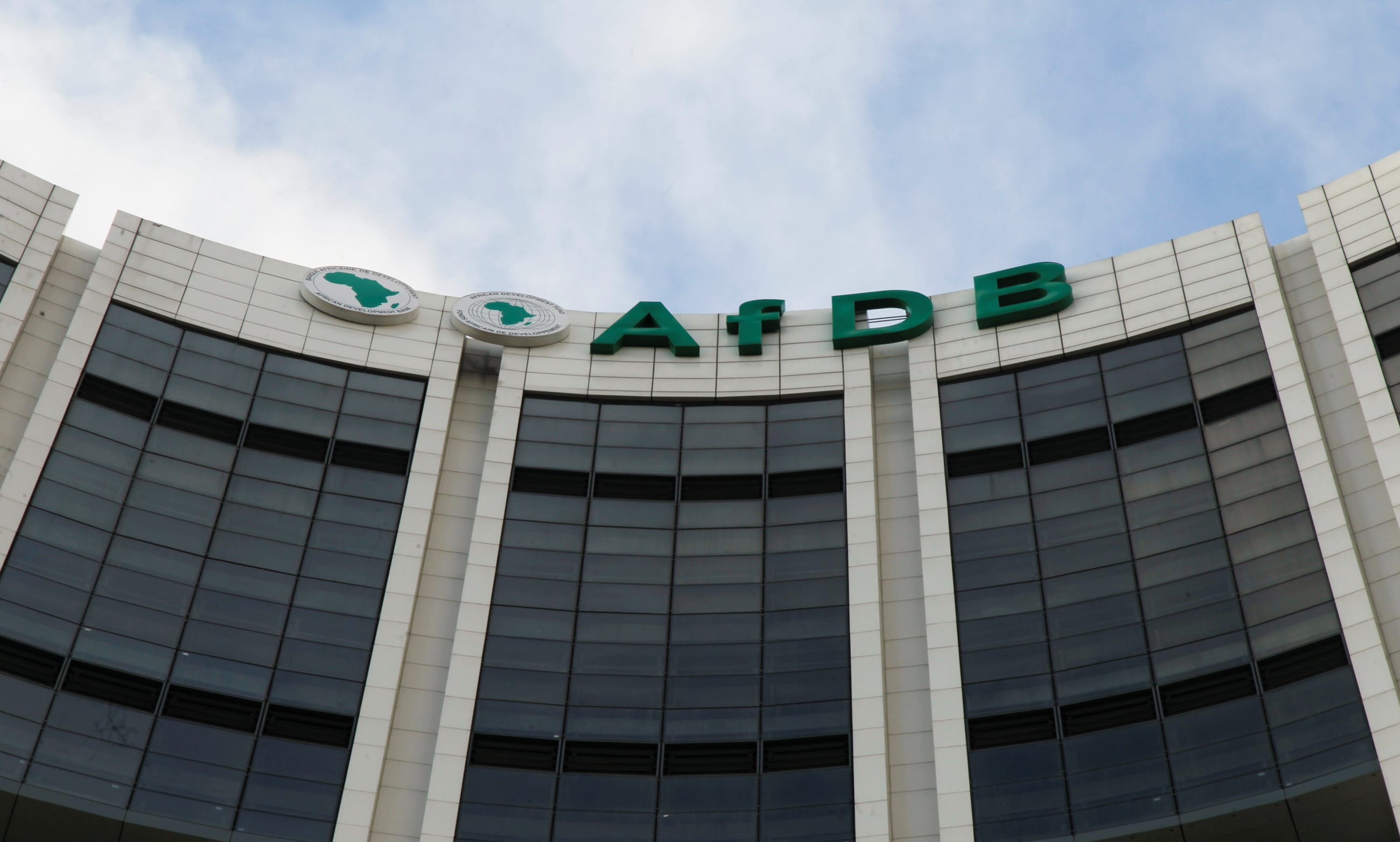
Multilateral development banks are also among the few entities whose funding increased between 2025 and 2026. Development assistance for health from regional development banks—which include the African Development Bank, Asian Development Bank, and Inter-American Development Bank—rose by an estimated 32% ($270 million) between 2025 and 2026, whereas the World Bank increased its funding by an estimated 2% ($91 million). The data suggests that the focus area of this increased funding is health systems strengthening, a core area of concentration for these institutions.
Meanwhile, organizations such as the UN agencies and Gavi have had to scale back their budgets. IHME's estimates show an 18% ($873 million) and 15% ($447 million) decrease in annual disbursements, respectively, between 2025 and 2026.
Low-Income Countries Boost Health Spending, but Shortfalls Remain
Countries across income groups have been affected by declining development assistance for health, low-income countries experiencing the largest shortfalls in their health budgets. Among low-income countries, total health spending per person—including donor funding—is estimated to have dropped by an average of 3% per year between 2024 and 2026 despite an average growth of 8% per year in government health spending per person.
Health spending in middle-income countries has been less affected by donors' actions. Despite declining development assistance, total health spending grew among both income groups between 2024 and 2026, increasing by an average of 1% among lower-middle-income countries and by 3% among upper-middle-income countries.
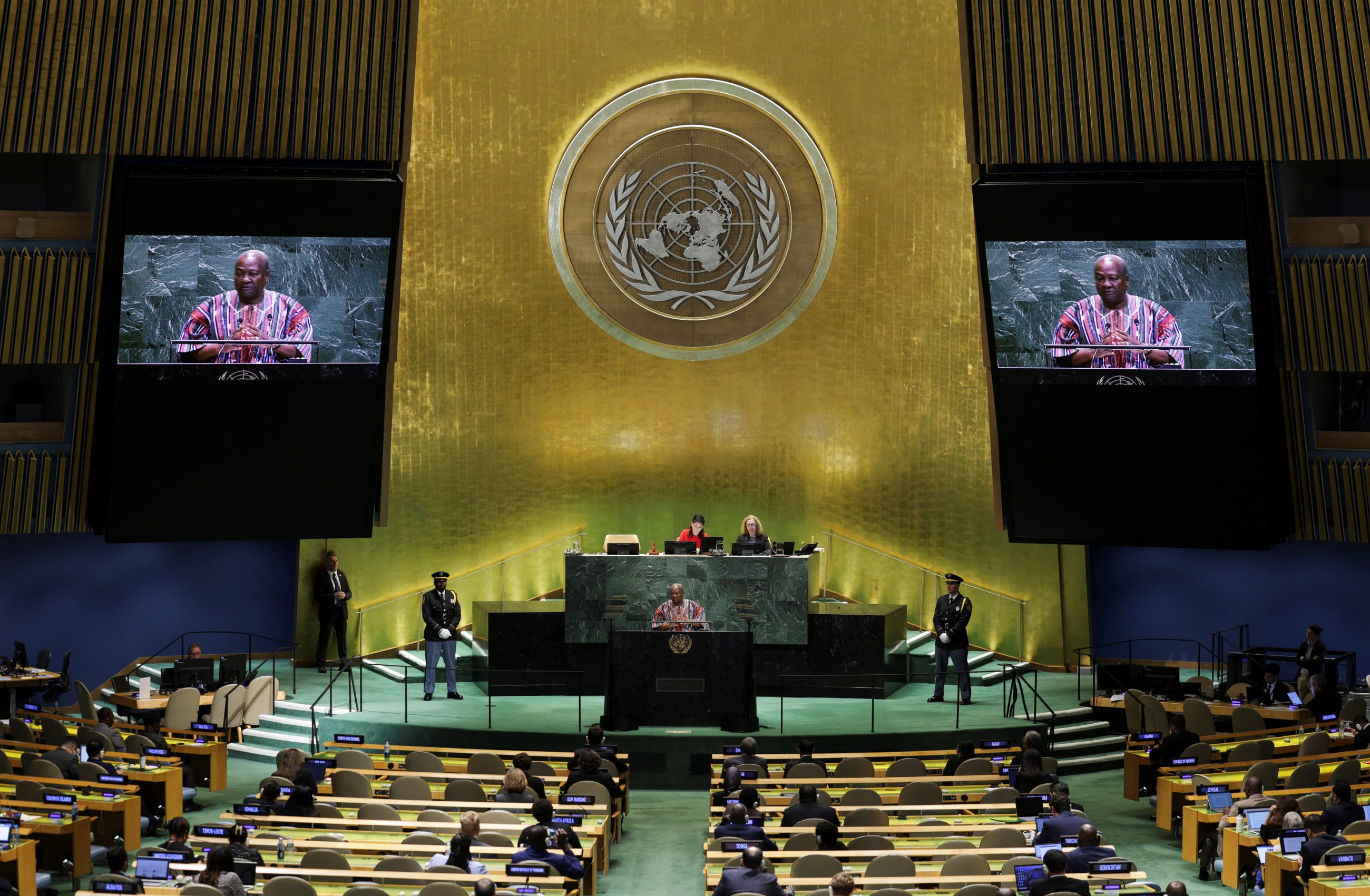
Historically, most development assistance for health has gone to sub-Saharan Africa, which has experienced the largest reduction in global health funding relative to other regions. In response to declining funding, African countries, led by the president of Ghana, John Dramani Mahama, developed the Accra Reset, an initiative to reshape global health by centering sovereignty and Global South voices. It pledges to reenvision areas of global health traditionally supported by funders, ranging from strengthening national health systems to local pharmaceutical manufacturing. Although the initiative promises country-led global health leadership, uncertainty remains about which countries are positioned to meet it.
As many low-income countries grapple with smaller health budgets, countries face stark choices: work to raise new money to cover the gaps left by donors, divert resources from other sectors to health, or scale back health services. The current evidence suggests that though governments intend to raise resources, enough new money has yet to be raised to cover existing health needs. Reprioritizing the health sector by redirecting resources from other areas has also been a response mechanism in some countries. However, it cannot be a viable long-term strategy unless overall government spending is increased. The last option, reduced services over the short or long term, seems to be a highly likely outcome that should proactively be avoided. Increasing out-of-pocket payment, another likely outcome, is counter to global universal coverage goals and will be a setback for those most in need of care.