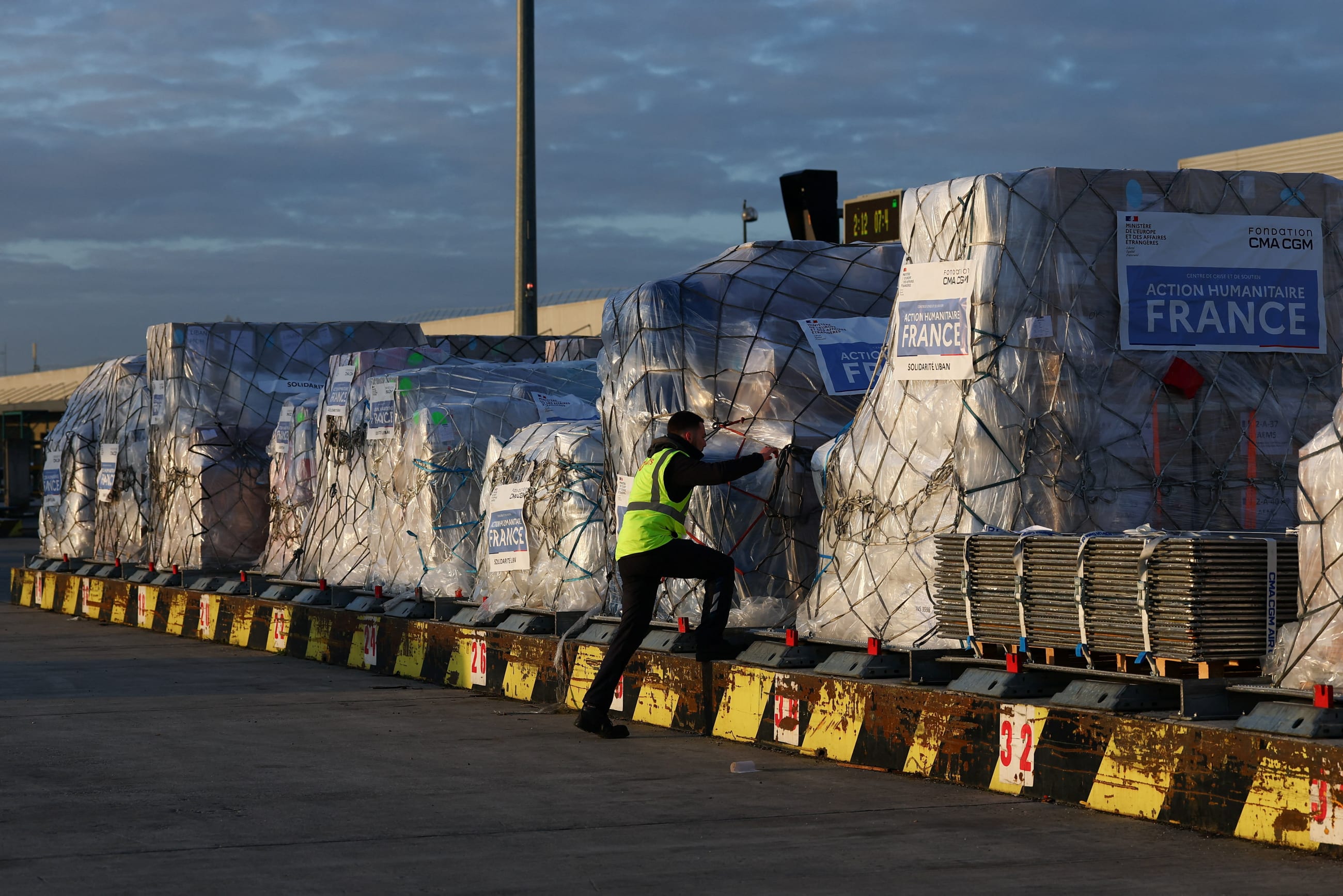
The escalating war in Iran and the Middle East has disrupted two of the world's most critical logistics corridors—the Strait of Hormuz and major Gulf air hubs—triggering delays across global supply chains. Commercial activity through the Strait of Hormuz remains 90% below pre-war levels as of March 16, and global air-cargo capacity dropped 79% in the Gulf region between February 28 and March 3, driving a 22% reduction worldwide.
The cascading fallout applies to the transport of critical medicines as well, and the consequences underscore a need for acute remedies and long-term structural reform. Immediate responses should focus on visibility of supply-chain gaps across the region and cargo reroutes through non-Gulf hubs. Although imminent medicine shortages are unlikely in the United States given extensive inventory buffers and largely uninterrupted Suez Canal shipping flows, pharmaceutical supply-chain vulnerabilities exposed by the conflict—a dependence on specific transport hubs, fragile cold chains, and emergency supply systems—highlight the need for a longer-term investment in the diversification and streamlining of pharmaceutical supply chains.
Consumers could see drug costs affected within four to six weeks because of increased Indian air-cargo rates
Pharmaceutical company executives are responding to the immediate pharmaceutical supply-chain threats by actively targeting unconventional routes to ensure that the delivery of products to their final destinations is uninterrupted. These new journeys include using land routes to truck cargo between airports in the Gulf Cooperation Council (GCC) region or diverting air cargo to China or Singapore to avoid the conflict zone entirely.
Rerouting costs will burden pharmaceutical export-dependent economies, as well as consumers. A strategist at a supply-chain execution firm warned that consumers could see drug costs affected within four to six weeks because of increased Indian air-cargo rates.
GCC Roles in the Global Pharma Supply Chain
The GCC region, including Bahrain, Kuwait, Oman, Qatar, Saudi Arabia, and the United Arab Emirates (UAE), serves as a critical pharmaceutical transit hub connecting Africa, Asia, Europe, India, and the United States. The GCC's growing pharmaceutical industry is worth $23.7 billion, around 80% of which relies on imports through the GCC airspace and the Strait of Hormuz. This valuation is projected to more than double by 2033.
Pharmaceutical Supply Chain Flows Influenced by the Iran War
Major parts of the pharmaceutical supply chain pass through Middle East shipping routes

Type
Generic medicines
Active pharmaceutical ingredients (APIs)
Biologics and advanced therapies
India and
South Asia
United States
Africa
GCC
airport hubs
European
manufacturers
GCC region
India
European Union
Middle East
shipping routes
China
United States
APIs from China to the United States predominantly go through West Coast ports and the Panama Canal.
GCC: Gulf Cooperation Council, a political and economic union of six member states: Bahrain, Kuwait, Oman, Qatar, Saudi Arabia, and United Arab
Emirates.
"European manufacturers" refers to Belgium, Denmark, Ireland, the Netherlands, and Switzerland,.
Chart:
CFR/Allison Krugman
•
Source:
TGH Research

Type
Biologics and advanced therapies
Generic medicines
Active pharmaceutical ingredients (APIs)
European
manufacturers
China
India
U.S.
Middle East
shipping routes
GCC
airport hubs
India and
South Asia
U.S.
EU
GCC region
Africa
APIs from China to the U.S. predominantly go through West Coast ports and the
Panama Canal.
GCC: Gulf Cooperation Council, a political and economic union of six member
states: Bahrain, Oman, Qatar, Saudi Arabia, United Arab Emirates and Kuwait.
"European manufacturers" refers to Belgium, Denmark, Ireland, the Netherlands,
and Switzerland,.
Chart:
CFR/Allison Krugman
Source:
TGH Research
Dubai is central in this network. Its primary air-cargo airport—the world's eleventh largest as of 2024—functions as a major pharmaceutical re-export hub, where medicines arrive, are warehoused, and then are shipped globally. CEVA Logistics, DHL, and DP World—Dubai's pharmaceutical supply-chain logistics giants—have significantly grown the emirate's pharmaceutical and health-care distribution footprint by expanding re-export and cold-chain capacities. They also capitalize on proximity to the Jebel Ali Free Zone, whose container port is the ninth largest in the world.
Dubai's air-cargo capacity is almost 4 million tons annually. Considering the conflict-driven drop in the region's cargo capacity, and that pharmaceuticals account for 4% of global air freight, the emirate could lose out on processing more than 10,000 tons of pharmaceutical air freight this March. These airspace disruptions are also spilling over into global-health emergency supply-chain response, and the World Health Organization's (WHO) Dubai hub operations are currently on hold.
What's Most at Risk and Why?
Given inventory buffers for many generic medicines, the first shortages will likely occur where supply chains are already fragile: cold chains and emergency shipments.
Cold-chain products—vaccines, insulin, biologics, and cancer therapies—have short shelf lives for their quality and integrity, making their supply chains fragile and thin. Most vaccines, for example, must be stored in transit between 2°C and 8°C. Cargo carriers could need a week and a half to catch up for every week that air shipments are suspended, increasing the risk of spoiled cold-chain products and shortages. These temperature-sensitive shipments contain specialized equipment that, if held up in the Middle East due to routing delays, may cause equipment shortages in subsequent shipments.
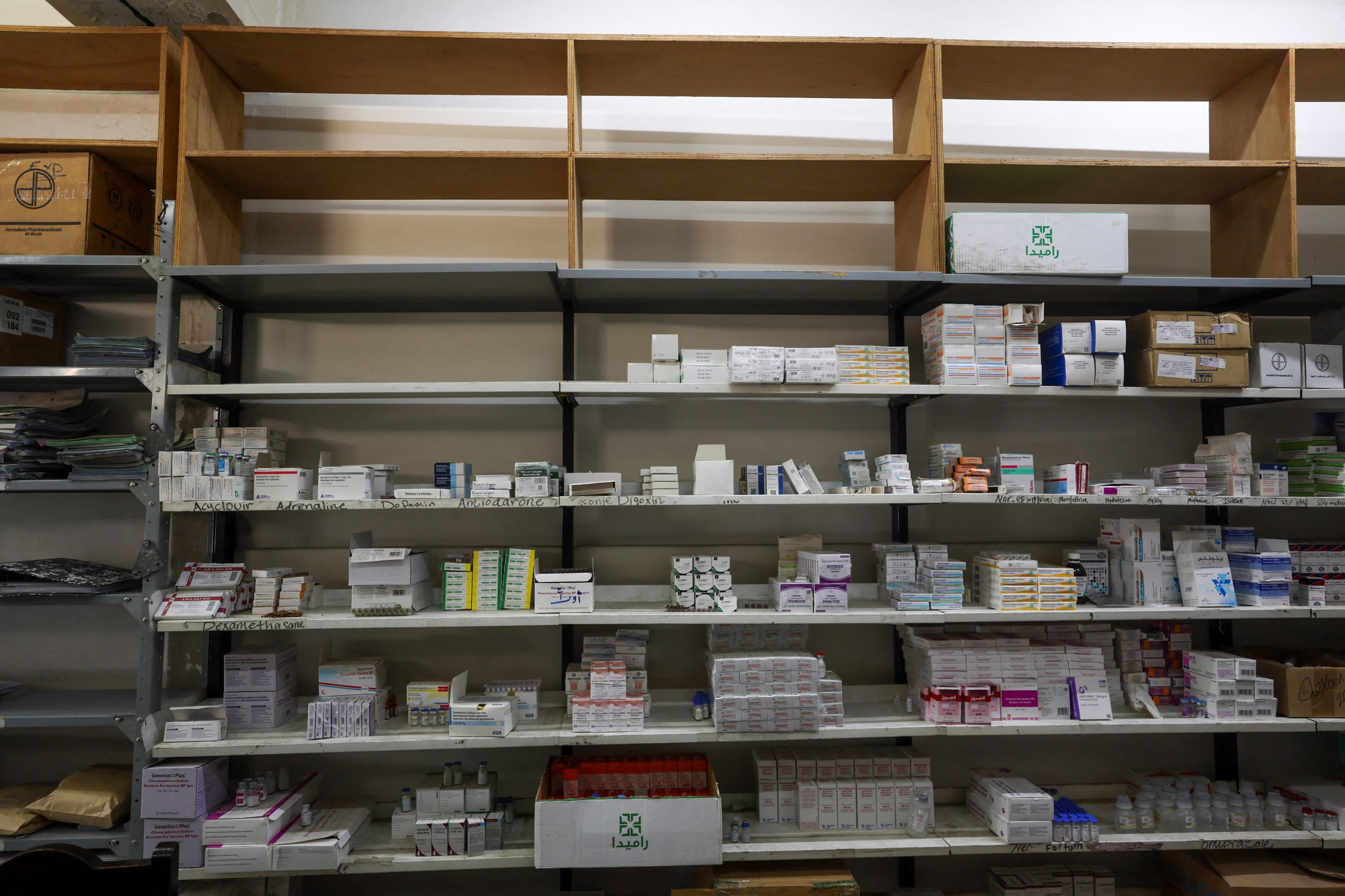
The WHO's emergency system that relies on the GCC airspace has already reported unmet needs in vulnerable countries stemming from the Iran conflict. WHO Regional Director Hanan Balkhy stated March 5 that its operations face a 70% funding gap as the war disrupts $18 million in humanitarian health supplies. Another $8 million in shipments cannot reach the hub, and more than 50 emergency supply requests from 25 countries are affected, including $6 million in medicines for Gaza.
How the Iran War Is Disrupting the Pharmaceutical Supply Chain
Disruptions at GCC airports and transshipment hubs are impeding the flow of active pharmaceutical ingredients (APIs) and finished products

Stages impacted by international transport disruptions
Products
imported into
destination
country
by sea or air
APIs exported
to another
country by sea
to be finished
Products
arrive at
warehouse
Final product
manufactured
Products are
dispensed
APIs manufactured
Some APIs
manufactured
domestically into
final products
The chart is a simplified example of the pharmaceutical supply chain.
Chart:
CFR/Allison Krugman
•
Source:
Adapted from The Center for Global Development

Some APIs
manufactured
domestically into
final products
APIs
manufactured
APIs exported
to another
country by sea
to be finished
Stages
impacted by
international
transport
disruptions
Final product
manufactured
Products
imported into
destination
country
by sea or air
Products
arrive at
warehouse
Products are
dispensed
The chart is a simplified example of the pharmaceutical supply chain.
Chart:
CFR/Allison Krugman
Source:
Adapted from The Center for Global Development
GCC countries, in particular Qatar, Saudi Arabia, and UAE, are emerging as a global presence in clinical trials, a development vulnerable to disruptions from halted critical medicine imports. Although it accounts for a small portion of global clinical trials, Middle East's contribution is projected to nearly double by 2033.
The region is attracting clinical trials from pharmaceutical giants such as Abbott and Pfizer because of the area's high chronic-disease prevalence and its lenient regulations allowing for fast-tracked trials. The UAE has recently taken strides in stem cell research, and Qatar is growing its precision medicine and genomics research. Saudi Arabia—where clinical trials already account for two-thirds of the region's total—is prioritizing future growth in this sector to realize its "Vision 2030," an effort to diversify its economy through research and development.
Supply-chain disruptions could jeopardize this objective, especially for ongoing clinical trials that depend on imported treatments such as insulin.
Iran's March 18 attack on Ras Laffan Industrial City has introduced significant uncertainty into the global helium supply, which is an essential input for cooling the magnetic resonance imaging (MRI) machines used worldwide for medical scans. Qatar is the world's second-largest producer of helium, behind the United States. Consequences could take time to ripple through the health-care system because of built-in buffers, the lag between helium extraction to hospital delivery, and the fact that installed MRI machines require helium refills only every few years.
Yet the disruption will tighten an already volatile market for helium used in medical equipment. With around 50,000 MRI machines worldwide, 5,000 new devices produced annually, and more than 95 million MRI scans performed each year, prolonged supply constraints could drive up prices and strain procurement, particularly since most systems still rely on helium despite emerging alternatives.
Will the Conflict With Iran Lead to Drug Shortages?
Despite these vulnerabilities, short-term risks of drug shortages are low in most countries because of inventory buffers built into the supply chain. On March 4, for example, the UAE announced confidence in its emergency drug stockpiles.
Across the European Union, countries mandate [PDF] essential-medicines stockpiles ranging from two to six months. These inventory regulations should cushion the continent from sharp shipment price increases resulting from the Iran conflict. The Washington Post reports that the cost of air cargo from Asia to Europe has risen 45% since the war began, more than twice the increase from Asia to the United States.
Supplementing country-level buffers, pharmaceutical companies also hold on average 180 days of finished-goods inventory, both at production sites and additional downstream locations in the supply chain. In addition to inventory buffers held by the manufacturers, large pharmaceutical distributors such as Cardinal, McKesson, and Cencora hold approximately 25 to 30 days of stock.
Despite a low risk of overall shortages, U.S. medicine imports routed through the Middle East could still be affected, per 2025 Zauba data. India, the largest generic medicine exporter to the United States, shipped 4,922 tons of finished pharmaceuticals through Middle East sea routes in 2025. A year earlier, 32% of U.S. API came from India, but these shipment routes run predominantly through the Red Sea, a route also disrupted by security concerns following Houthi attacks that escalated in 2024.
Pakistan, notably, relied on Salalah—an Oman port that suffered a March 11 attack by Iran—to re-export more than 80% of its medicine cargo weight to the United States in 2025.
Countries in Africa, however, are less equipped to absorb acute pharmaceutical-supply shocks due to limited inventories for high-value medicines. These weaker buffers stem from constraints on working capital.
Risk of Rising Freight Costs
Currently, around one quarter [PDF] of total brand drug spending is attributed to supply-chain costs. Marine insurance premiums were already trending upward before the conflict. They increased 8% in 2021, and market projections expect additional 3% increases annually over the next decade. This growth will be compounded by war premiums for ships transiting conflict zones. Red Sea insurance premiums have nearly doubled since the escalation of the Houthi conflict in 2024. Since late February, premiums have already surged by more than 1,000% for vessels transiting the Strait of Hormuz.
As freight costs rise from rerouting and delays, generics prices for consumers will follow quickly, whereas branded or innovative medicines costs will be less immediately reactive.
What Could Be Done?
For countries dependent on Middle East sea routes or with thin inventory buffers, and for the already-fragile cold chain, immediate protective measures are needed. Maintaining access to high-value cold-chain products necessitates rerouting air freight through non-Gulf hubs, despite increased fuel costs. Governments should also consider temporary regulatory flexibility to expedite alternative sources for imports, control extensions, and manage allocations, especially for vulnerable countries that do not have built-in inventory buffers.
Supply-chain visibility is the essential next step, so countries, pharmaceutical companies, and distributors can understand where stuck medicines and APIs are creating inventory pressure.
Crises often create the political momentum needed to build structures that endure beyond immediate emergencies. The pharmaceutical supply-chain vulnerabilities exposed by conflict in the Middle East underscore the need for a standing Group of 20 (G20) coordination mechanism on pharmaceutical supply chains—one that could manage risks during conflicts but also support the production and distribution of medical countermeasures during health emergencies. A G20 task force could aggregate supply-chain information, convene manufacturers and governments, and maintain real-time visibility over medicine flows and distribution chokepoints. The technology for such visibility already exists through digital supply-chain tracking, logistics platforms, and data-sharing tools. What is missing is an established multilateral structure to host and govern these systems.
The existing dependence on GCC transit hubs as a primary corridor for pharmaceutical trade should be geographically diversified, and shortened supply chains should be considered where feasible. The fragility of global pharmaceutical supply chains is not new. These same problems appeared during COVID-19, Japan's 2011 earthquake and tsunami, and Hurricane Maria in 2017. The war in Iran is yet another a sobering reminder of the structural problems in the pharmaceutical supply chain. Let's hope that this reminder finally leads to action.
EDITOR'S NOTE: This article was originally published on March 17, 2026. It was updated with details regarding the helium market.