As international attention shifted to the war with Iran, in the background, Israel moved to cut off the Gaza Strip. On February 28, the same day the first strikes hit Iran, Israeli officials announced that they were closing every crossing and aid corridor into the Palestinian territory.
Residents of Gaza had begun seeing improved flows of food and aid supplies, yet the new shutdown spread concerns of another prolonged period of deprivation. According to virtual interviews and testimony from six Palestinians and four health workers in Gaza, the news triggered a panic to obtain whatever supplies they could, knowing that essentials such as food and fuel could once again vanish from shelves within days.
As of March 19, all of those crossings except one—Kerem Shalom—remain closed, which humanitarian workers say has reduced aid flows to a trickle. Life in Gaza has never regained its footing since October 7, 2023, when Hamas militants based in the enclave launched an attack that killed more than 1,200 Israelis and foreign nationals, mostly civilians, and took 251 hostages.
The Israeli response and vow to eliminate Hamas has devastated living areas in Gaza. The 1.8 million people living there today confront renewed aid shortages, skyrocketing prices, and persistent dangers. Some Palestinians worry that the latest suffocation will push Gaza back into the famine that clutched the enclave after Israel blocked aid for eleven weeks last year.
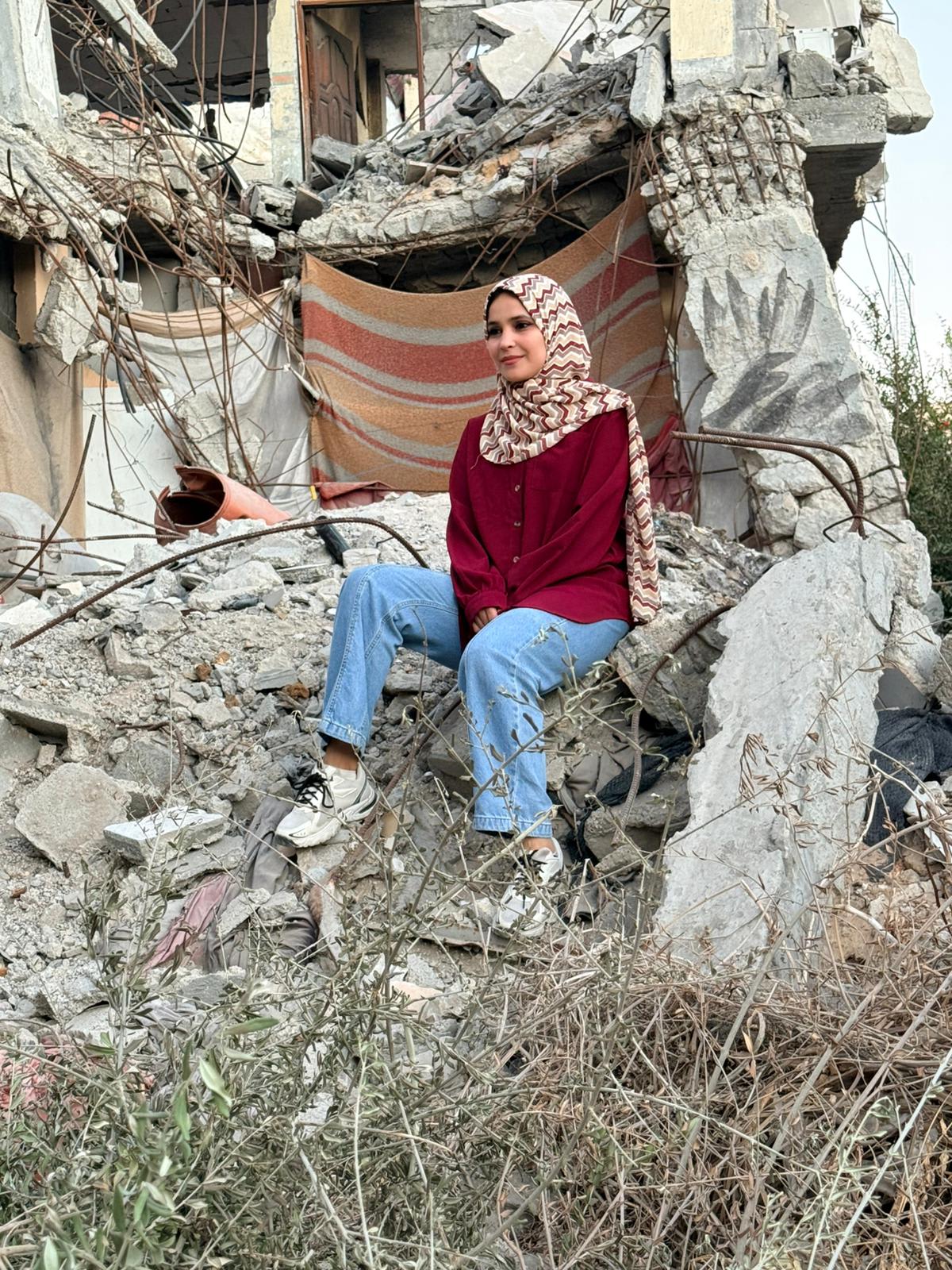
Doa'a Karawan, a displaced Palestinian and a humanitarian officer in Gaza, says that months after the October 2025 "ceasefire"—making air quotes as she says the word—the demand for aid work hasn't remotely slowed.
There's no one here who hasn't lost a family member, a home, or both
Mohammad Buwaital
Both Israel and Hamas have violated the truce, leaving Palestinian civilians stuck in the middle. Aid is not moving at nearly the rate needed, and strikes are still "happening daily," Karawan said. Civilians report regular attacks while collecting supplies or approaching their homes in the strip, especially at the blurred periphery of the "yellow line," the boundary that Israeli forces agreed to withdraw to in the initial days of the ceasefire. According to the United Nations, the latest data from the Hamas-run Gaza health ministry tallied 673 Palestinians killed between the October 15 start of the ceasefire and March 17. Four Israeli soldiers have died over this period, Reuters reports.
Mohammad Buwaital remembers one shift weeks into the ceasefire at Al Aqsa Hospital, when a 14-year-old boy entered, pushing his father in a wheelchair. He said the father had paralysis and severe injuries from bombings. The boy had been trudging on foot from one hospital to another, pushing his father morning to evening until he could find one that could admit them. Al Aqsa was their fourth stop.
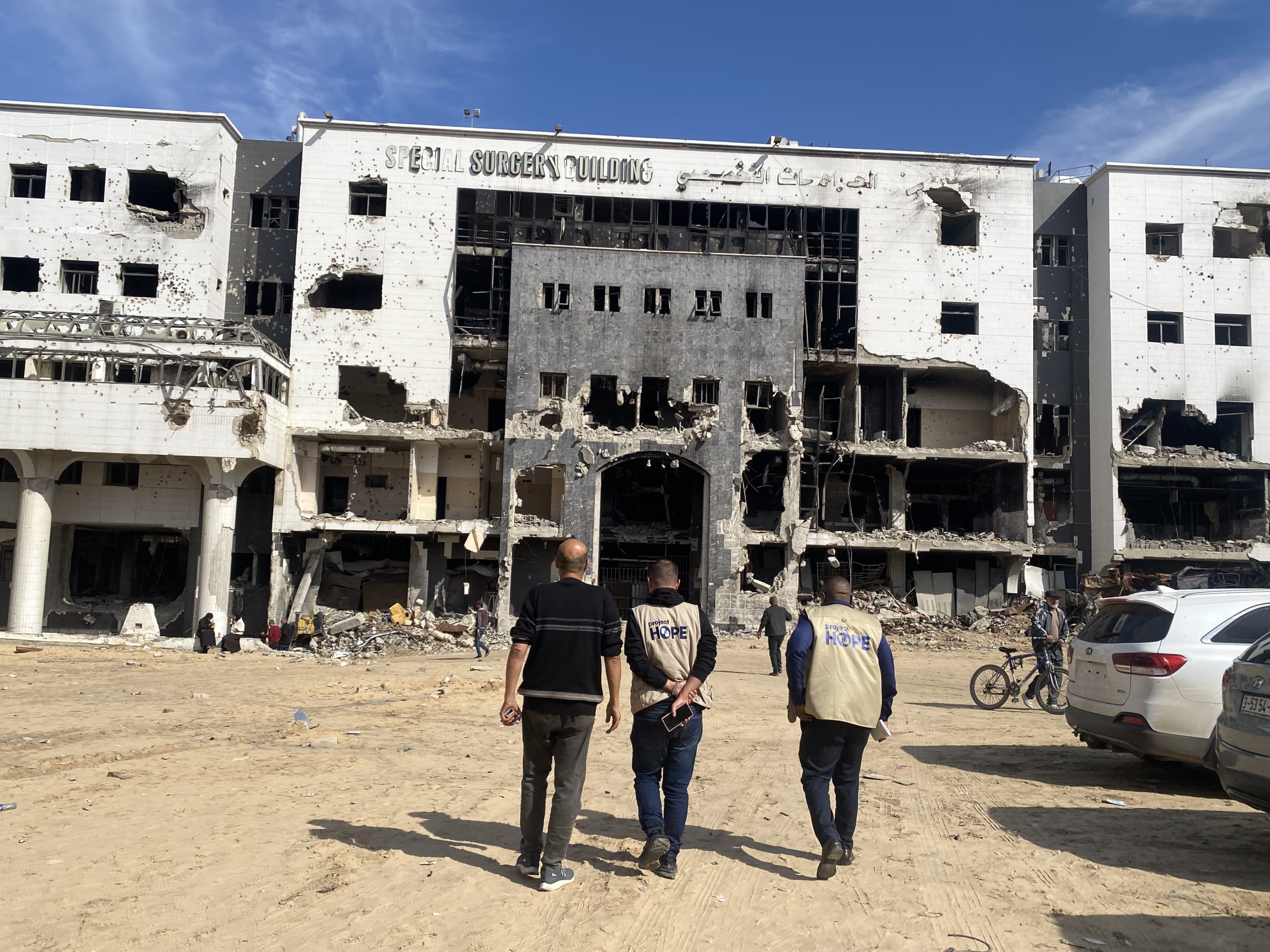
The Deir el-Balah–based hospital was designed to serve 200 patients. At the outset of the ceasefire in October, the World Health Organization (WHO) stated the hospital was operating at more than three times its capacity. Both of Al Aqsa's war-battered electric generators are reportedly no longer functioning, forcing the hospital to rely on a single, small back-up generator. The hospital is still floundering to keep up with its patients. According to the WHO, by early February, more than 18,500 Palestinians were in need of medical attention that was no longer available in Gaza.
The staff, too, is buckling under the shortages. The teams in Gaza are "incredibly energetic and committed," Buwaital said, but "exhausted and stretched thin, working under relentless pressure… There's no one here who hasn't lost a family member, a home, or both."
Doctors Without Borders CEO Tirana Hassan said that her staff has often treated patients in emergency rooms across Gaza, including Al Aqsa's after strikes, only to have their own family members brought in during the same strikes. At the end of 2025, Israel ordered all international staff out and barred 37 nonprofit organizations from working in Gaza, including Doctors Without Borders. The only staff left are Palestinian.
Aside from strikes in a time of truce, Gaza's other dangers still center on desolate, aid-stripped conditions.
"Our staff are turning up to ensure that they can provide this life-saving medical care. They too are trying to find safe places to work," Hassan said. "They too struggle to find access to food in an environment where it is not accessible, and clean water when the water infrastructure has been all but destroyed."
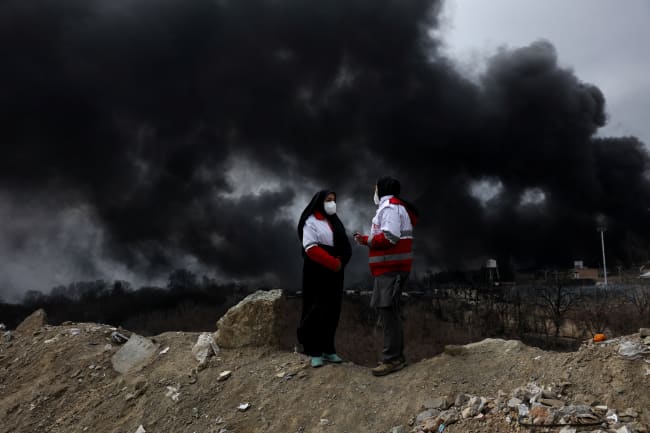
Health workers interviewed for this story describe life in displacement camps as macabre. Moses Kondowe, Project HOPE's Country Director in Gaza, sees the toll on his patients every day. In his 18 years working in conflict response around the world, he said, he's seen varied crises and, without doubt, "Palestinians face a lot of challenges."
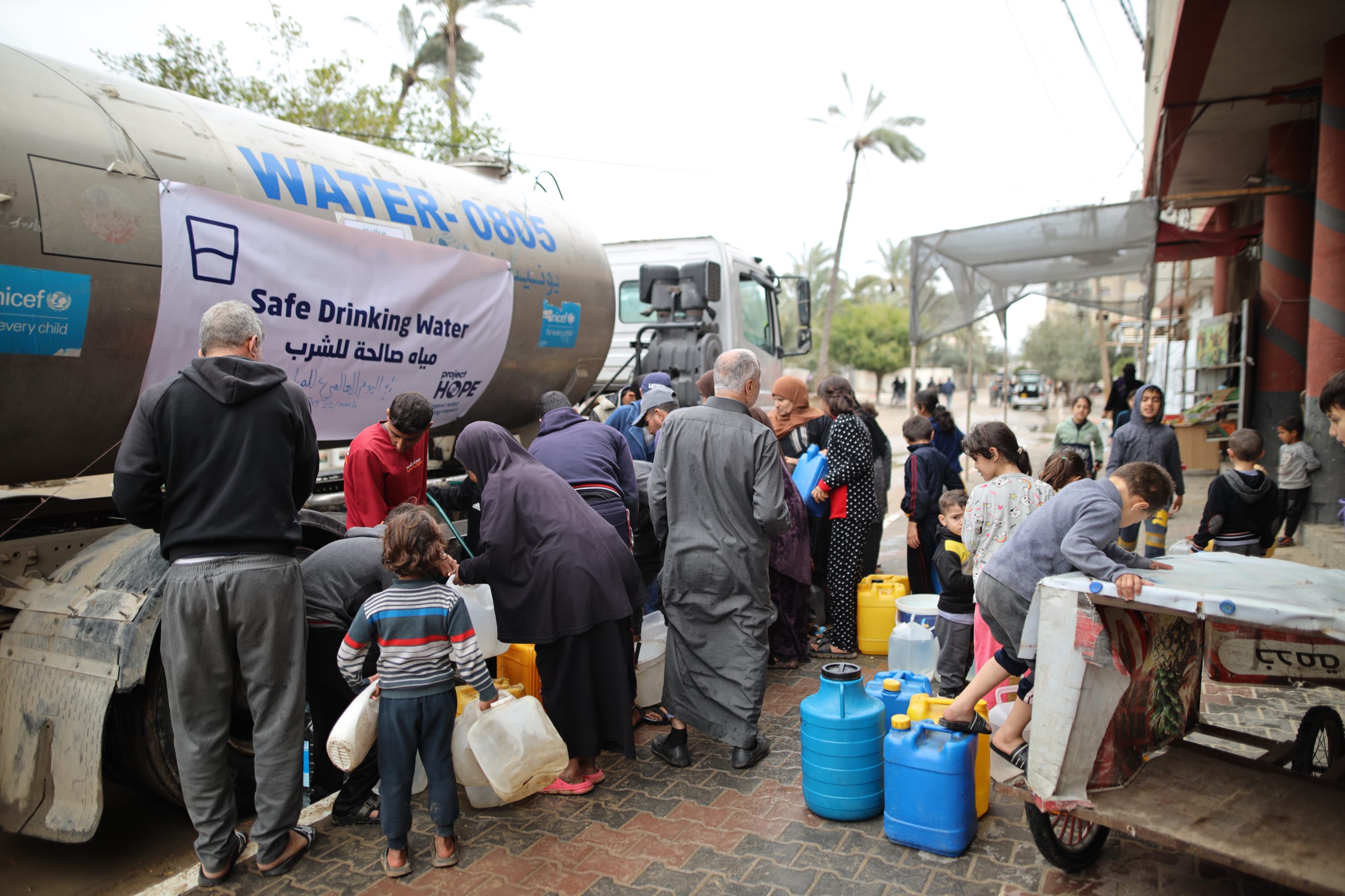
A critical one is shelter, especially during the winter. Flooding, cold temperatures, and a lack of potable water have created conditions [PDF] that increase vulnerability for more outbreaks of communicable diseases. Kondowe said that the increase in patients with severe diarrhea has been acute, a proxy that people are resorting to unsafe water.
But one of the most serpiginous challenges is a lack of food. Aid was restricted from entering the enclave for months, the Rafah crossing at Gaza's border with Egypt shuttered since May 2024. Karawan said she's "watched people dying because they cannot afford to buy a kilo of wheat." The cost where she is was recently as high as $40.
$40
In some parts of Gaza, the cost of one kilogram of wheat is as high as $40
I spoke with her on the morning of February 11, the same day that Israeli Prime Minister Benjamin Netanyahu visited President Donald Trump in Washington, DC. Across the street from the White House that day, a group of protesters was stationed behind a makeshift fence, bearing flags, shirts, and signage that read, among other things, "Stop Starving Gaza."
Inside the Gaza Strip, starvation is still a reality: "We have been suffering in famine for more than eight months," Karawan said. "We are still living in a time when babies are not allowed to have baby formula."
Half a year before the ceasefire, the UN food monitor, the Integrated Food Security Phase Classification (IPC), warned that the "worst-case scenario" was unfolding in Gaza: More than half a million people are projected to be at the "catastrophe" level of food insecurity by September. The ceasefire did usher in progress in reversing the famine, far more Palestinians able to access food than before, and costs coming down. Malnutrition levels decreased, the IPC cited lower projections in the most severe food insecurity classifications; at the end of 2025, that number was estimated at 100,000. The latest aid closure threatens to erase this progress, aid workers and humanitarian experts say.
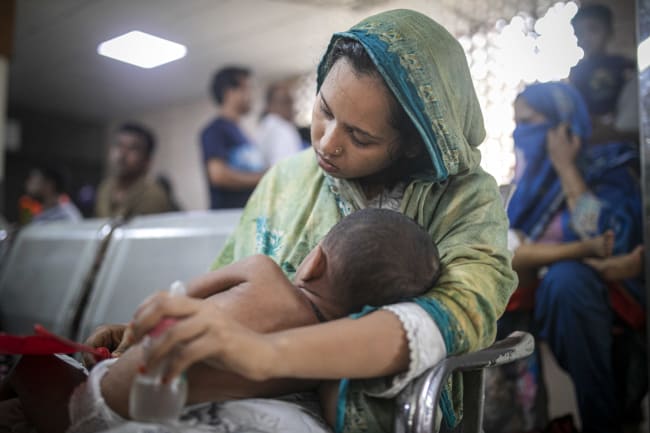
Hunger is still so rife that it can be hard to detect against the lowered bar for good health. Islam Taanin, a 29-year-old mother, lives in a school turned shelter with her four daughters after being displaced from her home in northern Gaza. Clinic staff in Tayara explained that she brought one of them, Maka, into their clinic for malnutrition, noticing her shrinking frame and fatigue. It was impossible to bring all four girls that day, but one of them, Saeda, came with them while the other two stayed back. Saeda, who appeared much healthier, was diagnosed with malnutrition too. "I knew that Maka is malnourished, but I was surprised to know that Saeda is," the mother told clinic staff, her voice filled with concern that she'd missed unseen signs of hunger in her daughter.
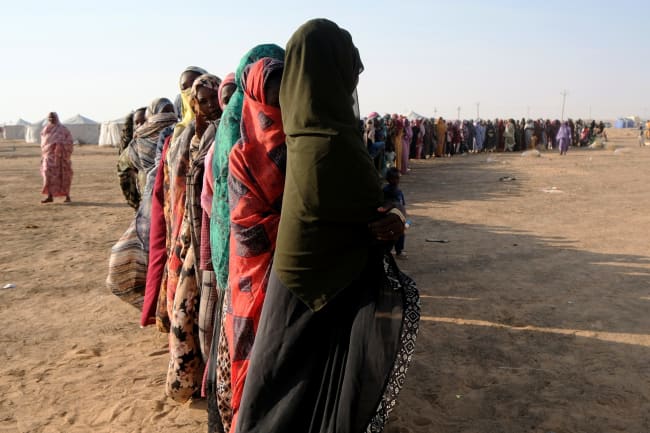
At least 165,000 metric tons of assistance have been delivered since the ceasefire as of January, according to the United Nations. Palestinian staff for humanitarian organizations have also been repairing roads and hospitals, clearing rubble, and reviving aid distribution points, though the ban on international staff has taken a toll on their work. But officials in these organizations say the aid allowed in is not nearly enough.
UN Secretary-General António Guterres called these gains "perilously fragile." More than three-quarters of Gaza's population (1.6 million of the 2.1 million) are still in "crisis-level" hunger, and projected to "face extreme levels of acute food insecurity," he told reporters at the UN headquarters in New York in December. Another UN aid spokesperson told the press in Jerusalem that the crisis was "far from over."
On February 2, Israel reopened the Rafah crossing after its almost two-year closure, but it wasn't open for a month before Israel sealed it off again in its war with Iran. Israel's military said on social media that the closures were for safety reasons, noting they were part of "several necessary security adjustments." In the same post, it said that "the closure of the crossings will have no impact on the humanitarian situation in the Gaza Strip." Israel Defense Forces were contacted for comment but had not provided one as of publication.
Even when it was unlatched, "there [was] no aid coming through," Kondowe reported, adding that "the number of people who [were] allowed in and out of Rafah can be counted on two hands." The WHO brought five patients over on Rafah's first day reopening, and rates hovered low on subsequent days. Trucks have been lined up at the border fully stocked, and Gaza's shelves remain sparse. The crossing remains closed. Eighteen thousand people need evacuation.
Echoing analysis and independent trackers, Tirana Hassan says that Israel has been denying most aid from entering Gaza for years, claiming the items—surgical equipment, antibiotics, pain medication, and even simple medical gear such as sterile gauze for war wounds—are dual-use or objects believed to have both military and civilian purposes. "Make no mistake: This is life-saving assistance that needs to go in," she said. "We are seeing a regression rather than the urgent scale-up that's required."
Just before a March 1 deadline, Israel's High Court issued an injunction on an order to ban the 37 aid organizations from operating in Gaza altogether. This ruling offers a glimmer of a lifeline to continue their work, Hassan explained, but doesn't reverse the ban—meaning that it doesn't materially change much for her team.
A few weeks earlier, members of the Board of Peace, the international group in charge of Gaza's future, gathered at the White House, where the United States pledged $10 billion and another nine countries $7 billion to address the situation. The latest World Bank figures put the cost of rebuilding Gaza at $70 billion. "Whatever role the Board of Peace will play in this next phase, I hope it will prioritize unfettered, unrestricted humanitarian access that cannot be just replaced overnight," Hassan said.
The need for aid in Gaza is pervasive, running the gamut from food and water to assistive devices such as wheelchairs and prosthetic limbs. But every interviewed Palestinian mentioned how resilient their people are.
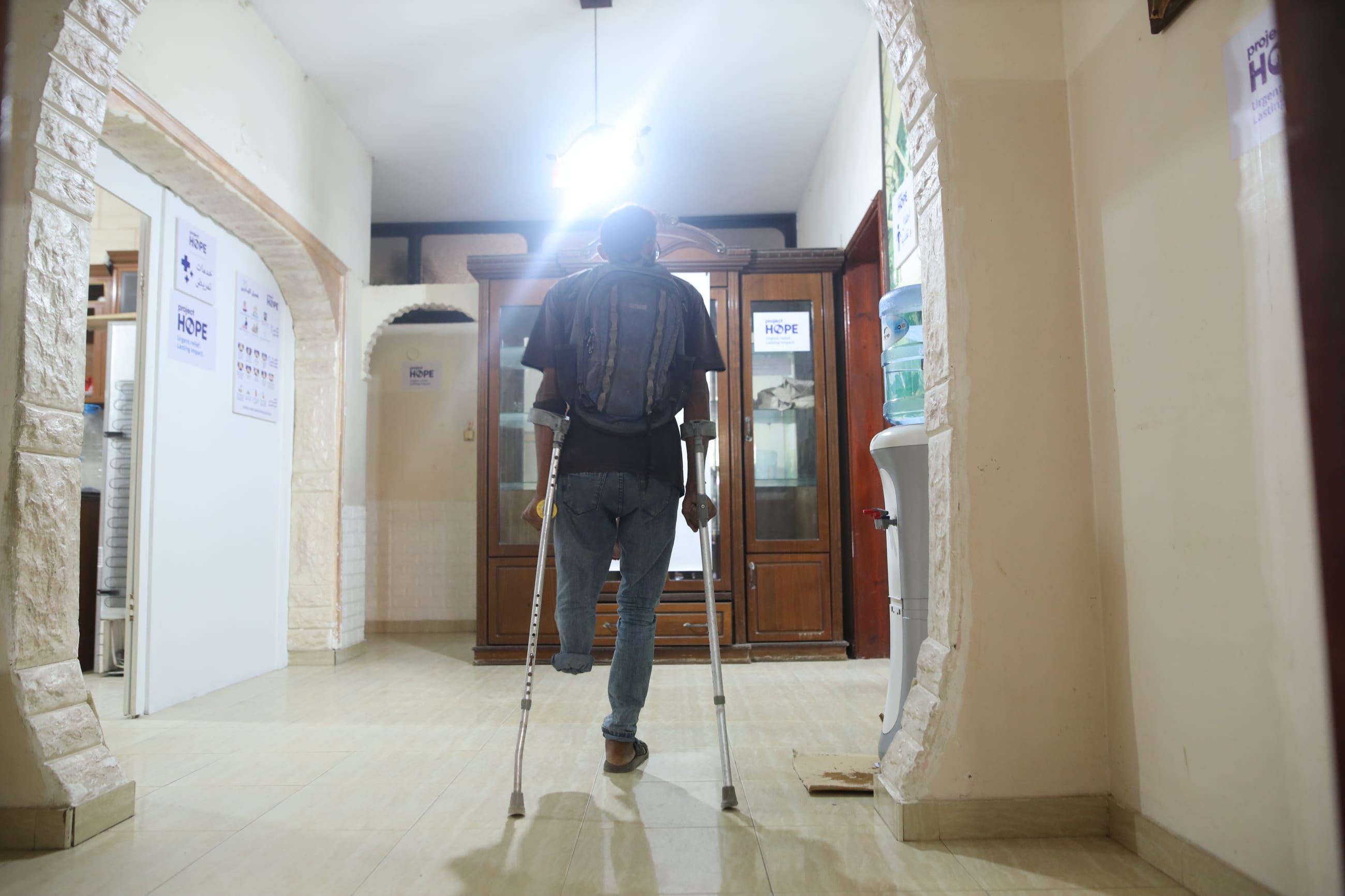
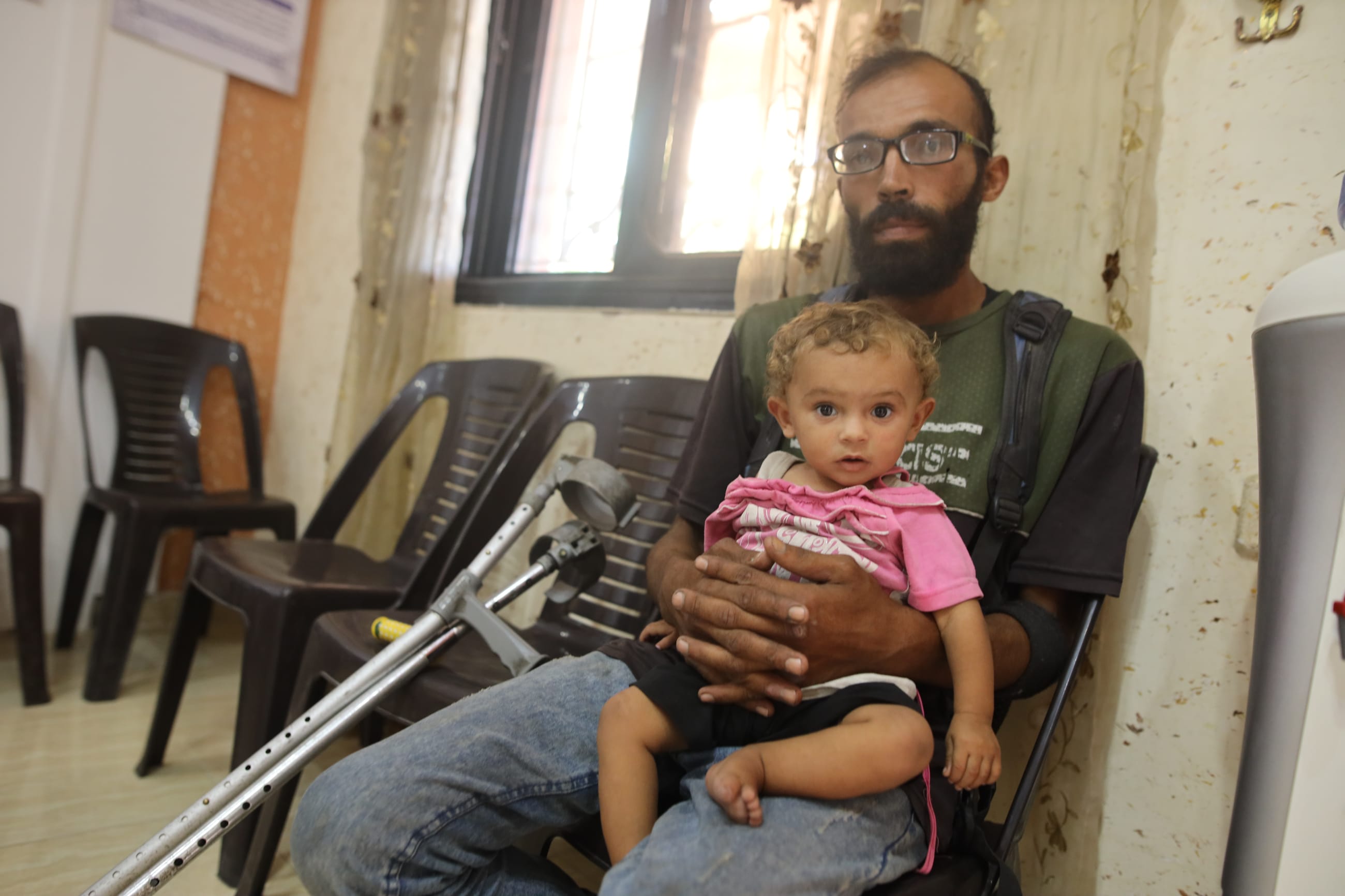
Hasan Zaghloul, a 30-year-old Palestinian man, lost his leg in an injury, his wife to an airstrike, and his home to the violence. "Before the war, I used to have a street stall and a shoe shop. I used to provide for my family fully. My wife was by my side," he explained in an interview via a Project HOPE clinic in Deir el-Balah. Now, he's lost almost all of his family members in the war, and watching his four girls alone is onerous. "I can't leave them alone," he said, "but I have nothing to feed them."
Nonetheless, they "are the hope of my life," he said. "Sorrow never leaves me, but I act strong in front of my children. After I lost my entire family, I now raise them with all the positivity I have." Karawan concurred. "There is always a silver lining, and I will never lose my hope," she said.