Susmita Pandey, a health assistant at the Timure health post in northern Nepal, is one of more than 6,000 missing people following the country's deadly flash floods in late August. Eight months pregnant and mother of a 2‑year‑old, Pandey has not been heard from since August 26.
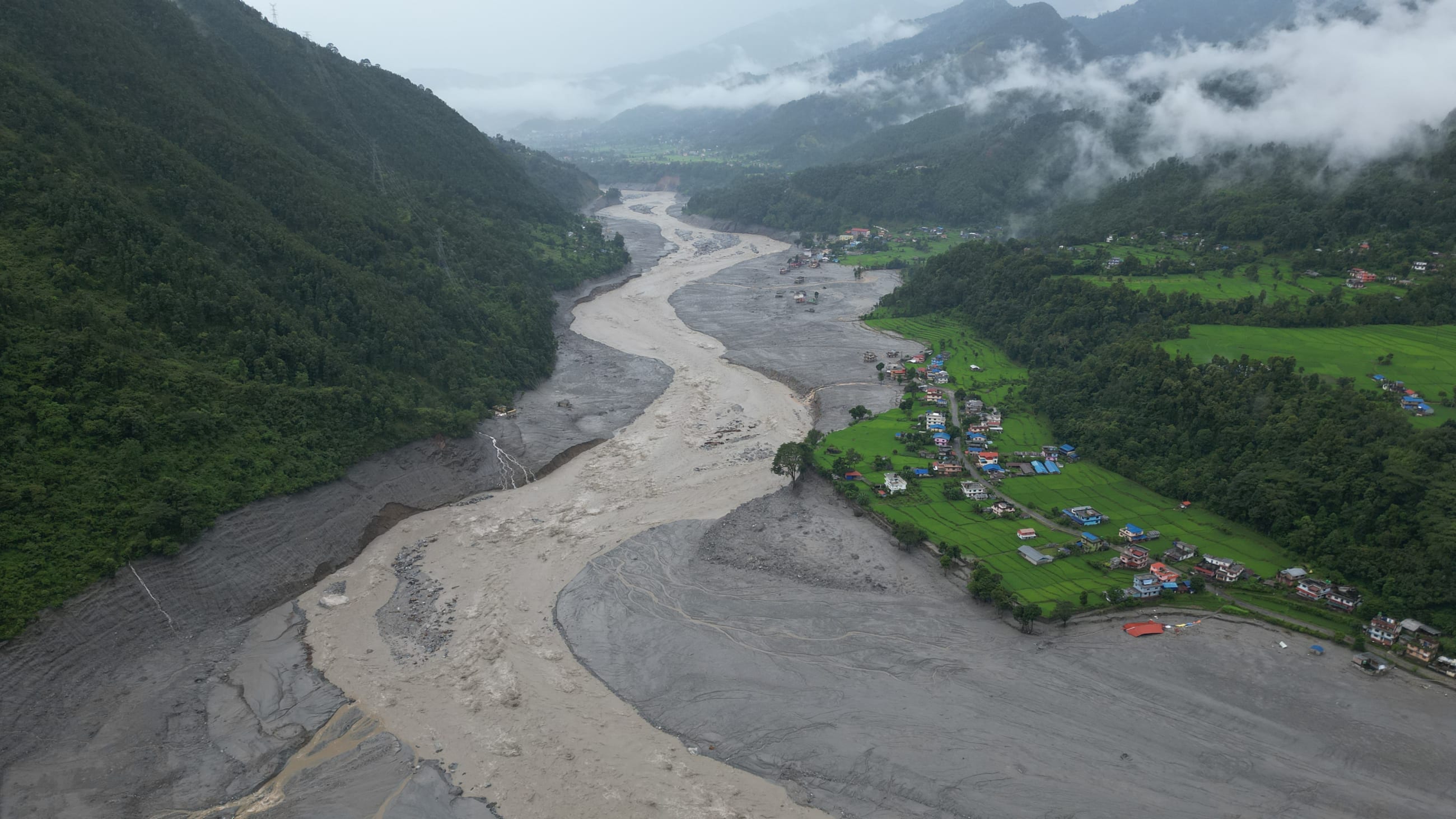
Timure was swept away by the flood that originated from the mountain range on the China-Nepal border after a rock-ice avalanche, labeled a "Himalayan Tsunami" and caught on CCTV camera for the world to witness. Scientists say human-induced climate change likely intensified the cascading impact of the flood. An analysis by World Weather Attribution noted that rapidly rising temperatures, driven by fossil-fuel emissions, destabilized the rock and ice. Per the latest data, the death toll has risen to 1,451.
Rekaha Adhikari, Pandey's sister‑in‑law, is using social media to appeal for the search and rescue of flood-affected health-care workers like Pandey.
"We don't know anything about [where she is]," Adhikari told Think Global Health.
Prerana Tamang's family is doing the same. Tamang, a staff nurse at Trishuli Hospital, has also been missing since the flood. Her photo, information, and family contact details were hanging on the wall of the Tribhuvan University Teaching Hospital in Kathmandu, as were those of so many other missing people.
While search and relief efforts continue, health care has emerged as one of Nepal's most heavily affected sectors. The devastation has come at a time when the country's health system is over capacity, facing postdisaster public-health concerns. Meanwhile, the funding needed to rebuild remains scarce.
Health Centers Under the Mud
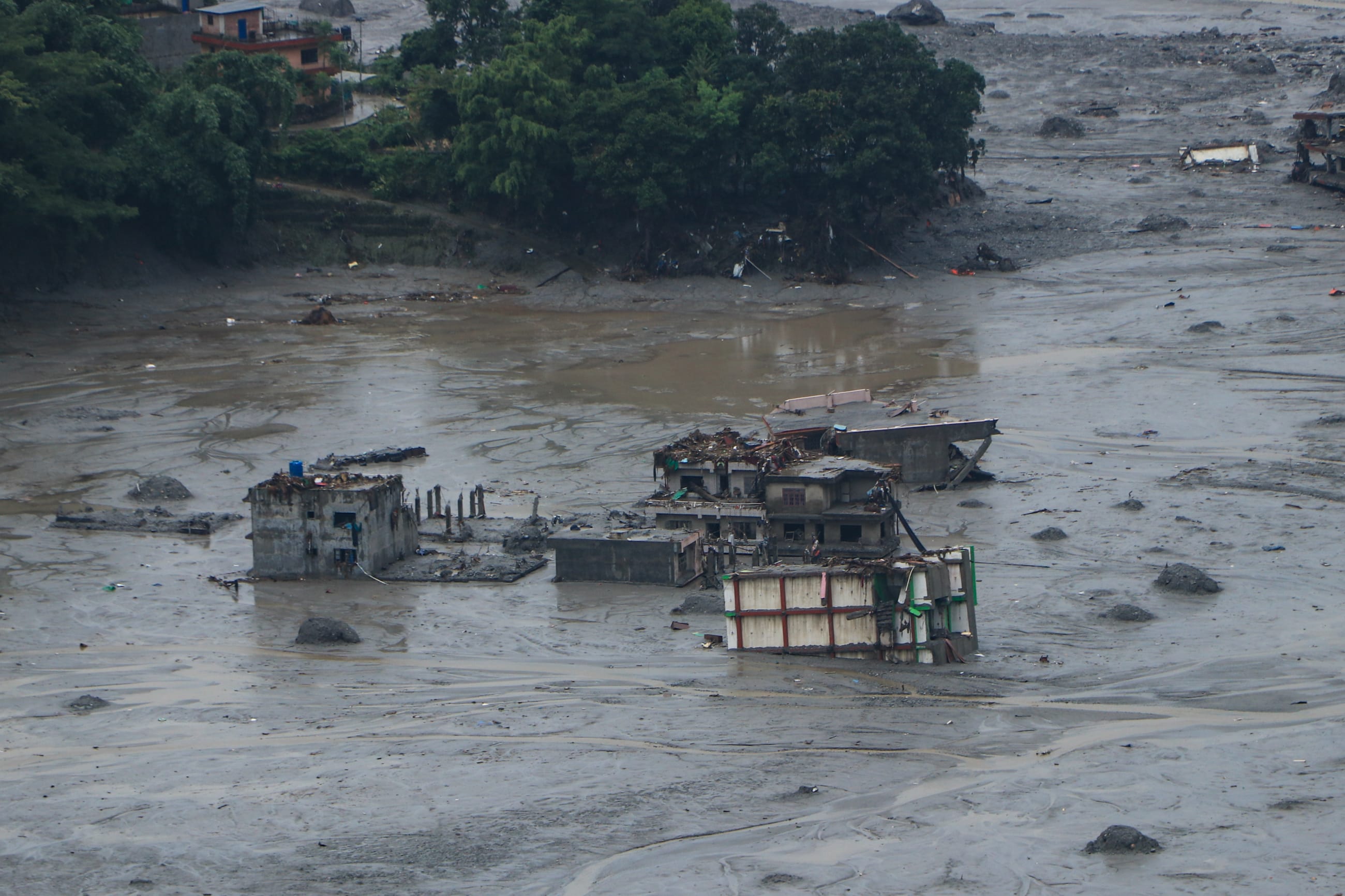
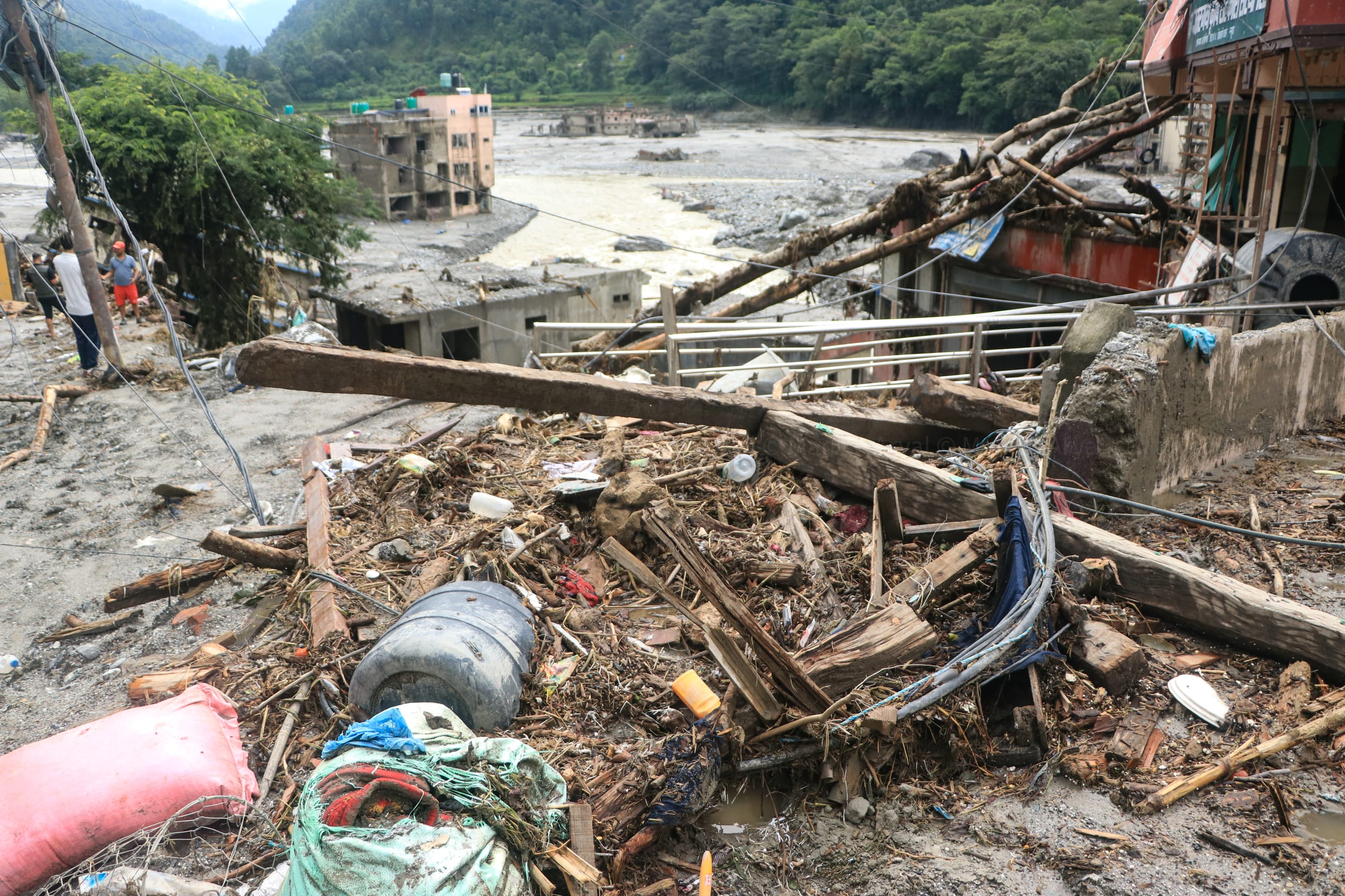
Alongside missing health-care workers, critical infrastructure was also damaged. Floodwater carrying boulders, debris, and mud swallowed everything in its way in downstream settlements in the Bhote Koshi and Trishuli river corridor in Rasuwa, Nuwakot, and Dhading districts.
At least seven health facilities, including primary health-care centers, health posts, and community health centers, were fully or partially damaged. These facilities provide primary health care to locals and are the most accessible way to get treatment.
It is still unclear how many health-care professionals have been affected, straining the already struggling rural health-care system in the region. Nepal's rural areas have fewer health-care facilities, providers including doctors and nurses, medical equipment, and medicines than urban areas like Kathmandu. Rugged mountains and hilly terrain in these areas also add barriers to supplying necessary aid.
It is still unclear how many health-care professionals have been affected, straining the already struggling rural health-care system in the region
According to the Department of Health Services, at least 12 health workers are missing in the affected region. The surviving staff are deeply traumatized, having witnessed the raging flood that swallowed their colleagues and friends.
"The [rescued health workers] were so disoriented and confused, for the first 72 hours they were unable to speak or make any decisions," said Prakash Gyawali, deputy health administrator at the Department of Health Services.
Health-care officials could not even reach the affected areas for 72 hours after the flood stormed through.
"When we finally got there, it seemed as if there was nothing there, all gone. The health centers and people are all gone," said Gyawali.
The flood not only tore apart health centers but also disrupted access to and services of two major hospitals in the region: Dhading and Trishuli Hospitals. These hospitals lost road connectivity to Kathmandu.
According to the Nepal government's rapid damage and needs assessment of the flood, 69 kilometers (43 miles) of roads were damaged, cutting a lifeline to needed health-care services to flood‑affected areas and nearby communities.
"After the flood, medicines and vaccines have been delivered to the area via helicopters and drones. This is an interim measure. But helicopter‑based delivery of medicines has now significantly decreased, and we only have limited stocks of basic medicines," said Niradhwaj Gharti Magar, chief of the public health office in Rasuwa.
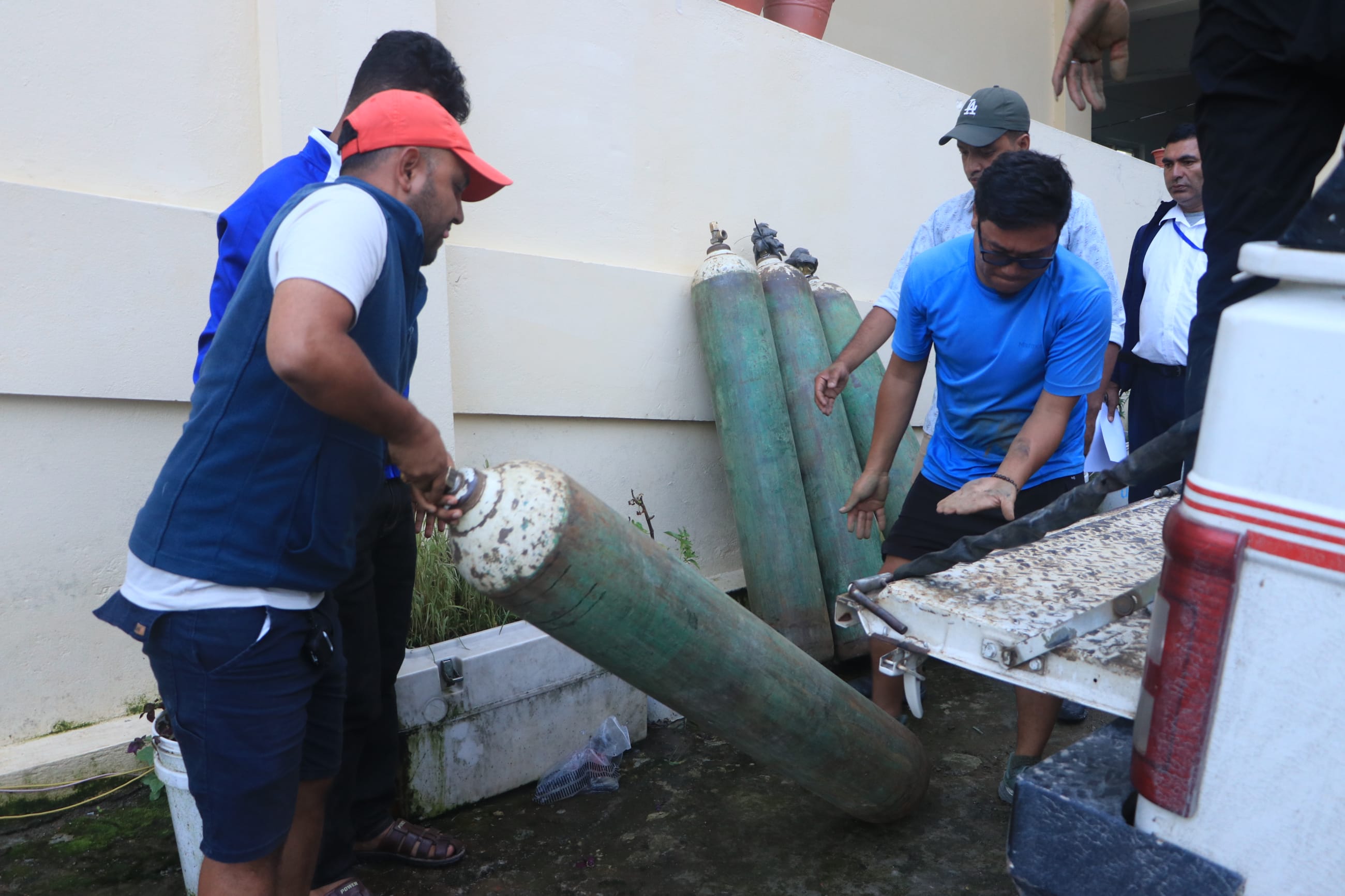
"Providing health-care services in these areas will be challenging if road connectivity is not restored soon," he added.
Nepal's government estimated that the economic loss and damage from the flood is more than $2.70 billion, and recovery and reconstruction of the infrastructure, including public-health facilities and road connections to the affected villages, will require more than $4.77 billion. Nepal requested $20 million from the UN fund for loss and damage, and it is also appealing for support from the international community through government-run relief funds, which have collected about $100 million. On September 22, the United States added a total of $36 million to flood response. Assistance has still fallen short of the billions needed for recovery.
Mounting Public-Health Concern After the Floods
In collaboration with local government and health and humanitarian organizations, including the World Health Organization (WHO), the UN Population Fund, and the Red Cross, the government has established temporary health clinics in the affected areas.
"We are aware that in this situation [postdisaster], there is a high possibility of infectious diseases, insect‑borne diseases, [and] water‑borne diseases. Chlorine and disinfectants have to be applied in [health facilities, holding centers, and villages]," Gyawali added.
Another concern is the smell of rotten food and livestock coming from the affected areas to the temporary shelters where survivors, including children and people with preexisting health issues, are staying. Health professionals are testing the affected people for fever, cold, and other symptoms at the holding center.
It's not possible to provide all health services through the temporary health camps. "However, regular services [need to] be resumed, even if from a temporary facility," said public-health expert Sharad Wanta.
A situation report on the health-sector response to the flood says fever and diarrheal cases are being managed by local governments in collaboration with the health teams on the ground, and further investigation and monitoring are ongoing.
Health workers also say there are growing signs of postdisaster psychological issues, including among health-care workers. After returning from the affected area, Gyawali shared a case where one health worker was distraught after losing his sister and brother‑in‑law.
"After that incident, he started screaming and crying; it was as if he had lost consciousness. Now, he is being rescued and is being treated."
The flood directly affected more than 84,000 people in the region; among them, more than 32,000 are children, and 541 are still separated from their families.
Around 17,000 children need urgent mental health and psychological support to recover from the distress and trauma caused by the disaster they endured, according to the UN Children's Fund (UNICEF).
Sameer Kumar Adhikari, joint spokesperson and senior health administrator at the Ministry of Health and Food Safety, says Nepal's priority is providing psychological counseling, vaccinations, regular medication for patients who have chronic conditions, and safe-delivery services to pregnant mothers.