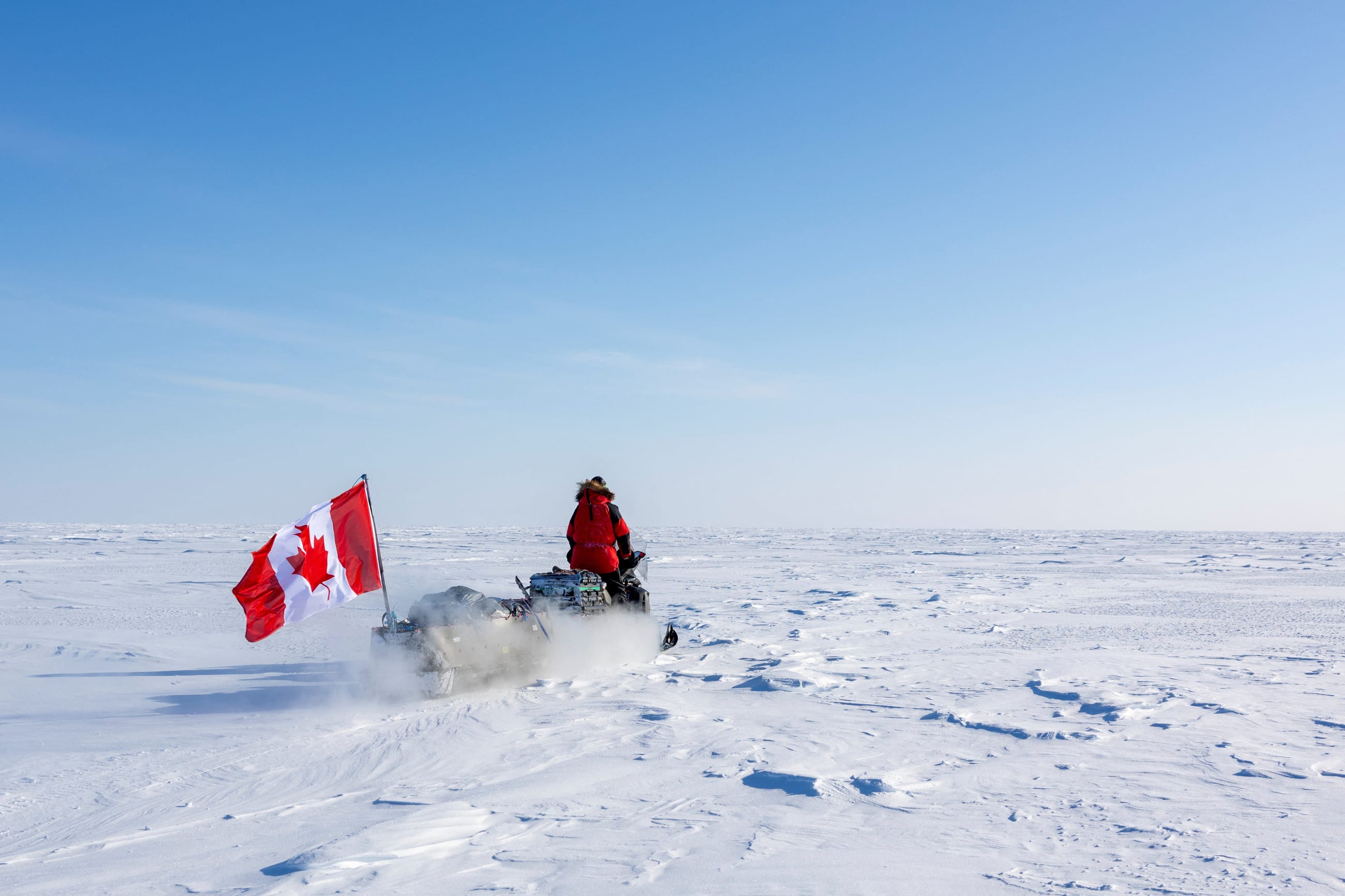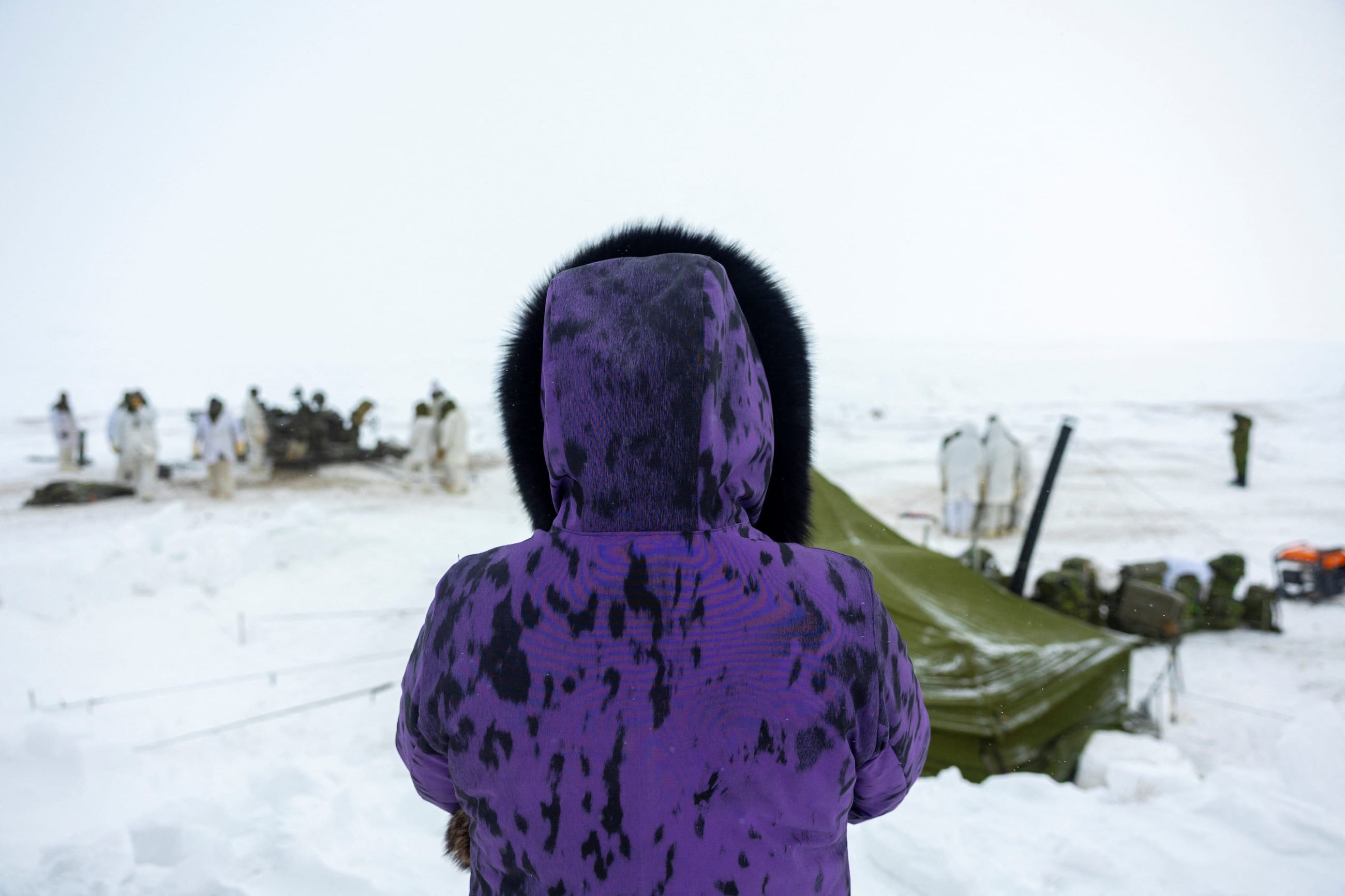
This past March, Canada's Prime Minister Mark Carney announced that the country's federal government will invest $24.6 billion in Arctic defense. Furthermore, the region's strategic importance as a northern travel route is growing as sea ice melts.
Yet these strategic investments overlook a major public health concern in the region: persistently high tuberculosis (TB) rates among Indigenous populations, which can be hundreds, even thousands, of times higher than in the rest of Canada. As the country continues to strategically invest in the Arctic, health leaders in the region are urging the government to provide sufficient funding to address outbreaks and bolster TB prevention efforts long term.
Canada has a reputation as a global health leader, including for its work to reduce the spread of TB in low- and middle-income countries (LMICs). In 2022, the government said its support had contributed to the detection and treatment of more than 2.6 million people with TB globally and prevented more than 13 million new infections since 2010.
Knowing this, many might be surprised to learn that TB incidence rates among the country's Indigenous groups, particularly among Inuit in the north, are among the world's highest, specifically in Nunavik, the northern part of the province of Quebec.
The Canadian government has made efforts to address the burden. Earlier this year, it renewed its funding for five years to fight TB in Inuit Nunangat, the four Inuit regions—including Nunavik—that span the country's north and 40% of Canada's land mass. Additionally, some of the defense funds announced earlier this year are earmarked for the neighboring territory of Nunavut, which has a population three times that of Nunavik's but comparatively lower TB rates.
Yet without comprehensive investments to address TB rates across the region, it's possible that sporadic outbreaks will continue, diverting resources from other needs, such as defense.
TB Rate 2,500 Times Higher
In 2025, the incidence rate for TB in Nunavik was 765 per 100,000—more than 2,500 times higher than that of nonindigenous Canadians, according to Jessika Huard, the project manager for the Nunavik Regional Board of Health and Social Services (NRBHSS)'s TB Elimination program. That led the mayors of Nunavik's 14 remote, fly-in communities to demand, on June 9, 2025, that the province declare a state of emergency. Since then, rates might be reaching a plateau, says Yassen Tcholakov, the former leader of Nunavik's infectious-disease response.
"2026 looks like the first year since COVID where the number might stay the same, and I'm expecting it to fall in 2027 if the interventions are maintained," says Tcholakov, now an assistant professor in the department of global and public health at McGill University, who worked in Nunavik for six years until early 2026.
The latest data illustrates Tcholakov's cautious optimism. Until October 26, Nunavik had 72 active cases of TB in 2026, according to the NRBHSS.
Speaking with Think Global Health via an online call, Tcholakov speculates that the positive change is the result of the health office's decision to move ahead on its own while waiting for the province to declare a state of emergency. For example, he says, the NRBHSS hired the Canadian Red Cross to support efforts like screening in communities, and health officials ramped up advocacy with the ministry of health.
Providing services in communities is key to reversing TB rates and improving Nunavik's health care in general, says Tcholakov, who remains a consultant with the regional office. "It's the standard things: getting an X-ray, some medication, etc. TB is an old disease, and the solutions are rather old; we're not using anything super fancy here."
Furthermore, Huard says that the office developed a plan to first stabilize outbreaks in seven of Nunavik's 14 communities and then boost the region's overall TB response. This includes strengthening coordination between the regional public health team and local health centers and building local and regional capacity for TB prevention, screening, treatment, and outbreak management, which would also have longer-term benefits.
A major contributor to high TB rates in these communities is overcrowding. Huard notes that it's not unusual for 8 to 10 people to live in one house in Nunavik, where it can often be too cold to go outdoors.
Overcrowding also limits the availability of skilled health-care staff, Huard adds: "If a nurse in a community decides that X-rays are needed, we will fly in the X-ray technician but then the nurse will have to leave. After the X-ray we might need a doctor to follow up, so the technician will have to leave—that requires a lot of human resources gymnastics." It also illustrates the need for investment in diagnostic infrastructure within these communities.
Another factor is history: for decades in the twentieth century, Inuit diagnosed with TB were taken from their homes and flown to Montreal or other southern centers for treatment. Many didn't return. In 2019, the Canadian government apologized for the policy. But many people remain reluctant to be tested for TB, fearing that they would have to leave their communities for treatment. To establish trust, there needs to be more local involvement. "What we need is to have most of the service done in the community by and for community members," says Huard. "[Yet,] in order to have that, we have to make sure that Inuit have opportunity for training… at the moment there's no opportunities."
The State of TB Funding
On February 19, 2026, the federal government renewed its funding by $19 million to fight TB in the region. In 2018, it had set TB elimination targets for 2025 (a 50% TB reduction) and 2030 (TB elimination) with the national group Inuit Tapiriit Kanatami (ITK). Since then, the government has invested only $49.7 million, whereas ITK originally requested $92.5 million to meet the targets.
"We do welcome this investment but it's not really enough," says Huard, "especially because the funding needs to be divided among the four Inuit regions over five years… we could do a lot more if we had the $92.5 million funding—it would give us the opportunity to put in place Inuit-led approaches."
Besides the training of community members, a larger investment could be used to address many of the underlying issues that make the provision of care difficult in these communities. For example, more space is needed. Huard explains, "In most clinical settings there's often three to four nurses working in the same office, working with patients, but too little space—we need bigger and bigger infrastructure." Also, access to clinical care is lacking: "Ideally we would have point-of-care access in most communities, so that people don't need to travel south. Sometimes you need a follow-up X-ray or a CT scan, and you don't have the appropriate equipment in the communities, so people have to travel to get that care."
It now seems unlikely that the 2030 target will be met without a larger, longer-term commitment of resources. Chief Public Health Officer for Nunavut, Nunavik's neighboring territory, Ekua Agyemang says, "We respond to [TB] outbreaks, we see a dip [in cases] for three or four or five years, but it comes up again, so sustained investment [is needed] over [a longer span of] time…[also] align[ing] with the needs and priorities of communities is key." She adds: "Especially in a situation where we might not be able to change our determinants of health that quickly, what we have control over is early detection, increasing our diagnostic capacity… ensuring health-care workers have the training they need, that they're available, [that] there's infrastructure, equipment and logistical support to carry out screening."