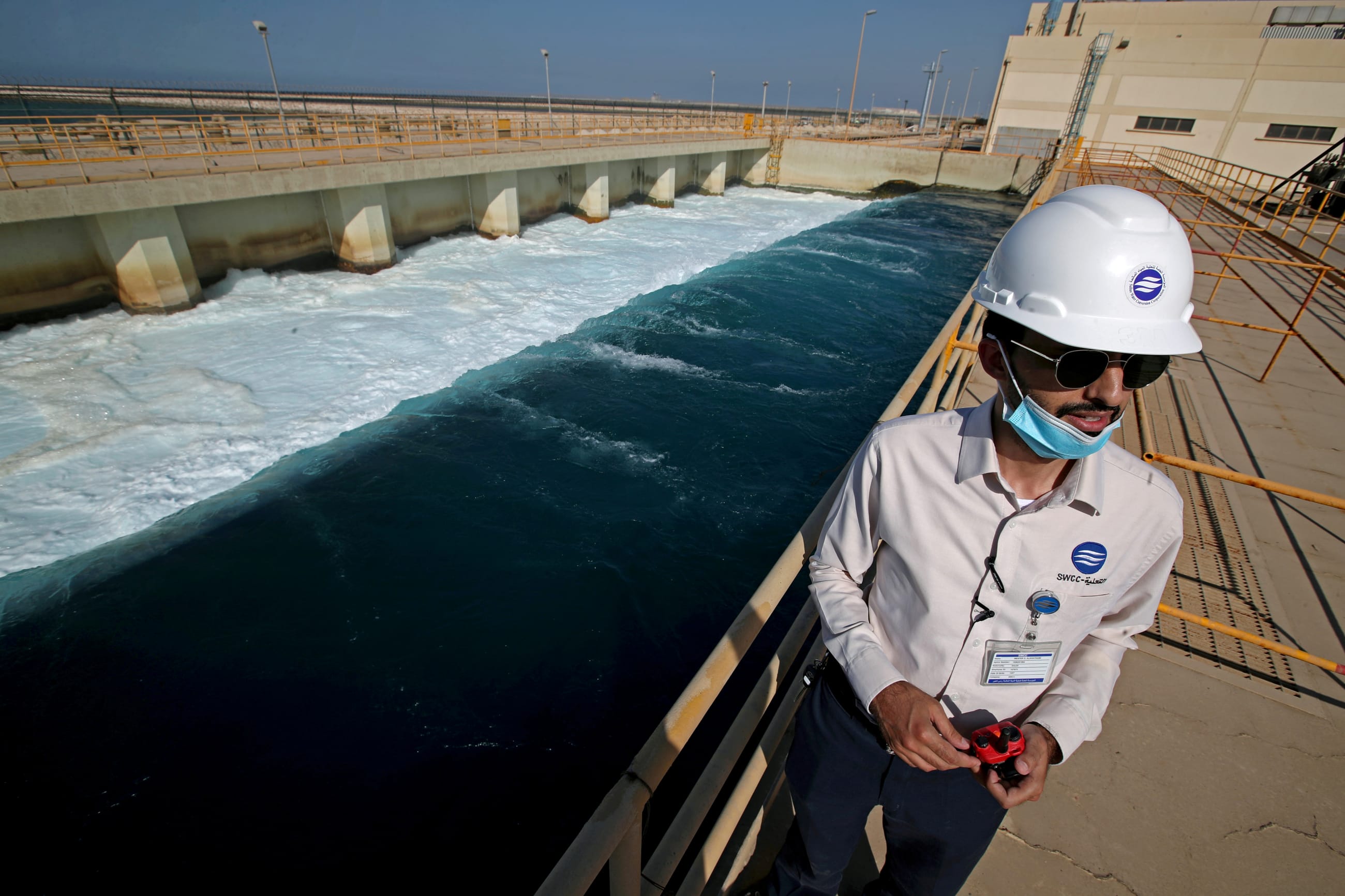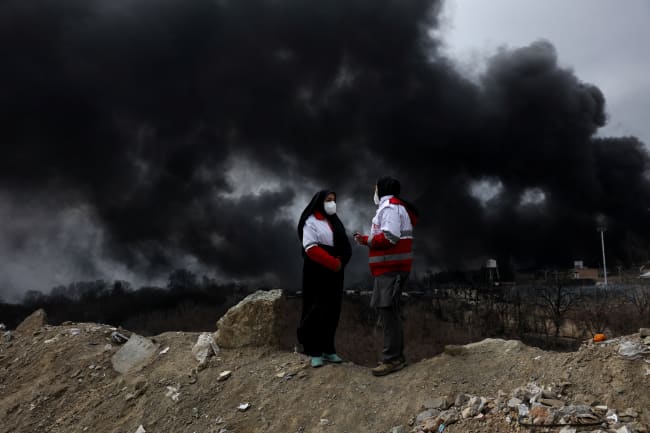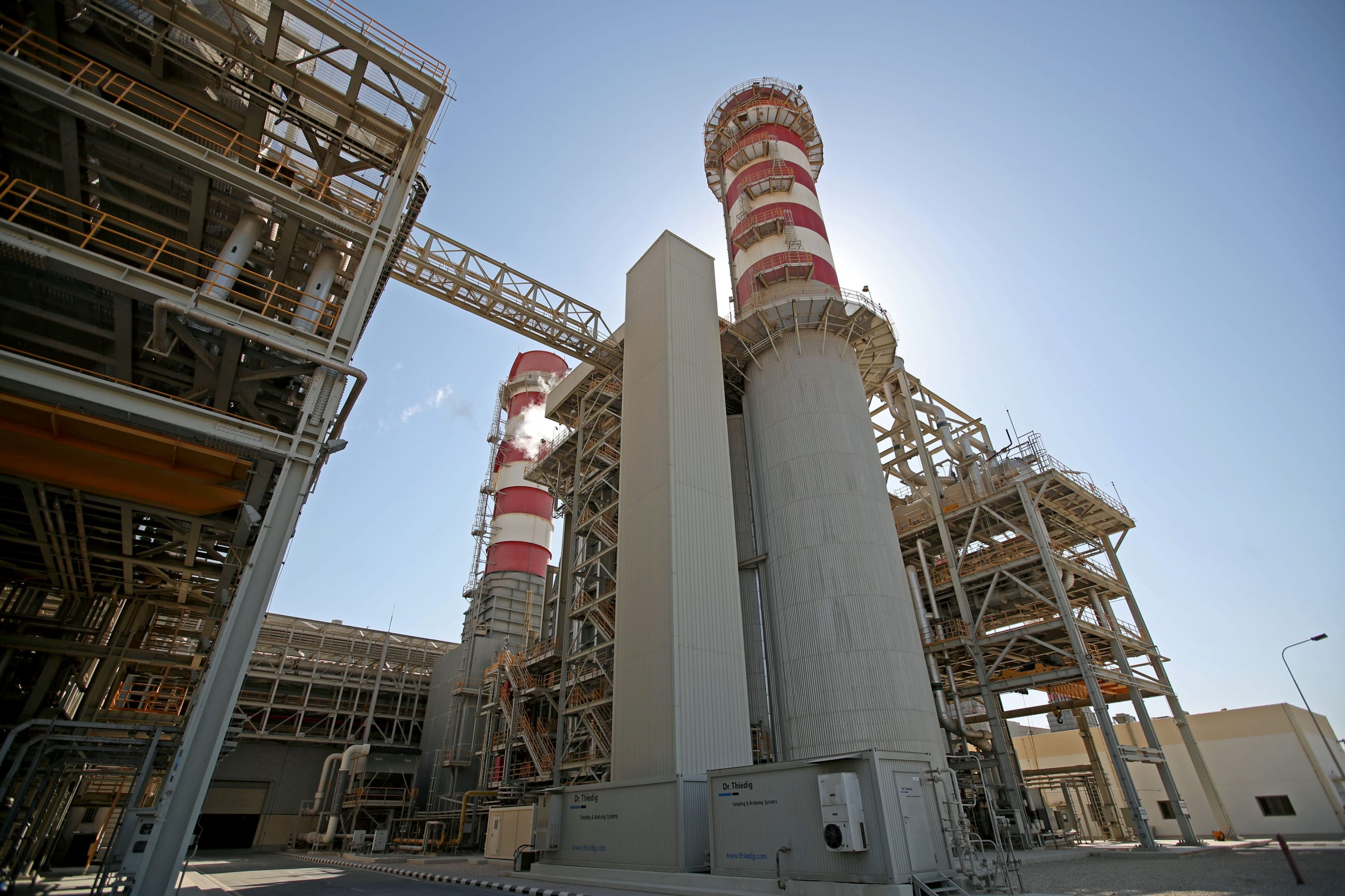
Eight days into the war against the U.S.-Israel coalition, Iranian Foreign Minister Abbas Araghvhi posted on X accusing the United States of attacking a freshwater desalination plant on Qeshm Island, affecting the water supply of 30 villages. The following day, the Bahraini Ministry of Interior released a statement that Iranian drone strikes damaged one of the country's 103 desalination plants, putting civilians at risk. After President Donald Trump threatened to obliterate Iran's power plants, its parliament speaker vowed to retaliate against Gulf water and energy facilities.
The Middle East region includes the top-5 most water-stressed countries in the world. Many depend on desalination for their water supply, a process that removes salt and minerals from seawater to make it suitable for human consumption, agricultural activities, and industrial use. According to data published in NPJ Clean Water in January 2026, the region accounts for 41.8% of the total operational desalination capacity worldwide. That is a consequence of the Middle East being home to 6% of the world's population but less than 2% of renewable freshwater.
This heavy dependence on desalination, coupled with the threats to these facilities amid the ongoing conflict, has raised concerns that extend beyond the battlefield to the health and humanitarian risks if millions lose access to potable water.
To unpack the consequences, Youssef Brouziyne, Middle East and North Africa representative at the International Water Management Institute, spoke with Think Global Health (TGH) about the region's desalination history, the potential fallout from such attacks, and how humanitarians could respond.
This interview was lightly edited for clarity.
□ □ □ □ □ □ □ □ □ □ □ □ □ □ □ □
TGH: Can you give a brief history of desalination plants in the Middle East? How long have they been in use? How has their expansion evolved? Has climate change motivated their deployment?
Youssef Brouziyne: Desalination has been part of the Gulf water story since the mid-twentieth century. Kuwait installed an early desalination plant in 1951, and Bahrain began desalinating in 1975. The Gulf's modern large-scale era then accelerated through Kuwait's early flash-evaporation plants in the late 1950s and early multistage flash desalination development in 1960, before spreading across the Gulf Cooperation Council (GCC). Over time, the region moved from small thermal systems to large, power-linked desalination complexes, and more recently toward greater use of reverse osmosis.
Currently, the desalination capacity in GCC stands at about 26.4 billion cubic meters [6.9 trillion gallons] per year, which is 45 to 50% of the global desalination capacity.
[For contrast, according to the most recent data, the United States uses 117.5 trillion gallons of water annually, enough to nearly fill Lake Erie.]
Climate change wasn't the impetus of desalination in the region but has clearly strengthened the case for it. Desalination is a drought-proof risk-management option and a way to address climate-related water risks. As a result, the expansion of desalination use has been reinforced by worsening drought, heat, variability, and pressure on groundwater and surface water.
TGH: What humanitarian and health roles do desalination plants play in the Middle East? What is the current scale?
Youssef Brouziyne: In the Gulf, desalination is a main source of potable water, meaning that it underpins households, hospitals, schools, hygiene, and sanitation services, which all depend on a functioning water network. Desalinated water can also be used for irrigation, but direct agricultural use remains relatively limited because cost and energy needs are high.
From a water-systems perspective, desalination more often protects urban supply and can indirectly free other resources for agriculture, whereas wastewater reuse is usually the more scalable agricultural pathway, especially in countries with dynamic irrigation development, such as Saudi Arabia.
[For a granular map of desalination plant locations in 2025, see the World Bank's Fresh Perspectives: Emerging Issues and Opportunities for Desalination in the Middle East and North Africa.]
TGH: Bahrain is reported as one of the top-5 countries experiencing the highest levels of water stress. How does desalination factor into Bahrain's economy and society?
Youssef Brouziyne: In Bahrain, desalination is not a marginal technology; it is part of the backbone of everyday life. Reporting indicates that desalination provides 59% of total national water supply and more than 90% of drinking water for roughly 1.6 million people. Bahrain's Electricity and Water Authority says that six advanced desalination plants have a total production capacity of 213 million imperial gallons per day, which makes desalination integral not only to households, but also to public services and wider economic continuity.
TGH: If these facilities continue to be targeted, what ripple effects would we see?
Youssef Brouziyne: Generally, in major wars and armed conflict situations, the first-order effects would be immediate water-service disruption, public-health stress, and pressure on emergency supply systems. The second-order effects would be broader: loss of hygiene and sanitation reliability, higher household water costs, business disruption, pressure on hospitals, and possible overpumping of already stressed groundwater. The third-order effects, if outages were prolonged, could include localized displacement and stronger pressure on nearby towns and cities.
TGH: Could a humanitarian response address the loss of a major desalination plant? If so, what steps would be needed?
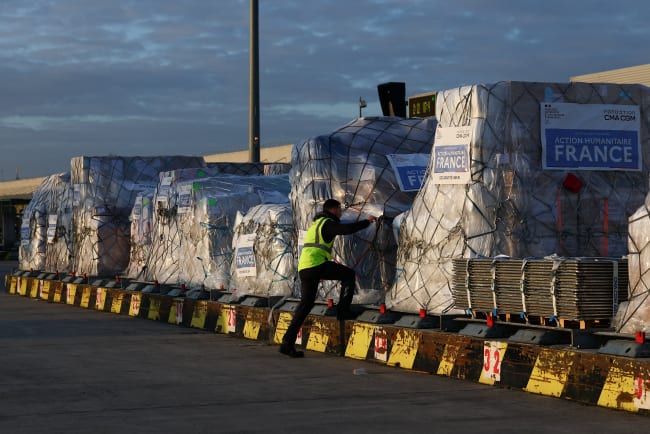
Youssef Brouziyne: Partially, yes—but only as a temporary bridge, not as a full replacement for major system capacity. The immediate package would normally include emergency assessment, water trucking, bottled water for priority needs, temporary storage, repair of power and pumping links, and rapid protection of hospitals and other critical services.
After that, the response has to move quickly into rehabilitation: restoring safe drinking water, sanitation, and health-service continuity.