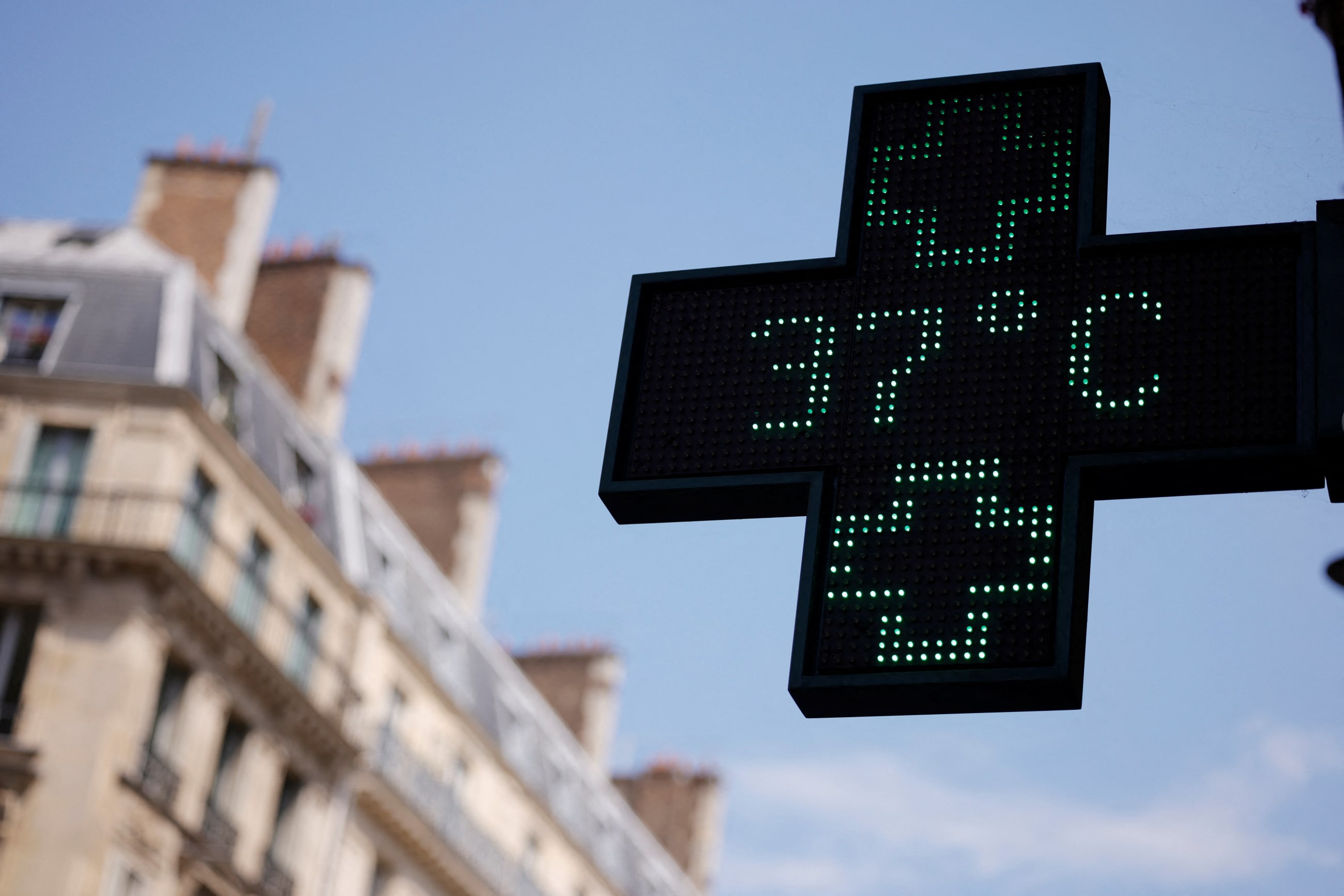
Heat across the European Union is shattering records: June 2026 ranked as the hottest month ever recorded in Western Europe. Temperatures have surpassed those seen during the catastrophic heat wave in 2003, which caused an estimated 70,000 excess deaths across the continent, most of which occurred in France, Spain, and Italy. Wildfires have again spread in the southwestern part of France, which authorities warn may continue to burn for months, as well as in Spain.
In France, where temperatures reached a high of 43.8°C (111°F) in the western town of Palluau, authorities have responded by doubling down on the lifesaving strategies they adopted after the 2003 extreme heat crisis. France's "playbook" for preventing deaths during heat waves includes short-term actions such as providing access to air-conditioned rooms in public buildings and checking in on older and frail people living independently, advising populations living in wildfire areas to stay home and to use filtering face piece class 2 (FFP2, respirator) masks, as well as longer-term adaptation actions such as subsidizing heat pumps, renovating private and public buildings, and developing urban green spaces.
France's programs have succeeded in limiting deaths during extreme heat events since 2003. Although the impact of the 2026 heat is not yet known, preliminary estimates suggest potentially 5,000 or more excess deaths for the period between June 17 and July 2. Authorities in France and beyond should do more to protect the population, as heat waves will continue to occur and intensify with climate change. Strategies to mitigate the harms from extreme heat include renovating buildings for summer comfort; defining and implementing workplace protection rules, especially for outdoor workers; and strengthening efforts to address wildfire risk and reduce exposure to wildfire smoke. France can also take steps to reduce the incidence of chronic diseases, which increases people's vulnerability to heat. To help lessen the frequency of extreme events over the longer term, France, along with the EU and all Paris Accord signatories, should continue pursuing policies to reduce its greenhouse gas emissions.
France's Policies Have Made Heat Less Deadly
France learned lessons from the deadly heat of 2003 and applied them to prevent future catastrophes, which is reflected in the data. After reaching an all-time high in 2003, deaths per 100,000 people (age-adjusted) fluctuated based on the temperature but have not come close to levels seen in 2003, according to the most current research available from the Global Burden of Disease study. It remains to be seen whether France's approach continues to be effective during recent temperature spikes—the results will be clear once the warm season ends.
France implemented aggressive measures to address extreme heat following the summer of 2003. For example, Bordeaux, Grenoble, Lyon, and Paris all developed climate plans, as well as ambitious greening plans and so-called freshness oases during the last 20 years. Specific efforts also targeted unhoused populations, who are particularly at risk, and the elderly, with requirements for nursing homes to have at least one large, air-conditioned room. The government also provided financial assistance to support building renovation and the wider use of reversible heat pumps, which provide air conditioning. Some town halls have designated air-conditioned rooms where everyone is welcome, and all mayors have maintained lists of isolated frail or elderly people to be called and helped during heat waves. During the recent heat event, the public gardens in Paris, which traditionally closed at sunset, were open all night. City authorities opened bathing sites in the Seine River, some of which had been used for the 2024 Olympic games.
More Work to Be Done to Save Lives
Renovating buildings, particularly schools and other public buildings where people spend a large portion of their time, is crucial for keeping people healthy as temperatures rise. Extreme heat—which was previously generally observed when school was out in July and August—is now happening during the school year. Amid the 2026 heat waves, many schools across France were forced to close or change their hours because few are designed to accommodate extreme temperatures.
Despite the ongoing incidence of extreme heat events, heat-related mortality in France and the EU is not an inevitable consequence of rising temperatures
As is the case throughout Europe, chronic diseases account for most of the disease burden in France. Preventing and treating these chronic diseases is another way to reduce heat-related deaths because these diseases make people more susceptible to the negative effects of high temperatures. For example, when it is hot, the heat forces the heart to pump harder to keep the body cool, increasing the risk of heart attack or stroke among people living with cardiovascular disease. Within France, most heat-related deaths are linked to noncommunicable diseases.
Policies aimed at reducing smoking and alcohol consumption and addressing air pollution can lower people's risk of developing a chronic disease, along with better diagnosis and treatment of conditions such as high blood pressure, elevated blood sugar, and obesity. Interventions that facilitate food security, healthy diets, and physical activity can also protect people from developing noncommunicable diseases.
Although air conditioning is effective in reducing heat-related deaths, it is also a significant draw on energy demand and can therefore contribute to greenhouse gas emissions in locations where electricity is generated by fossil fuel combustion. In addition, air conditioning generates climate-warming emissions through the leakage of refrigerants used in air-cooling devices, such as hydrochlorofluorocarbons. Like much of Europe, France faces a particular challenge given the relatively low penetration of air conditioning in residential settings. Current estimates suggest that 18–26% of French homes have air conditioning as of 2025—much lower than in the United States, Japan, and South Korea (where roughly 90% of homes had air conditioning as of 2018) and China (about 60% in 2018).
Air conditioning is a core measure to address the health impacts of extreme heat, but cooling strategies such as shading, neighborhood greening, district cooling systems (where chilled water is used to cool buildings), and improved building design are effective without increasing energy demand and contributing to greenhouse gas emissions.
Because air conditioning contributes to climate change, efforts to renovate buildings and reduce chronic diseases should also be complemented with action to reduce climate-warming emissions. In this regard, the European Union as a whole, of which France is a member, has demonstrated substantial progress, decreasing carbon emissions by roughly 40% between 1990 and 2024, compared to a much more moderate decrease in the United States of 7% (starting from higher per capita emissions) over the 1990–2020 period.
Despite the ongoing incidence of extreme heat events, heat-related mortality in France and the EU is not an inevitable consequence of rising temperatures. These deaths can be substantially reduced through measures that help people adapt to the warming climate. The extent to which adaptation and mitigation efforts are prioritized will largely determine how many people die because of further warming.