Last summer, Chicago saw a sudden jump in opioid overdoses: 37 in 24 hours, nearly 40% [PDF] more than usual. But instead of pointing to a drug supply contaminated with fentanyl alone, health officials raised another possibility for the increase: a 95°F heat wave.
On extremely hot days in Chicago, public health workers like Christian Zamarriego hold their breath. Drug overdoses often spike during heat waves and cold snaps, he explained. That uptick last year wasn't a surprise to anyone.
"There's a lot that goes into someone experiencing an overdose," said Zamarriego, who helps manage the city's health response to drug use. "Obviously it's attributed to a drug, but I think the context really matters here."
Although overdose deaths in the United States have begun to decline nationwide, the climate crisis could potentially undo this progress. In recent years, multiple studies have suggested that weather events and extreme temperatures like high heat can worsen drug-related harms, and those unable to escape the intense conditions are at risk of the worst-case scenario. The interaction has already played out this summer; health officials in Wisconsin's Dane County, home to the state capital, Madison, suspect that a heat wave fueled a brief rise in overdoses across two days in June.
One analysis of fatal overdoses from the last three decades, published in October 2025, estimates that high temperatures increase the annual overdose death toll in the United States by 150 cases a year. "The simplest answer is to say that more extreme heat leads to more overdoses," said Gregg Gonsalves, the paper's supervising author and an epidemiologist at the Yale School of Public Health.
This figure, Gonsalves added, will likely grow as extreme weather events like heat waves become more common and relentless because of climate change. "Failing to address this global climate crisis leads you to have more extreme heat days, therefore exacerbating risk for people who use drugs."
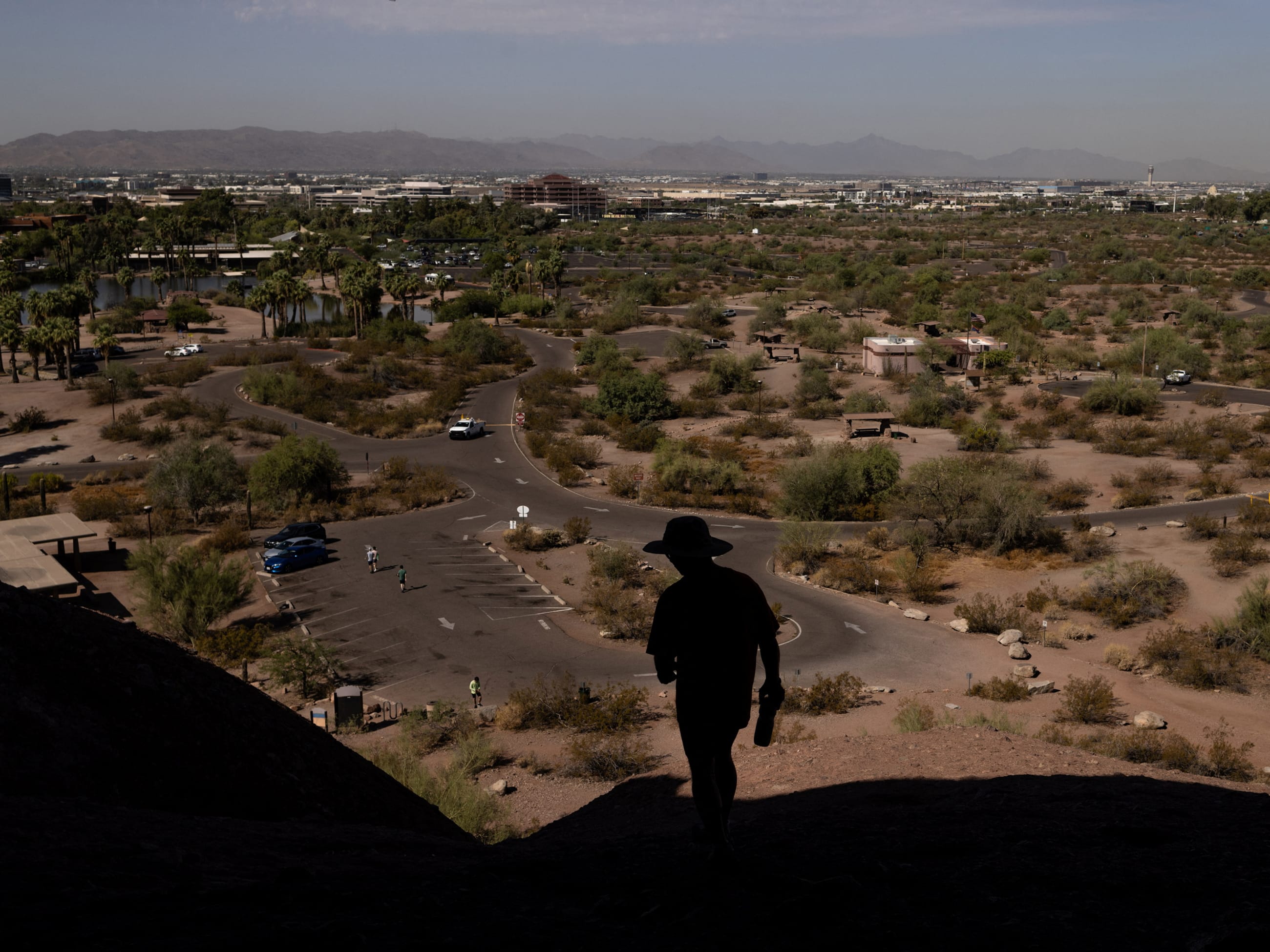
Already, heat is playing a role in increasing the worst-case outcomes of substance use disorders. Across Arizona's Maricopa County, which includes Phoenix, the percentage of heat-related deaths involving drugs or alcohol jumped [PDF] from 50% in 2020 to 57% in 2024. Arizona's statewide death rate from drug overdoses is now twice the national average.
The reasons why sweltering conditions raise the risk of overdose are not fully understood, but a likely factor is that substances like stimulants and alcohol can disrupt thermoregulation, the process our bodies use to maintain a steady temperature, said Robbie Parks, an environmental epidemiologist at Columbia University.
Humans need to maintain an internal temperature of about 98°F to function well, which is why they sweat to cool down. Heat stroke occurs when a person's core reaches 104°F. Anything higher can be fatal, which is why heat waves are responsible for tens of thousands of deaths every year, more than any other weather event.
Failing to address this global climate crisis leads you to have more extreme heat days, therefore exacerbating risk for people who use drugs
Gregg Gonsalves, Yale School of Public Health.
Just as substances lower one's tolerance for heat, the reverse is also true: heat stress increases sensitivity to the effects of drugs, making overdose more likely, Parks explained. Anyone can be at risk, he said, but those unable to avoid the oppressive temperatures are typically the most susceptible to these harms. "The highest decile of poverty will always remain reasonably vulnerable."
The problem is worsening as temperatures climb, according to Raminta Daniulaityte, a drug use researcher at Arizona State University. Her research team found that heat was a factor in 15% of fatal overdoses recorded in Arizona in 2023, up from 3% in 2019. Almost two-thirds were those experiencing homelessness, many of them in cities where temperatures are ratcheted up by the proliferation of asphalt and other heat-trapping surfaces.
Increased methamphetamine use is one way many of these individuals have endured the blistering conditions, Daniulaityte explained. Through interviews with people experiencing homelessness in Arizona, she learned that while they understand the health risks of the drug, they often viewed it as the only escape from the heat. "You're hot, you're really miserable in the heat, and so methamphetamine helps you," Daniulaityte said, adding that cities like Phoenix need to respond by opening more cooling centers.
Extreme temperatures can also indirectly increase the chance of an overdose. Heat waves can be a catalyst for wildfires, which can disrupt addiction treatments. Following California's Camp Fire, which blazed through the state's north in 2018, the number of patients who went without their prescribed opioids for more than two weeks quadrupled, a 2022 analysis suggests.
This included buprenorphine, a treatment for opioid addiction that, like methadone, binds to the same brain receptors as heroin. Long-term disruptions to a medicine like these are dangerous, said Iraklis Tseregounis, a drug use researcher at University of California, Davis, and the 2022 paper's lead author. The sudden loss of access to buprenorphine or methadone risks withdrawal and a return to illicit drug use. "They need to have continued access to them; otherwise they could have fatal consequences," Tseregounis said.
Disruptions to care have occurred following other climate-related events. In 2012, following Superstorm Sandy, around 1 in every 10 methadone patients in New York and New Jersey couldn't receive their medication for a week. Ellen Benoit knows at least one client who didn't return to treatment after the disruption. "So that is a person who was lost to treatment directly because of climate change and the barriers that extreme weather events put up," said Benoit, a sociologist and researcher with the North Jersey Community Research Initiative.
Certain measures, like take-home methadone and telemedicine, could mitigate the disruptions caused by natural disasters, Benoit believes. But with models predicting that weather events like wildfires and hurricanes will become more chaotic and overwhelming because of climate change, health workers can only prepare so much, she said.
Zamarriego agrees. Heat waves and cold snaps in Chicago are always met with an "all-hands-on-deck approach," he said. Anyone unsheltered is warned about the incoming risk, and more harm-reduction supplies like naloxone are flooded throughout overdose hotspots. But as climate events increasingly get longer and more brutal, these interventions, Zamarriego fears, could become less effective.
"At the end of the day, I think what makes this more of a concern," he said, "is that we can't control the weather."