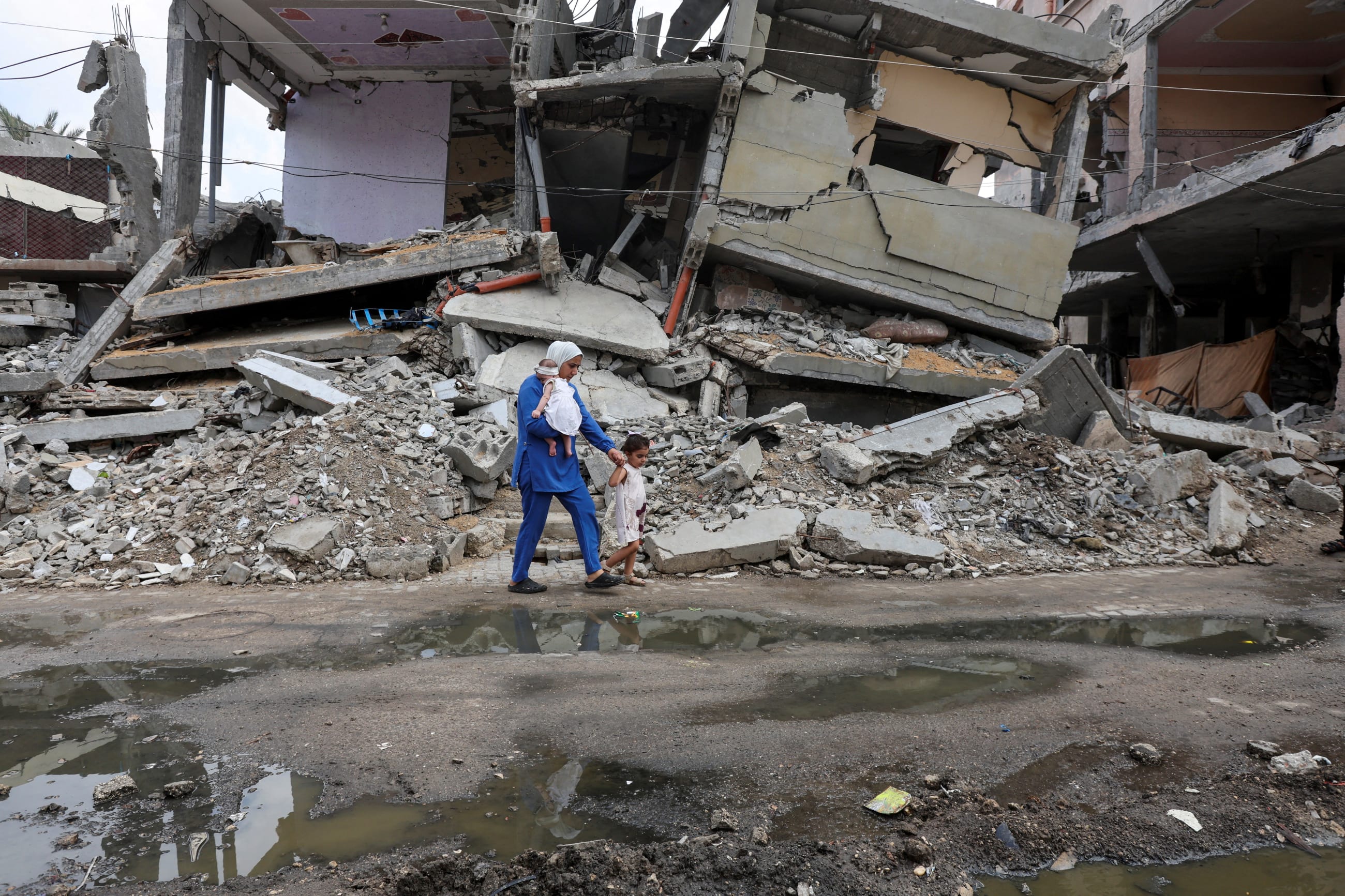
Three years after the October 7, 2023, attacks on Israel and the war in Gaza that followed, infectious-disease risk has become one of the conflict's enduring health consequences.
In 2024, poliovirus was detected in Gaza's wastewater before a paralytic case was confirmed, and the World Health Organization (WHO) found continued environmental circulation into the following year. By the end of 2025, however, no further detections had been reported, suggesting that a targeted vaccination campaign during a brief ceasefire may have interrupted transmission. The episode shows why epidemic intelligence in damaged urban environments cannot depend on clinics alone: wastewater and other environmental signals can reveal transmission when routine care and reporting have been disrupted. Damage to health facilities and water and sanitation systems further weakens the capacity to prevent, detect, and contain outbreaks.
War does not need to generate novel pathogens to create serious infectious-disease risk. It can intensify the conditions in which familiar threats become more dangerous: limited access to water and sanitation, interrupted vaccination, fragmented laboratories, delayed treatment, weak infection prevention and antimicrobial stewardship, and displacement into crowded settings. Recovery should therefore include dedicated capacity to detect and reduce infectious-disease risk before it becomes a large outbreak or entrenched resistant transmission.
A Surge in Global Conflict
A June 2026 analysis from the Uppsala Conflict Data Program recorded 65 state-based conflicts in 2025, the highest number since data collection began in 1946.
Damage to health facilities and water and sanitation systems further weakens the capacity to prevent, detect, and contain outbreaks
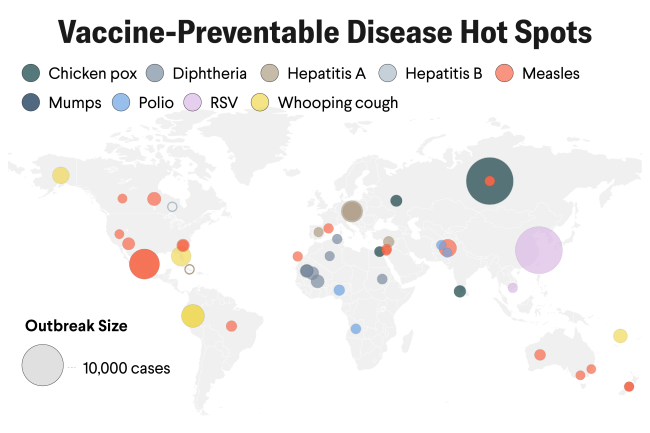
The Eastern Mediterranean illustrates the health consequences. As of June 2025, WHO was managing 16 graded emergencies across the region, and more than 115 million people needed assistance; WHO recorded 80 disease outbreaks in 2024, 50 of which were still ongoing by September 2025. Recent examples include poliovirus in Gaza, Afghanistan, and Pakistan and cholera in Sudan and Yemen.
Sudan's cholera outbreak that began in 2024 eventually spread to all 18 states; 124,418 cases and 3,573 deaths erupted before the government declared it over in March 2026. WHO has repeatedly linked epidemic risk there to conflict, displacement, damaged water and health systems, and limited access to safe water and care. Cholera in this context is a systems problem. Recovery that treats water, sanitation, and disease control as separate sectors will miss how closely they interact.
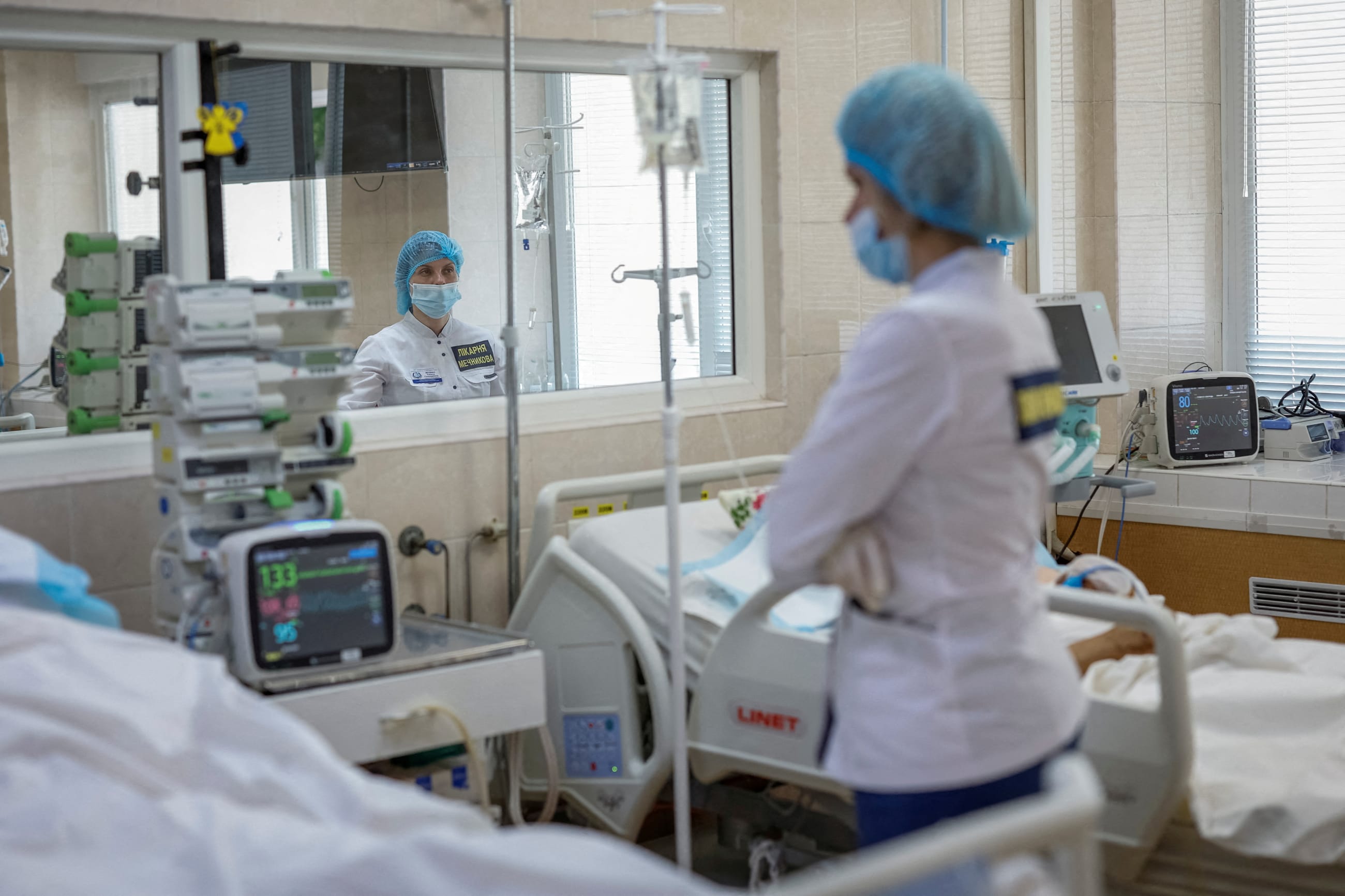
In Ukraine, antimicrobial resistance presents a different challenge. Conflict can amplify resistance through severe injuries, patient transfers, treatment disruption, damaged facilities, and weakened infection control. A 2024 multicenter survey in five Ukrainian hospitals treating war casualties found health-care-associated infections in 12.6% of patients and 51.9% of intensive-care patients; tested pathogens showed 66–100% resistance to several major antimicrobial classes. The survey authors emphasize that the true national wartime burden remains unknown.
Ukraine's war has also disrupted access to care for chronic and infectious diseases. WHO reports continuing pressure from displacement, damaged facilities, and attacks on health care. For tuberculosis and HIV, interruptions to diagnosis and treatment can delay detection and continuity of care, and for tuberculosis can increase the risk of drug resistance. Recent peer-reviewed work documents substantial disruption to HIV services during the full-scale war. These effects will not necessarily disappear when fighting ends.
Building Better Post-Conflict Surveillance
Major recovery plans already organize needs across sectors. The 2026 Gaza Rapid Damage and Needs Assessment, produced jointly by the World Bank, United Nations, and European Union, estimated $71.4 billion in recovery and reconstruction needs; housing, health, agriculture, transport, and water and sanitation are among major priorities. Ukraine's 2026 assessment estimated almost $588 billion in needs, with the largest requirements in transport, energy, and housing. These frameworks are essential, but infectious-disease risk should cut across them instead of sitting only within a health chapter.
WHO already has systems for parts of this problem. Its Early Warning, Alert and Response System (EWARS) helps emergency settings detect outbreaks quickly, and the Health Resources and Services Availability Monitoring System (HeRAMS) tracks whether health facilities and essential services are functioning. Recovery planning can go further by connecting those health signals with maps of damaged water systems, roads and clinics, wastewater results, weather, and access-to-services data. In plain terms, the goal is to identify where risk is building before hospitals see a surge, and which repair or health intervention is most likely to reduce it.
That means routinely bringing together population-level information instead of tracking individuals: environmental signals such as wastewater; satellite or aerial imagery showing damage to water, health, and transport systems; weather and service-access indicators; and routine outbreak data. The value is threefold: it shows where infrastructure damage is creating exposure; updates as displacement, weather, and services change; and ties early warning to decisions such as which water systems to restore first or where to deploy vaccination, diagnostics, and infection control.
This approach is already partly feasible. A 2025 peer-reviewed study used open-source earth observation to assess 239 water, sanitation, and hygiene sites in Gaza and found visible damage at 49.8% of them. The 2026 Gaza recovery assessment similarly combined remote sensing with ground-verified data to calculate damage and recovery needs. What is not yet routine is linking such infrastructure intelligence with environmental pathogen and clinical surveillance. That integration could help planners distinguish places that are damaged from places where damage is also creating a rising infectious-disease risk.
The Gaza Strip is therefore a logical demonstration setting when access and local leadership permit because environmental poliovirus surveillance and detailed geospatial damage assessments already exist. The model should not be imposed from outside. It should be led by national and local public-health authorities, municipalities, researchers, and communities, with WHO and technical partners providing support instead of control.
Ethical caution is essential. A proportionate system would collect only what is needed for a defined public-health decision, use aggregated or nonsensitive data wherever possible, limit access and retention, and prohibit reuse for security, law-enforcement, or population-control purposes. WHO surveillance ethics guidance makes clear that public-health data should not be repurposed for unrelated action against individuals.
Financing is also a constraint. WHO says severe humanitarian funding cuts in 2026 have disrupted more than 6,600 health facilities and cut off care for more than 53 million people; in the Eastern Mediterranean, WHO's 2025 emergency health appeals were only 55% funded. This makes it more important, not less, to invest in systems that help scarce resources reach the places where they can have the greatest effect. The Pandemic Fund is one potential vehicle: it finances surveillance, laboratory systems, and the health workforce; already supports projects in the West Bank, Gaza, and Yemen; and in 2026 opened funding to high-risk, high-need countries, including Sudan and Afghanistan. Development banks and philanthropy could complement this by supporting geospatial and environmental data infrastructure that spans humanitarian response and reconstruction.
Ending conflict does not end infectious-disease risk. Recovery plans should rebuild not only what war destroys visibly but also the capacity to see where health risk is accumulating and to act before the next preventable outbreak.