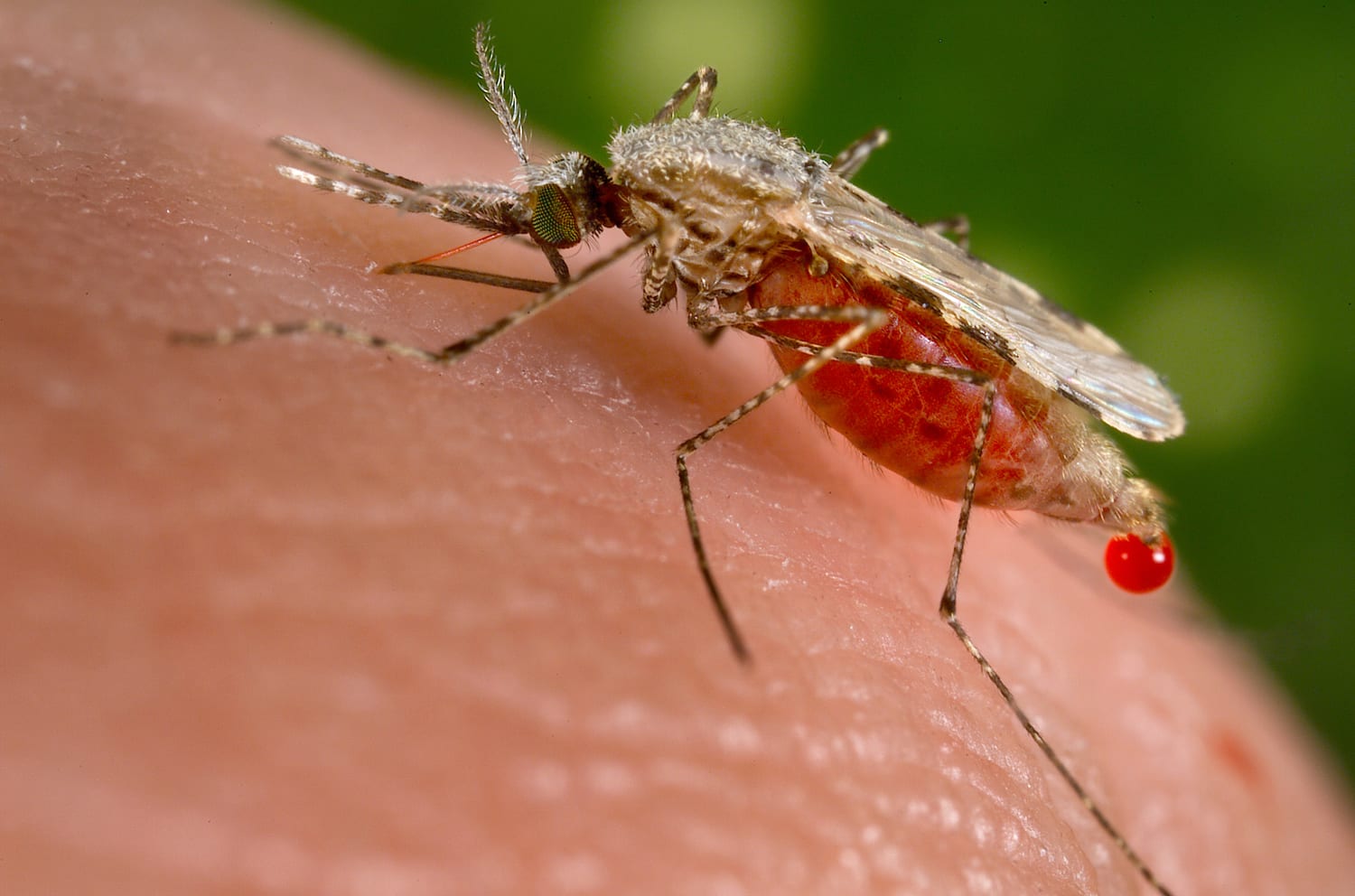
Scientists recently found that an invasive mosquito, Anopheles stephensi, is spreading malaria quickly across African cities and is resistant to insecticides, threatening millions of people.
Malaria was not always an African disease. For centuries, it hounded much of the world, shaping settlements, wars, and empires across Europe, Asia, and the Americas. Now, much of the world has since become malaria-free. The United States eliminated the disease in the early 1950s, although some isolated incidents have occurred since then. Europe recorded zero indigenous cases in 2015. China, once reporting as many as 30 million cases a year in the 1940s, was certified malaria-free by the World Health Organization (WHO) in 2021.
The disease is now overwhelmingly concentrated on the African continent. In 2024, WHO estimated 282 million cases and 610,000 deaths; Africa accounted for 95% of the burden. Children younger than 5 accounted for roughly three-quarters of malaria deaths in the region.
This is what makes malaria so morally unsettling: a disease banished from much of the world still kills African children needlessly. It is clear that Africa urgently needs a solution that it can sustain. That is where genetically engineered mosquitoes have emerged as one of the boldest possible additions to the malaria toolbox.
The most far-reaching of these technologies are gene drives, which are designed to make a chosen trait, say, the ability to block malaria parasites, spread through mosquito populations far more rapidly than it would through normal inheritance, potentially extending the intervention across entire populations. Countries need to test this new technology themselves to determine whether it works, not dismiss it based on speculative rumors.
Hard-Won Gains Against Malaria Are Under Threat
For decades, Africa has fought malaria with insecticide-treated mosquito nets, a range of antimalarial treatments, insecticide spraying of homes, and, more recently, vaccines. These tools have provided great successes and remain indispensable. Since 2000, some 2.3 billion malaria cases and 14 million deaths have been averted.
Since 2000, some 2.3 billion malaria cases and 14 million deaths have been averted
Yet the protection walls are cracking; many countries are once again recording major increases in malaria. In Ethiopia and Madagascar, for example, cases rose by 2.9 million and 1.9 million, respectively, between 2023 and 2024. There are many reasons for these failures. Mosquitoes like Anopheles stephensi, which recently invaded the region from Asia, are surviving key insecticides, parasites are becoming less sensitive to frontline medicines, and some infections are harder to detect with common rapid tests. At the same time, climate change is altering mosquito habitats, conflict is disrupting health services, and global malaria funding remains far below need. In 2024, only $3.9 billion was available for malaria work against a target of $9.3 billion.
How Gene Drives Fight Malaria
In simple terms, gene drives tilt the rules of inheritance, so that the required genetic change is passed to offspring more often than usual, allowing it to become common in a mosquito population within relatively few generations. For malaria control, the goal of gene drives is either to suppress mosquito populations until they collapse or to alter them so they can no longer transmit malaria parasites.
These technologies offer something current tools cannot provide: they sustain their own effect. If successful, they will reduce the need for repeated campaigns and recurring budgets currently needed to distribute nets, spray homes, or deliver drugs year after year.
Although no gene-drive mosquitoes have been released in Africa today, the broader idea of using specially modified mosquitoes for disease control is no longer confined to the laboratory. For example, 600,000 male mosquitoes carrying the bacterium Wolbachia are being released across the Washington, DC, region to suppress local mosquito populations. Wolbachia is not a gene drive, but its regulated use shows that novel mosquito-control technologies can move from scientific testing into real-world deployment.
Gene drives themselves remain under contained testing, where the results have been compelling. In small laboratory cages and large indoor enclosures, even modest releases of gene-drive mosquitoes have decimated captive populations of Africa's leading malaria vectors, often with striking speed. In Tanzania, scientists at Ifakara Health Institute, working with Imperial College London, recently developed Africa's first gene-drive-capable mosquitoes with malaria-blocking traits, showing under contained conditions that they could reduce the development of naturally circulating malaria parasites.
These are extraordinary scientific milestones. But laboratory success does not always equate to real-world success, and gene drives should still be field-tested against African realities.
How Should Africa Respond to Gene Drives?
The answer to the gene-drive question should not be shaped by fear, hype, or recent headlines about genetically modified mosquitoes. Africa should not rush gene-drive mosquitoes into the field, nor should it dismiss a potentially transformative tool before generating the evidence needed to judge it honestly.
Unfortunately, there is a strange imbalance in how some campaigners describe the technology to the public: the risks of using gene drives are often described vividly, whereas the risks of doing nothing are not. The field has already received a political warning. Target Malaria, a leading consortium of African, European, and North American organizations co-developing gene-drive approaches for malaria control, spent years preparing for staged evaluation in Burkina Faso and Uganda. In August 2025, after a small release of male-bias mosquitoes without any gene drives in Burkina Faso, national authorities ordered the suspension of their activities despite the project having received biosafety, environmental, and local community approvals before the release. In Uganda, Target Malaria continues work with regulators and communities, using non-gene-drive strains in preparation for possible future gene-drive research. But there are no planned environmental releases at present.
Burkina Faso's experience shows that sovereignty, transparency, and public legitimacy are essential conditions for responsible progress.
Caution Is Justified
Gene drives raise questions that Africa cannot afford to treat lightly. For instance, what if the technology targets the wrong mosquito? Much of the frontier work has focused on one species, Anopheles gambiae, yet malaria transmission in Africa is sustained by multiple mosquito species. A drive that works brilliantly against one species may have limited impact where others carry most of the burden. For best results, these efforts should be expanded to also target the other major malaria vectors across Africa.

Countries' concerns go further. What if the target mosquito also transmits other diseases? What if the genetically modified mosquitoes cross borders into countries that never consented? What if climate change shifts mosquito ranges after approval? What if replacement mosquitoes stop transmitting malaria but continue biting people relentlessly?
These are not arguments for abandoning gene drives. They are arguments for evaluating them with the seriousness, humility, and foresight they deserve. That is why, at this stage, Africa needs field evidence much more than advocacy, evidence generated in African settings, by African scientists, under African regulatory oversight. Only then can countries judge where gene drives may work, what risks they may pose, and whether their benefits outweigh those risks.
For a technology with such promise, and such uncertainty, this is no time for premature acceptance, rejection, or rumors. It is the moment to generate the evidence that Africa needs to decide for itself.
Who Should Test Gene Drives in Africa?
Gene drives cannot be tested by their developers alone. Instead, Africa needs a trusted public-interest architecture to evaluate gene drives. The institutions building gene-drive mosquitoes should provide mosquito strains, safety data, and labels identifying what their product is expected to achieve. But they should not also be the main sponsors, public advocates, risk communicators, and judges of the technology readiness.
Each trial should remain nationally authorized and publicly owned, with ministries of health, biosafety authorities, and other competent national bodies defining the public health question and approving the work. The evaluations should be run by independent African-led consortia of research institutions and public health agencies, working with regulators, ethicists, and community representatives.
The foundations for this architecture already exist. WHO has issued guidance for testing genetically modified mosquitoes, including gene-drive strains. The U.S. National Academies has called for ecological risk assessment, phased testing, and public engagement in decision-making. The Cartagena Protocol, to which 173 states and the European Union are parties, also includes guidance on engineered gene drives. The Africa Union, too, through its Development Agency (AUDA-NEPAD) has published specific guidance on risk analysis for genetically modified mosquitoes.
Country-Led Trials Are Needed
WHO, the WHO Africa regional office, Africa Centres for Disease Control and Prevention, UDA-NEPAD, and regional bodies should play a more proactive role in generating badly needed data on gene drives: they should help countries prepare for and organize the trials to generate the evidence necessary for countries to decide.
WHO has shown before, through its Solidarity trials evaluating therapeutics and vaccines during the COVID-19 pandemic, that it can indeed help coordinate large, multicountry evaluations of urgent public health tools. Gene drives need a similar spirit: a trusted, African-led evaluation platform that helps countries ask the right questions, compare evidence, protect communities, and decide for themselves.
Developers and funders would still have an essential role in the evaluation process, but neither should control the trial, own the evidence, or lead the public message. The rules governing the trial—how it is financed, assessed, monitored, and stopped if necessary—should be transparent from the start. So should the evidence generated and the processes for engaging affected communities.
A recent partnership between Equatorial Guinea and the University of California Malaria Initiative offers a timely test of these principles. As the country considers gene drives within its broader malaria-control strategy, its approach to national ownership, independent oversight, transparency, and community engagement could help set an important precedent for Africa.
Ultimately, if gene drives fail, Africa should know that from data, not from rumors. If gene drives work, the decision to use them should rest on evidence, public accountability, and long-term stewardship.