
Japanese Prime Minister Takaichi Sanae won a massive political gamble on February 8, after her party dominated in a snap election held only 110 days after she took office. The moment renewed comparisons between Takaichi and her role model Margaret Thatcher, Britain's "Iron Lady" premier who twice consolidated power via landslide victories.
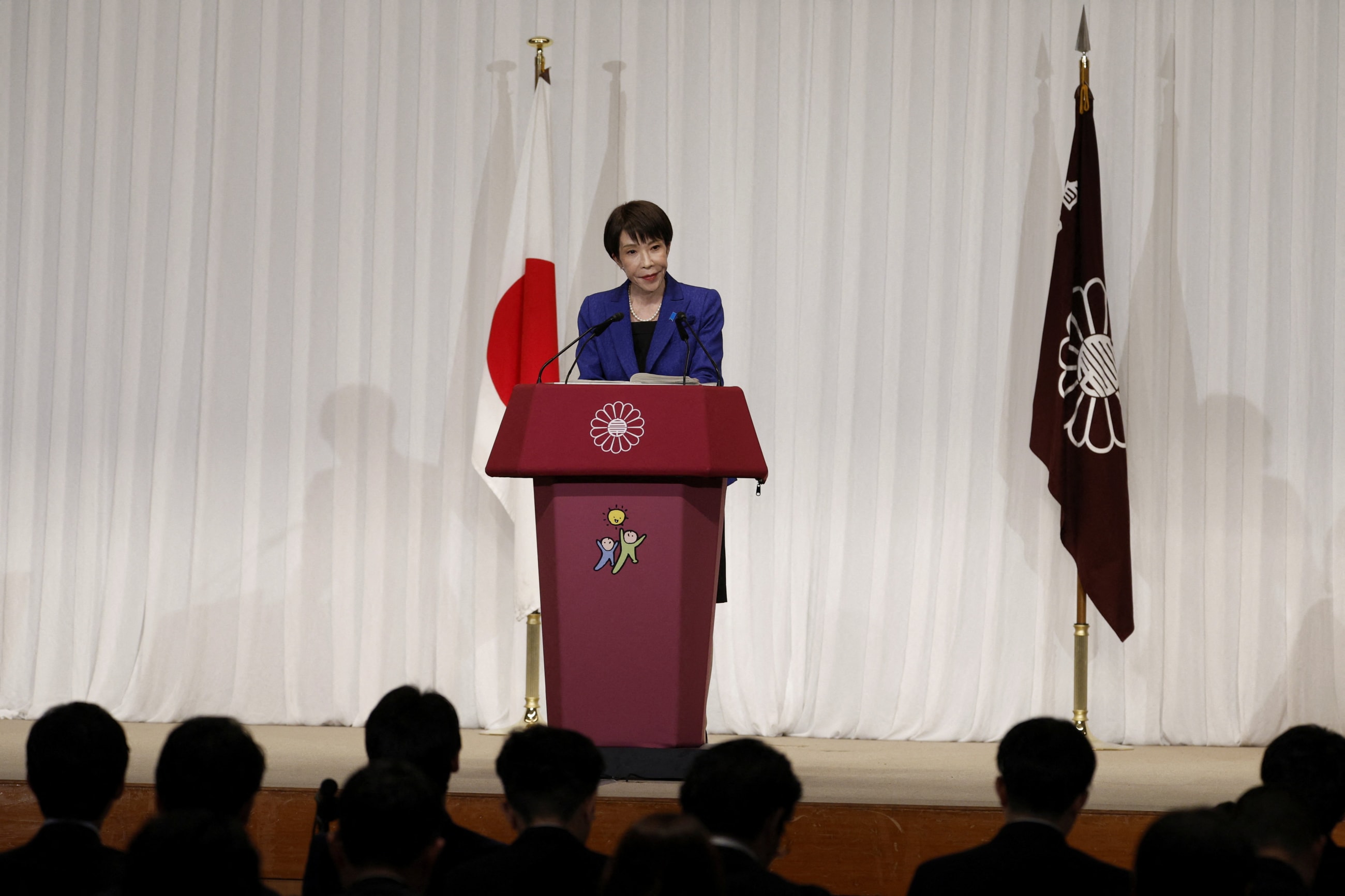
Yet Takaichi and Thatcher align in another arena: their sleep schedules. Toward the close of 2025, Japan's first woman prime minister garnered media attention over her minimal sleep habits, reportedly two to four hours per night. While Thatcher was often applauded for a similar schedule as part of her image, Takaichi has received a backlash.
While Takaichi claims her nighttime routine reflects a personal commitment, not a workplace expectation, her habits echo a deeper national and global trend—one that can be fatal. Embodied by the infamous 1980s expression karoshi, or "death by overwork," Takaichi has resparked debate on the normalization of excessive labor and its influence on health and longevity.
Decades after Japan coined the term, the World Health Organization (WHO) recognized karoshi syndrome in 2021, connecting chronic overwork and stress to cardiovascular deterioration and mental health conditions.
750,000
In 2016, 750,000 global deaths were linked to karoshi syndrome, or chronic overwork and stress
That year, the WHO and International Labor Organization estimated that 750,000 global deaths were linked to the syndrome in 2016—a 29% jump since the turn of the millennium. According to their assessment, excessive work, generally defined as more than 35 to 40 hours weekly, could account for approximately a third of all work-related health problems and represent the single largest occupational health risk factor.
As awareness grows, so do calls to rethink the boundaries of sustainable work. Companies worldwide are experimenting with promising alternatives—shorter workweeks that improve health and productivity—but stark disparities in how nations prioritize work versus rest highlight the cultural and policy barriers that must be overcome.
The Geography of Exhaustion
The pathway from overwork to mortality runs through the bedroom, as chronic sleep deprivation is a direct consequence of the global overwork culture. A 2014 study involving 124,000 Americans found the habit of trading sleep for work spans sociodemographic categories, such as age, educational attainment, marital status, and income level. Other studies from the United States, the Netherlands, and Sweden show associations between job strain and developing sleep difficulties.
Think Global Health examined 54 countries using 2018 data from the University of Groningen's Penn World Table for average annual hours worked per person and the digital app Sleep Cycle for average hours of sleep per night to spotlight global disparities in work-life balance. Countries logging longer work hours tend to have less sleep. Places where employees average less than seven hours of nightly sleep—the American Academy of Sleep Medicine's recommended minimum—work an average of 2,078 annual work hours, compared to 1,756 work hours for those sleeping seven hours or more. The difference is 322 working hours, about eight full weeks of labor, per year.
European countries are consistently the most well rested, while Asian economies show the opposite pattern. The top-10 countries logging the fewest annual work hours were in Europe (1,479 average annual work hours). By contrast, countries in Asia made up eight of the 10 clocking the most working hours (2,364).
While many common factors erode sleep, such as newborns, pre-existing health conditions, or interpersonal conflict, regional variations are more than biological or individual. They can be connected to societal differences defined by labor laws and cultural norms. Long working hours in East Asian countries have been tied to Confucian ethics, where hierarchy, loyalty to supervisors, and collective responsibility are prioritized over individual needs. In South Korea, researchers found that some employees have positive attitudes about their long working hours due to individual affirmative attitudes, group cohesiveness, and power dynamics that were traced to collectivist values.
Sleep-limited countries such as Japan have labor regulations in place, but violations are common. A 2021 investigation [PDF] by Japan's Ministry of Health, Labour and Welfare found that, of 24,042 targeted workplaces, 37% were found to have illegal overtime. In more than a third of these companies, overtime exceeded 80 hours per month. Another 419 workplaces exceeded 150 hours of monthly overtime, while 93 employers surpassed 200 hours. In a repeat 2023 investigation [PDF], workplaces with illegal overtime increased to 44.5%, almost half of which exceeded 80 hours per month.
Tragic stories lie behind those stats. In 2023, a 25-year old actress committed suicide after logging 437 hours of work in her final month of life, 277 of which were overtime. Officials linked the 2017 death by heart failure of a 31-year-old reporter to working more than 150 overtime hours per month.
Meanwhile, better-rested European populations tend to enjoy the extensive family-friendly policies of public welfare that encourage high levels of work-life balance. The European Parliament prioritizes work-life balance through stringent social protections, collective bargaining, and labor market policies.
Official EU law mandates maximum 48-hour workweeks, weekly 24-hour rest periods, and a minimum of four weeks paid annual leave. Austria and Germany rank among the lowest per capita workloads at 1,501 and 1,380 average hours annually, respectively. Austria boasts 36-hour weekend rest periods and more than 95% collective bargaining coverage for public employees. Germany has 11-hour mandatory daily rest periods and prohibitions on Sunday work.
The Biology of Burnout
Chronic sleep deprivation has been linked to several noncommunicable diseases—cardiovascular disease, diabetes, obesity, hypertension, depression. According to RAND, data from five OECD countries suggests that those receiving fewer than six hours of sleep per night increase their mortality risk by 13%. Studies have shown a 29% higher risk of cardiovascular disease in those with insomnia, and higher rates of stroke among workers clocking more than 55 hours per week.
Women face a disproportionate burden [PDF] of chronic disease risk from long work schedules, with higher odds ratios than men for heart disease, cancer, arthritis, and diabetes. This is likely, in part, a result of women maintaining disproportionate domestic responsibilities on top of their professional lives, making their total work hours far exceed what's measured in the labor market.
When examining diabetes and obesity risks, insufficient sleep drives the appetite hormone ghrelin
Biologically, extreme work hours activate a body's stress response, elevating blood pressure, heart rate, and cortisol excretion. In essence, the body is in fight-or-flight mode. Yet rather than an acute threat, work stress can be never-ending—the body's emergency systems remain in constant high alert, and cardiovascular health slowly deteriorates. When examining diabetes and obesity risks, insufficient sleep drives the appetite hormone ghrelin, pushing food intake past energy needs. As exhaustion accumulates, the body demands fuel to stay awake, and it is often too tired to stay active.
According to Orfeu Buxton, professor of biobehavioral health at Penn State University, the damage of sleep deprivation compounds over time in ways that can't quickly be reversed.
"Recovery from a week of short sleep takes more than just a few days," Buxton said, emphasizing that just 30 to 45 minutes of additional sleep per night can improve metabolic and cardiovascular function within a few weeks.
"Diet and exercise. It's the regular healthy habits," he underscores, "not just sleeping in to catch up."
Psychological Detachment
While toiling under long hours reduces the time available for rest, sleep deprivation among overworked employees can largely be attributed to poor psychological detachment, or an inability to mentally separate from work. Studies have connected this phenomena of after-work rumination to insomnia, nighttime awakenings, and burnout. In a self-fulfilling cycle, overwork prevents psychological detachment which then hinders sleep.
Sleep deprivation can then impair cognitive function, which is followed by suffering work performance—and a need for more hours to complete tasks. To disrupt the perpetual deteriorating spiral, work demands must be reduced to the point that psychological detachment becomes possible. Even a 30-minute increase in sleep duration has been shown to improve workers' self-reported mental health scores by 0.09 points on a five-point scale, an effect comparable to receiving a 25% increase in workplace autonomy or job security.

Boundary theory plays a role, too. When the mental boundaries between work and private life become blurred, it becomes difficult for the brain to log off. The constant possibility of a work intrusion chips away at non-work time. For the brain to fully recover, psychophysiological systems must return to pre-stressor levels, an impossible task without full mental detachment. Without clear delineations, stress systems remain activated, cortisol elevated, and sleep unrestorative. Mental health conditions [PDF] like anxiety, depression, and, in extreme cases, self-harm or suicide, can then begin to arise.
Models of Change
Beyond labor regulations, many governments and private companies are experimenting with the "100-80-100" model—100% performance in 80% of the time for 100% of the salary—or the four-day workweek. Reduction in hours can help eliminate unnecessary tasks and inefficiencies, leading to a clear distinction between presence and productivity. The result is often rejuvenated and motivated workers who are more productive and create higher-quality work.
Globally, we see improvements in people's health, both physical and mental
Charlotte Lockhart, co-founder of 4 Day Week Global
"Globally, we see improvements in people's health, both physical and mental," said Charlotte Lockhart, co-founder of 4 Day Week Global, an advocacy organization running trials around the globe. "When people improve themselves in one way or another, they bring a better person to work, and then that better person is more productive at work."
The four-day workweek has been successful in pilot programs. Of 61 companies and 2,900 workers participating in a British-run trial, 39% of employees were less stressed, 71% percent had reduced levels of burnout, and levels of fatigue and sleep issues decreased. Most companies—92%—continued with the four-day model following the conclusion of the program. Company revenue on average rose by 1.4%, and the number of staff leaving participating companies dropped by 57% across the trial period.
A 2019 pilot project with Microsoft Japan reported a 40% boost in productivity after offering paid leave on Fridays—the company simultaneously witnessed a 23% reduction in electricity consumption. Following their own four-day week trial, the fully remote company Buffer cited a 22% increase in productivity, an 88% jump in job applications, and a 66% plummet of absenteeism.
Success extends beyond the private sector. After a 2015–19 trial in Iceland, much of the island's workforce transitioned from 40- to 35-hour workweeks, and 86% of the population currently enjoys reduced hours [PDF]. Participants in Germany's trial gained an additional 38 minutes of sleep and 24 minutes of exercise per week, and experienced 90 fewer minutes of weekly stress compared to the control group. Companies also saw improvements in recruitment and retention, with no decline in financial performance despite reduced working hours, suggesting productivity gains. In Portugal's 41-company trial [PDF], workers gained an average of 11 additional minutes of sleep nightly and reported significant reductions in anxiety, fatigue, insomnia, depression, stress, and loneliness.
With growing evidence from trials worldwide, the four-day workweek has emerged as a data-driven solution to a global health crisis. Yet for those prioritizing productivity over sleep, the cost of exhaustion is increasingly measured not just in lost hours, but lost lives.