The U.S. Centers for Disease Control and Prevention (CDC) rang in 2026 by revising the vaccine schedule recommendations for children and teens. The decision from CDC Acting Director Jim O'Neill, who also serves as deputy secretary of Health and Human Services (HHS), did not remove any individual immunizations from the schedule but changed how many are considered "routine."
The stated motivation is a desire to align American practices with other developed countries, though under the new plan, U.S. children would go from being routinely protected against 17 diseases to 11. That's comparable to Scandinavian countries such as Denmark—which had been pedestaled as a "peer nation" during a December meeting of the CDC's vaccine consultants, the Advisory Committee on Immunization Practices (ACIP).
As of Tuesday, 19 states had announced that they won't follow the new schedule, according to the Center for Infectious Disease Research and Policy. The American Academy of Pediatrics (AAP), which is fighting HHS in court over changes made this summer to COVID-19 vaccine guidance, described the new plan as "dangerous and unnecessary" and continued to spotlight its "own evidence-based recommendations" based on decades of research.
Despite this pushback, pediatricians and states could expose themselves to legal quandaries and pressure over federal funding by forgoing the new schedule. Think Global Health spoke with Dorit Reiss, a law professor at the University of California, San Francisco, about whether the updated federal guidance could create ways to sue doctors and pharmacies over alleged vaccine injuries and medical malpractice. A new commentary in JAMA, co-authored by former CDC Director Rochelle Walensky, raises similar questions for clinicians.
"Doctors might not want to be sued at all," Reiss said. "They might be worried about liability, and that could have a deterrent effect on their decision to give a vaccine."
This deterrence could affect vaccine makers, too, if pediatricians, other health providers, and states respond by ordering fewer doses. Reiss also explained how the new schedule could open a fresh avenue for pressuring states over requirements for school vaccination.
Reiss added that the unorthodox approach HHS officials took to issue the new recommendations could face legal challenges. On Wednesday, AAP and its co-plaintiffs in the COVID lawsuit said they plan to seek a federal injunction to block the new schedule.
New Liability Questions for Pediatricians and Pharmacies
Under a federal law from 1986, the National Vaccine Injury Compensation Program (VICP) insulates vaccine manufacturers from civil suits by offering "a no-fault alternative to the traditional legal system for resolving vaccine injury petitions." Those petitions must first run through the U.S. Court of Federal Claims rather than state civil courts. The VICP program was created after a bevy of lawsuits against these vaccine companies led to shortages, and it offers some protections to the health practitioners and providers who administer the immunizations.
The new schedule raises questions about these protections by redefining which vaccines are considered routine
The new schedule raises questions about these protections by redefining which vaccines are considered routine. A routine vaccine is any recommended to be administered to everyone in particular age group to protect against an infectious disease. Under federal law, VICP maintains a table of the vaccines that qualify for coverage, and U.S. code states that those vaccines must be recommended by the CDC to the HHS secretary as being routine.
With the new schedule, vaccines against 11 infectious diseases remain routine, including for polio, measles, mumps, rubella, human papillomavirus (HPV), and varicella (chickenpox).
By contrast, vaccines to fight six other infections—rotavirus, hepatitis A, hepatitis B, influenza, meningococcal disease, and respiratory syncytial virus (RSV)—now land on one of two tiers. The new recommendations say that kids should only get those vaccines if they are at high risk of catching the disease or after their parents or guardians conduct shared clinical decision making (SCDM) conversations with a medical provider. Last autumn, the CDC and ACIP also moved childhood COVID-19 vaccines from the routine to SCDM tier.
The CDC describes SCDM recommendations as "individually based and informed by a decision process between the health care provider and the patient or parent/guardian." Vaccine injury lawyer Aaron Siri, who has advised HHS Secretary Robert F. Kennedy Jr., told STAT News that the manufacturers of vaccines that now qualify as SCDM, rather than being routine, are no longer shielded from liability.
Think Global Health asked Reiss whether the same applies to pediatricians.
□ □ □ □ □ □ □ □ □ □ □ □ □ □ □ □
Think Global Health: Could the new tiers, namely the vaccines under SCDM, open up doctors, health providers, and pharmacists who administer the shots to potential lawsuits?
I could envision a scenario where a pediatrician follows the old schedule and rules, and then later the patient claims, "they gave me the shot even though I'm not high risk," or "they didn't engage enough in the shared clinical decision making process."
Dorit Reiss: There are two parts to that. The first is that as long as the vaccines are still on the VICP table of injury under the statute, a person like that would have to go through VICP first as they do now to sue providers or manufacturers. That's because the law is based on the vaccine injury, not on who you're suing. The law says if you have a vaccine injury, you have to go through VICP first.
TGH: And VICP is the last stop for the lawsuit?
Dorit Reiss: No. Even now you can go through VICP and then get to state courts, in one of two ways. Even after the U.S. Court of Federal Claims rules, a plaintiff can reject the decision of VICP and then file in civil court. Or, after 240 days in VICP, if your case hasn't been decided, you can pull your case back and go to state courts.
So whether you lose or win at VICP, you can go to state court. The process just takes time and money.
A person could also file their case in VICP, plan to drag their feet for 240 days, and then sue the doctor for medical malpractice in state court.
TGH: So if a doctor doesn't follow the new CDC vaccine schedule, are they committing medical malpractice?
That's completely uncertain because the doctor can say, correctly, I am following guidance from expert medical associations. I am following the standard of care, whatever the federal government says. And that's not a bad argument.
Usually medical malpractice cases depend upon following the standard of care, and if there are two or more customs that can be considered the standard of care, doctors get to choose.
But doctors might not want to be sued at all. They might be worried about liability, and that could have a deterrent effect on their decision to give a vaccine even without losing in court.
TGH: Aaron Siri and Del Bigtree, a longtime vaccine critic and past adviser to Kennedy, argue that the new vaccine schedule weakens VICP's liability coverage. But you counter that Secretary Kennedy would first need to remove a vaccine from the VICP table?
Dorit Reiss: Removing them would open a can of worms. He could do it, but if he follows the law, he has to give prior warning and solicit public comments. It's a long process that, too, could be litigated by companies or by other stakeholders. It's not clear that he would win that.
TGH: What was your general reaction to the memo, and to the administrative procedure they used to develop it?
Dorit Reiss: I think the procedure was insufficient because there was no official advance notice.
Agency officials would normally publish a draft of the recommendations and the changes they want to make. They would give stakeholders a chance to comment on and revise the draft according to comments and make adjustments to avoid errors. Before they publish the draft, they would also run it through CDC experts and have the staff give input. None of this appears to have happened.
Generally, the way ACIP makes decisions is that a new idea or recommendation is presented to the committee over several meetings and then there's a vote based on the presentation. The committee members consider the changes, and they take a position. This didn't happen.
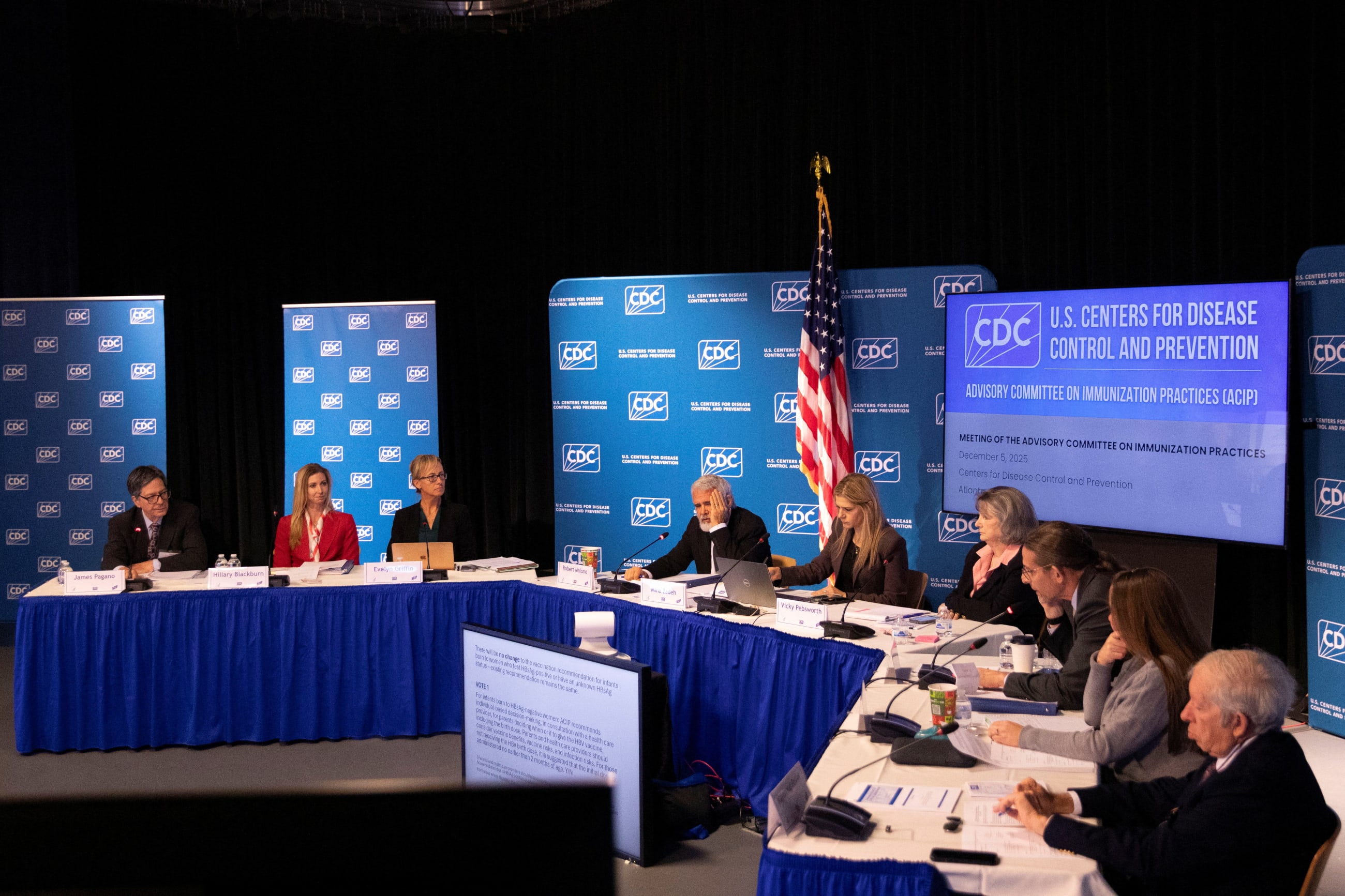
Before the holidays in early December, ACIP had a meeting in which there was a presentation about vaccine policy in Denmark. But the committee took no vote about whether to change U.S. policy to align more with Denmark's.
One presentation, which ignored some of the major public health and demographic differences between the countries, isn't enough.
TGH: Ok, but does bypassing ACIP violate the law?
Dorit Reiss: To get to the core of the administrative law questions, first, you should ask whether the agency went through the administrative rulemaking process. One of the challenges that federal officials could face is that they really didn't go through the ACIP process.
Second, under the arbitrary and capricious standard, the officials need to explain the reasoning behind the decision, addressing all the major issues, and why they're departing from prior decisions.
Why go with Denmark rather than say, Germany or France, which have larger and more heterogeneous populations?
Dorit Reiss
Looking at their explanation—the materials supporting the decision—you have a relatively short memo [PDF] from Dr. Martin Kulldorff and Dr. Tracy Beth Høeg—neither of whom is primarily an expert in this area. The memo says that they are trying to align the United States with peer countries, but they didn't explain why these countries were peers. They didn't address the very real differences between the United States and all these countries.
The memo also didn't explain in any serious way why a change was needed. Kulldorff and Beth Høeg state that there has been a loss of public trust in vaccines, but they didn't quite state why this sudden reversal would increase trust rather than decrease it further. They didn't address the risks and costs of the decision. For example, if the policy leads fewer people to get vaccines, will there be more hepatitis A or more hepatitis B in the population?
The memo does make statements about each vaccine, but they're very short. For example with influenza, Kulldorff and Beth Høeg mentioned the Cochrane Collaboration review, which by the way found that influenza vaccines do decrease infections in children, but they ignore other research literature, such as studies showing that influenza vaccines decrease mortality in children.
So, there wasn't any serious risk-benefit analysis for any of the vaccines they removed—nor a good explanation around the countries they identified as peers. Why go with Denmark rather than say, Germany or France, which have larger and more heterogeneous populations?
The memo's explanation wasn't up to the standards we usually see from agencies.
Can Doctors and States Ignore the New Vaccine Schedule If They Receive Federal Money?
Acting CDC Director O'Neill's decision memo [PDF] says the new schedule preserves access to vaccines currently available to Americans. He said that federal programs—Medicaid, Children's Health Insurance Program (CHIP), and the Vaccines for Children program—would continue to cover all the pediatric vaccines on the old schedule without costs to patients. AHIP, the trade association representing the U.S. health-care industry, reportedly plans to do the same, at least through the end of 2026.
Despite those reassurances, physicians worry that placing more vaccines under the shared clinical decision making (SCDM) process could create barriers to delivering and accessing the vaccines. Reiss said questions over SCDM could also factor into new pressure campaigns against state requirements for school vaccination.
That's because, as health organizations have highlighted previously, there are no clear standards for SCDM conversations.
Last autumn, ACIP and the CDC changed guidance for the COVID-19 vaccines, placing the shots under SCDM recommendations. Patients, physicians, and a suite of health-care organizations, including the American Academy of Pediatrics, responded by suing Secretary Kennedy, HHS, O'Neill, and the CDC.
The complaint posits that AAP and other health organizations had to commit additional resources to fulfill their missions to their members, such as launching an independent version of the vaccine schedule or counseling their physician members on how to navigate SCDM for a larger number of vaccines. Physicians mentioned in the lawsuit stated that they have experienced financial harm because the extra time required to hold SCDM conversations with patients often isn't reimbursable by insurance.
Pneumococcal vaccine uptake among Medicare beneficiaries dipped after 2019 when ACIP recommended SCDM for that shot
Prior to the new schedule, only five vaccines fell under SCDM, but medical professionals had raised similar concerns about how the designation can have a chilling effect on vaccine delivery. A 2021 survey of practitioners in Texas cited time commitment as an anticipated barrier for the human papillomavirus (HPV) immunization, and a study published in November found that SCDM had little influence on increasing uptake of HPV vaccine among teens.
Pneumococcal vaccine uptake among Medicare beneficiaries dipped after 2019 when ACIP recommended SCDM for that shot. Another survey conducted last year by the Annenberg Public Policy Center shows that many Americans are confused about what SCDM rules mean for when they should seek a vaccine and who is allowed to administer it.
During an ACIP meeting in December, Missouri physician Laura Morris said that switching the routine recommendation to SCDM for COVID vaccines had influenced the clinical implementation of those doses in rural areas relying on federal insurance.
"There now are multitudes of messages and prescriptions that are necessary to generate," Morris said, while serving as an expert liaison for the American Academy of Family Physicians (AAFP). "Pharmacists in my state are tied to ACIP recommendations in such a way that they are required to also document and require prescriptions for many of the places that previously we were able to have standing orders and protocols—for the vaccinated patients where we know the benefits outweigh the risks."
In November, Secretary Kennedy's lawyers filed a motion to dismiss AAP's lawsuit—in part arguing that the organization and its co-plaintiffs had not been harmed and lacked legal standing.
Think Global Health asked Reiss to walk through these developments.
□ □ □ □ □ □ □ □ □ □ □ □ □ □ □ □
TGH: The administration could argue that it hasn't changed the vaccine schedule. They've just added tiers. One exception is the dosing for the HPV vaccine. The schedule now recommends one dose instead of two, even though there isn't evidence that a single dose provides the same protection.
You've written—and some research shows—that SCDM can reduce uptake and create insurance coverage issues. Can you give examples of how that happens?
Dorit Reiss: Remember that before this new schedule, shared clinical decision making was rare. There were only five vaccines under those terms.
There are anecdotal stories of insurers refusing to cover shared clinical decision making vaccines such as HPV for adult women. In those instances, the insurer cites the statute and says that they need only to cover vaccines routinely recommended by ACIP. As far as I know, it has never been litigated, but for the insurers, it's a plausible argument.
HPV is also a good example because of Vaccines for Children [a federal program that purchases vaccines for underinsured or uninsured children]. Notice that the new guidelines make two changes for the HPV vaccine. First, they recommend one dose rather than two, but they also moved the age suggestion to 11 years old.
So if you have a 9-year-old and worry that Secretary Kennedy could one day take the HPV vaccine off the market, you can no longer have the Vaccines for Children program cover that.
Or say you want the child to have two doses because the evidence behind a single dose is still unclear about how long that immunity would last. You want your kid to have two doses so that it's more certain they'll have long-lasting immunity, but now you won't have Vaccines for Children coverage for that.
TGH: To have the right to bring a lawsuit, a person or entity needs to have legal standing—or a personal stake in the outcome of the case. Which people or groups have the legal standing to raise a challenge against the new vaccine schedule?
A vaccine manufacturer who argues that this is going to affect their business? A person who catches one of these diseases in the future?
Dorit Reiss: You're hitting exactly on a big part of the issue. To reduce the likelihood of anyone standing to challenge the new recommendations, the secretary and other health officials went out of their way to say that the new recommendations have no practical implications.
Here, there are several things to consider. One is that in AAP versus Kennedy [on January 6], a judge denied the government's motion to dismiss, finding that AAP has standing because the organization has shown that the COVID vaccine decision imposes a burden on AAP and physicians by consuming more resources and finances.
AAP members are facing financial costs from the decisions by the secretary, including more counseling under shared clinical decision making, which is not covered by insurance, even if the vaccines themselves are. Going forward, these arguments for standing could apply to other medical associations to create standing.
TGH: Do states have legal standing if they can show that the new guidance affects them directly?
Dorit Reiss: Some states have laws connecting several parts of their vaccine infrastructure to ACIP recommendations, so the new recommendation could throw those systems into confusion and create uncertainty. If there are actual barriers, that could lead to standing.
TGH: If a person catches one of the diseases no longer covered by routine vaccine recommendations, could they have legal standing to sue?
Dorit Reiss: Your question raises the idea of someone who becomes infected after this recommendation, but you don't have to actually get the disease to have legal standing here. If a parent can show that there's now a meaningful barrier to their accessing the vaccine because of this decision, that's enough.
You don't have to actually get sick if not having access to the medical preventive clearly increases your chances of the disease.

TGH: Could the new vaccine schedule change whether private insurers pay for vaccines?
Dorit Reiss: For private insurers, it's completely unclear now whether they have to provide coverage for these vaccines, even for the ones under shared clinical decision making. There are arguments both ways, but if a private insurer wanted to avoid covering those vaccines, they could now do that.
Another question is if I'm a state and I acquire vaccines for delivery through social programs, under shared clinical decision making, can I still buy vaccines for all the children in my state?
TGH: Right, because if states act as a vaccine provider during a public immunization drive, where do the in-depth SCDM conversations between parents and medical providers come into play? Could states face other pressure under the new rules?
Kennedy and the administration could use the recommendations to put pressure on states to change their vaccine mandates for schools by threatening the federal grants going to states.
TGH: How?
Dorit Reiss: I'm going to use hepatitis B as an example because all states require its vaccine for school. The federal government now no longer recommends hepatitis B as a routine vaccine to anyone except children who have certain risk factors.
Under this construct, one could argue that states shouldn't be mandating those vaccines from schools. An HHS official could tell a state, "we, with the support of President Trump, suggest you change your state laws to remove the vaccine mandate."
TGH: Do you think this new schedule and all the recent change to federal vaccine policy make the U.S. market less palatable to vaccine manufacturers? I ask because the confusion for patients and providers could influence the volume of vaccine orders.
Dorit Reiss: I think you're right. I'm hearing that some manufacturers are stepping back from vaccine innovations. In other words, they're less likely to start new vaccine projects, which will hurt people in the long term. From what I've heard, the manufacturers are not quite at the point where they're taking old vaccines off the market.
I don't have a clear prediction, but the first place I'd be looking is next year's influenza vaccines. The Food and Drug Administration has signaled that it plans to make approval of the influenza vaccine more difficult, so we may see less availability or no availability of flu vaccines as soon as next year.
If that happens, that's a really big warning sign that we're in trouble. Not just for that flu season, but generally.
AUTHOR'S NOTE: Think Global Health contacted the American Academy of Pediatrics (AAP) and the American Academy of Family Physicians (AAFP) for comment. AAP did not respond, and AAFP referred Think Global Health to AAP.