At the World Economic Forum on January 20, Canadian Prime Minister Mark Carney described the current geopolitical shift as "a rupture, not a transition." Carney's remarks come after the United States released its America First Global Health Strategy last September and withdrew from the World Health Organization (WHO) days after Carney's speech. Those developments signal a departure from the multilateral approach that has underpinned global health security since the millennium. Recent reductions in foreign aid have exposed the dependence of low- and middle-income countries (LMICs) health systems on external donors.
Those disruptions make it imperative for countries to invest in adaptable, locally driven systems.
Human-centered design (HCD) offers a practical pathway forward for this transition. HCD is a problem-solving approach that prioritizes the needs and experiences of frontline users when developing policies, services, and interventions. It creates bottom-up health policy, codesigns health systems with communities, and focuses on context-relevant outcomes.
Health systems need to be supported by enabling conditions in domestic financing, operations, workforce capacity, and accountability
But redesigning alone is not enough. Health systems need to be supported by enabling conditions in domestic financing, operations, workforce capacity, and accountability. As LMIC governments shift away from donor-driven, disease-specific programs, HCD can facilitate dismantling siloed care.
To build health systems that can respond to hyperlocal needs and transnational health shocks, LMICs should ensure universal access to integrated emergency, critical, and operative care (ECO), part of World Health Assembly Resolution 76.2 (2023) [PDF]. That resolution emphasizes the need for deverticalization or comprehensive, integrated perioperative care that transcends narrow, illness-specific health-care service delivery. It encompasses perioperative care, disaster preparedness, maternal health, trauma services, and pandemic response. By applying HCD, countries can better inform national ECO-related solutions to strengthen integrated health-care service delivery.
Human‑Centered Design Strengthens ECO Interventions
In low- and middle-income countries, top-down implementation created challenges with local hierarchies, staffing, and facility routines, preventing many countries from successfully adopting the WHO Surgical Safety Checklist. India's BetterBirth program is another example, in which its emphasis on checklist adherence did not reduce maternal mortality.
That mismatch is not limited to clinical protocols. Centralized or donor-driven purchasing often does not account for local integration, leaving equipment unused because it's incompatible with existing systems and lacks parts, technicians, training, or repair funding. Technology‑related interventions, such as women's health apps and electronic medical record systems, have often prioritized data capture and engagement metrics.
Those initiatives have been hampered by disregard for local operational capacity, duplicative work, misaligned extrinsic incentives, and exacerbation of underlying inequalities. When HCD is absent, technologies, checklists, and guidelines frequently fail because they are misaligned with local conditions.
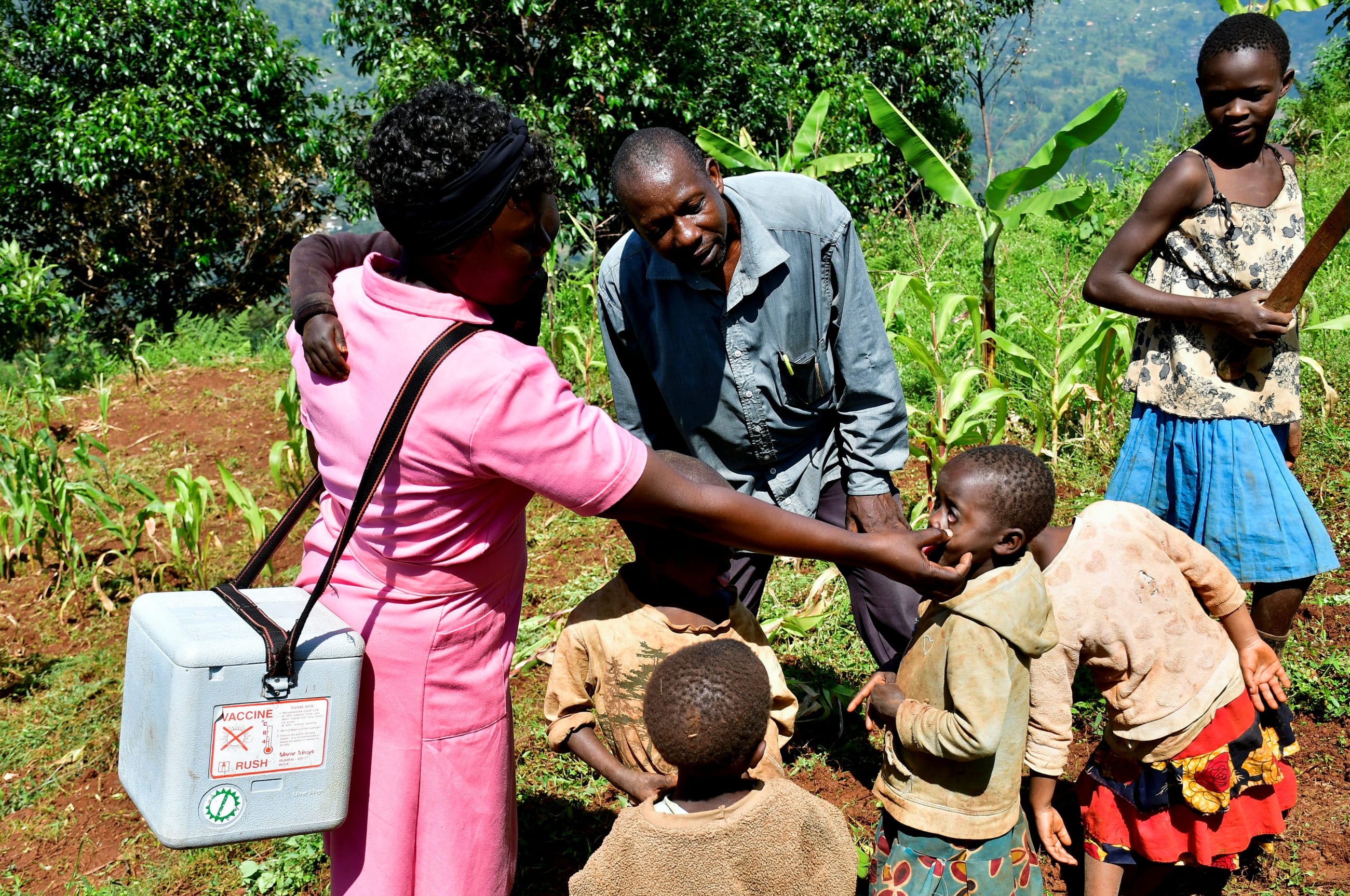
HCD is just as relevant to what health systems measure and digitize as it is to what they deliver at the bedside. For example, HCD-based reassessment of World Bank's Service Delivery Indicators (SDI) helped capture and support the underlying drivers of health-care worker motivation and retention.
In Ethiopia, HCD allowed surgeons to report inconsistent operating room lighting that disrupted care and resulted in patient harm. In response, durable and affordable surgical headlights were designed to function reliably even with power outages.
Similarly, Uganda's FamilyConnect, South Africa's MomConnect, and Bangladesh's Aponjon mHealth used feedback from community surveys to develop two-way SMS platforms that delivered maternal and child health information to new and expectant mothers, improving health outcomes [PDF].
After the 2015 earthquake in Nepal, researchers from Kathmandu and London interacted with local Nepalese women to develop the MANTRA mobile application game, which seeks to improve access to information and communications for low-literacy people before, during, and after environmental disasters by warning of geohazards and providing relevant health advice.
Kenya's Ministry of Health and PATH applied HCD methodology to create a national roadmap to better understand obstacles to postpartum hemorrhage prevention and treatment. By using frontline worker input and multistakeholder partnerships, the process revealed barriers in the medication supply chain, gaps in provider training and protocols, and workflow bottlenecks. In parallel with a cost-effectiveness analysis, the HCD approach informed changes to practice guideline update, provider training, supply chain management, and national scale-up of a heat-stable drug to treat postpartum hemorrhage.
Despite its value, HCD can be resource intensive, and heterogenous methodology and application across contexts may lead to suboptimal results.
Challenges of Operationalizing HCD
What's needed is not more compartmentalized, HCD-labeled pilot projects. To reengineer ECO systems to work at scale, governments should embed HCD in policy so that patient and provider needs translate into national decisions. Six actions can guide this movement:
1. Devolve ECO decision-making and budgets to districts and facilities, and give frontline teams, such as surgeons, nurses, and midwives, formal representation in decisions regarding priorities and standards.
2. Design around care pathways. Map the end-to-end ECO journey, from referral to medical facility-based care, to posthospital recovery. Focus redesign on the "pain points," when people are forced to improvize because of system failures.
3. Modernize procurement and maintenance by requiring end-user approval and purchasing based on the total cost over the equipment's lifetime.
4. Set up a system for facility-level reporting of health-care service delivery bottlenecks (such as oxygen outages) and pair it with rapid follow-up and corrective actions for accountability.
5. Align financing to reliability by budgeting recurring and future operating costs so that funding allocation reflects what's needed at the point of care.
6. Measure user-relevant reliability indicators, such as stockouts of essential medications and workload on providers, to inform iteration and strengthen accountability.
As governments rethink and rebuild their approaches to reliable global health systems, they should reimagine and redesign for local priorities, workflows, and governance. The integration of HCD into global health security frameworks is a necessity. Locally driven design of ECO systems can create convergence between stakeholders' realities and actionable solutions. Only by building human-centered systems can global health security evolve from reaction to resilience.
AUTHOR'S NOTE: The views expressed in this article are those of the author and do not necessarily reflect the views of Mayo Clinic.