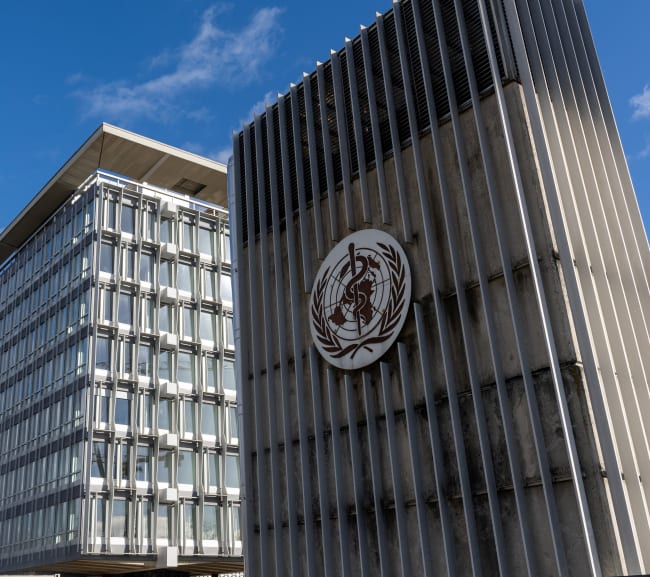
This year marked historic progress in governance for global health security. After years of negotiation, the Pandemic Agreement was adopted, the UN Pact for the Future was implemented, and amendments to the International Health Regulations (IHR) [PDF] entered into force. Together, these frameworks promise to embed equity, financing, coordination, and accountability into preparedness for the next health emergency.
However, they overlook the very settings where outbreaks routinely ignite and spread: humanitarian crises. In those settings, protracted conflict and fragile governance render traditional preparedness tools and approaches inadequate.
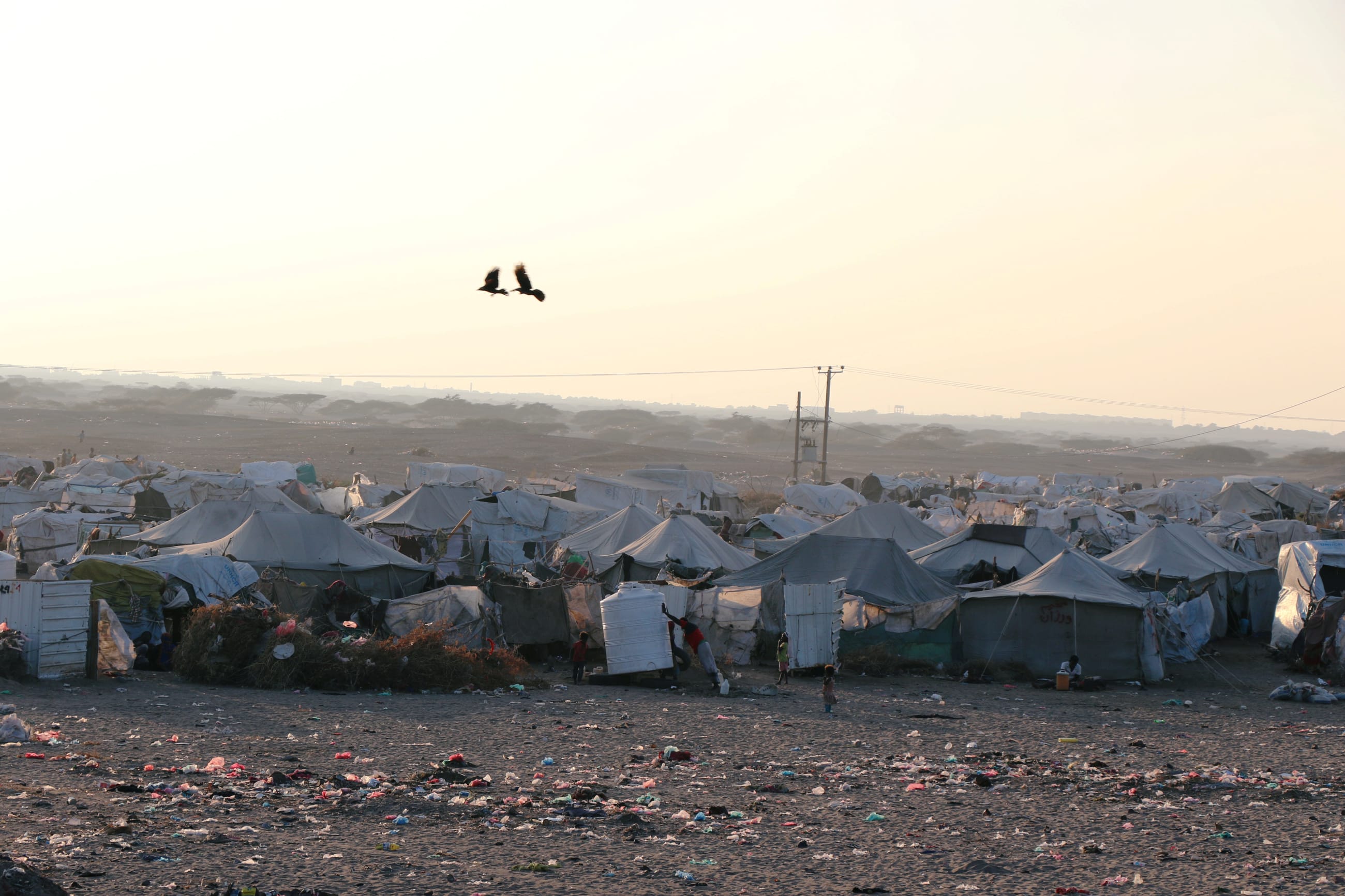
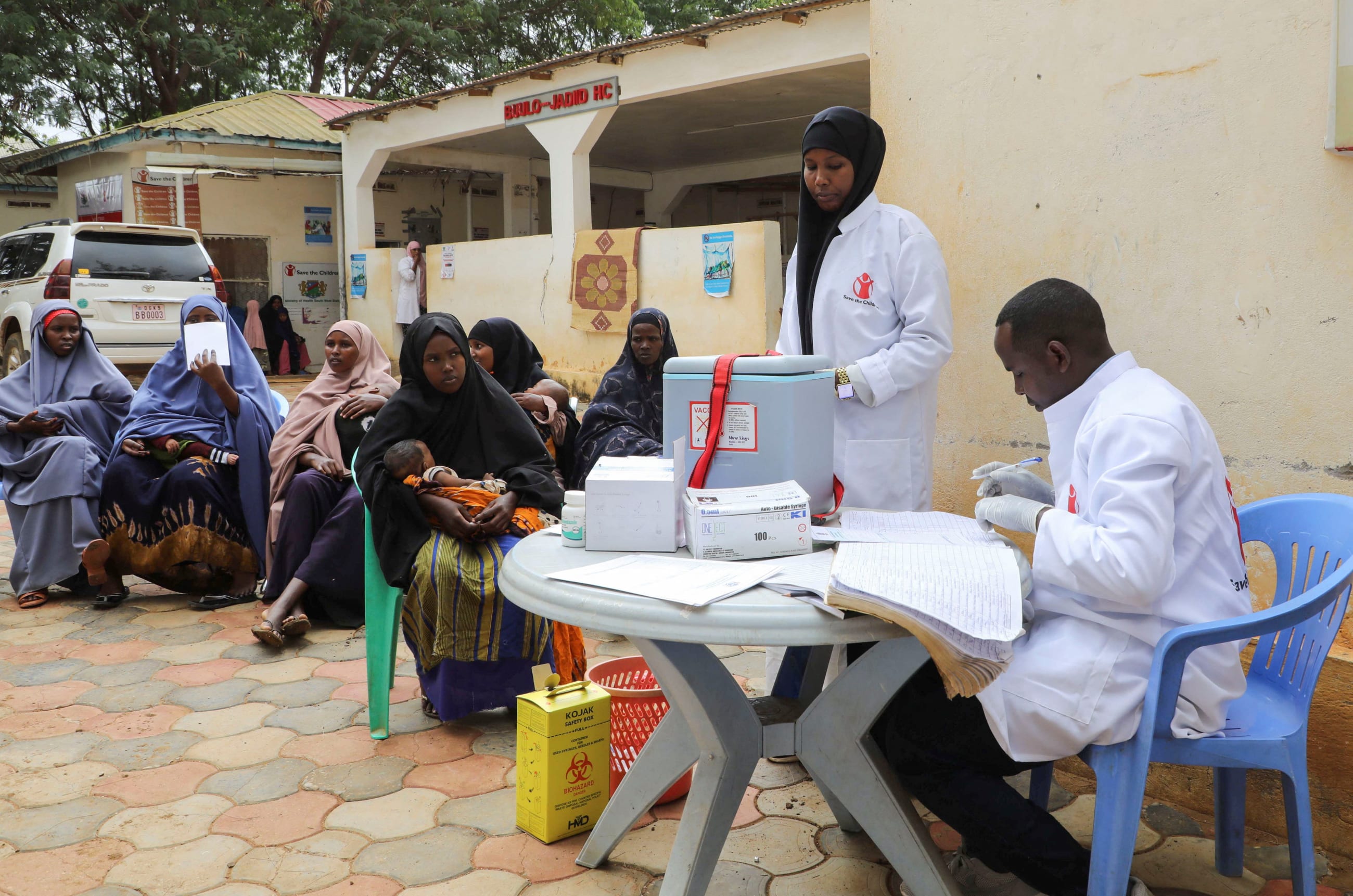
One in four people worldwide live in fragile contexts, which can devolve into a humanitarian emergency through a confluence of crises. Most humanitarian settings face severe fragility and are characterized by recurrent climate and conflict-related emergencies and weak or nonexistent national health systems. Here, it is often humanitarian organizations and frontline health workers—not ministries of health—that deliver the core functions of pandemic prevention, preparedness, and response. Those functions proved critical during the COVID-19 pandemic, as well as during recent outbreaks of cholera, mpox, and Ebola. Yet vital local capacities are not accounted for.
To properly assess outbreak readiness in humanitarian settings, local preparedness capacity must be assessed simultaneously with national systems capacity. Long-term investments in primary health systems are needed to support that preparedness.
The Missing Layer in Global Health Security
The world's worst humanitarian emergencies have been left out of global health security strategies and health system funding mechanisms. The lack of health financing [PDF] in fragile and conflict settings, also called bridge funding between humanitarian and development mandates, is a decades-long issue.
In 2023, a year that marked record-high global humanitarian need and steep post-COVID funding reductions, Somalia, Syria, and Yemen were in the top five recipients of U.S. humanitarian assistance [PDF], but those countries received no global health security funding from the U.S. Agency for International Development (USAID) or State Department. The Pandemic Fund provided grants for pandemic preparedness to Somalia [PDF] (via multicountry award) and Yemen in recent funding rounds.
However, the fund's model, which requires government-led proposals and routes resources through a narrow set of implementing entities, means that nongovernmental organizations (NGOs) and community or civil society organizations (CSOs) can only participate as subcontracted delivery partners, if at all. In addition, the capacities of NGOs and CSOs remain unmeasured because the fund's monitoring and evaluation framework relies on the IHR's monitoring tools—the mandatory State Party Self-Assessment Annual Reporting (SPAR) and voluntary Joint External Evaluation (JEE).
Those tools are built on a linear, top-down model that assumes that capacity develops nationally and filters downward. For both the SPAR and JEE, each indicator is scored on a five-level scale, advancing only when all criteria at the previous level are met. For example, in SPAR's early warning surveillance indicator (see table), Level 1 (no capacity) reflects the absence of national guidelines and standard operating procedures, and Level 5 (full capacity) requires full surveillance implementation "at all levels." Under this framework, community-based surveillance capacity—critical for detecting and containing events before they become national outbreaks—is not accounted for in a country's score until Level 5.
This current IHR reporting system therefore does not account for the role of NGOs and CSOs at the front lines of health security. In some humanitarian settings, those actors are the only source of health services for millions of people and crucial for developing local capacities alongside national health systems and policies. To ensure accurate assessment of countries' health preparedness, NGO and CSO capacities should be incorporated into these evaluation frameworks using structured documentation.
The limited visibility of local-level capacities applies to assessments beyond SPAR and JEE. A 2021 scoping review examined global public health emergency preparedness assessment tools and found that only 31% were applied at the local level—mostly within hospitals—and that nearly all focused on national-level capacities. Although this challenge exists across countries, it is particularly harmful to humanitarian settings where critical local capacities remain invisible—and therefore unfunded.
Reframing Preparedness From the Frontlines Outward
Research on pandemic preparedness among front line health workers in humanitarian settings during COVID-19 shows the importance of localized preparedness. USAID's COVID-19 response investments in humanitarian health systems in Syria, South Sudan, and Honduras built crucial local capacities that included infection prevention and control and triage protocols, water and sanitation facilities in health centers, risk communication and community engagement, and community-based surveillance and reporting systems. Health emergency preparedness and response capacities were built from the ground up using a patchwork of short-term emergency funds. The COVID-19 response temporarily softened traditional boundaries between humanitarian and development efforts, revealing both the necessity and feasibility of more coordinated approaches to crisis response and longer-term system strengthening.
Primary health-care systems in humanitarian settings already provide a critical but underrecognized infrastructure for this work
These bottom-up gains underscore the need for a coordinating layer capable of aligning fragmented efforts until the national system can effectively reach these humanitarian areas. A key lesson from COVID-19 is that CSOs need to be embedded in these coordination structures to improve impact and reach. The UN Pact for the Future seeks to improve the coherence and leadership of the UN system, particularly through joint UN actions at the country level, including strengthening the links between humanitarian and development work. The Quadripartite's One Health Joint Plan of Action—a framework for addressing human, animal, and environmental health—also stresses the importance of successes in joint initiatives that include community-centric solutions.
Promising initiatives demonstrate how to equip the front lines with IHR-aligned capacities. Resolve to Save Lives' Epidemic-Ready Primary Health Care shows that preparedness depends on the everyday functioning of primary health systems and offers a practical model that could be expanded to support humanitarian health systems. The initiative has identified the core activities relevant to primary health care, whether delivered by a public system or NGOs, to prevent, detect, and respond to outbreaks while maintaining essential health services. Early results in Ethiopia, Nigeria, Sierra Leone, and Uganda demonstrate that when epidemic readiness is embedded into primary care, health systems can reduce service disruption, strengthen surveillance, and safeguard staff during outbreaks.
Primary health-care systems in humanitarian settings already provide a critical but underrecognized infrastructure for this work. Strengthening preparedness at the primary health care level advances both global health security and universal health coverage, which necessitates shared tools and frameworks. To be effective, however, investments need to bridge the preparedness gaps in fragile health systems left by both the humanitarian-development silos and separate global health frameworks. This includes but should not be limited to support from the Pandemic Fund enabled by a range of implementing partners trusted by communities and guided by experts directly from these contexts.
Closing the Humanitarian Preparedness Gap
The historic Pandemic Agreement of 2025 was groundbreaking in many ways, including its emphasis on preparedness through the primary health-care approach and its mention of humanitarian settings. The opportunity now is to operationalize these aims. Reorienting the global preparedness system to include humanitarian settings requires a conceptual and operational shift—one that better integrates IHR monitoring tools, funding streams, implementing partners, and global health frameworks. Preparedness should be not only nationally owned but also locally prioritized.
That can be accomplished through the following actions:
First, IHR reporting should better capture these gaps. World Health Organization member states should create a mechanism for governments to report subnational capacities in SPAR—whether as a supplemental form in the annual submission or a comments section—and incorporate that data into national monitoring and evaluation systems.
Second, development initiatives in humanitarian settings should be properly financed and coordinated, in particular with community partners. This includes dedicating sustained funding for health system strengthening in protracted humanitarian contexts through various coordinated finance mechanisms rather than relying solely on short-term emergency grants.
Third, readiness should be centered on effective primary health care. This means ensuring that public and private global health security investments include explicit strategies for supporting preparedness within primary health-care systems.
When the next health emergency emerges, its trajectory will depend not only on the strength of national policies but also on the readiness of health workers in remote clinics, displacement camps, and community organizations operating in conflict zones. Recognizing and resourcing these front line actors is not simply an equity imperative, but also a strategic necessity for regional and national security.
Without them, global health will remain only as strong as its most fragile setting.