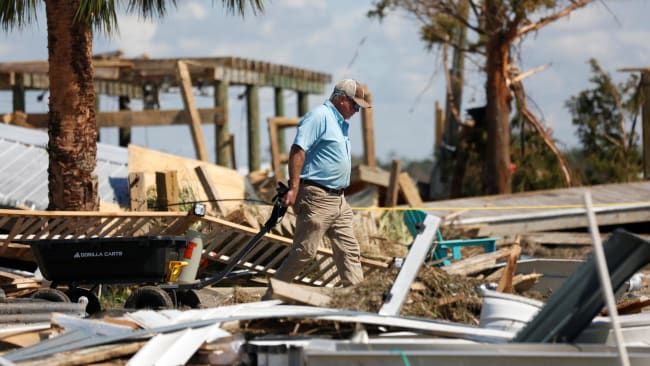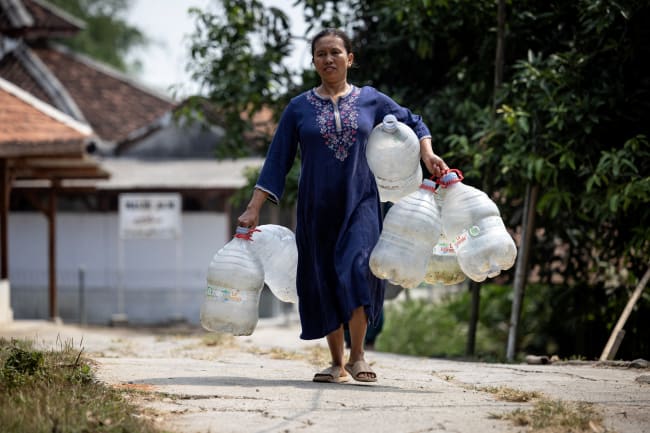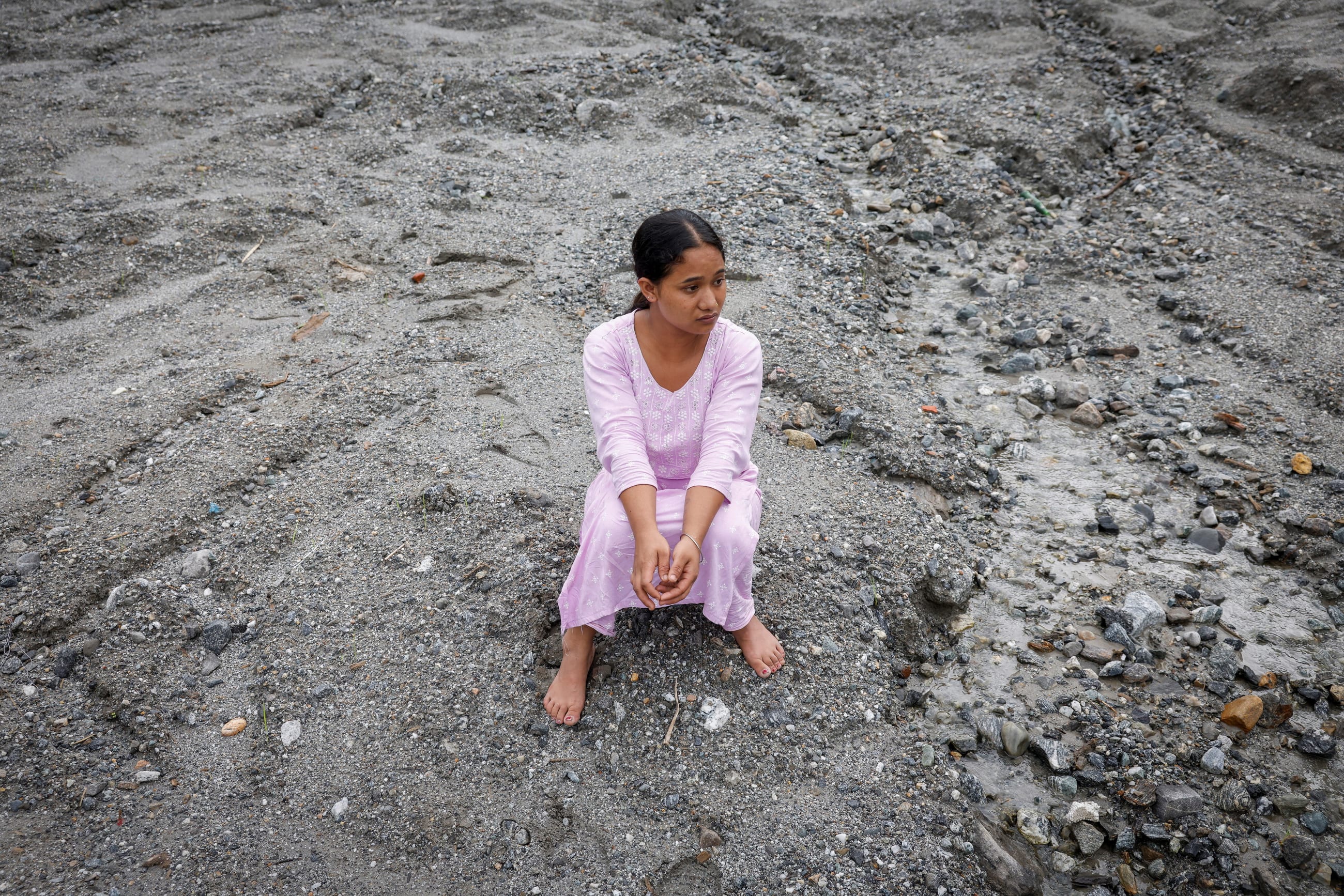
As world leaders conclude discussions at COP31, 2026 is ending as a year of record-breaking heat and severe weather from human-caused climate change, including devastating flash floods in Nepal and severe wildfires across Europe and North America. As the latest Lancet Countdown report outlines, the health effects of climate change are outpacing global efforts to address them.
Encompassed in climate change's health effects are worsening global mental health, including increased prevalence of anxiety, depression and posttraumatic stress disorder (PTSD). Although the World Health Organization (WHO) and many advocates have made strides in integrating mental health into climate and health programming, a major challenge remains overlooked: collective dissociation from climate harms.
Climate Change, Trauma, and Dissociation
To understand collective dissociation, it is important to understand traumatic stress and the brain's response to it. In the face of an overwhelming threat, the brain is wired to respond in one of four ways: fight (attack), flight (avoid), fawn (appease), or freeze. Evolutionarily, these responses helped human survival. However, when faced with repeated exposure to traumatic stress where escape or resolution are not possible and flight, fight, and fawn all fail, the brain tries to protect itself by entering an even more extreme "freeze" response: dissociation.
In the context of climate change, collective dissociation is especially likely to occur when people repeatedly experience climate disasters or distressing climate news with limited avenues for meaningful action or resolution
At the individual level, dissociative experiences can occur in response to a traumatic event and range from feeling overwhelmed, having out-of-body experiences, or, in severe cases, disconnecting from reality itself. When entire communities experience a traumatic event, such as school shootings, armed conflict, or natural disasters, the psychosocial impacts can transcend individuals to affect interpersonal and community dynamics. These collective traumatic responses not only include worse mental health among individuals (i.e., increased posttraumatic stress and depression) but can also manifest as greater interpersonal conflict, decreased community trust, and, in positive cases, renewed community resilience.
Collective dissociation is one harmful outcome that can occur after crisis: a complex, dissociative response to a large-scale trauma characterized in part by widespread apathy and a disconnection from reality. In the context of climate change, collective dissociation is especially likely to occur when people repeatedly experience climate disasters or distressing climate news with limited avenues for meaningful action or resolution. For example, studies on climate change and behavior show that the more people feel their actions are ineffective in making meaningful change, the less motivated and more apathetic they become.
Among an Australian community in New South Wales that experienced fires and floods in successive waves, community leaders described taking repeated "disaster hits," a persistent feeling of swimming without being able to take a breath. In cases such as this, collective "disaster fatigue" can set in, leading people to disengage from climate action and embrace dissociation as a survival strategy through a collective loss of hope and resignation.
Although collective dissociation is not a formal clinical diagnosis in the same way that PTSD is, and it should not be read as such, research has long argued that community experiences of crises have community-level psychosocial effects that require community-level interventions. As communities around the globe increasingly experience or witness climate disasters without respite, the brain's dissociation response can kick into action.
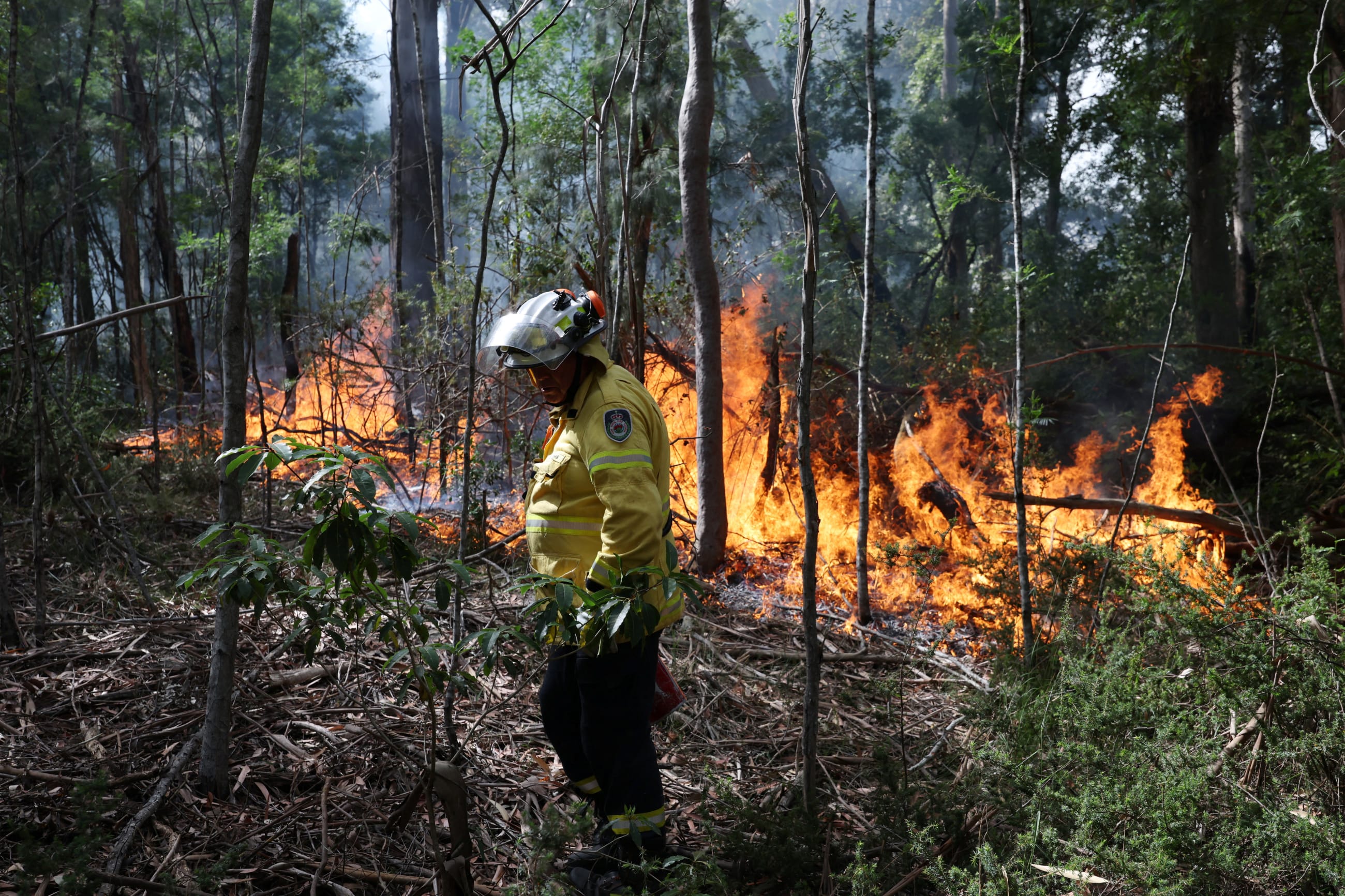
The consequences of collective dissociation can include large-scale disengagement from climate-related news, weaker support for pro-climate action due to apathy, or a resignation that climate catastrophe is inevitable. One study across eight countries (five of which were in the Global North) found that feeling like "it's too much" and "there's nothing I can do" were some of the most frequently cited reasons for climate news avoidance. For some people, particularly youth, repeated exposure to climate change messaging can conversely be associated with message fatigue, a decreased desire to engage in sustainability behaviors, and reduced acceptance of policies addressing climate change. In the United States, recent polls showed that although nearly half of Americans (44%) were concerned about climate change, more than 60% felt that countries will not intervene to prevent its worst outcomes. In a federal political context that has significantly rolled back climate protections, the overwhelming threat of climate change with little ability to prevent it in the current political context can lead to this collective resignation.
The broader public response to catastrophic climate disasters in 2026 serves as another case study. During the recent flash floods in Nepal, vivid, jarring videos of towns being swept away in a matter of seconds and people running away from the sudden onslaught of water circulated through international news for days. This came on the tail end of a summer of severe wildfires across Europe and North America, which saw a similar pattern of footage circulation and news coverage, including collective expressions of shock on social media. Although these events were incredibly devastating and led to great loss of life, the widespread coverage translated to limited public mobilization. Contrast this with similar incidents in previous years, such as the 2019–20 Australian bushfires or wildfires in the Amazon, which led to global climate protests in large numbers. Although this decline may not be equally applicable to all contexts, and climate advocates continue to work through many channels, climate organizing has indeed seen an objective drop in widespread protests since 2019.
There are many theories about why climate movements are less publicly visible compared to prior years, including the competing crises of COVID-19 pandemic disruptions, increasing armed conflicts, and economic strain in many parts of the world. However, the absence of public mobilization in the aftermath of increasingly worse climate events can also indicate, at least in small part, a growing collective dissociation from and normalization of climate disasters. The first record-breaking wildfire may be shocking, but the second, third, and fourth will not elicit the same shock response. Brains are simply not built this way.
As the death toll and destruction of climate disasters intensify, repeated crises can become normalized as minds become desensitized to them. Without intervention, what would have previously been shocking—such as a death toll in the thousands following the floods in Nepal—can become a new normal, until the next disaster generates even worse outcomes. Given that the greatest loss of life, economic, and infrastructural damages are borne by countries in the Global South who contribute the least to climate change, collective dissociation and inaction can also become an issue of staggering global health inequity. Unfortunately, this positive feedback loop can normalize increasingly worse climate catastrophes, leading to both greater mental health burden and increasing public disengagement from climate action.
An Integrated Public Health Approach
Fortunately, solutions exist. Understanding the mental health impacts of climate change to include not only individual mental health outcomes but also community-level effects requiring community-level, public health solutions is a powerful starting point.
Recent public health research shows that collective action can be a solution: among undergraduate students concerned about climate change, those engaged in community action did not experience depressive symptoms compared to those who were not. Notably, those who participated in individual behaviors to promote sustainability, such as recycling, did not experience any such mental health benefit.
Increasingly, collective action and community participation in climate solutions are being incorporated into public health intervention strategies. In parts of North America, community organizations are experimenting with building community hubs to strengthen mutual aid and community connection as part of a population mental-health approach to the climate crisis.
The WHO Regional Office for Europe's recent report [PDF] recommends integrating climate action into mental health responses, including through fostering social connection and participation in community groups. Notably, the Belém Health Action Plan [PDF] from last year's COP30 explicitly calls for community and social participation as a key principle in building health-system resilience to climate change.
Addressing collective dissociation involves recognizing it as a public health problem with public health solutions, beginning with making meaningful climate action accessible to larger numbers of people.