Reedley, California, sits in the Central Valley about 30 miles south of Fresno, surrounded by stone-fruit orchards and packing houses. There, a building-code complaint is ordinary municipal business. But in December 2022, when a city inspector arrived at a commercial warehouse to follow up on a report about a garden hose running through an exterior wall, what he found set off an investigation that would eventually reach the FBI, federal prosecutors in Sacramento, and the House Select Committee on the Chinese Communist Party [PDF].
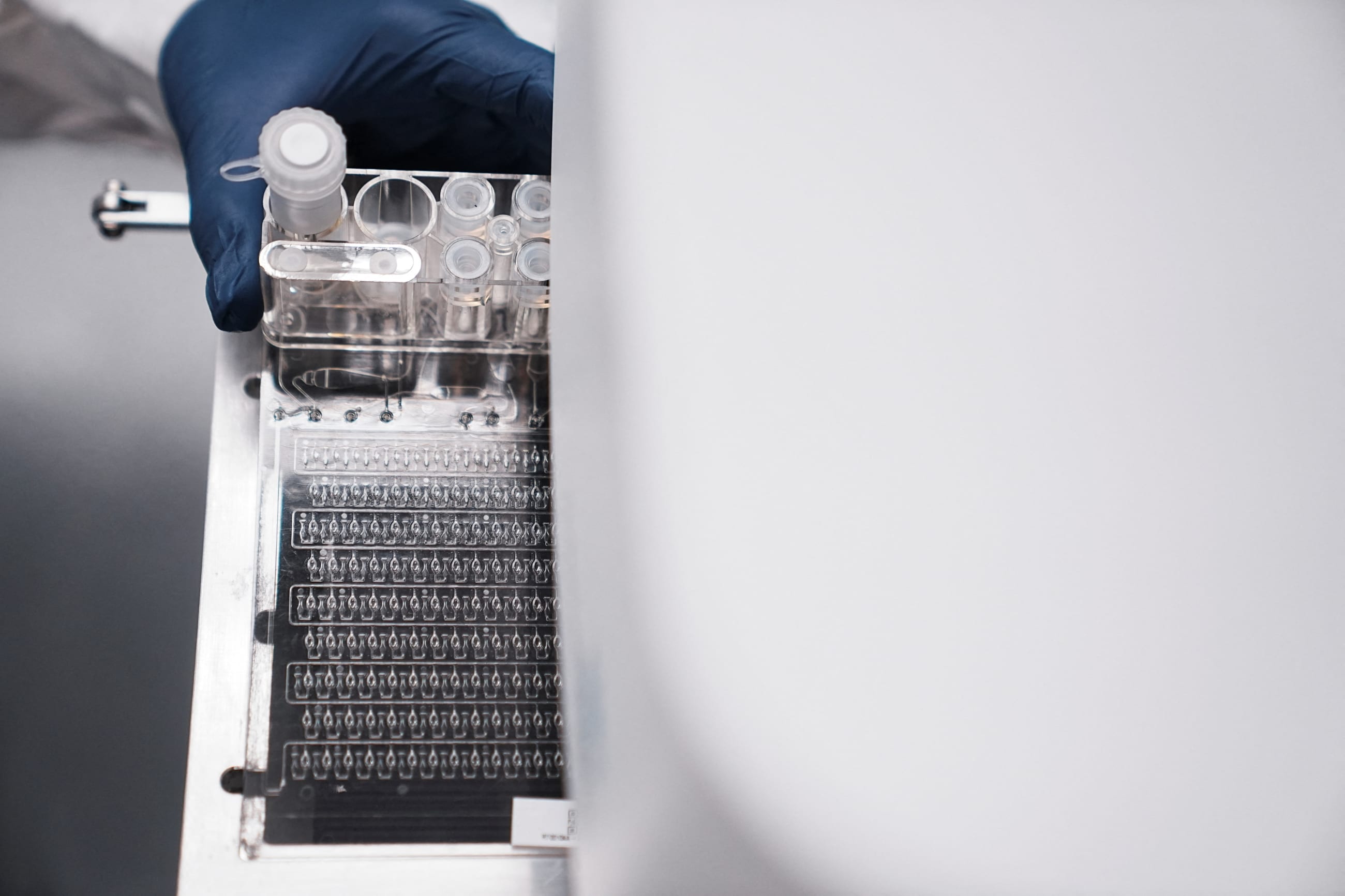
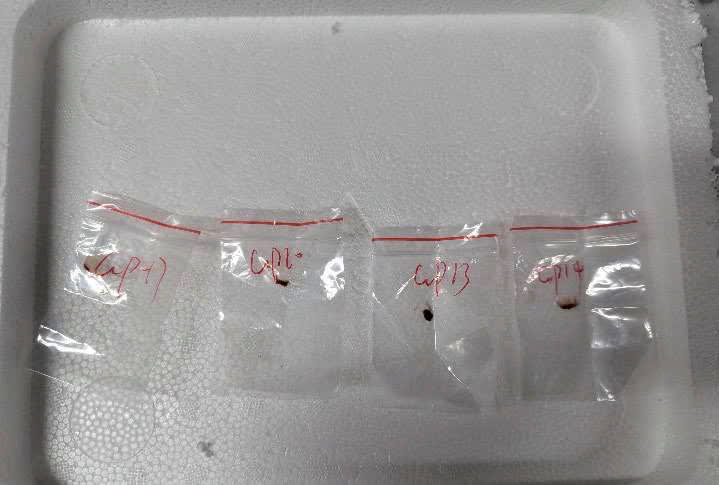
The warehouse contained a functioning, unregistered biological laboratory: roughly 1,000 genetically modified mice, refrigerators packed with unlabeled or coded vials, and labels identifying infectious agents including HIV, tuberculosis, malaria, dengue, hepatitis viruses, and SARS-CoV-2. There was no biosafety signage, no ventilation infrastructure, and no trace of the facility in any public health registry. It had no institutional sponsor, no university affiliation, and no federally recognized research purpose. Wire transfers from Chinese banks had funded the operation.
The accidental discovery of the Reedley lab should unsettle public health officials as much as national security officials. The next dangerous biological event may not look like the scenarios for which governments have spent decades preparing. It could look like illicit commerce, sloppy diagnostics manufacturing, agricultural disruption, a suspicious outbreak, or a facility whose legal status, funding, purpose, and chain of custody are all unclear. The blind spot that let a warehouse sit undetected for years is an example of gray-zone competition, where a hostile country can gain an advantage while evading blame. The United States and its partners should take steps to anticipate the biological gray zone and safeguard public health through tighter regulation, coordination between agencies, and a dedicated workforce to screen for risks.
The accidental discovery of the Reedley lab should unsettle public health officials as much as national security officials
The Reedley lab's operator, Jia Bei Zhu, a Chinese national who had entered the United States under a fraudulent identity while facing criminal proceedings in Canada, was arrested in October 2023 and charged with manufacturing and distributing misbranded diagnostic test kits. His arrest led investigators to a second site in Las Vegas, where a garage containing more than 1,200 samples had been stored at room temperature long enough that most were degraded beyond identification before federal laboratory processing could be completed.
A company linked the garage to the warehouse in Reedley. Zhu's wife departed for China before investigators arrived, retaining remote camera access to the property. The House Select Committee on the Chinese Communist Party investigated the incident and concluded in its 2023 report [PDF] that no monitoring architecture exists to determine whether comparable unauthorized facilities are currently operating on U.S. soil. In May 2026, a federal jury found Zhu guilty on all 12 counts for fraudulently selling more than 1 million COVID-19 tests. When Food and Drug Agency (FDA) and Centers for Disease Control (CDC) investigators questioned him in May 2023, he falsely identified himself as Qiang "David." He claimed he knew nothing about Universal Meditech or Prestige Biotech, the companies he had helped run.
Biology and the Gray Zone
The House Select Committee assessed that the Reedley materials were inconsistent with a mass-casualty bioweapons program. That assessment is accurate, but it is also the wrong benchmark. At least 20 potentially infectious agents, including HIV, tuberculosis, and the deadliest known form of malaria, were discovered. Those agents can still disrupt communities, contaminate water and agricultural systems, and target specific populations while producing an initial signature indistinguishable from ordinary disease emergence. That uncertainty is what makes them useful for coercion: they can pressure an adversary without clearly crossing the line into open conflict.
Biological warfare is unusually difficult to track. A missile creates a crater. A cyberattack leaves a digital trail. A pathogen, however, can resemble nature. It takes time, technical capacity, and political trust to establish whether an outbreak began through accident, negligence, smuggling, or sabotage. During that interval, uncertainty can disrupt supply chains, generate public fear, divide allies, and delay response.
Gray-zone competition refers to coercive activity below open war, often designed to obscure responsibility and avoid a conventional response. In biology, the most strategically relevant threat is not necessarily a mass-casualty attack with a select agent. Lower-consequence organisms can still impose real costs if they affect crops, animal health, military readiness, or public confidence. The Justice Department's 2025 case involving the alleged smuggling of Fusarium graminearum, a cereal-crop fungus with a well-documented profile in agroterrorism literature, illustrates the point. Agricultural damage can be covert, economically painful, and hard to attribute quickly.
China has made biotechnology a strategic priority. Its policy of military-civil fusion systematically blurs the distinction between civilian research capacity and state security objectives, and the 2017 National Intelligence Law codified an underlying obligation: Chinese organizations and citizens are legally required to support and cooperate with state intelligence work. Foreign-linked commercial entities can accumulate biological materials, fund research programs, and transfer capital across jurisdictions while maintaining no publicly visible connection to any state program. The resulting system is designed to render the distinction between private commercial activity and state-directed operation unresolvable from outside that system.
Whether Zhu was a directed intelligence asset or an opportunistic criminal is, in a significant analytical sense, beside the point. In a system engineered around deliberate ambiguity, a network of unauthorized biological sites funded through cross-border transfers lends China a strategic advantage regardless of whether any individual received direct tasking from Beijing. The National Security Commission on Emerging Biotechnology found that 79% of U.S. biopharmaceutical companies surveyed depended on Chinese firms for at least some portion of their manufacturing. The distinction between commercial biotechnology and biotechnology serving national security or military goals may no longer be clear.
A Verification Deficit
Existing monitoring institutions were not built around this problem. The Biological Weapons Convention (BWC) prohibits biological weapons but lacks the routine inspection machinery that exists for chemical weapons or nuclear safeguards. The U.S. Select Agent Program focuses on a defined list of particularly dangerous agents. University and hospital laboratories operate within established compliance systems. Reedley fell outside those categories.
Events in Iran in 2026 show a different version of the same dual-use dilemma: facilities, expertise, and materials that support legitimate public health or scientific work may also be redirected to prohibited military purposes. U.S. arms-control assessments have warned that Iran maintains the flexibility to redirect legitimate biodefense and public health research toward a weapons capability on leadership demand. Strikes beginning in early 2026 targeted Iranian academic institutions that have appeared in international proliferation assessments as suspected dual-use nodes, including Imam Hossein University, Malek Ashtar University, and the Shahid Meisami Research Complex. Those same institutions are real universities conducting legitimate scientific work. The two characterizations are not mutually exclusive. In a dual-use environment, they routinely coexist.
Unlike the Chemical Weapons Convention, which established an independent technical secretariat with genuine inspection authority or the Nuclear Non-Proliferation Treaty framework operating systematic safeguards with actual facility access, the BWC relies on voluntary confidence-building measures and a small implementation-support unit with no enforcement capacity. Any state willing to conduct prohibited research within legitimately functioning academic or public health institutions faces essentially no risk of detection through treaty mechanisms.
There is, however, a secondary risk that receives insufficient attention. Iran's biological research capacity is distributed across a network of Revolutionary Guard–affiliated research centers, military-linked universities, and dual-use pharmaceutical institutions. When command structures fracture and facilities are struck, physical security over dangerous biological materials can degrade independently of any offensive intent. The proliferation risks arising from custodial failure are analytically distinct from, and may outlast, the offensive capabilities that originally motivated the strikes.
The Taiwan Dimension
The gray-zone logic has implications beyond U.S. safety, participating in other global conflicts. Standard China offensive-strategy analysis against Taiwan focuses on missiles, naval force projection, and blockade scenarios, all of which represent real and probable threats. What tends to receive less systematic attention is how biological disruption might function not as a standalone attack but as one component of a broader coercive campaign, layered alongside cyber operations, information pressure, and conventional military signaling.
What tends to receive less systematic attention is how biological disruption might function not as a standalone attack but as one component of a broader coercive campaign
Although there is no public consensus that Beijing intends biological disruption, the strategically relevant scenario is not a mass-casualty pathogen attack. It is something more ambiguous: a suspicious disease emergence among Taiwanese military personnel during a period of elevated cross-strait tension, a contamination event at a critical logistics node, or a pathogen affecting agricultural supply chains. Any of those would generate attribution delays, provide reason for a quarantine of the island, social disruption, and division among allied governments long before any definitive cause could be established. The coercive pressure would continue throughout that interval. Furthermore, the initiating state could maintain plausible deniability long enough to foreclose an organized allied response, a dynamic that could itself provide political cover for a more conventional blockade.
This scenario does not require establishing that China has developed a specific bioweapons program targeting Taiwan. It requires only acknowledging that subthreshold biological disruption falls within the demonstrated capability range of states with serious biotechnology programs; that Beijing has exhibited sustained investment in gray-zone operations across cyber, economic, and information domains; and that the incentive structure of a coercive Taiwan campaign creates strong reasons to deploy every available instrument below the threshold of armed conflict. Taiwan and its security partners should develop integrated attribution protocols, combining public health surveillance, military intelligence, and allied coordination, before a crisis instead of under the time pressure of one.
Two Failures at Home
Within the United States, the domestic response to Reedley exposed an assessment gap that produces failures traceable to the same institutional deficit.
In Reedley, local authorities lacked the expertise to evaluate what they had found, the legal tools to compel access, and any established protocol for determining when federal involvement was warranted. An unauthorized biological laboratory operated inside a rented warehouse for years because the regulatory framework was not designed to cover facilities of its type, nor did its owner feel the need to comply.
In February 2026, the absence of the same assessment capacity produced the inverse outcome. A landlord in Irvine, California, reported suspicious activity at a rental property. Police arrived to find a homemade chemistry lab. Unable to evaluate the materials, local responders escalated to the county hazmat unit, then to the FBI's Evidence Response and Hazardous Evidence Response Teams and to the U.S. Army National Guard. A multiday federal investigation followed. The setup belonged to a 17-year-old college student conducting research into cancer and molecular compounds. The family's attorney described the situation as having been mischaracterized and escalated into something it simply was not.
These are structurally equivalent failures, each produced by the absence of trained biological-assessment capacity at the local and state level. When first responders cannot evaluate what is in front of them, the response is either insufficient, when the risk is genuine, or disproportionate, when it is not. Both outcomes are predictable consequences of a biosecurity architecture that terminates at the federal level and leaves local response to improvisation.
Four Reforms Worth Pursuing
Better architecture would begin with humility. Biosecurity should not become a pretext for stigmatizing immigrant scientists, criminalizing legitimate research, or treating every home experiment as a national security event. Governments cannot rely on chance discovery and ad hoc escalation.
Biological facility registration should be broadened beyond select agents and federally funded laboratories, and requirements should be scaled to risk and activity rather than institutional identity. The Reedley and Irvine operators had no obligation to appear in any reporting system, and they did not.
Every U.S. state should have rapid-access biological-assessment teams staffed by people with genuine laboratory and biosafety expertise, integrated with public health, emergency management, and federal response systems. That is the baseline capacity required to ensure that neither the Reedley failure nor the Irvine overresponse is simply repeated.
Federal agencies should be able to combine signals that currently sit in separate silos: suspicious import patterns, unexplained biological materials, medical-device fraud, financial flows, and the absence of required registrations. The Reedley operation may well have generated anomalous signals in multiple existing databases simultaneously. No entity was positioned to connect them.
The United States and its allies should revive work on Biological Weapons Convention verification and extend supply-chain screening to foreign-linked biological infrastructure, particularly in countries with limited independent regulatory capacity. The institutional mechanisms already exist; applying them to the biological domain requires political commitment more than new architecture.
These steps will not eliminate biological ambiguity. But they would shorten the period in which ambiguity can be exploited, and they would ensure that detection no longer depends on a code inspector noticing a garden hose.