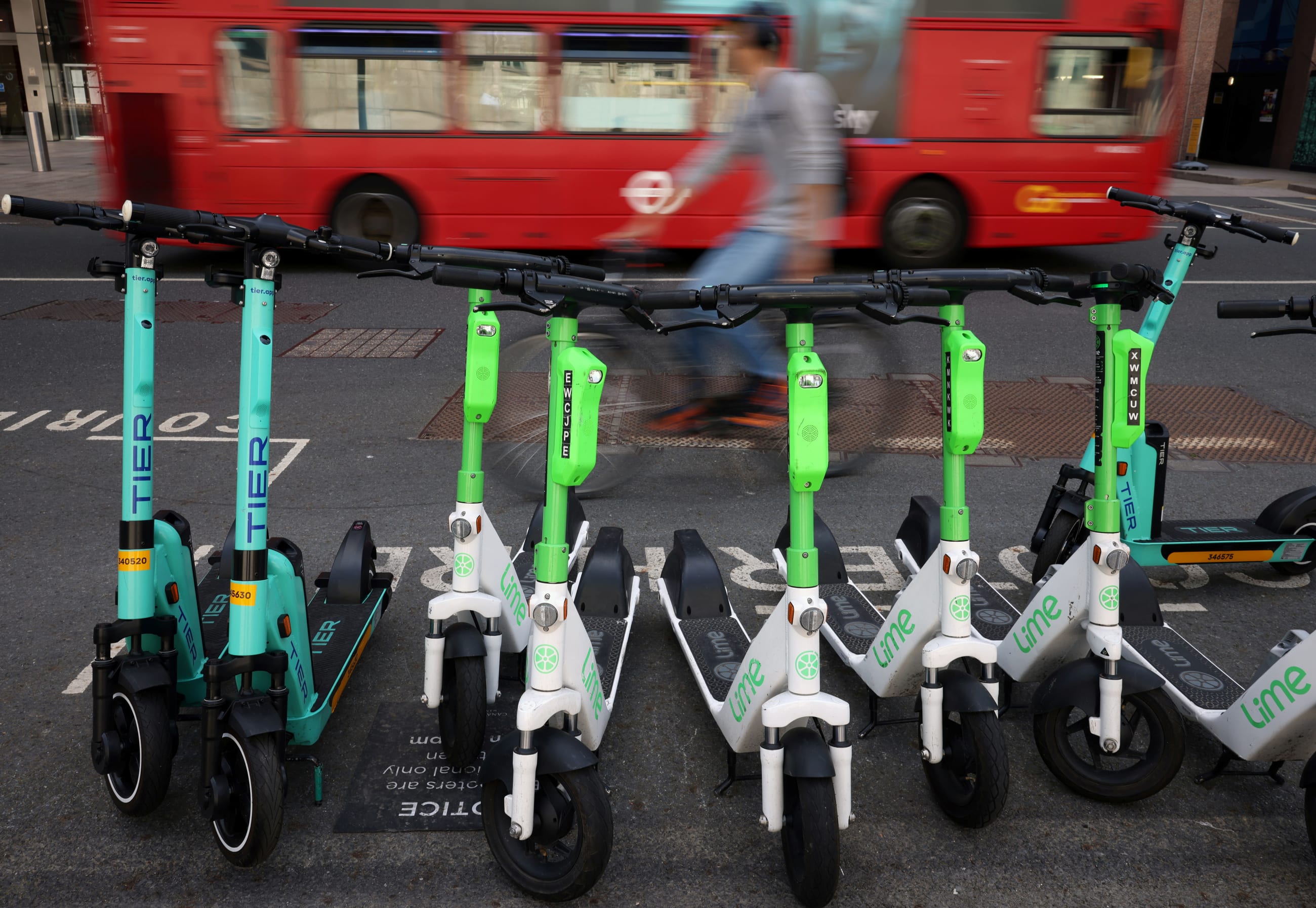
As children return to school around the world, many are riding e-bikes and e-scooters as a fast and easy mode of transportation. Simultaneously, concerns are growing about their risks. A recent study from the United Kingdom, published in Nature, found that e-scooters caused more head injuries than motorcycles do. Around the United States, government officials from Mayor Zohran Mamdani of New York City to legislators in Illinois are taking action to regulate e-bikes and e-scooters or to tighten enforcement of existing laws amid safety concerns.
To better understand the risks of e-bikes and e-scooters, and ways to boost young riders' safety, Think Global Health interviewed Theo Vos, a professor and a leading scientist of the Institute for Health Metrics and Evaluation's Global Burden of Disease Study, which measures the world's health, including rates of injury. Vos is based in the Netherlands, a country known as a global leader in cycling culture, where e-bikes are growing in popularity among younger and older people alike.
Vos describes how the Netherlands vastly improved cycling safety more than 50 years ago, when a mother-led movement pressured the government to create bike lanes nationwide after many children were killed while cycling. Parents' fear and outrage following children's deaths in 1970s-era Holland echoes the discussion surrounding e-bikes and e-scooters today, and pediatricians, parents, and policymakers are sounding the alarm as more youth are killed riding these vehicles.
□ □ □ □ □ □ □ □ □ □ □ □ □ □ □ □□ □ □ □ □ □ □ □ □ □ □ □ □ □ □
Think Global Health: What should people consider before using e-bikes or e-scooters or letting their kids use one?
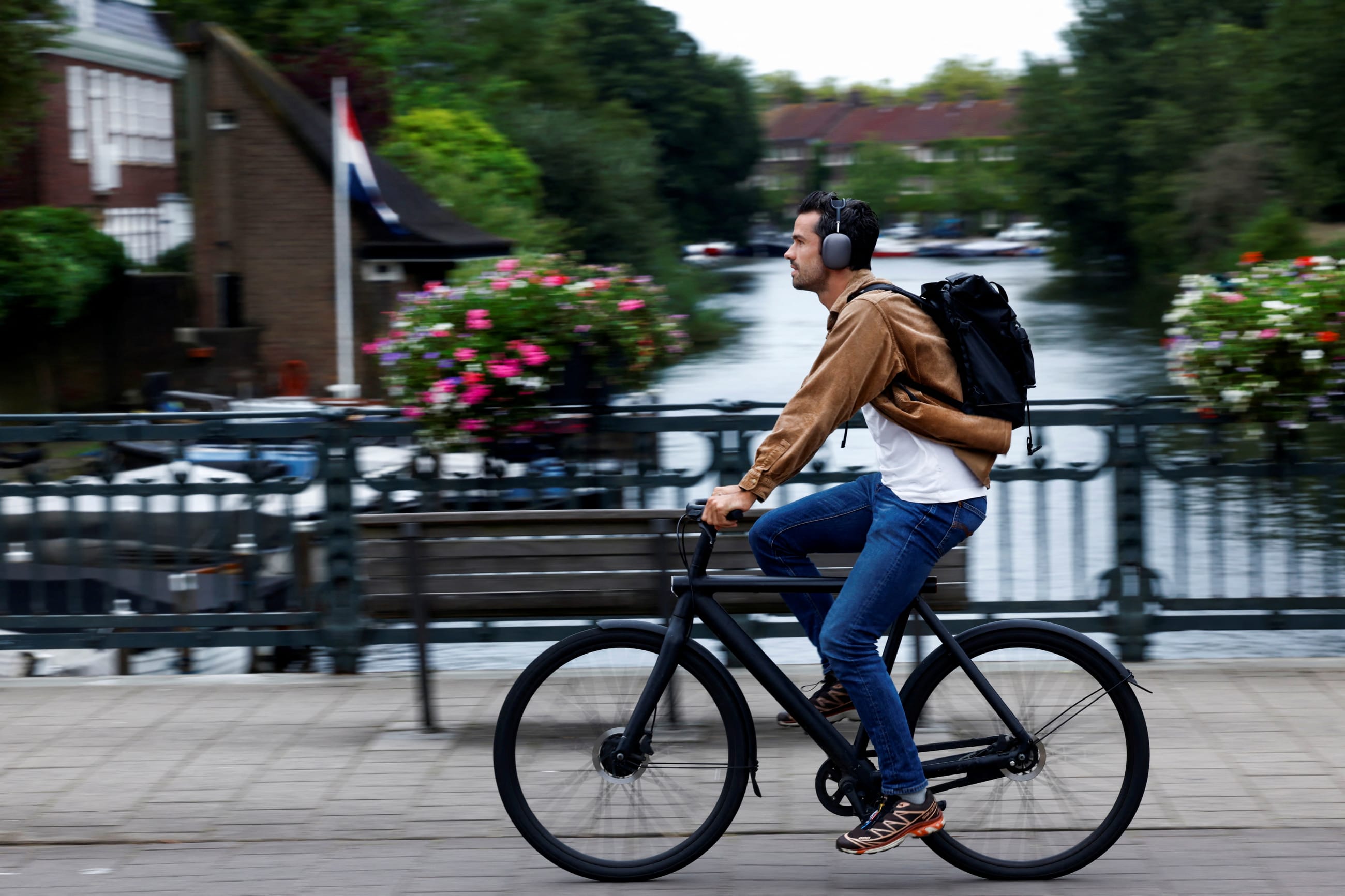
Theo Vos: For younger kids, it's important to consider the amount of exercise they get. [With an e-bike], you give them an easier way to transport themselves [compared to a traditional bike]. On the other hand, when younger people have an e-bike, they use it more often [than other forms of transportation] and maybe go longer distances—whereas in the past they would have said, "Oh no, I'm not going to go by bike." It's a bit of a balance there.
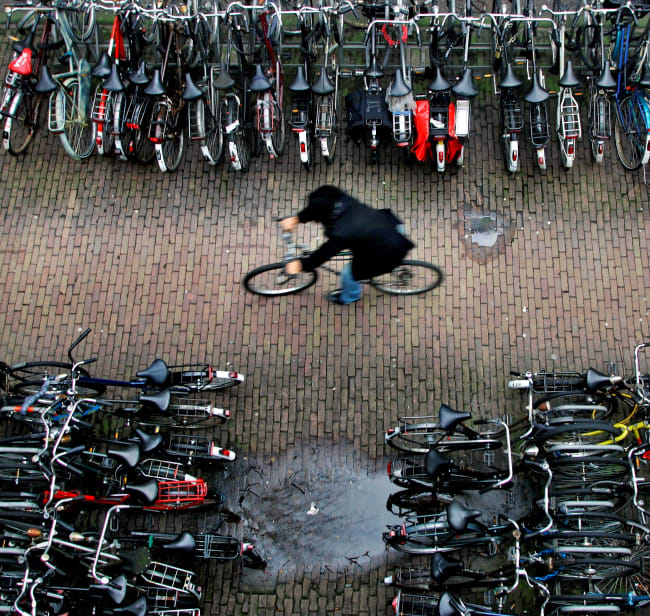
In Holland, where there are mostly separated bike lanes, the danger among youngsters is a whole lot less than in places that paint a bit of green or red on the pavement—a poor excuse for doing something for bike riders—rather than properly providing facilities. Now, in some parts of the United States things are improving quite a lot from what I've seen. Some places have bike lanes, but often they immediately stop, and then bikers get shunted onto busy roads without an alternative.
Bike lanes are organized way better in Holland. The story about [how bike paths originated] in Holland is a good one. When teaching health policy, I say to make a bigger change in policy, you need at least three things to come together. In the late sixties, early seventies in Holland, the first thing was a rise in cycle deaths, quite a few of them kids. The increase in cycle deaths occurred because there was fast-growing prosperity after World War II; roads were built all over the place, and everyone wanted to have a car.
The second thing was a protest movement by mothers. They would stand by the road with big banners saying, "Stop the child murder."
For the kids, it's a lot of freedom, and they love it, but it's not very safe
And the third thing was the oil crisis. A Labor [center-left political party in the Netherlands] prime minister made a ruling that any new road development had to be accompanied by separated bike lanes, and no right-wing government since has changed that. That's why Holland has the best biking infrastructure.
Now, the biggest worry in the media in Holland is the fat bikes [bikes with oversized tires]. Somehow, as a loophole in the law, they allow young kids to ride these things, and then [the government] has all sorts of excuses: we can't specifically forbid [fat bikes] because then we'd have to forbid all the e-bikes under the age of 16, and we can't possibly force them to wear a helmet. When you get all these 11-, 12-, or 13-year-olds, who often ride three apiece on fat bikes; with one little trick they remove the 25 kilometers per hour (16 miles per hour) [speed limit] restriction, and they go 50, 60, 70 kilometers per hour (31, 37, 44 miles per hour). [The police] last week caught one [of these fat bikes], and they put it on a testing machine, and it clocked 119 kilometers an hour (74 miles per hour).
Particularly in cities, [fat bikes] are a total nuisance. They zoom around at high speed, and there are young kids who shouldn't have a machine like that between their legs. [Fat bikes] have become a huge status symbol. For the kids, it's a lot of freedom, and they love it, but it's not very safe.
E-scooters, which we call steps, are less common here. I think they tried introducing them in some cities, but I rarely see them.
Think Global Health: Some parents in the United States are saying that e-bikes and e-scooters seem really unsafe; should I let my kid have one or not?
Theo Vos: It depends on where you are. If you let kids mingle with heavy traffic, then you're asking for trouble. In Holland, separated bike paths are on the major roads in towns and between towns, so that's a good thing. But of course, in regular traffic, smaller streets, you don't have that.
But one of the things I marvel about since I'm back in Holland [after working for many years in the United States] is the very common sight of a mother with one of these electric cargo bikes with one or two kids in it, and then another child on a tiny bike next to her, also in plain traffic, often already from the age of 4 onwards. [Dutch kids] learn from a young age to take part in traffic, take responsibility for it, and know what the rules are, and you can see that these kids thrive on it.
Think Global Health: Do you think the enforcement is more rigorous in the Netherlands compared to a place like the United States?
Theo Vos: Oh, hardly anywhere near what it desirably would be.
Think Global Health: What are your thoughts on a recent Nature study reporting that e-scooters caused more head and internal injuries than motorcycles and cycling in the United Kingdom?
Theo Vos: The study looks decent and is based on solid data. The high rates of head injury make the suggested need for wearing a helmet compelling, but that would "undermine" the business model of commercial operators, as few people would carry a helmet with them, I suspect. They also reference a largely unregulated market with substandard, lighter e-scooters that may also have higher speeds. There are lots of opportunities for regulation of e-scooters, but compliance will be pretty difficult to police.
Think Global Health: Based on your scientific expertise, what policies could reduce the number of e-bike and e-scooter injuries and deaths?
Theo Vos: Speed limits and helmet laws that are enforced, and infrastructure to separate bikes and scooters from heavier motorized traffic.
EDITOR'S NOTE: Responses were lightly edited based on an interview and clarification via email.