Last week, Russia launched an overnight missile and drone attack against Ukraine, killing at least 10 civilians and injuring more than 50. During the attack, a cruise missile briefly entered Polish airspace. This caused NATO to scramble its warplanes and raised concerns that the war could spill beyond Ukraine's borders.
Meanwhile, in Vilnius, Lithuania, medical professionals are preparing for a war they hope never comes.
Early one morning in March, a conference room in Lithuania's capital slowly filled with doctors, government officials, and program coordinators. Vice Minister of Health Skirmantas Krunkaitis took the head of the table, delivering a solemn speech about the hardships that lay ahead. Within hours, those doctors would embark on a two-week journey into Ukraine to learn how to treat war injuries and understand the chain of care for wounded patients.
The group was the ninth cohort of Lithuanian medical professionals sent through a formal internship program organized by the ministry of health. Since the program began in 2025, approximately 62 doctors and nurses from five regional hospitals have participated.
Among those gathered were Edgaras Kulikauskas and his wife, Eglė Kulikauskienė.
Although much attention has focused on the traditional defenses—border walls, troop bases, and even drone training—Lithuania is investing in another critical area: its health-care system
Edgaras, an abdominal surgeon, and Eglė, an anesthesiologist and intensive care physician, both work in a hospital in the regional city of Utena. Only Edgaras was set to depart for Ukraine, but both had a firm belief in the value of the program, which seeks to train physicians to handle traumatic injuries not seen through years of peace at home.
"We work in a small hospital, and we know that it is not prepared for the war that is going to come," she said.
The couple's fears reflect a growing concern in Lithuania, a country that sits on NATO's eastern flank, sandwiched between Russia's heavily militarized Kaliningrad region to the west and Russia's ally Belarus to the east. Lithuania was occupied twice by its much larger neighbor, most recently in 1944 as part of the Soviet Union, before it gained independence in 1990. Although it was always wary of Russia's intentions, the full-scale invasion of Ukraine in 2022 made a possible attack on Lithuania an existential reality.
Across the country, many are preparing for what Lithuanians refer to as Day X, a potential military invasion by Russia. Although much attention has focused on the traditional defenses—border walls, troop bases, and even drone training—Lithuania is investing in another critical area: its health-care system.
Preparing for a Russian Invasion
"We have to be strong. We have to send a message that we are prepared," Krunkaitis said. "Medicine is only part of it, but a very essential part."
For Krunkaitis, the importance of preparedness is personal.
Before joining the health ministry, he worked as a military doctor. He volunteered in refugee centers and war zones in Ukraine, including in the direct aftermath of the Russian attack on Bucha, Ukraine, where Russian forces massacred some 400 civilians.
"I was devastated. Not as much, you know, [from the war's] visual aspect, when you see collapsed buildings, but mostly by the stories of the patients," Krunkaitis said.
He recalls treating 30 or 40 patients a day, despite not always having the components required for proper medical treatment. Krunkaitis and his team diagnosed people, developed treatment plans, and transported medicines. His patients told stories of how they lived and survived during the occupation, and he found the resilience of the Ukrainian nation impressive.
His experience in war zones led to his recruitment to the ministry in early 2025. When he arrived, he immediately stressed the importance of a program where health professionals not only assist but also learn from Ukrainians. The ministry began working with the nongovernmental organization Blue/Yellow, the same group he volunteered with.
The nonprofit, which relies on donations, has helped coordinate transportation, logistics, and medical connections within Ukraine since 2024.
"As a nongovernmental [organization], we have one great advantage: we can go closer to the war," said Blue/Yellow cofounder Jonas Ohman.
What began as a small effort has now transformed into a government-backed system.
"It turned out to be a huge success, so huge that it has now been institutionalized," he said. "Lithuania is sending medics regularly there."
The vice minister's experience convinced him that learning by doing is essential to preparing for a potential escalation.
"I don't want my system to learn from the books. I want them to learn on the ground and write the books," Krunkaitis said.
Among those who completed the program was Raminta Martinaitytė, a traumatologist who first participated in the internship program in August 2025.
She then returned twice as a volunteer for medical missions led by Blue/Yellow, first in October 2025 and again in March 2026. Volunteers often work in areas close to the front line, where access to health care has been disrupted by the war.
In May 2026, she returned to Ukraine for another observation visit to get to know more of the country.
But it was her first volunteer mission that stayed with her.
Within hours of arriving at Petropavlivka Hospital in Ukraine's Dnipro region, Martinaitytė found herself in the operating room, treating an injured soldier.
"One of the first surgeries I went to do was an amputation of the leg because of tourniquet syndrome," she said.
Tourniquet syndrome occurs when a patient's tourniquet—a band wrapped tightly around a patient's leg or arm to compress blood vessels—is left on too long, cutting off blood flow and causing irreversible tissue damage.
In Lithuania, doctors receive one or two patients in need of an amputation every six months. In Ukraine, doctors receive one or two of those patients in an hour, explained Martinaitytė. Her experience allowed her to observe how a health-care system functions under pressure.
Before making her trip, she hesitated to tell her family where she was going.
"I didn't know how they would react to my decision," she said.
When she finally shared the news, her family expressed their concerns but ultimately supported her choice.
Today, Martinaitytė continues treating Ukrainian patients in Lithuania while preparing for her upcoming trip to Ukraine. Some soldiers receive long-term care inside Lithuanian hospitals through a different government program.
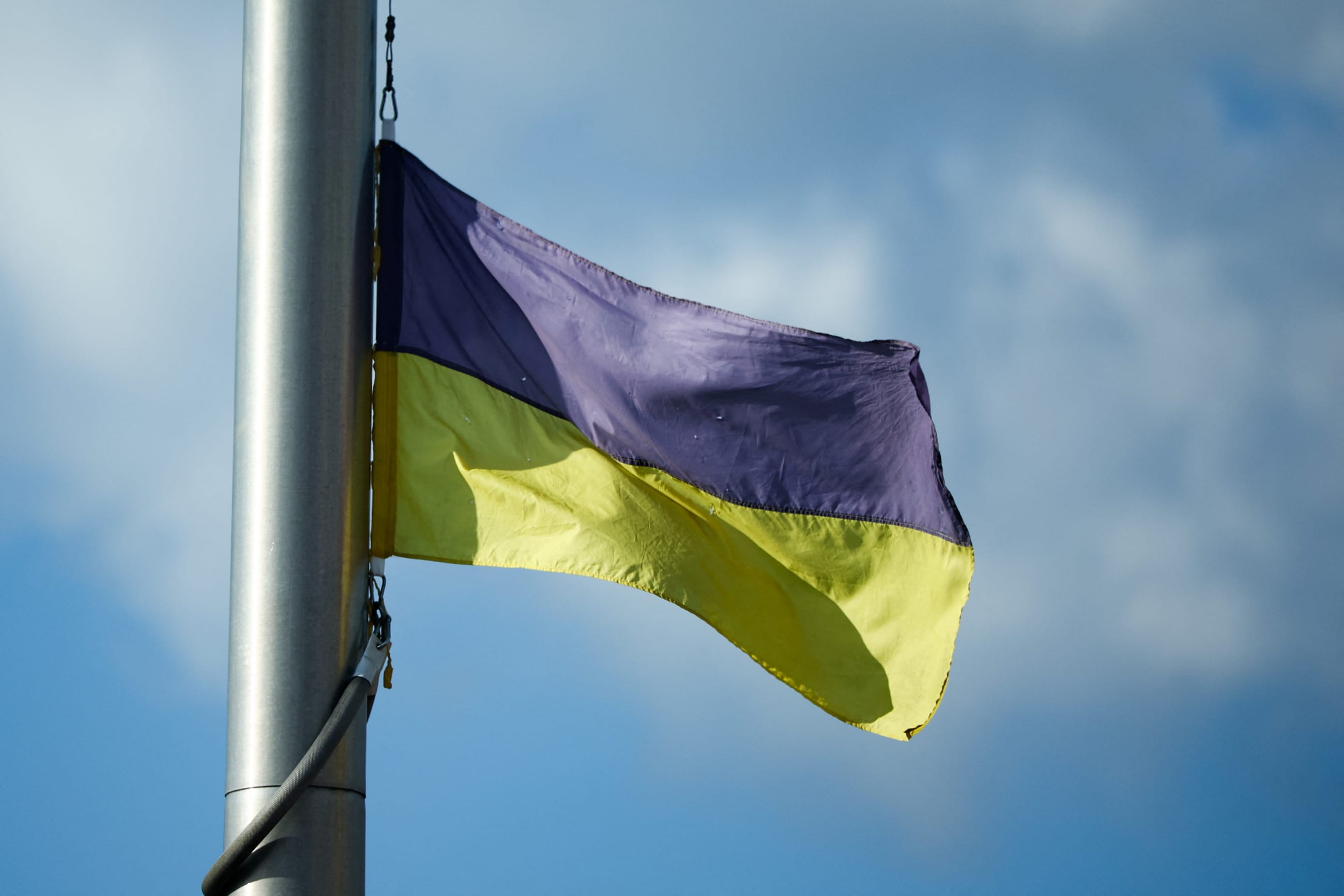
The medical program also reflects a deeper kinship between the two countries that is visible throughout Vilnius. Ukrainian flags hang from balconies, line store windows, and fly alongside Lithuania's own across many parts of the capital.
Another important aspect of the Lithuanian program is not just learning about battlefield medicine but also how to continue to provide vital care to civilians during a time of societal disruption.
Krunkaitis recalled a cancer patient whose treatment began just before the war.
"They started treatment, but then occupation happened and the treatment stopped," he said. "A quarter of his face was gone, and it was beyond the time of help, and all of the palliative care was needed, and pain management and psychological help and so on."
Responding to Drone Warfare
Although Lithuanian medical professionals are learning the basics of how to administer health care during war, they are also gaining insight into the evolution of war medicine itself, as the Ukraine conflict pioneers new types of warfare.
During one of her internships in Ukraine, Martinaitytė saw that transformation firsthand. After transporting a patient, her team was returning to base around midnight.
"The city was under attack, and the drones were shot above us," she recalled.
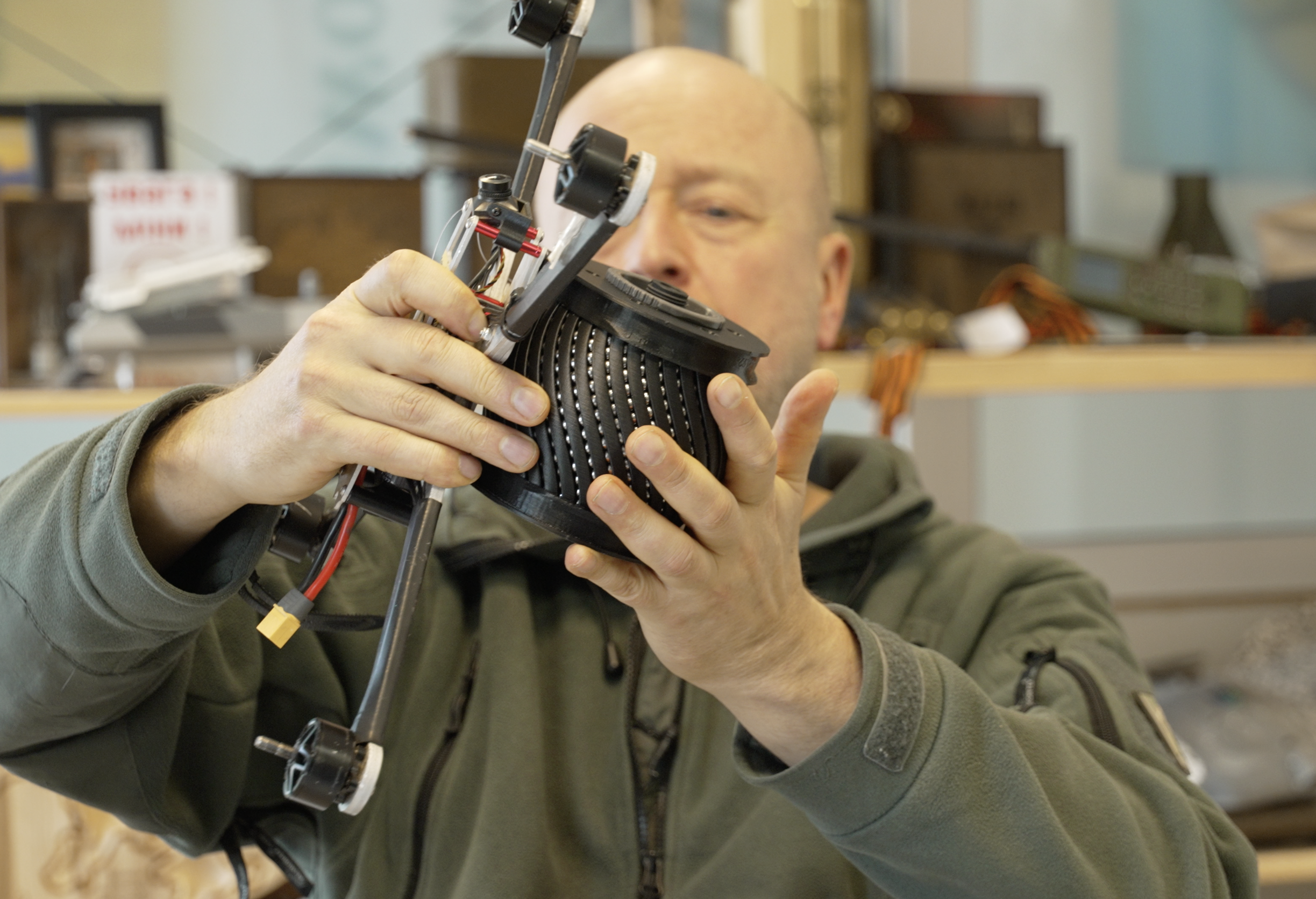
Ohman said that small first-person-view drones have transformed the nature of warfare and the medical response required to treat his victims. Holding a drone, he described how explosive devices attached to them scatter metal ball bearings everywhere.
"This is not a bullet wound. This is something different, and you have to treat it differently," he said.
Vitenis Bertašius, a surgeon who recently returned from a medical mission in Ukraine, described this impact.
Using a CT scan of a wounded soldier, he pointed to dozens of small fragments scattered throughout the body from a drone attack. He said doctors refer to it as "starry sky" because of the way it appears across the scan.
In a small vial, he also showed a construction screw retrieved from a soldier who suffered from drone-blast trauma. Bertašius explained that doctors sometimes find screws and other materials from improvised, drone-mounted explosives.
For Lithuanian doctors, understanding how to treat these injuries has become an urgent new part of their training.
"There were days when hospitals received 150 or 200 military personnel with difficult injuries and difficult trauma," he said.
In such circumstances, he said, hospitals in Lithuania would not be prepared.
"Our system would just break down at the first step."
Doctors like Bertašius hope clinicians learning in Ukraine can help prepare hospitals in Lithuania for a crisis they hope never comes.
"I [encouraged] my colleagues to go there to see how it happens," he said. "If you have more and more people who took at least a small peek, you can create a new system quite faster."
Since returning, Kulikauskas has begun sharing what he learned with his colleagues.
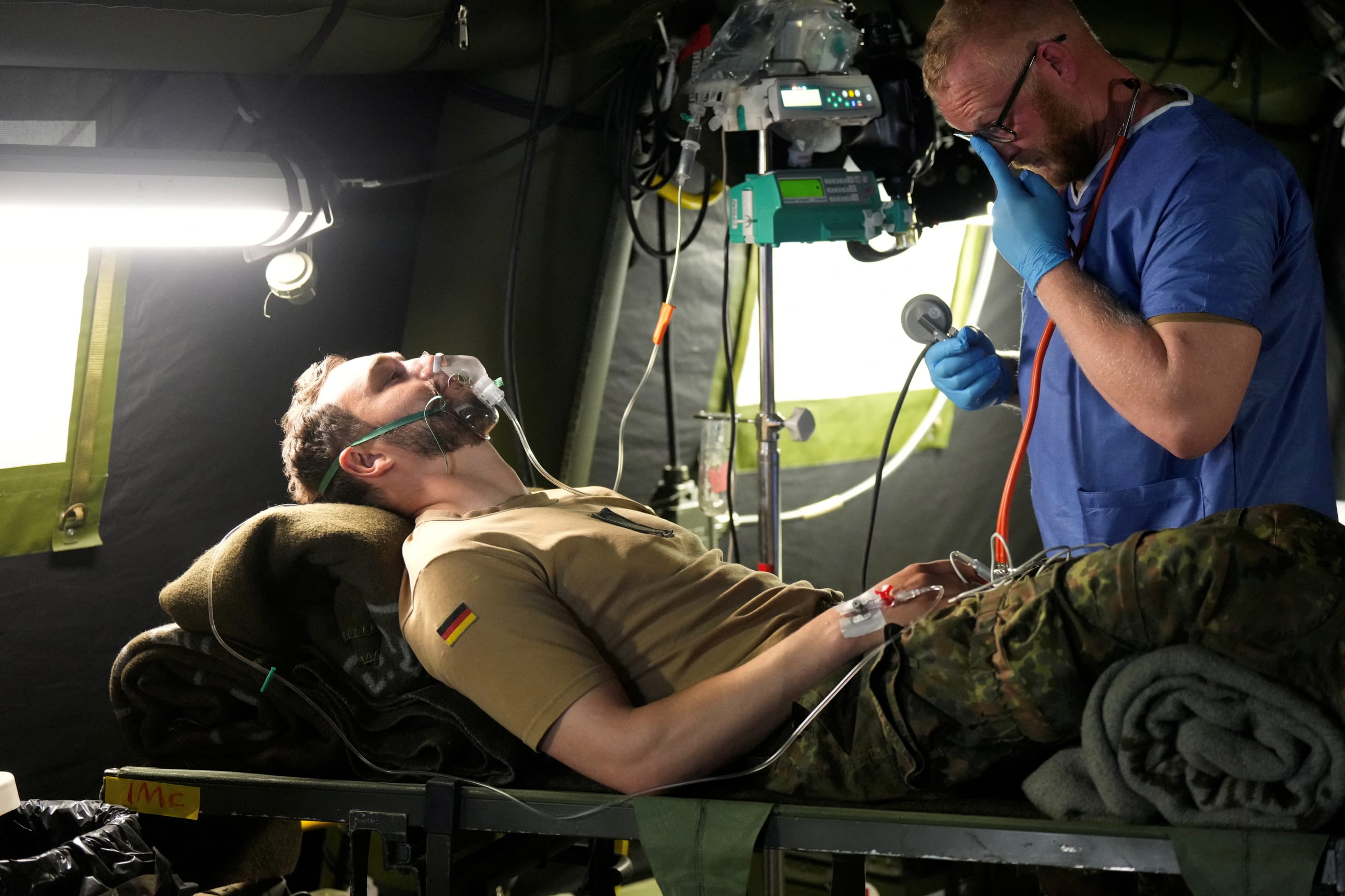
During the internship, the team observed how the Ukrainian health-care system organizes medical services during war and how patients are transported across long distances using specially equipped ambulances, buses, and medical trains.
Throughout their visit, the sounds of war were never far away. Air-raid sirens interrupted daily routines, drones flew overhead, and distant artillery fire served as a constant reminder of the conditions the Ukrainian medical teams work under.
Outside, Vilnius feels calm. Light falls across the largest city, where pastel-colored buildings line the streets. The Old Town is full of baroque churches, charming cafes, and boutiques.
Yet beneath that calm, preparations continue.
Another group of medical professionals left for Ukraine last month, and two additional missions are planned for the summer.
The Ministry of Health is also coordinating the fifteenth medical mission to Ukraine set to depart in early August, marking the first joint tour of the Baltic countries.
Lithuania will lead the mission that will bring together leading traumatologists, emergency physicians, and nurses from Lithuania, Latvia, and Estonia. The goal is to broaden the regional effort to prepare for a potential war.
The doctors returning from Ukraine hope that the skills they are bringing home will never be needed. Still, they continue to train with the possibility that one day, they might.
ACKNOWLEDGMENT: This story was reported on a trip to Lithuania by New York University's GlobalBeat journalism program. For more on how Lithuania is preparing for possible invasion by Russia, see this additional video piece.
Samuel Wands produced the video and lead photo. He is a budding video journalist and documentary filmmaker. Based in New York City, Samuel mainly covers international, social, and political issues. Samuel's work so far has brought him to Brazil, Lithuania, and all corners of New York.