• Environment
  • Poverty
  • Trade
  • Governance
  • Food
  • Urbanization
  • Aging
  • Gender
  • Migration
  • Data Visualization
  • Recommendations
  • Research & Analysis
  • Series
  • Interviews
  • About This Site
  • Submission Guidelines

Newsletter

Think Global Health

  • Environment
  • Poverty
  • Trade
  • Governance
  • Food
  • Urbanization
  • Aging
  • Gender
  • Migration
  • Data Visualization
  • Recommendations
  • Research & Analysis
  • Series
  • Interviews
  • About This Site
  • Submission Guidelines

Newsletter

Think Global Health

Mexico City Policy Expands and Saving Rural Cambodian Mothers

January 30, 2026


Editors' Note

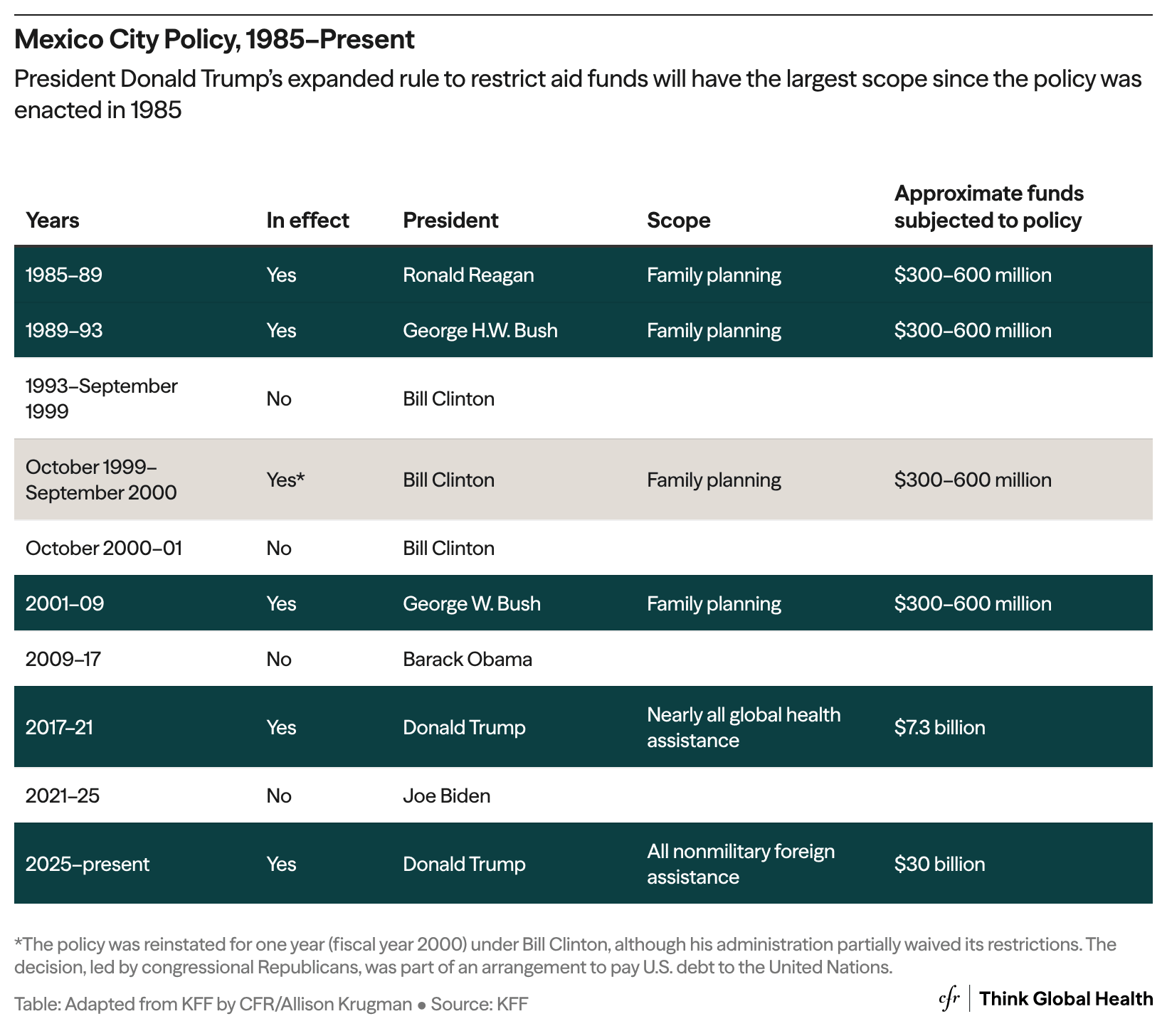
On January 27, the Trump administration finalized new restrictions on U.S. foreign assistance. The Promoting Human Flourishing in Foreign Assistance Policy expands the scope, scale, and ambiguity of the Mexico City Policy—also known as the Global Gag Rule. Rather than bar U.S. funding for groups that provide abortion counseling or referrals, the new rule stretches to programs run by nongovernmental organizations, international groups, or foreign governments that support gender ideology and diversity, equity, and inclusion. 

To decipher how the Human Flourishing policy will influence $30 billion in annual aid, Stephanie Psaki, former U.S. coordinator for global health security at the National Security Council, describes how the new policy's ambiguity will force organizations to cut permissible health programs out of fear of noncompliance and could even undermine the America First Global Health Strategy. 

To continue the conversation on the U.S. withdrawal from the World Health Organization, Chatham House's Ebere Okereke outlines the immediate implications for Africa. She emphasizes that health is a core function of statecraft, not a discretionary social sector buffered by external goodwill. 

To cap the newsletter, TGH travels to Cambodia, where obstetrician-gynecologist (OB-GYN) and health administrator Suren Kanayan describes how his rural hospital used inexpensive strategies to reduce severe postpartum hemorrhage by nearly 40%, and how to apply those changes to maternal care in other resource-constrained settings. 

Until next week!—Nsikan Akpan, Managing Editor, and Caroline Kantis, Associate Editor 
 

This Week's Highlights

GOVERNANCE

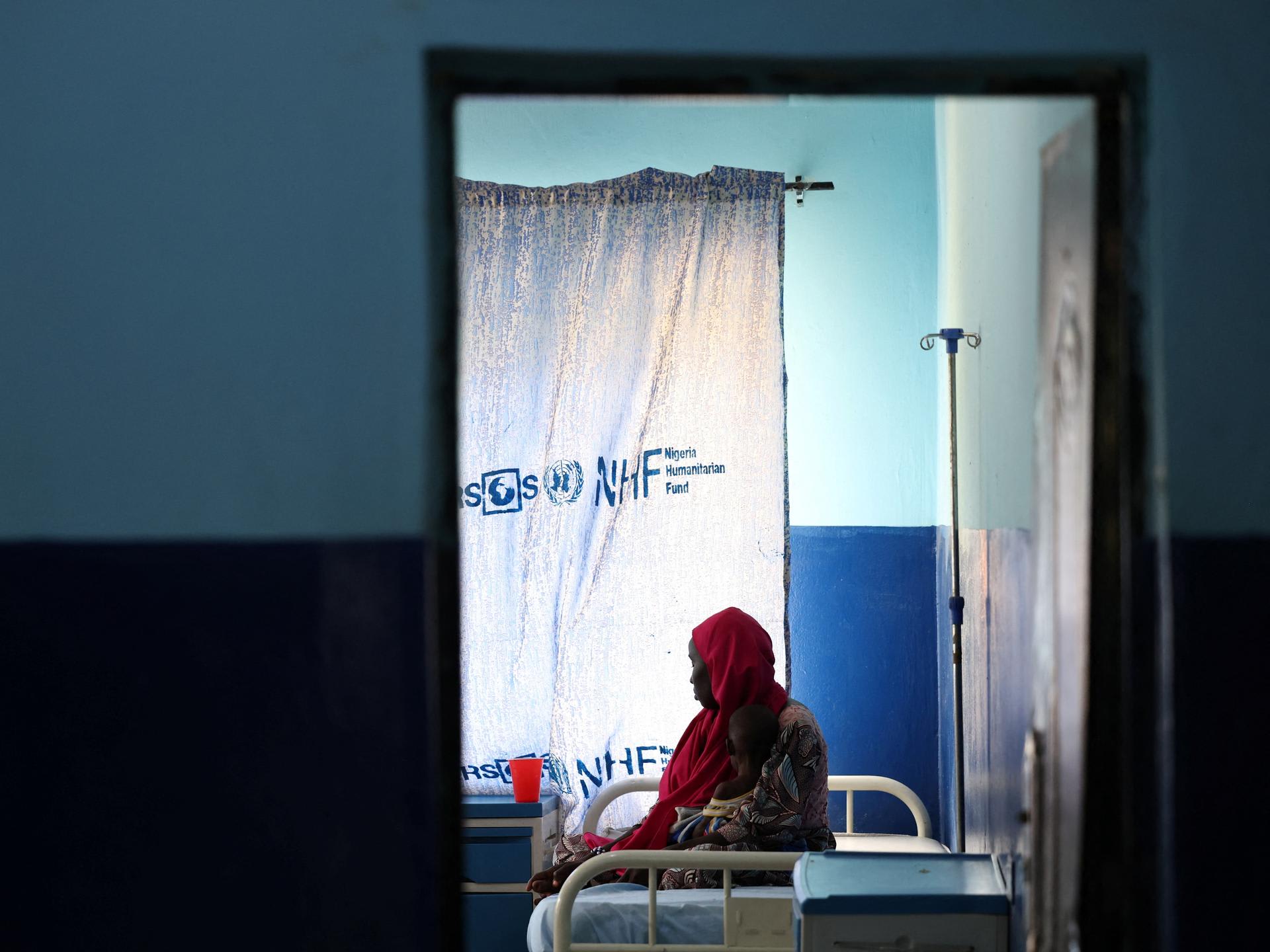
A woman and her child, who is suffering from malnourishment, wait for care at Dikwa Primary Health Center's emergency ward, following the withdrawal of USAID support, in Dikwa, Borno State, Nigeria, on August 27, 2025.

What U.S. Withdrawal From the World Health Organization Means for Africa 

by Ebere Okereke 

A Chatham House fellow explains how, from an African perspective, the decision stripped away comforting assumptions about global health cooperation 

Read this story


Figure of the Week

A table showing when the U.S. Mexico City Policy was in effect

Read this story


Recommended Feature

POVERTY

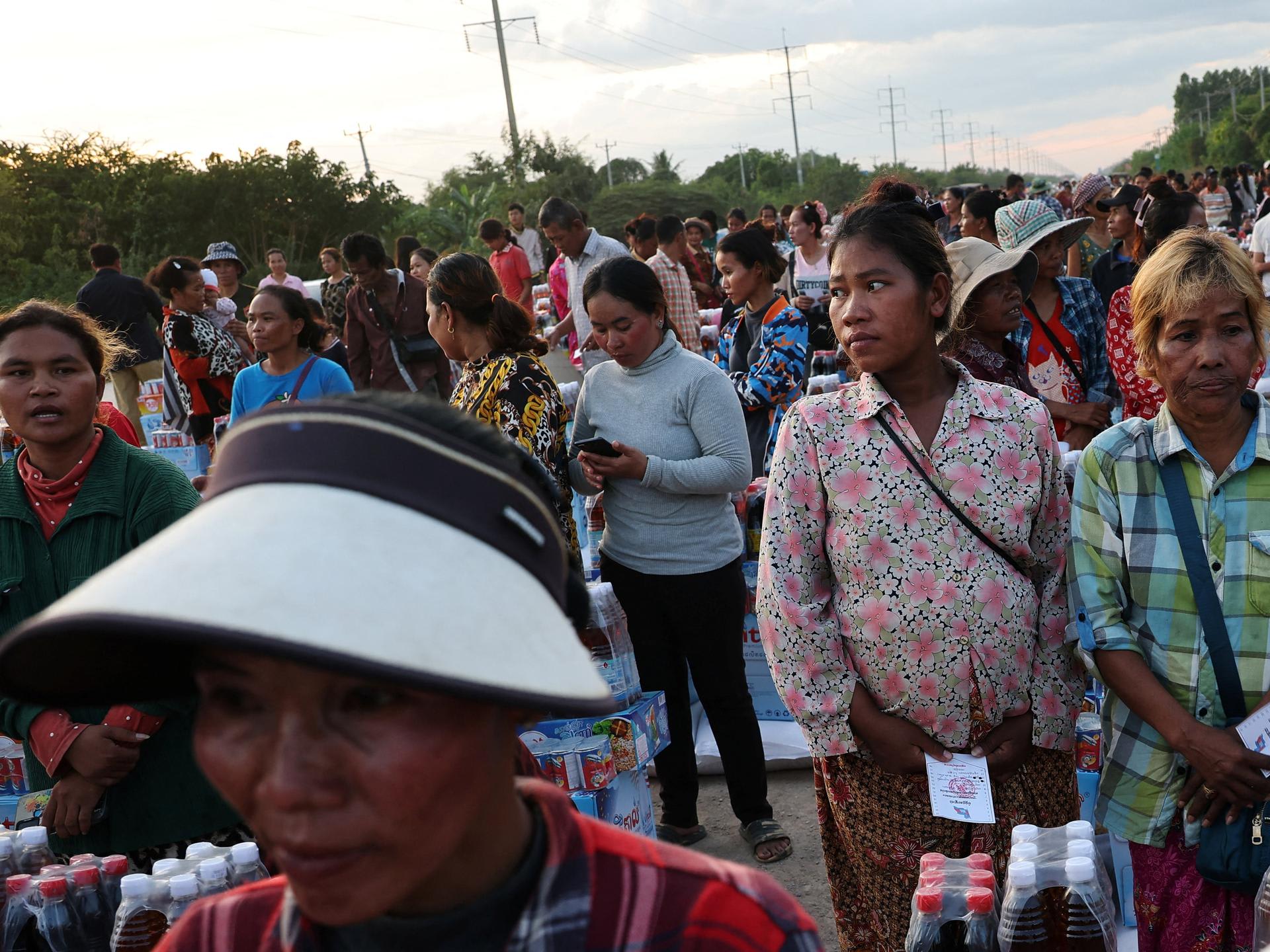
Suang Sreang, 27, who is pregnant and due to give birth within days, waits to receive supplies at Wat Por Sovannaram refugee camp, in Ou Chrov district, Banteay Meanchey Province, Cambodia, on December 13, 2025.

Cost-Effective Reforms to Save Mothers' Lives in Cambodia 

by Suren Kanayan

An OB-GYN recounts how practical, inexpensive strategies improved maternal care at his rural hospital 

Read this story


What We're Reading

European Countries Including UK Lose Measles Elimination Status (Reuters)

William H. Foege, Key Figure in the Eradication of Smallpox, Dies at 89 (New York Times) 

Dozens of CDC Databases Aren't Being Updated—Most Related to Vaccines, Study Finds (NBC News)

How I Got My Career in Foreign Policy: Thomas J. Bollyky (CFR)

In Search of a Platonic Co-parent (New York Times)

Did a Celebrated Researcher Obscure a Baby's Poisoning? (New Yorker)

Gates Foundation, OpenAI Unveil $50 Million "Horizon 1000" Initiative to Boost Health Care in Africa Through AI (Fortune)

A Pregnant Mother in ICE Detention Says She's Bleeding—and Hasn't Seen a Doctor in Weeks (The 19th)


Interested in submitting?

Review our Submission Guidelines

Previous NewsletterBack to Archive

Subscribe to Our Newsletter

Sign up for our weekly newsletter to stay up to date.

See Past Newsletters
About This SiteSubmission Guidelines

©2025 Council on Foreign Relations. All rights reserved. Privacy Policy and Terms of Use.