• Environment
  • Poverty
  • Trade
  • Governance
  • Food
  • Urbanization
  • Aging
  • Gender
  • Migration
  • Data Visualization
  • Recommendations
  • Research & Analysis
  • Series
  • Interviews
  • About This Site
  • Submission Guidelines

Newsletter

Think Global Health

  • Environment
  • Poverty
  • Trade
  • Governance
  • Food
  • Urbanization
  • Aging
  • Gender
  • Migration
  • Data Visualization
  • Recommendations
  • Research & Analysis
  • Series
  • Interviews
  • About This Site
  • Submission Guidelines

Newsletter

Think Global Health

U.S. Leaves the WHO, AI Scams Imitate Doctors, and Ghana's Gold Rush

January 23, 2026


Editors' Note

Thursday marked one year since President Donald Trump initiated the U.S. withdrawal from the World Health Organization (WHO), ostensibly ending U.S. involvement in the institution. Trump's decision—shaped by grievances with the WHO's perceived "mishandling" of the COVID-19 pandemic, U.S. financial contributions, and a lack of reform—is part of his administration's retreat from multilateralism and sets the tone for the America First Global Health Strategy.  

To lead this week's newsletter, Peter Singer, former special advisor to the WHO's director general, outlines three reforms that could strengthen the WHO and global health, regardless of whether the United States returns. He also suggests avenues for more effective U.S.-WHO collaboration. 

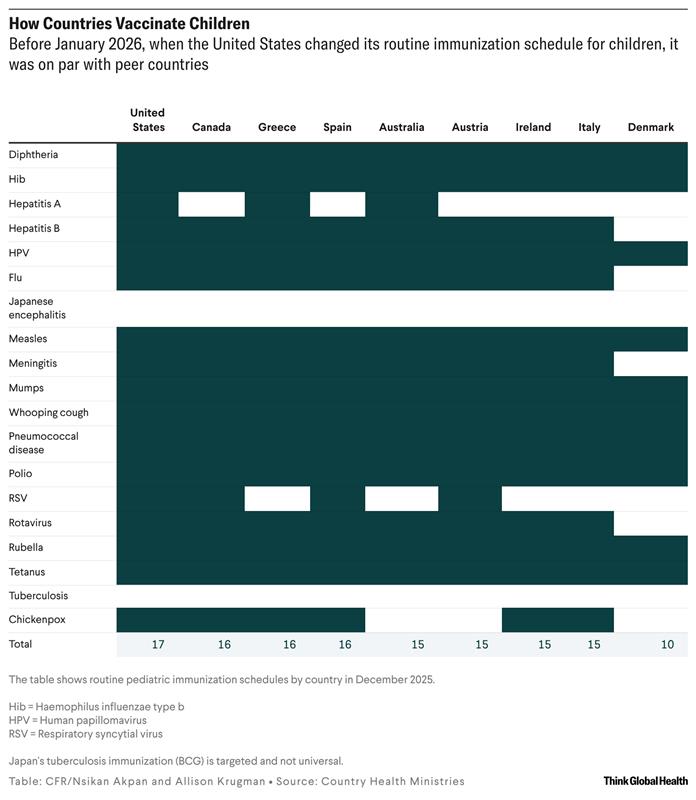
Beyond transforming global health, the United States is revamping its domestic health policy. On January 5, the U.S. Centers for Disease Control and Prevention (CDC) reduced the number of diseases covered in the childhood vaccine schedule from 17 to 11—a move that comes as the country is struggling to contain its largest measles outbreak in 35 years. To unpack the CDC's decision, TGH Data Visuals Editor Allison Krugman interviews Seth Berkley, the former head of Gavi, the Vaccine Alliance, who explains how the new guidelines will influence local and global outbreaks.  

Next, physician Sunny Jha warns that generative artificial intelligence (AI) is being used to create deep-fake videos that impersonate doctors and other health practitioners to promote health falsehoods and erode trust in health care.  

David Mawutor Donkor, a research assistant at the University of Cape Coast in Ghana, concludes this week's edition by describing how record-high gold prices are pushing more Ghanaians to seek work in dangerous and poorly regulated mines, harming their bodies and the environment.

Until next week!—Nsikan Akpan, Managing Editor, and Caroline Kantis, Associate Editor 
 

This Week's Highlights

GOVERNANCE

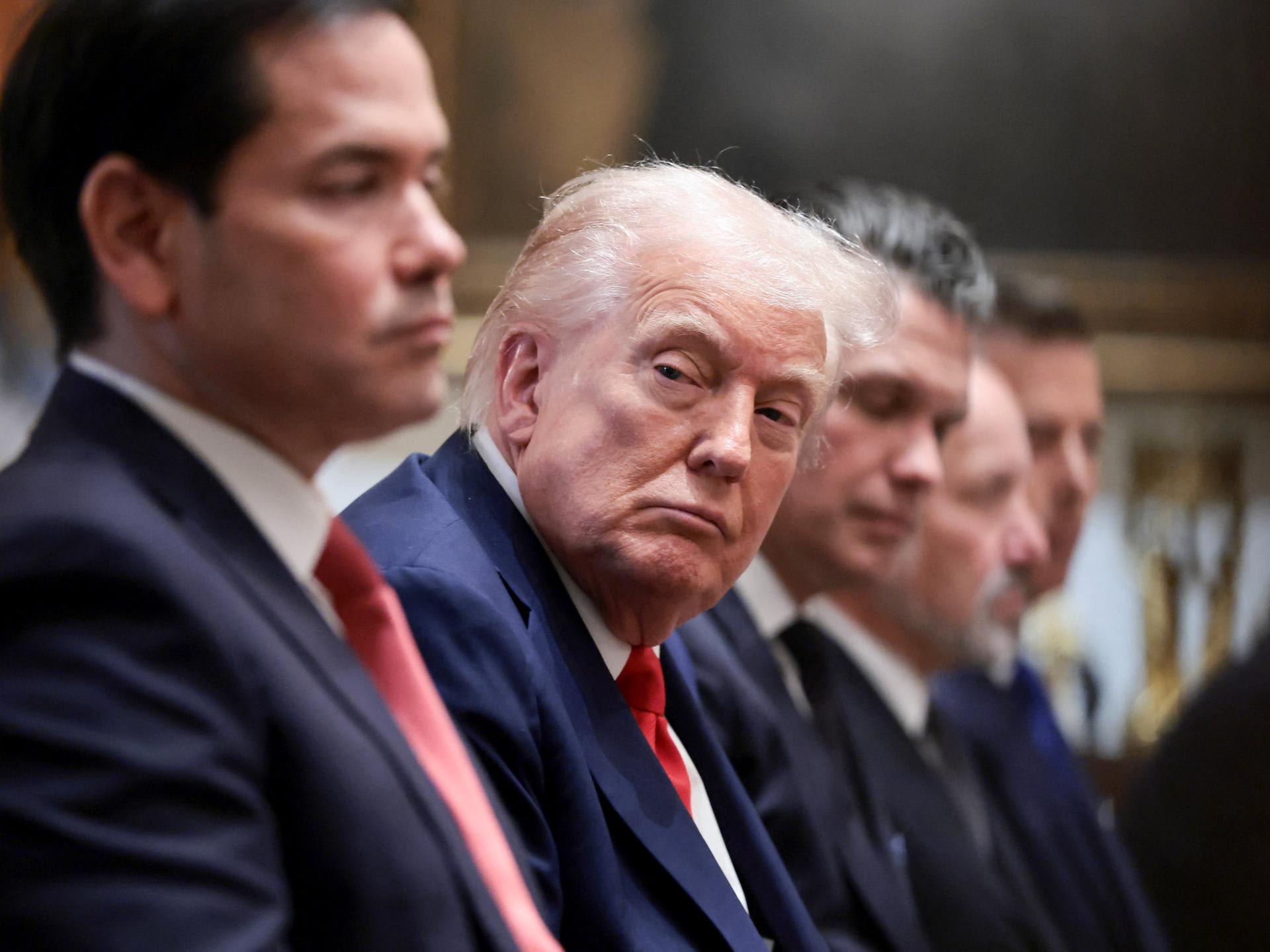
U.S. President Donald Trump, Secretary of State Marco Rubio, and Secretary of Defense Pete Hegseth attend a cabinet meeting at the White House, in Washington, DC, on October 9, 2025.

The United States Leaves the WHO. Three Reforms Could Motivate Its Return 

by Peter Singer

A former special adviser to the WHO director general outlines arenas that could strengthen global health

Read this story


Figure of the Week

A table showing routine pediatric immunizations schedules  across various high-income countries

Read this story


Recommended Features

GOVERNANCE

Makoto Kitada, MD, demonstrates a telemedicine application service called 'CLINICS,' in Tokyo, Japan, on July 8, 2020.

Protecting Physicians From AI Impostors

by Sunny Jha

Name, image, and likeness protections, such as those for college athletes and actors, could help physicians fight AI scammers

Read this story


AGING

An artisanal miner climbs out of a gold mine with a bag of rocks broken off from inside a mining pit, at the unlicensed mining site of Nsuaem Top, in Ghana, on November 24, 2018.

Gold Prices Reach Record High, Poisoning Ghana's Land 

by David Mawutor Donkor

As gold demand grows, Ghana's rural families are turning to riskier operations, worsened by lax regulations and porous supply chains 

Read this story


What We're Reading

China's Population Falls Again as Birthrate Drops 17% to Record Low (The Guardian)

The World Has Entered a New Era of  'Water Bankruptcy,' UN Report Says (Washington Post)

Debunking the "Coercion" Argument in the Abortion Pill Debate (MedPage Today)

HHS Gave a $1.6 Million Grant to a Controversial Vaccine Study. These Emails Show How That Happened (Rolling Stone)

Marion Nestle on the New Dietary Guidelines (Public Health On Call)

Weight-Loss Drugs Could Save U.S. Airlines $580 Million Per Year (New York Times)

The Activists Taking on Brazil's Femicide Crisis—Via Social Media (Telegraph)

Sales of Antibiotics for Farm Animals Spiked in 2024 (Civil Eats)


Interested in submitting?

Review our Submission Guidelines

Previous NewsletterBack to Archive

Subscribe to Our Newsletter

Sign up for our weekly newsletter to stay up to date.

See Past Newsletters
About This SiteSubmission Guidelines

©2025 Council on Foreign Relations. All rights reserved. Privacy Policy and Terms of Use.