The America First Global Health Strategy (AFGHS) is driving the most significant rethink of U.S. leadership on global health in a generation. The strategy's emphasis on country self-reliance and an expanded role for the private sector represents a fundamental reset of U.S. support to end three of the world's leading infectious diseases: HIV/AIDS, tuberculosis, and malaria.
As this new approach takes shape, making the aid transition effective will require more than policy ambition; it will require disciplined execution by the State Department. Developing new diagnostic and delivery technologies outlined in the AFGHS depends on sustained research investment, efficient regulatory pathways, market incentives, and predictable demand. Targets that mark progress toward ending these diseases in bilateral agreements with countries should be measurable and backed by adequate financing. Supply chains that deliver prevention and treatment work efficiently in a crisis only if they are built and tested in practice before the crisis begins.
Although the effort to end this trio of infectious diseases is not a for-profit enterprise, the AFGHS could ensure that targets are met by applying other private-sector principles to the aid transition. As the world works to close the gap on ambitious targets through AFGHS, seven recommendations are worth considering.
Measure what matters. In the private sector, a successful project begins with a clear objective, and resources, strategy, and execution are organized around reaching it. Businesses rely on timely data to monitor performance and course-correct.
Making the aid transition effective will require more than policy ambition
Aid transition requires the same discipline: rigorous tracking of finances, ensuring service continuity, maintaining workforce capacity, and relentlessly focusing on outcomes before problems become crises. If data quality and frequency are compromised in aid transition, it will be impossible to track outcomes and adjust as any successful Fortune 500 company would do in the middle of a project or campaign.
As national government systems take over as the main source of data from the President's Emergency Plan for AIDS Relief (PEPFAR) and the Centers for Disease Control and Prevention (CDC), regular monitoring for accuracy and early signals of disease resurgence will determine whether the AFGHS transition strengthens the response or erodes it.
Regular monitoring would also help the State Department identify key warning signs of backsliding, including a drop in the number of people tested for HIV or initiated on HIV treatment, an increase in the number of patients dropping out of HIV treatment, an increase in attrition among health-care workers, theft or diversion of drugs and health commodities, delays or gaps in the reporting of data, and reports of insufficient information or resources at the subnational level.
Demand accountability and efficiency. Every successful business project has an owner, someone who gets the credit when things go right and can explain what happened when they do not. This discipline is coupled with an exit strategy: if something is not working, the leader can course-correct or walk away. No successful company exits a market without continuity plans. At a company, no board would approve a transition plan without clear performance indicators, realistic financing assumptions, and sufficient resources to execute. Toward this goal of accountability, making AFGHS country implementation plans public would make ownership and continuity clear.
Bet big on innovation. The private sector understands that front-loading investment in innovation maximizes long-term returns and sustainability. Kid-friendly antiretrovirals, longer-lasting insecticidal nets, and shorter TB treatment regimens did not happen by accident—they required deliberate, ambitious coordination among relevant stakeholders and investment.
The recent lenacapavir agreement among the U.S. Department of State, the Global Fund, and Gilead Sciences demonstrates how market-shaping—a strategy whereby businesses influence instead of react to a market—can accelerate access to one of the most promising HIV prevention tools ever developed while creating the scale, predictable demand, and investment incentives needed to sustain the market until generic competition emerges and delivers long-term affordability and resilience.
Private-sector innovation should remain central to global health, and offer incentives that reward doing things better, faster, and cheaper. For AFGHS to succeed, the State Department should continue working with American companies to identify breakthrough new diagnostics and treatments and leverage artificial intelligence to relentlessly find and scale the most effective tools.
Build the systems to deliver. In business, once a decision is made, a company moves the necessary resources—people, materials, capital—into place without hesitation.
Over the past two decades, U.S. investments through PEPFAR and the Global Fund built exactly this kind of infrastructure, including data systems, supply chains, procurement, laboratories, workforce management, and program delivery. COVID-19 and Ebola tested that infrastructure and proved that when resources are marshaled with purpose, the system works to quickly develop tools for outbreak response.
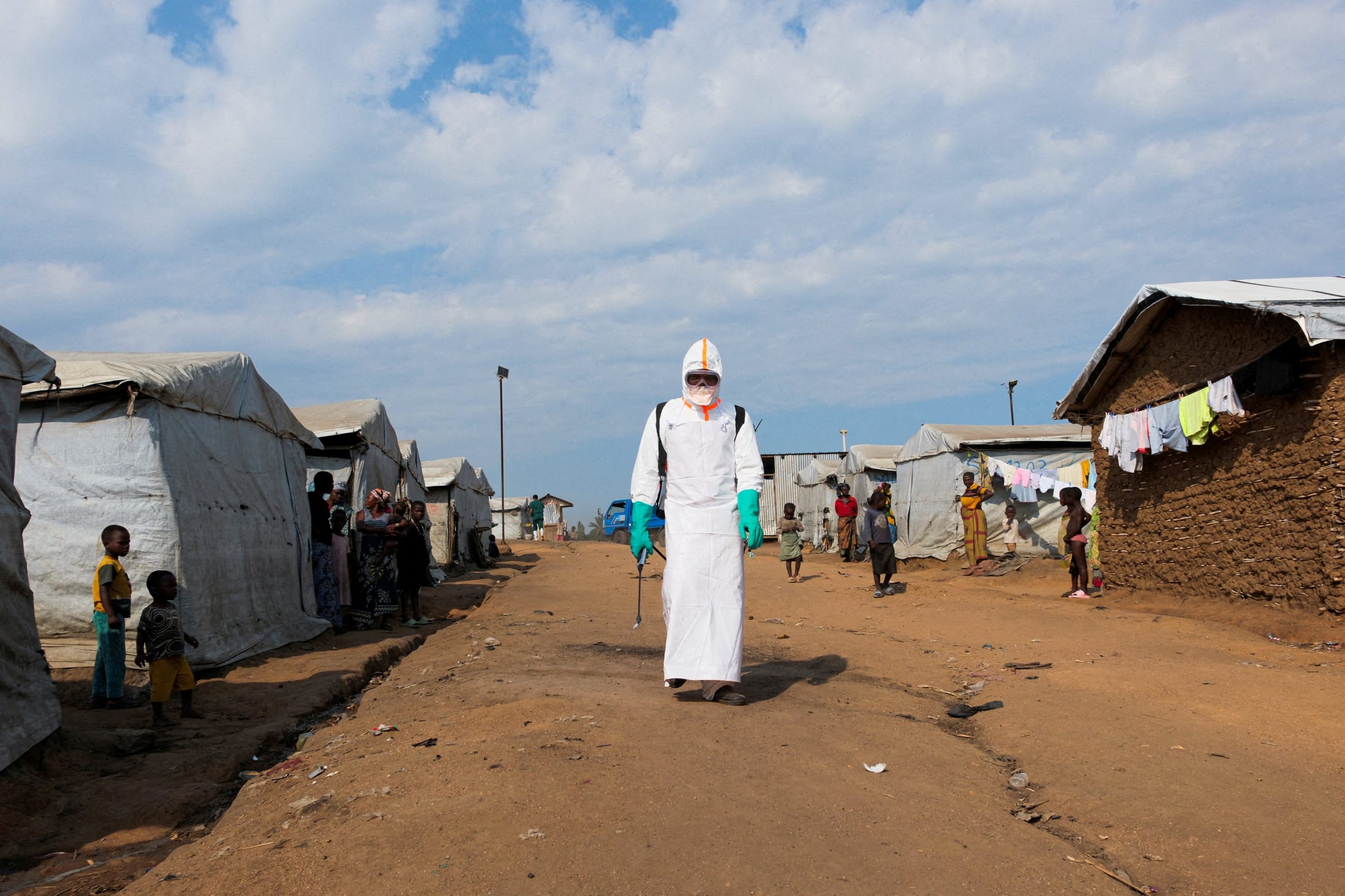
A well-run business does not walk away from an asset once it is built. It works to ensure that that asset remains adequately financed, staffed, and managed as countries transition health functions within national systems. Without deliberate investment in this ecosystem during the term of the bilateral agreement and after it ends, transitions risk weakening the very infrastructure that made progress possible in the first place.
Listen to the customer. Success in business depends on understanding consumer behavior and delivering value on their terms. In global health, the "customers" are communities, and they know the challenges they face better than anyone.
Global health transitions can work when civil society, affected communities, and local organizations help shape decisions. In South Africa, one study found that about 20% of patients dropped out of care after being transferred from NGO-supported services to government facilities following funding cuts. In Nigeria, reductions in PEPFAR support forced many clinics to begin charging patients for services that had previously been free, and support for tracking patients who missed appointments fell by more than half.
The HIV response has shown for two decades that cocreating solutions with affected populations produces interventions that work, including self-testing kits that communities helped design that saw uptake never reached through clinic-based testing alone, and peer-led outreach that found key populations that facility-based systems missed for years. If civil society engagement and community-based services are compromised in aid transition, it will undermine bottom-line outcomes.
Invest in people. When companies are serious about a new product launch or venture, they invest in that team. This is no less important for the global health workforce—in both management capacity and in-country leadership at every level.
That includes everyone from headquarters staff-setting strategy to epidemiologists, monitoring and evaluation specialists, laboratory personnel, procurement officers, community health workers, and program managers on the front lines. Execution depends on people, not just on systems or bilateral deals. As donors withdraw support for health workers, countries risk losing decades of institutional knowledge and technical expertise at the very moment they are being asked to shoulder greater responsibility for their own health systems.
Investing in people means strengthening leadership across U.S. missions, building local program-management capacity, protecting monitoring and evaluation functions, and ensuring that countries and the United States retain the workforce needed to track results, respond to new pathogen threats, and execute effectively toward health outcomes.
Expand the market to build scale and sustainability. The Global Fund has demonstrated what market-shaping can achieve through its pooled procurement mechanism, which managed more than $1 billion in orders across 81 countries in 2025. Through the mechanism, the Global Fund aggregates demand for antiretrovirals, malaria commodities, diagnostics, and other health products, helping countries secure more competitive prices and reliable supply.
The program's market-shaping efforts have also accelerated the introduction of newer HIV medicines while lowering costs through coordinated forecasting, volume guarantees, and supplier competition. Similar approaches have been used for malaria through the Affordable Medicines Facility for malaria, which increased the availability and affordability of quality-assured malaria treatments across multiple African countries. By combining regulatory reform, financial innovation, and local private-sector insights, it is possible to expand to new populations and greater volumes. The State Department should continue exploring how it can lower costs through similar market-shaping efforts.
Across these principles, all successful enterprises communicate their value. Companies invest heavily in telling a compelling story about impact and return, building the confidence of customers, investors, and stakeholders. Continually making the case that ending epidemics is part of U.S. identity and strategic brand is critical, and sustaining public confidence requires deliberate and sustained storytelling by the State Department about impact and return on investment.
Global health should not become a profit-seeking venture. Equal access to services is the only way to end epidemics, and that will always require strong public health systems, political commitment, and a moral compass no balance sheet alone can provide. But as global health enters an era of aid transition and greater country ownership, successful execution matters more than ever. Business offers lessons in accountability, data-driven decision-making, customer engagement, operational excellence, and disciplined focus on outcomes.
Applying those principles thoughtfully, while staying grounded in equity, human rights–based services, and public health values, can help ensure that transitions strengthen rather than weaken progress.