• Environment
  • Poverty
  • Trade
  • Governance
  • Food
  • Urbanization
  • Aging
  • Gender
  • Migration
  • Data Visualization
  • Recommendations
  • Research & Analysis
  • Series
  • Interviews
  • About This Site
  • Submission Guidelines

Newsletter

Think Global Health

  • Environment
  • Poverty
  • Trade
  • Governance
  • Food
  • Urbanization
  • Aging
  • Gender
  • Migration
  • Data Visualization
  • Recommendations
  • Research & Analysis
  • Series
  • Interviews
  • About This Site
  • Submission Guidelines

Newsletter

Think Global Health

Iran War Disrupts Pharma Supply Chains and South Africa Uses AI Chats for HIV Care

March 20, 2026


Editors' Note

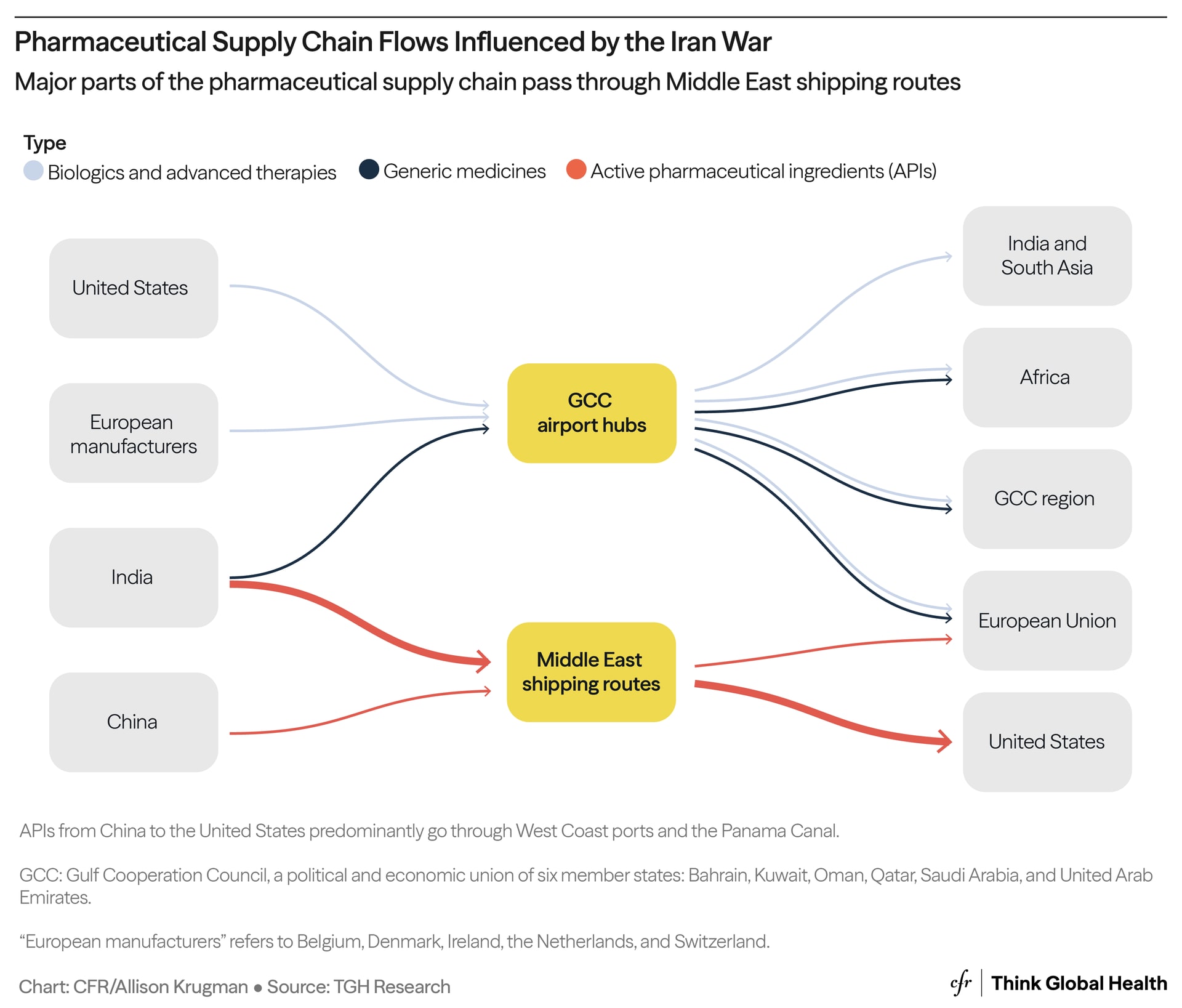
Almost three weeks since the war in Iran began, thousands of people—including civilians—have been killed and up to 3.2 million have been displaced. Further aggravating the humanitarian crisis is the disruption of some of the world's most critical logistics corridors—the Strait of Hormuz and major Gulf air hubs. The interruptions are triggering delays across global supply chains, including those for pharmaceuticals.  

To lead this week's coverage, CFR's Prashant Yadav and Anya Hirschfeld outline how pharmaceutical company executives are responding to the immediate supply-chain threats by actively targeting unconventional routes. 

As more health-care systems adopt artificial intelligence (AI) tools to improve diagnoses, lower delivery costs, and strengthen quality of care, South Africa is using the technology to enhance HIV prevention and treatment. Sarah Morris, chief product officer at Audere, and Jirair Ratevosian, PEPFAR's former chief of staff, describe how Aimee—a WhatsApp-based AI companion—is encouraging HIV self-testing and helping users adhere to treatment plans.  

Six years after COVID-19 lockdowns swept Europe, journalist Emma Smith examines how the recent closure of several long-COVID clinics in England leaves thousands of patients without access to specialized care.  

Until next week!—Nsikan Akpan, Managing Editor, and Caroline Kantis, Associate Editor 
 

This Week's Highlight

URBANIZATION

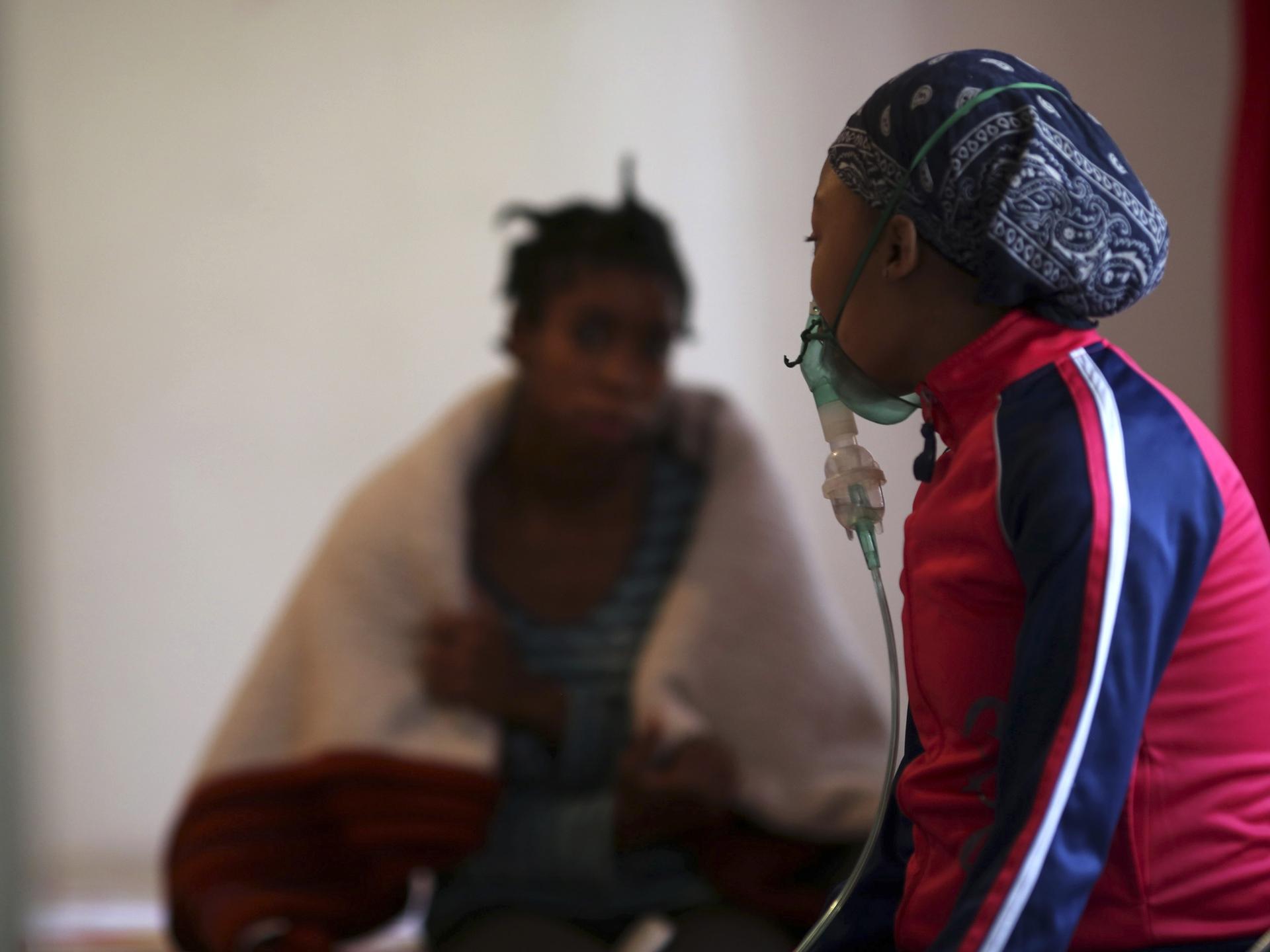
HIV patients chat at Nkosi's Haven, south of Johannesburg, South Africa, on November 28, 2014.

How AI "Besties" in South Africa Are Changing Uptake of HIV Medication  

by Sarah Morris and Jirair Ratevosian

Chatbot companions, such as Aimee, are part of a broad wave of digital health tools being tested across HIV programs 

Read this story


Figure of the Week

A flow chart showing major pharmaceutical supply chains passing through Middle East shipping routes

Read this story


Recommended Feature

URBANIZATION

Felicity Callard, a 49-year-old British university professor and lecturer who continues to struggle with symptoms following a COVID-19 infection, poses after an interview at her house, in London, England, on September 2, 2020.

England Closes Several Long-COVID Clinics, Deserting Patients     

by Emma Smith 

The closures mark a funding reversal by the National Health Service and come even as long COVID's prevalence remains steady 

Read this story


What We're Reading

Does Medicinal Cannabis Work for Depression, Anxiety or PTSD? Our Study Says There's No Evidence (The Conversation)

Argentina Officially Withdraws From World Health Organization, Following United States (Al Jazeera)

Reduced Physical Activity Due to Global Heating Will Lead to Rise in Health Issues, Study Says (The Guardian) 

United States Considers Withholding HIV Aid Unless Zambia Expands Minerals Access (New York Times)

Influencers Push "Parasite Cleanses" but Doctors Say to Steer Clear (NPR)

Judge Blocks RFK Jr. From Scaling Back Childhood Vaccine Recommendations (PBS News)


Interested in submitting?

Review our Submission Guidelines

Previous NewsletterBack to Archive

Subscribe to Our Newsletter

Sign up for our weekly newsletter to stay up to date.

See Past Newsletters
About This SiteSubmission Guidelines

©2025 Council on Foreign Relations. All rights reserved. Privacy Policy and Terms of Use.