Last month, the Trump administration released a policy to end federally supported "high-risk" life sciences research, including dangerous gain-of-function projects, where scientists alter organisms with new traits in ways that can make them more harmful. The framework also establishes stronger oversight for other initiatives that could potentially pose significant risks to public health, biosecurity, or national security. The policy also came as reports revealed artificial intelligence's ability to design potentially destructive, unseen viruses and bioweapons.
To lead this week's edition, anesthesiologist Sunny Jha uses the 2022 discovery of a Chinese-funded biology lab in California to illustrate blind spots in the United States' biosecurity surveillance. That example, among others, reveals how the United States is unprepared for "gray-zone" biological threats—ambiguous, hard-to-attribute incidents that fall below the threshold of overt bioweapons attacks but can still disrupt agriculture, public confidence, or military readiness. To bolster U.S. defense, Jha suggests four reforms—broader facility registration, state-level rapid biological assessment teams, better interagency data sharing, and renewed international verification efforts—while warning that the pretense of biosecurity should not be used to stigmatize immigrant scientists or criminalize legitimate research.
With autumn approaching, El Niño—the change in weather pattern that occurs when the Pacific Ocean becomes warmer—is intensifying and this year's episode could be the most powerful in decades. As countries brace for extreme weather events caused by this phenomenon, Kenya is working to secure financing for climate projects and improve community health by strengthening regulations around its carbon market, writes journalist Joyce Chimbi.
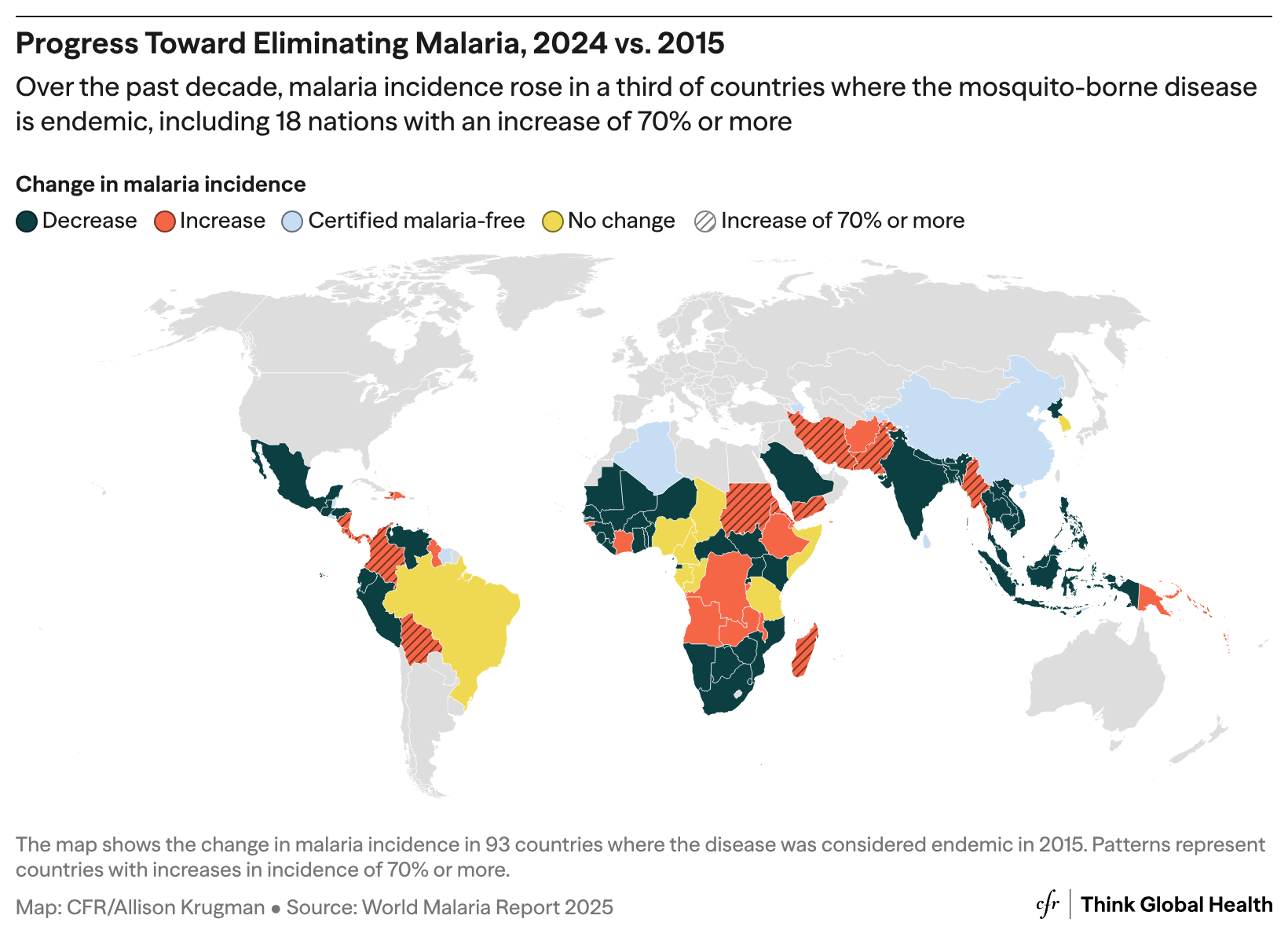
Accompanying the weather shifts caused by climate change are shifts in infectious disease patterns, as with malaria. In Africa, Anopheles stephensi, an invasive mosquito species resistant to insecticides, is spreading malaria across cities and threatening millions of people, but more data is needed on whether genetically modified mosquitoes could help protect Africans from that threat, suggests Fredros Okumu, a professor of vector biology at the University of Glasgow.
Until next week!—Caroline Kantis, Associate Editor
Coordinating responses across all levels of government could help prevent biological accidents and safeguard national security in the face of biothreats
Building on the success of projects such as Mikoko Pamoja, Kenya is working to regulate its carbon market to address past controversy and secure community gains